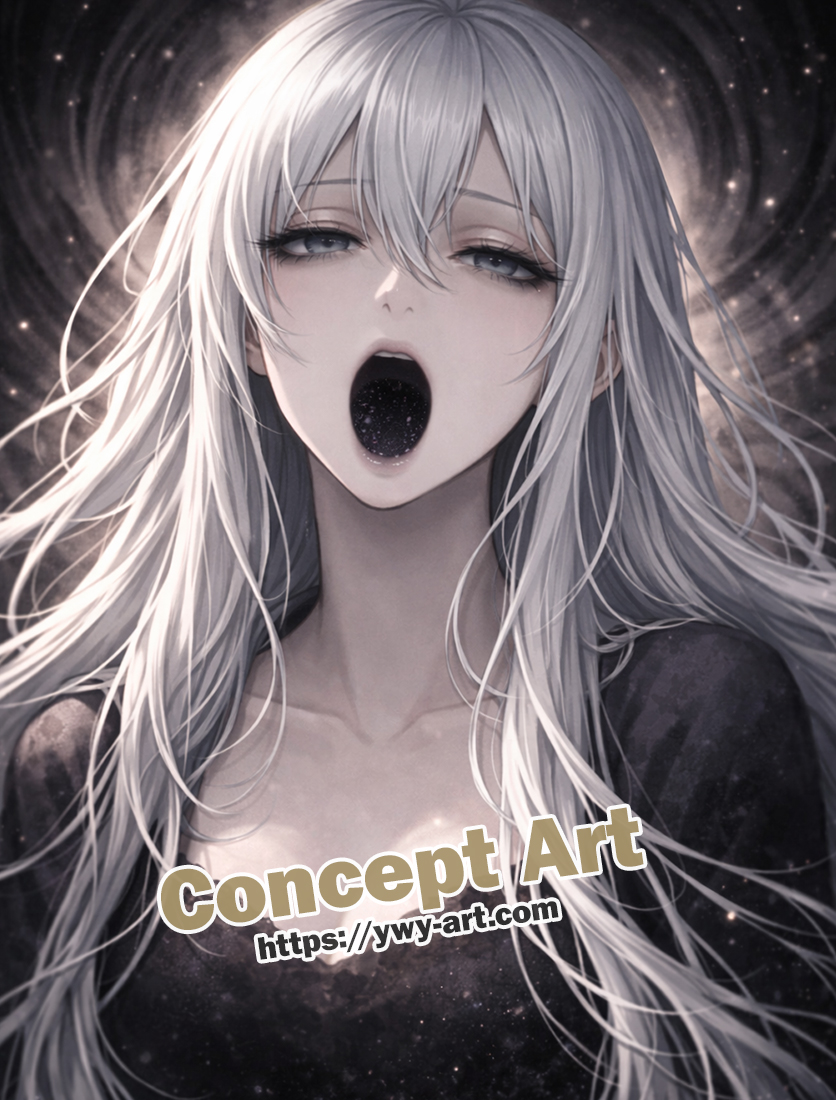
Mouth of Darkness – Hine-nui-te-pō
She does not chase, judge, or destroy. She simply waits. At the end of all things, there is only her—quiet, inevitable, and absolute.
Basic Profile
| Name | Hine-nui-te-pō |
|---|---|
| Mythology | Māori Mythology |
| Gender | Female |
| Region | New Zealand (Aotearoa) |
| Era | Ancient Oral Tradition |
| Domain | Death, Night, Underworld |
| Symbol | Darkness, Mouth, Threshold, Night Sky |
| Culture / Religion | Māori Spiritual Beliefs |
| Main Role | Guardian of the Underworld, Final Destination of Souls |
| Associated Deity | Māui, Hine-tītama |
| Common Depiction | A silent, pale woman embodying the gateway to death |
| Alignment | Neutral (Inevitable Force) |
| Creative Reference | The mouth as a void, calm expression, flowing pale hair, inward motion |
Overview
Hine-nui-te-pō is the Māori goddess of death and night, representing the final destination of all living beings. Unlike many death deities, she is not portrayed as a punisher or a judge, but as a natural and unavoidable presence that receives all souls.
Her story is deeply tied to the myth of Māui, a hero who attempted to overcome death itself. His failure established the mortal nature of humanity, reinforcing her role as the unchangeable boundary between life and the afterlife.
Characteristics
- A silent and emotionless presence
- Embodies inevitability rather than fear
- Represents transition, not destruction
- Connected to darkness and inward movement
- Exists beyond human control or influence
Symbolism and Meaning
Hine-nui-te-pō symbolizes the acceptance of death as a natural part of existence. Rather than portraying death as something violent or tragic, she embodies its quiet certainty and the idea that all life returns to a common origin.
Her association with the mouth and inner space reflects the concept of entering another realm. This is not a force that attacks from the outside, but one that draws inward, representing transition and return rather than conflict.
Quick Creative Reference
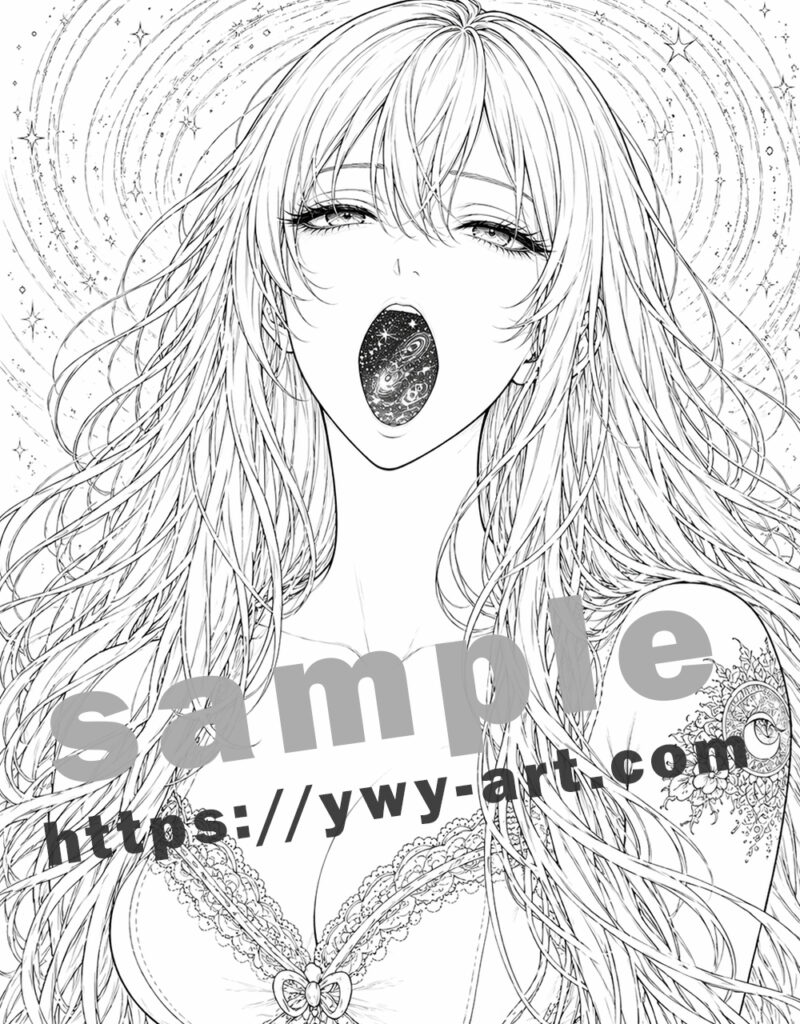
| Best For | Dark fantasy, symbolic death themes, quiet horror |
|---|---|
| Visual Keywords | Void, pale skin, flowing hair, darkness, inward motion |
| Mood | Calm, inevitable, mysterious |
| Useful Themes | Life and death, transition, acceptance, the unknown |
Compare with Similar Deities
| Name | Mythology | Main Domains | Overall Image |
|---|---|---|---|
| Hel | Norse | Underworld, Death | Cold and divided between life and decay |
| Ereshkigal | Mesopotamian | Underworld, Judgment | Queen of a structured realm of the dead |
| Santa Muerte | Folk Catholicism | Death, Protection | Skeletal figure associated with devotion and fate |
The Myth of Māui and the Origin of Death
The most important story involving Hine-nui-te-pō is the attempt by Māui to grant immortality to humankind. He believed that by entering her body and emerging again, he could reverse the natural order of death.
However, he failed, and his death confirmed that mortality is permanent. This myth defines her not as an enemy, but as a fundamental truth that cannot be altered.
Death as Transition, Not End
In Māori belief, death is not seen as a final ending but as a return to one’s ancestors. Hine-nui-te-pō governs this passage, acting as a threshold rather than a barrier.
This perspective removes fear from the concept of death and replaces it with inevitability and continuity.
The Concept of Tapu
Hine-nui-te-pō exists within the concept of Tapu, meaning sacred and untouchable. She represents a domain that cannot be interfered with or controlled by humans.
This reinforces her presence as something beyond emotion or judgment—purely a force of existence.
Visual Interpretation in This Artwork
This artwork focuses on the mouth as the entrance to the underworld, symbolizing the inward pull of death. The absence of emotion reflects her true nature as a neutral force.
The flowing hair and converging background emphasize movement toward a single point, guiding the viewer’s attention into the void.
Coloring Variations
- Monochrome Spirit: Use grayscale tones to emphasize silence and stillness
- Cosmic Void: Add subtle blues and purples inside the mouth for depth
- Fading Light: Introduce soft gradients from light to dark toward the center
Coloring Tips
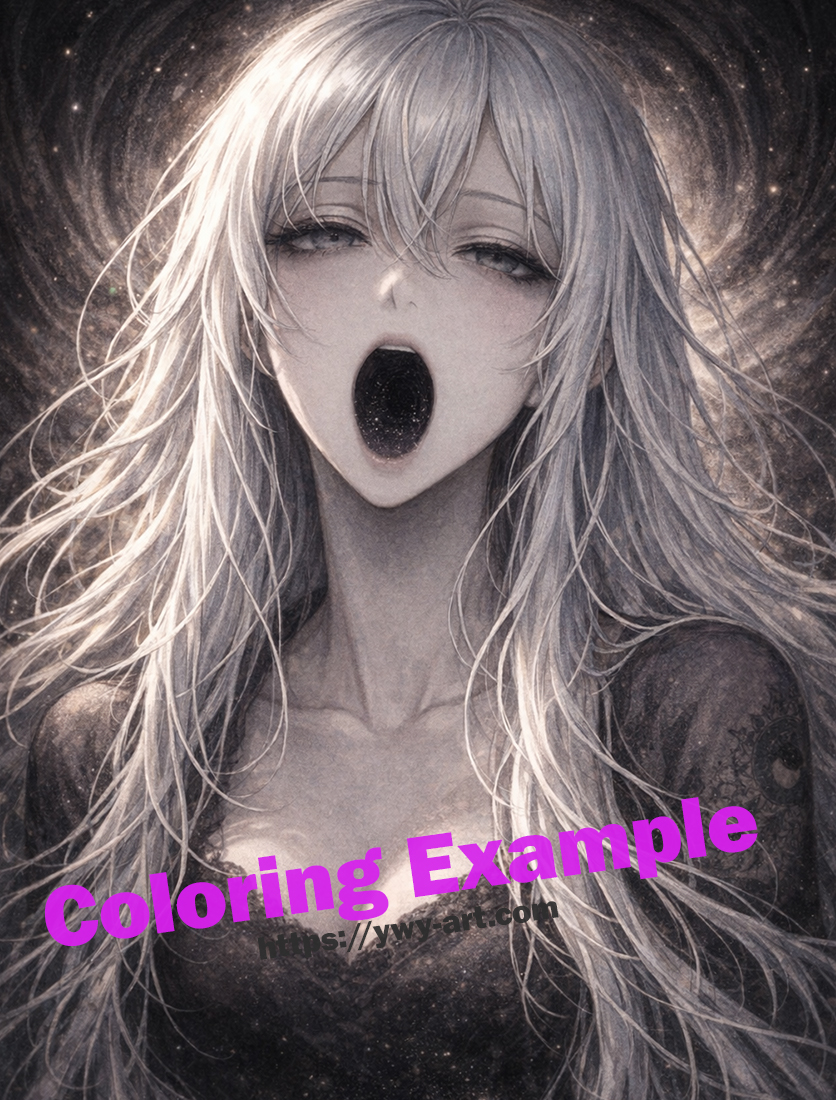
Keep the skin tones soft and desaturated to maintain a calm, lifeless atmosphere. Avoid strong warm colors to preserve the sense of distance and detachment.
Use layered gray tones in the hair to create flow and dimension, allowing the strands to guide the eye naturally toward the center.
For the mouth, avoid solid black. Instead, build depth with gradual shading and small highlights to suggest an endless void.
Japanese Summary
ヒネ・ヌイ・テ・ポーは、マオリ神話における死と夜の女神であり、すべての命が最後に辿り着く存在です。彼女は裁きや罰を与える存在ではなく、ただ静かに魂を受け入れる“終着点”として描かれます。
英雄マウイが不死を得ようとして失敗した神話により、人間が死から逃れられないことが確定し、彼女は「変えられない現実」として位置づけられました。
死の意味と役割
マオリ文化では、死は終わりではなく祖先のもとへ帰るための通過点とされています。ヒネ・ヌイ・テ・ポーはその入口であり、恐怖ではなく必然として存在しています。
そのため彼女の存在は、攻撃的でも感情的でもなく、静かで受け入れがたい現実そのものを象徴しています。
マウイ神話の重要性
マウイは人間を不死にしようと試みましたが失敗し、その結果、死は避けられないものとなりました。この神話は彼女の役割を決定づける重要な要素です。
彼女は敵ではなく、「超えられない境界」として存在しています。
作品における表現
本作では口を冥界の入口として表現し、内側へ引き込まれる構造を視覚的に描いています。無表情であることにより、感情ではなく存在そのものを強調しています。
背景や髪の流れは中心へ収束するよう設計されており、見る者の視線を自然に引き込みます。
塗りのポイント
肌は薄く淡いトーンで塗り、静けさを意識しましょう。強い色味は避けることで雰囲気が保たれます。
口の中は黒一色にせず、グラデーションや粒子で奥行きを表現することで作品の完成度が大きく向上します。
Explore Our Coloring Book Series
Discover more dark goddesses and mythological figures brought to life through intricate line art.
Each piece is designed to balance beauty, depth, and storytelling through color.
Step into the world of mythology..
Available on Amazon Dark Ritual Goddesses of Mythology Coloring Book Open in a new tab


コメント