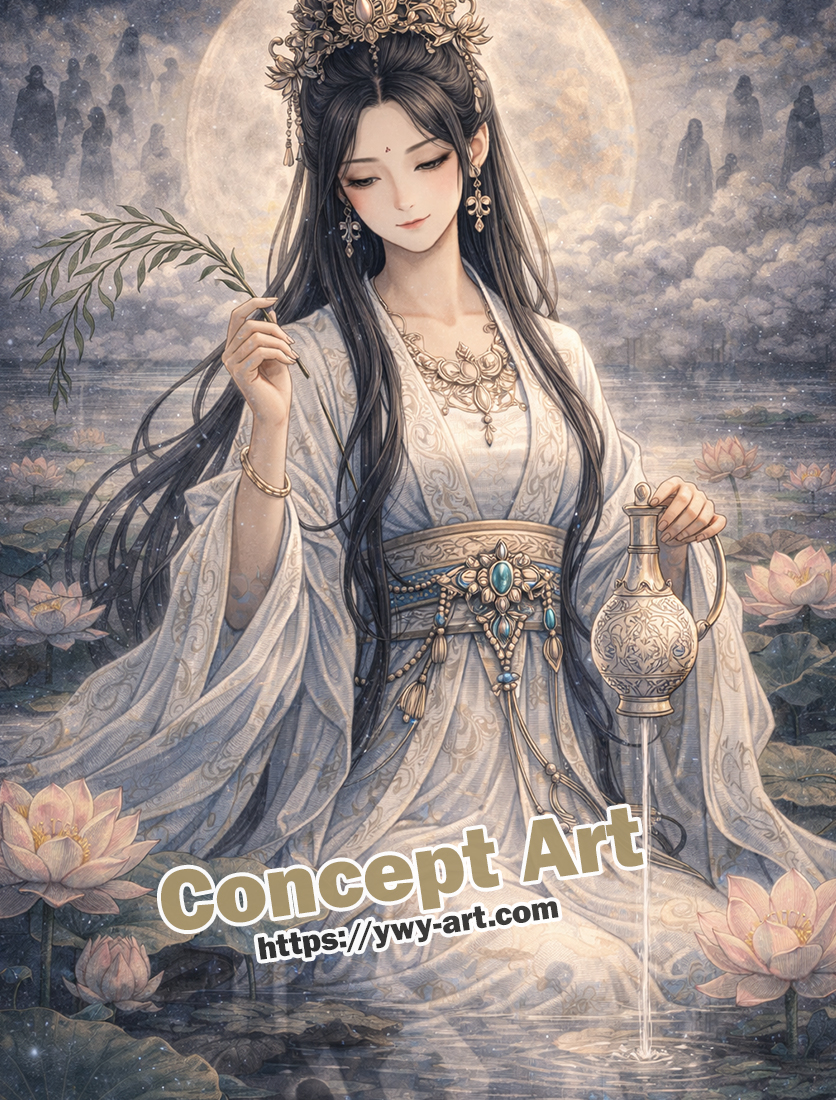
Guanyin is the bodhisattva of compassion in East Asian Buddhism, known as the one who hears the cries of the world. She represents mercy, kindness, and the power to relieve suffering, making her one of the most beloved spiritual figures in Asian mythology and religion.
- Who is Guanyin?
- What does Guanyin represent?
- Guanyin in Buddhist tradition
- The transformation from Avalokiteśvara
- Compassion, salvation, and silent strength
- Guanyin compared with other dark goddesses
- Guanyin coloring illustration
- Coloring tips
- Explore more dark goddesses
- 観音(グァンイン)とは?
- 観音が象徴するもの
- 仏教における観音
- 慈悲と救済の存在
- 他のダークな女神との違い
- イラスト紹介
- 塗り方のポイント
Who is Guanyin?
Guanyin is a bodhisattva—an enlightened being who chooses to remain in the world to help others achieve liberation. Originally derived from the Indian bodhisattva Avalokiteśvara, Guanyin evolved in China into a figure widely depicted in feminine form, embodying compassion and protection.
What does Guanyin represent?
Guanyin represents infinite compassion, mercy, and unconditional care. Her name means “the one who hears the cries of the world,” reflecting her role as a protector who responds to suffering and offers guidance in times of fear and despair.
Guanyin in Buddhist tradition
In Buddhist tradition, Guanyin is believed to hear the voices of all beings who suffer and respond with compassion. She is often called upon in moments of danger, illness, or emotional distress, and is said to appear in whatever form is needed to provide help and relief.
The transformation from Avalokiteśvara
Guanyin originated as the bodhisattva Avalokiteśvara in India, but over time in China, the figure gradually became associated with feminine qualities such as motherhood, nurturing, and mercy. This transformation reflects the blending of Buddhist teachings with local traditions.
Compassion, salvation, and silent strength
Unlike gods who rule through fear or force, Guanyin’s strength lies in compassion. She does not dominate or judge but instead listens, understands, and responds. Her presence represents quiet salvation—the idea that even in suffering, there is always the possibility of relief and transformation.
Guanyin compared with other dark goddesses
Unlike Ereshkigal or Hel, who govern death and the underworld, Guanyin represents compassion within suffering. Rather than ruling over darkness, she enters it willingly to guide others out. Her role is not to control fate, but to ease the pain within it.
Guanyin coloring illustration
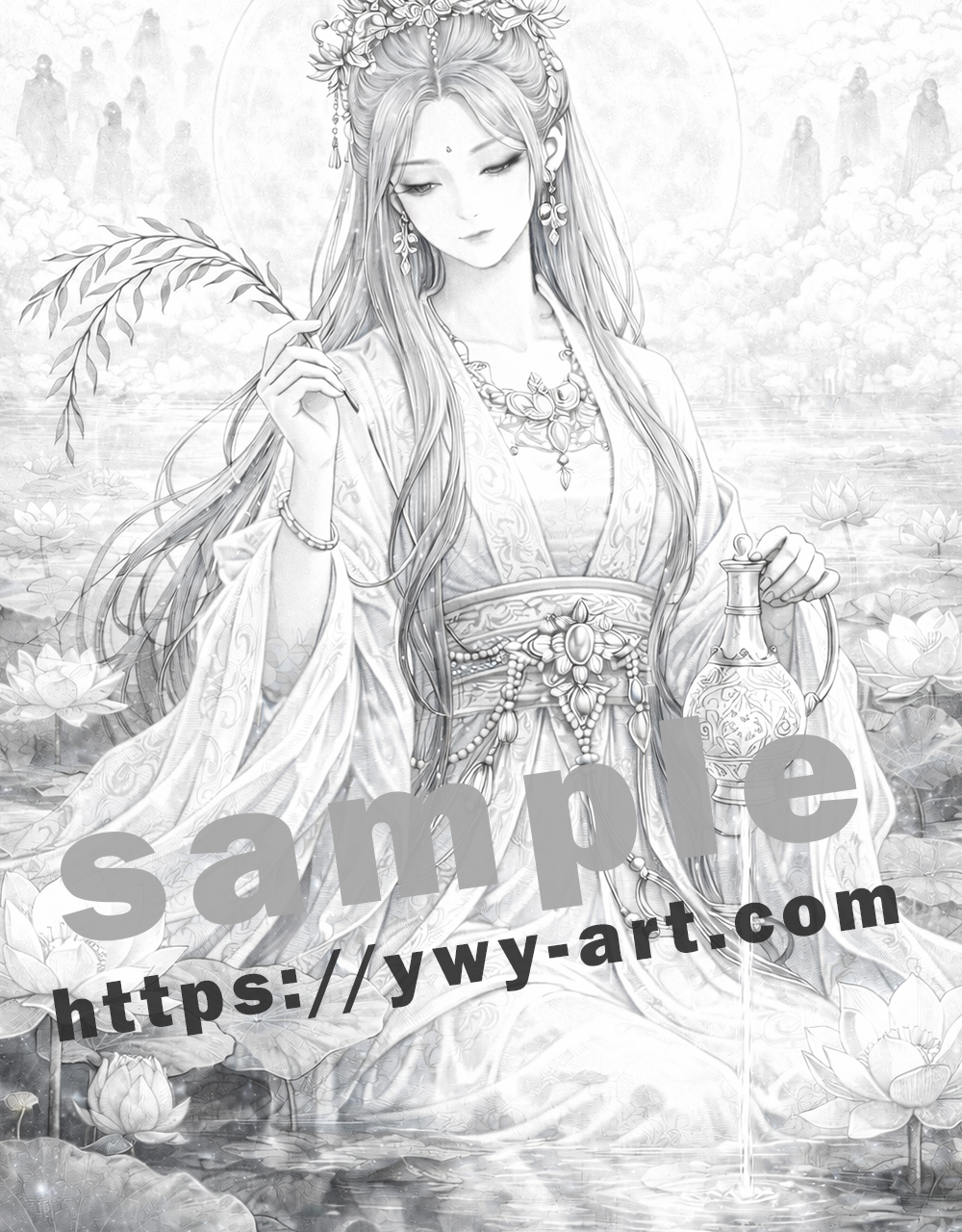
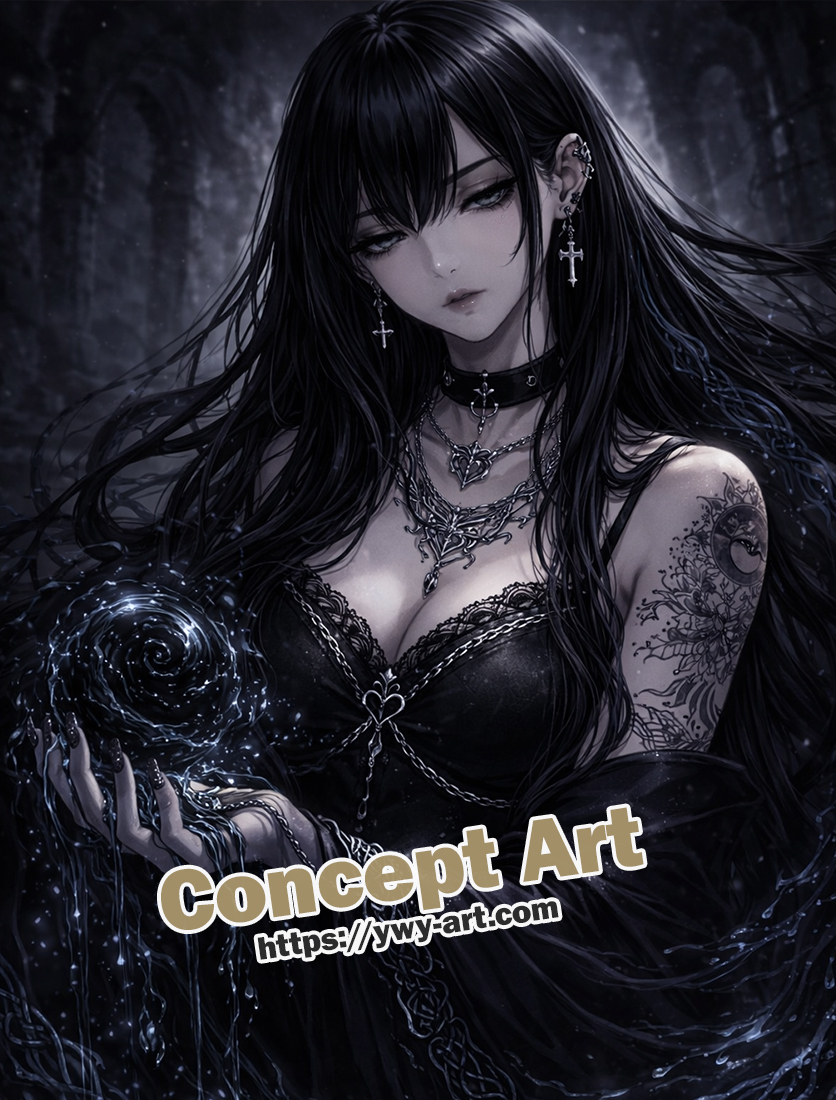
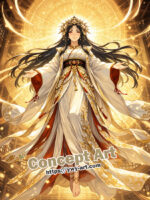
In this illustration, Guanyin appears as a serene and luminous figure, surrounded by flowing elements that suggest water, air, and spiritual presence. Her calm expression reflects deep compassion, while her posture conveys quiet authority.
The composition emphasizes balance and stillness, representing a moment where suffering is acknowledged but gently transformed through understanding and grace.
Coloring tips
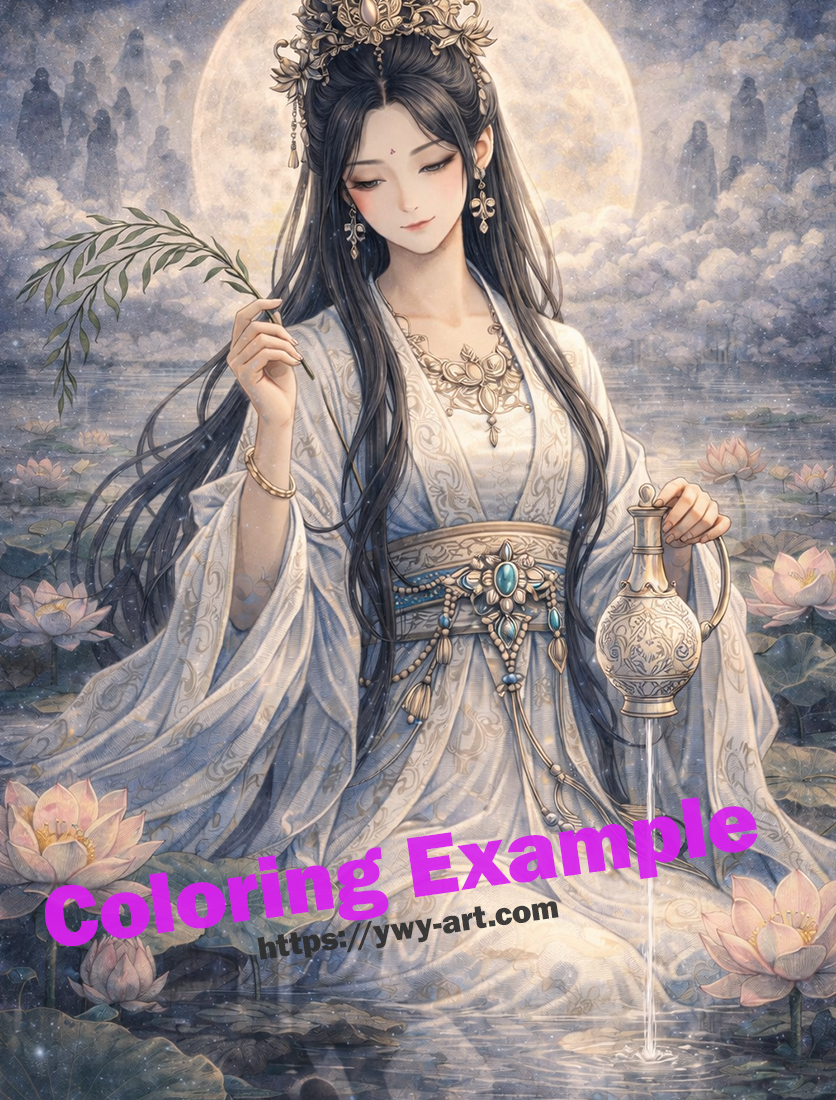
This illustration works well with soft and harmonious color palettes.
Hair
Dark tones such as black or deep brown can create contrast with the light surrounding her.
Clothing
White, pale blue, and soft gold are ideal for expressing purity and compassion.
Water and Background
Use light blues, turquoise, and gentle gradients to create a calm, flowing atmosphere.
Highlights
Subtle glowing effects can enhance the sacred and peaceful presence of the figure.
Explore more dark goddesses
Discover more powerful figures in mythology:
- Arianrhod – Goddess of Fate and the Silver Wheel
- Danu – Goddess of Primordial Waters
- Amaterasu – Goddess of Light and Order
観音(グァンイン)とは?
観音は東アジア仏教における慈悲の菩薩であり、「世の声を聞く者」として知られる存在です。人々の苦しみや願いに耳を傾け、救いの手を差し伸べる慈愛の象徴です。
観音が象徴するもの
観音は無限の慈悲、優しさ、そして救済を象徴します。苦しみの中にある人々の声を聞き、その状況に応じて助ける存在として信仰されています。
仏教における観音
観音はもともとインドの菩薩アヴァローキテーシュヴァラに由来し、中国に伝わる中で女性的な姿として広く信仰されるようになりました。現在では慈母のような存在として親しまれています。
慈悲と救済の存在
観音の力は支配ではなく共感にあります。苦しむ者に寄り添い、その痛みを理解し、救いへと導く存在です。その静かな強さこそが最大の特徴です。
他のダークな女神との違い
エレキシュガルやヘルが死や冥界を司る存在であるのに対し、観音は苦しみの中にある人々を救う存在です。闇を支配するのではなく、その中に入り込み、光へと導く役割を持っています。
イラスト紹介
この作品では、観音は穏やかで静かな存在として描かれています。流れるような構図と柔らかな表情が、慈悲と安らぎを象徴しています。
全体の静けさと光の表現によって、苦しみを受け止めながらも癒しへ導く存在感が表されています。
塗り方のポイント
髪
黒やダークブラウンを使うと、周囲の淡い光との対比が生まれます。
衣装
白、淡い青、やわらかな金色を基調にすると、清らかさと慈悲深さが表現しやすくなります。
水や背景
淡い青、ターコイズ、やさしいグラデーションを使うと、穏やかで流れるような空気感を演出できます。
光の表現
控えめな光のにじみやハイライトを入れることで、神聖で静かな存在感を強められます。
Discover the world of Mythology Tattoo Coloring
Explore on Amazon Dark Goddesses of Mythology Tattoo Coloring Book 40 Gothic & Dark Fantasy Goddess Designs





コメント