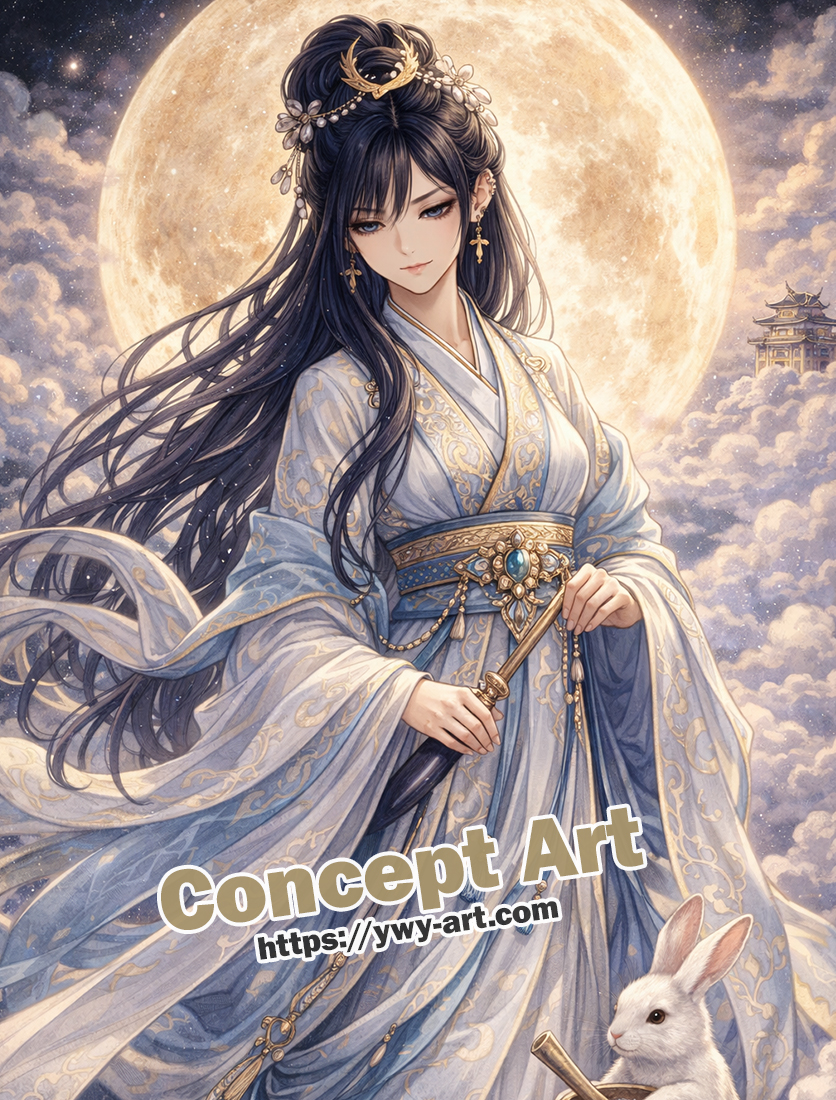
Chang’e is the moon goddess in Chinese mythology, known for her beauty, immortality, and tragic separation from the human world. She is closely associated with the moon, longing, and the eternal distance between love and destiny.
Who is Chang’e?
Chang’e is the Chinese goddess of the Moon and the wife of the legendary archer Hou Yi. She became immortal after consuming an elixir and ascended to the moon, where she now resides as a celestial figure.
What does Chang’e represent?
Chang’e represents immortality, beauty, longing, and separation. Her story reflects the emotional distance between heaven and earth, and the cost of transcendence—gaining eternity while losing human connection.
The legend of Chang’e and the elixir
According to Chinese mythology, the archer Hou Yi saved the world by shooting down nine suns that scorched the earth. As a reward, he received an elixir of immortality.
In one version of the myth, Chang’e drank the elixir herself and ascended to the moon, leaving her husband behind forever. Her story became one of the most enduring legends of longing and separation in Chinese tradition.
The moon, solitude, and eternal longing
Chang’e lives alone in the Moon Palace, often accompanied only by the Moon Rabbit. Her story is not one of conquest, but of quiet isolation—eternal life gained at the cost of human warmth and closeness.
Chang’e compared with other dark goddesses
Unlike Ereshkigal or Hel, who rule over death and the underworld, Chang’e represents emotional distance and longing. Her darkness is not fear or destruction, but separation, memory, and the quiet sadness of immortality.
Chang’e coloring illustration
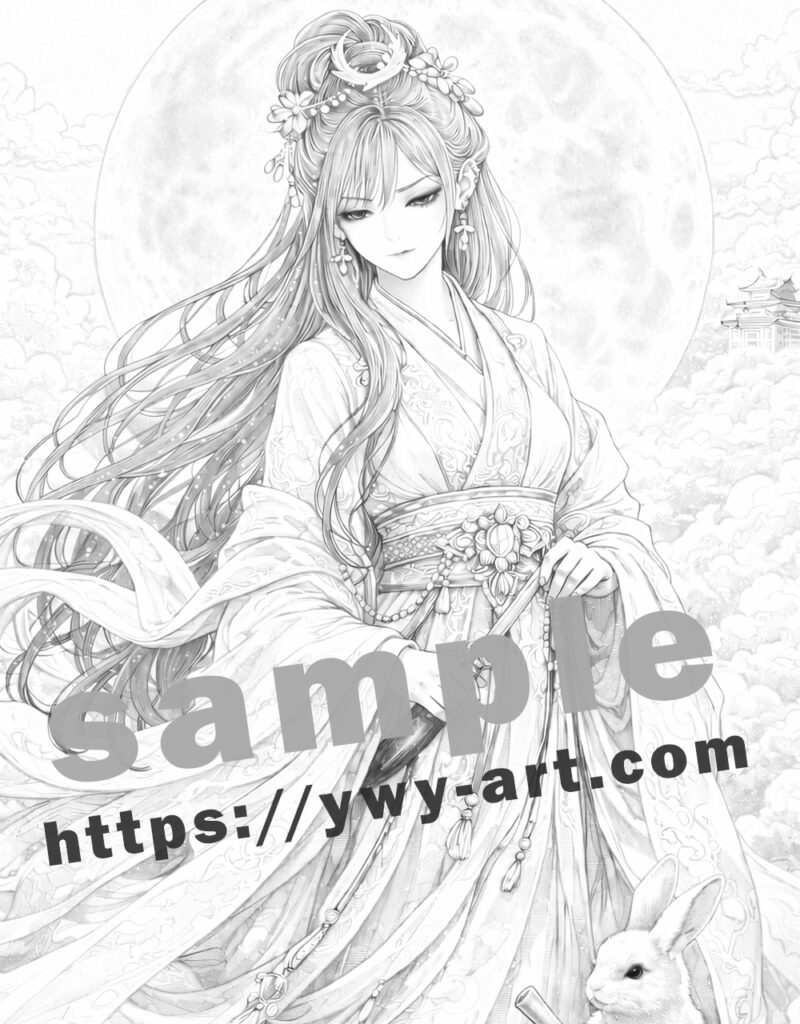
In this illustration, Chang’e stands beneath the full moon with flowing robes that move like clouds in the night sky. The Moon Rabbit beside her quietly prepares the legendary elixir, while the distant palace and drifting clouds create a dreamlike scene filled with mystery.
The composition emphasizes stillness, elegance, and emotional distance, capturing the feeling of a goddess who is beautiful yet forever beyond reach.
Coloring tips
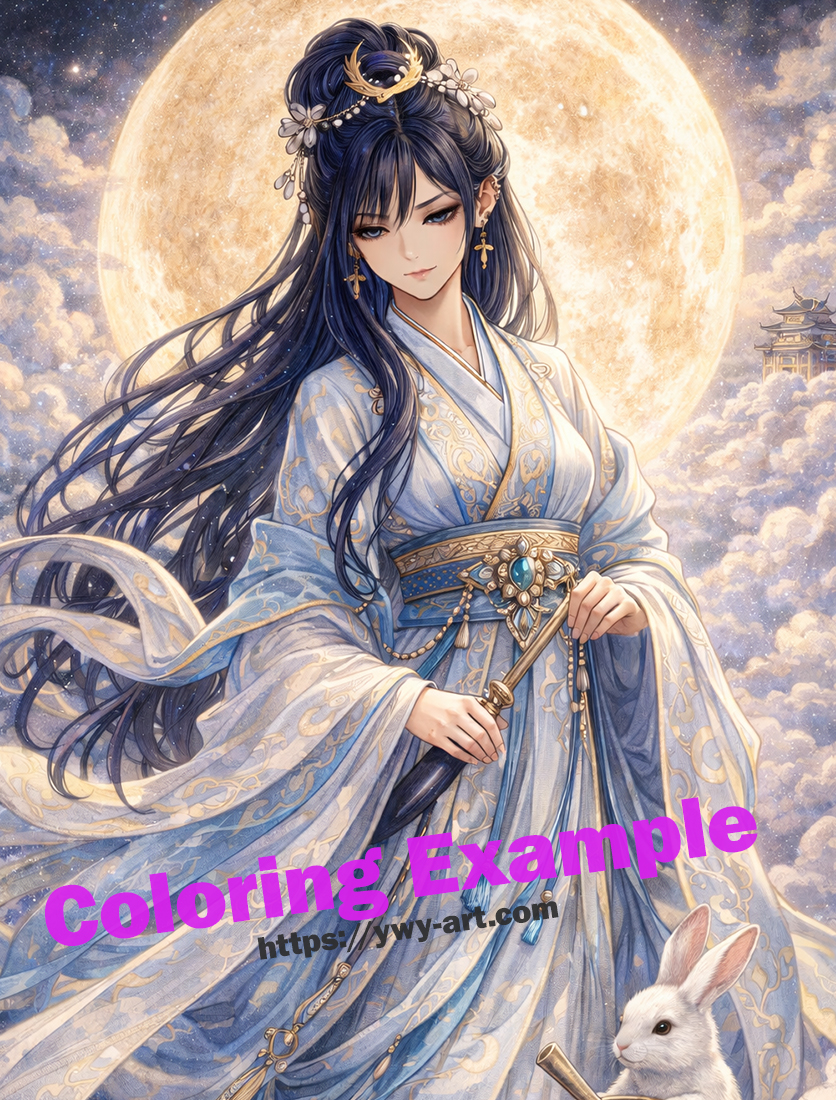
This illustration works best with soft, luminous, and slightly melancholic color palettes.
Hair
Black or deep brown with subtle highlights can create contrast against the glowing moonlight.
Clothing
White, pale blue, silver, or soft lavender tones emphasize elegance and celestial beauty.
Moon and background
Use gradients of blue, violet, and soft gray to create a calm and mysterious night atmosphere.
Moon Rabbit
Keep the rabbit mostly white with cool gray shading to maintain the quiet mood of the moonlit world.
Lighting
Add gentle glow effects around the figure to express the quiet radiance of the moon.
Explore more dark goddesses
Discover more powerful figures in mythology:
- Arianrhod – Goddess of Fate and the Silver Wheel
- Danu – Goddess of Primordial Waters
- Guanyin – Goddess of Compassion
嫦娥(じょうが)とは?
嫦娥は中国神話に登場する月の女神であり、不老不死と美しさ、そして永遠の別離を象徴する存在です。静かな月の世界に住む神秘的な存在として広く知られています。
嫦娥が象徴するもの
嫦娥は永遠、美しさ、孤独、そして離別を象徴します。不老不死を得る代わりに人間としての繋がりを失うという、神話的な代償を体現する存在です。
嫦娥の神話
中国神話によれば、弓の名手・后羿は空に現れた十の太陽のうち九つを射落とし、世界を灼熱から救いました。その報酬として不老不死の霊薬を授かります。
その後、嫦娥がその霊薬を飲み、月へと昇ってしまったことで、夫と永遠に離れる運命となりました。この物語は、中国神話の中でも特に美しく切ない伝説として語り継がれています。
月と孤独の象徴
嫦娥は月宮殿に住み、月の兎と共に静かな時間を過ごす存在として描かれます。その姿は、永遠の命と引き換えに得た孤独と、届かない想いを象徴しています。
他のダークな女神との違い
死や冥界を支配する女神とは異なり、嫦娥の持つダークさは「孤独」や「距離」にあります。力ではなく、感情と記憶に宿る静かな闇を象徴している点が特徴です。
イラスト紹介
このイラストでは、嫦娥が満月を背に静かに佇み、雲のように流れる衣が夜空の気配をまとっています。そばでは月の兎が霊薬を調合し、遠くには月宮殿が幻想的に浮かび上がります。
全体の静けさと距離感が、嫦娥という存在の切なさと美しさを際立たせています。
塗り方のポイント
髪
黒やダークブラウンを使うと、月の淡い光との対比が生まれます。
衣装
白、淡い青、銀、やさしいラベンダーなどを使うと、月光に包まれた優雅さを表現できます。
月と背景
青、紫、グレーを重ねたグラデーションで、静かで幻想的な夜の空気感を出せます。
月の兎
白を基調にしながら、薄いグレーで影を加えると、月の静かな世界観になじみます。
光の表現
淡い光のにじみや柔らかなハイライトを加えることで、月の神秘的な輝きを強調できます。
Discover the world of Mythology Tattoo Coloring
Explore on Amazon Dark Goddesses of Mythology Tattoo Coloring Book 40 Gothic & Dark Fantasy Goddess Designs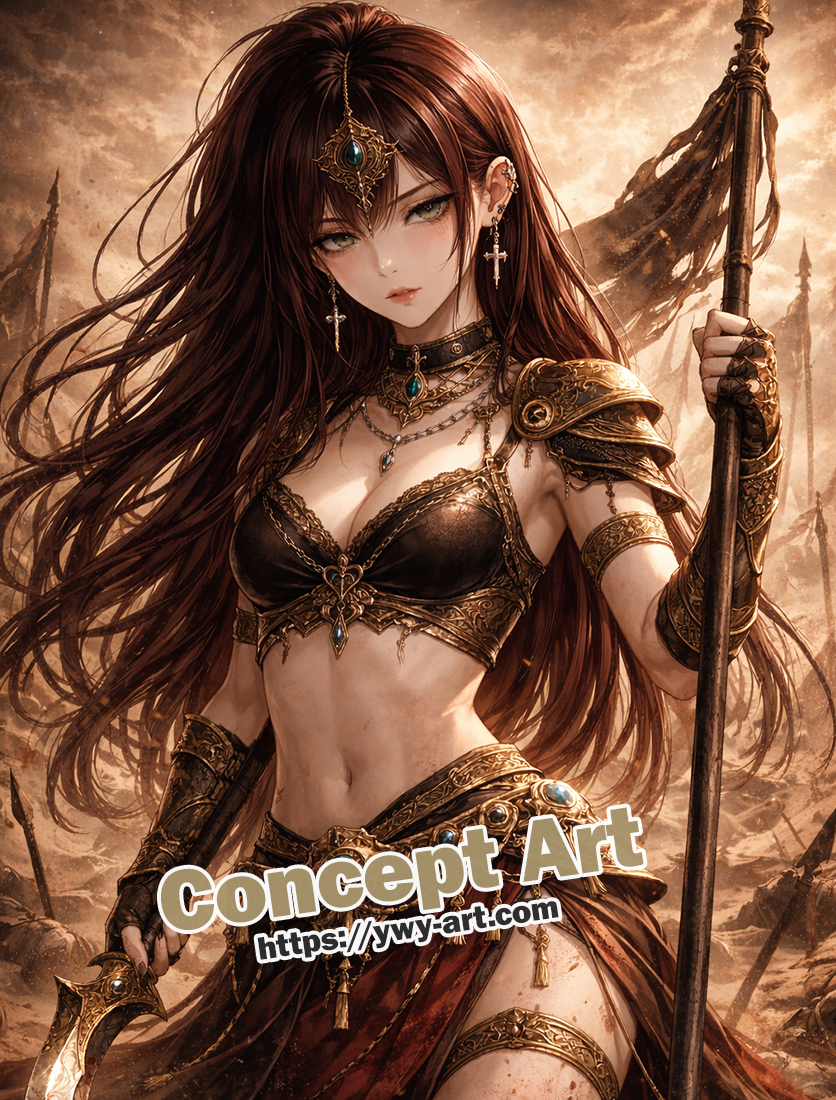
コメント