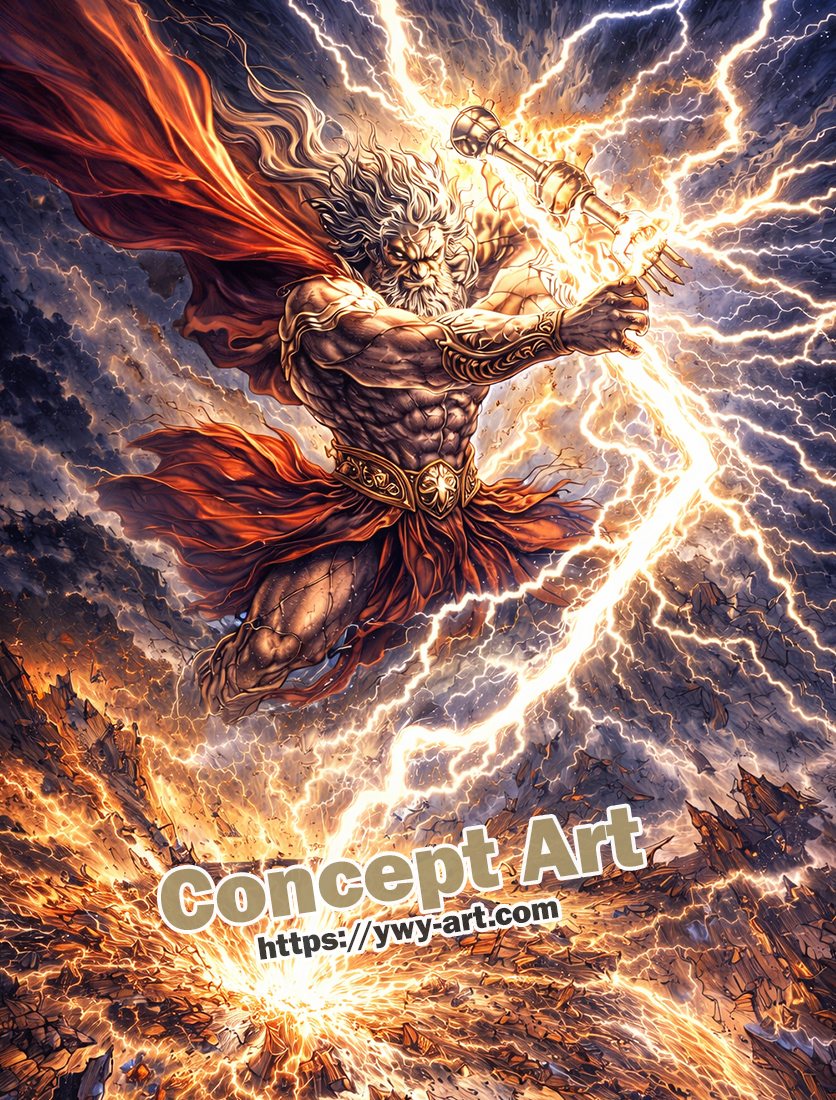
Zeus — Absolute Judgment
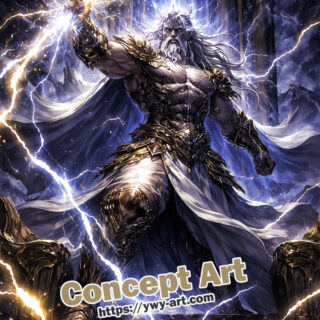
At the peak of the Titanomachy, Zeus no longer acts as a challenger, but as the force that decides the end. The battlefield has already collapsed into chaos, and what remains is not a struggle for dominance, but a moment of final resolution. His lightning does not test the enemy—it delivers the outcome.
Basic Profile
| Name | Zeus |
|---|---|
| Mythology | Greek Mythology |
| Gender | Male |
| Region | Ancient Greece |
| Era | Mythological Age |
| Domain | Sky, Thunder, Authority |
| Symbol | Lightning Bolt, Thunder, Eagle |
| Culture / Religion | Greek Mythology |
| Main Role | King of the Olympian Gods |
| Rank | Olympian Supreme Deity |
| Position in Titanomachy | Decisive force bringing the war to its conclusion |
| Associated Deity | Hera, Poseidon, Hades |
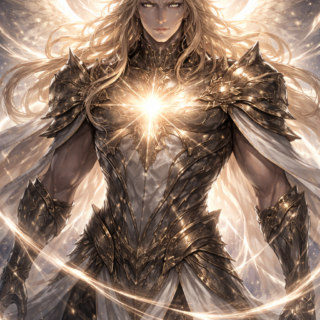
| Common Depiction | Powerful figure wielding lightning from above |
| Alignment | Lawful Neutral |
| Creative Reference | Final strike, descending lightning, absolute authority, divine judgment |
Overview
Zeus is the ruler of the Olympian gods and the embodiment of divine authority. Unlike other deities who represent aspects of nature or emotion, Zeus represents control, order, and the final decision. His power is not merely destructive, but definitive. When Zeus acts, events do not continue—they conclude.
In the Titanomachy, Zeus transitions from a leader of resistance into the arbiter of the war’s outcome. This scene represents the exact moment where his role shifts completely. The battle is no longer uncertain. His strike transforms chaos into conclusion, bringing the long conflict to its inevitable end.
Characteristics
- Absolute authority over sky and thunder
- Decisive and unwavering in action
- Acts with certainty rather than emotion
- Embodies control and finality
- Delivers judgment rather than engaging in prolonged combat
Symbolism and Meaning
Zeus represents the concept of judgment in its purest form. His lightning is not random or chaotic—it is precise and intentional. In mythology, lightning often symbolizes divine will, and in this case, it becomes the physical manifestation of a final decision.
In this “Absolute Judgment” state, Zeus is no longer part of the battle. He exists above it. The strike he delivers is not part of the conflict—it ends it. This elevates him from a participant to a force that defines the conclusion of events.
Quick Creative Reference
| Best For | Final battle scenes, divine authority, decisive moments |
|---|---|
| Visual Keywords | Lightning strike, sky rupture, descending force, divine power |
| Mood | Final, overwhelming, authoritative |
| Useful Themes | Judgment, conclusion, inevitability, divine control |
Compare with Similar Deities
| Name | Mythology | Main Domains | Overall Image |
|---|---|---|---|
| Jupiter | Roman | Sky, Thunder | Roman counterpart of Zeus, equally authoritative but more state-oriented |
| Thor | Norse | Thunder, Strength | Warrior-type thunder god, more physical and battle-focused |
| Indra | Hindu | Storm, War | Storm god associated with victory and leadership in battle |
The Moment of Judgment
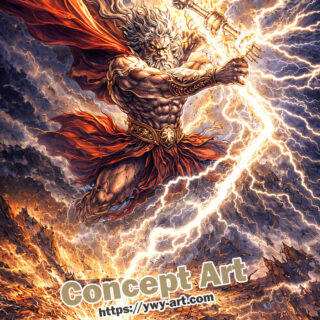
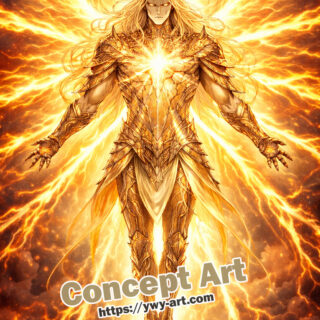
This scene captures the instant where Zeus delivers the final blow of the Titanomachy. Unlike earlier moments of tension or escalation, this is the point of resolution. The lightning is not exploratory—it is final.
Everything that has unfolded until now converges into this single action. The war does not continue beyond this strike. It ends here.
Beyond Combat
Zeus is not depicted as struggling or reacting. His posture and motion show control, not desperation. This reinforces the idea that the outcome is already decided before the strike lands.
He is not overcoming the enemy through effort, but enforcing a result that has already been determined.
Power Without Doubt
The defining characteristic of Zeus in this scene is certainty. There is no hesitation, no adjustment, and no second attempt. The strike is singular and complete.
This clarity separates Zeus from other deities in the Titanomachy, positioning him as the endpoint of the conflict rather than another participant within it.
The End of Resistance
When Zeus strikes, resistance is no longer possible. The battlefield, already destabilized by other forces, cannot withstand the concentrated power of his judgment.
This transforms the war from a clash of forces into a resolved outcome, marking the transition from chaos to conclusion.
Coloring Variations
- Golden Lightning: Use bright yellow and gold tones for the lightning to emphasize divine authority.
- Storm Contrast: Apply deep blues and grays in the background to highlight the brightness of the strike.
- Apocalyptic Tone: Introduce subtle reds and oranges in the ground to suggest destruction and heat.
Coloring Tips
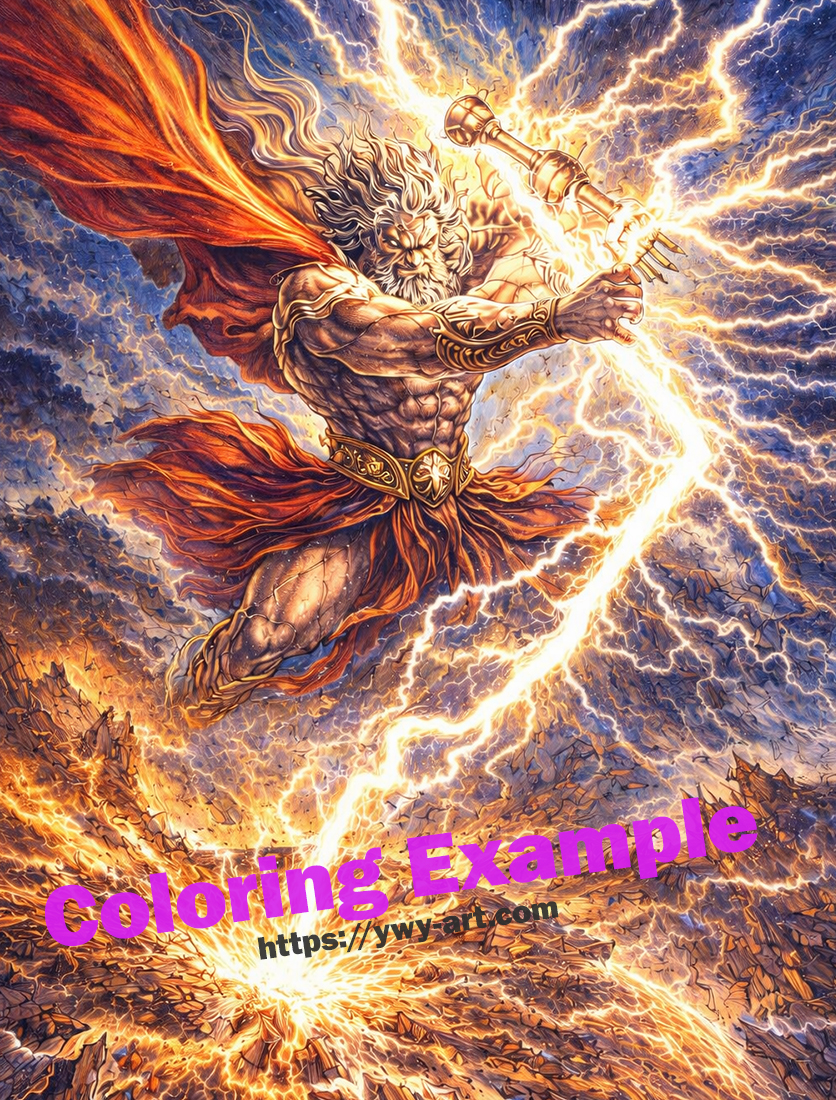
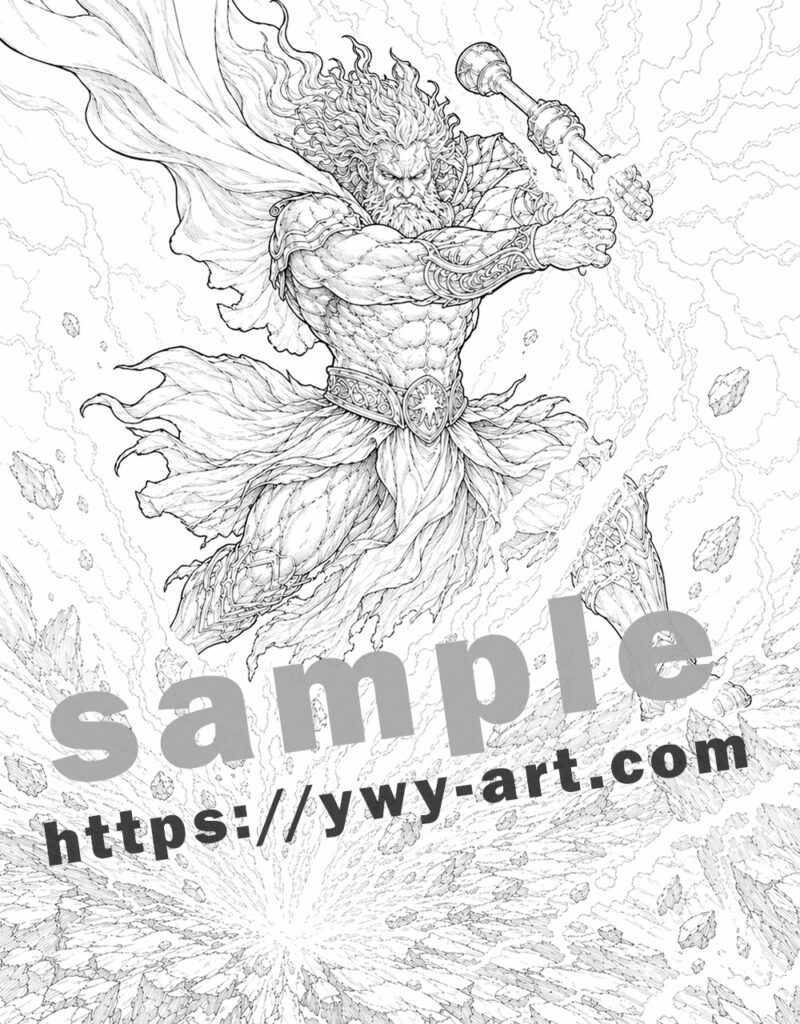
Start with the lightning as the brightest element, leaving core areas nearly white. Build outward with yellow and orange to create a radiant effect.
Use darker tones in the sky and ground to create strong contrast, allowing the lightning to stand out as the focal point.
Layer colors gradually rather than pressing hard at once, especially when working with colored pencils, to maintain depth and texture.
Japanese Summary
ゼウスは神々の王として、ティタノマキアの最終局面において戦いを終わらせる存在として描かれる。このシーンは戦闘の一部ではなく、決着そのものを表している。
彼の雷は攻撃ではなく裁定であり、戦いの結果を確定させる力として機能する。ここではもはや戦うのではなく、終わらせるという役割が強調されている。
裁きの瞬間
この場面はティタノマキアの終点であり、すべての戦闘が収束する瞬間である。ゼウスの一撃は過程ではなく結果を生む。
そのため、このシーンは戦いの途中ではなく、決着の象徴として位置付けられる。
戦闘を超えた存在
ゼウスはここで敵と対等に戦っているわけではない。すでに優位に立ち、その力を確定させている。
この構図により、彼は戦闘者ではなく支配者として描かれる。
終焉の確定
ゼウスの雷が落ちた瞬間、戦いは続かない。抵抗は終わり、結果だけが残る。
これはティタノマキアにおける最終段階を象徴する重要なシーンである。
塗りのポイント
雷の中心は塗らずに白を残し、その周囲に黄色やオレンジを重ねることで発光を表現する。コントラストを意識することで迫力が増す。
背景は暗めに仕上げることで、ゼウスの存在感と雷の明るさを強調できる。
Explore Our Coloring Book Series
Explore more powerful mythological scenes and divine beings in our coloring book series.
Each illustration is designed to capture a defining moment of myth and bring it to life through your colors.
Step into the world of mythology..
Available on Amazon Titanomachia: The War Before the Olympians Open in a new tabArtwork Collection
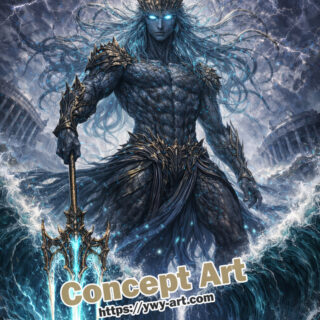
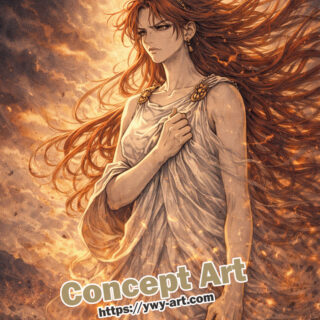
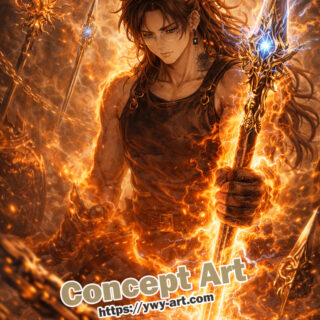
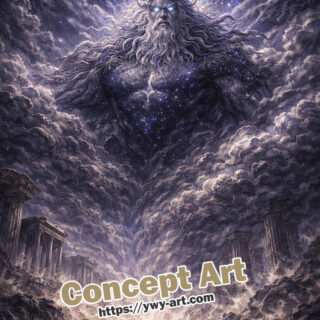






Project Mythos Connection
Follow the figures, places, events, and symbols connected with this coloring artwork.
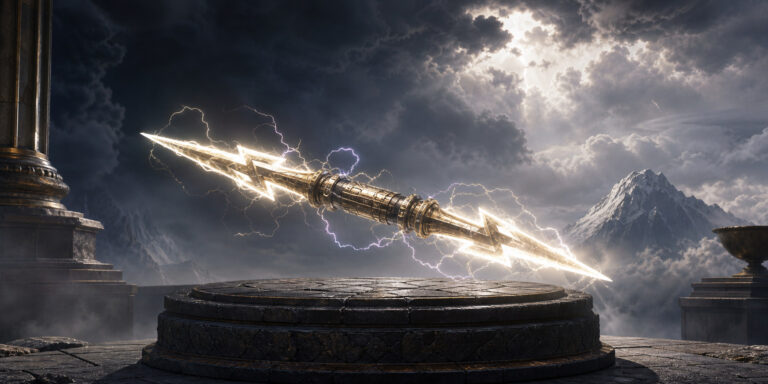 ArtifactThunderboltThe Thunderbolt is the signature weapon of Zeus, forged by the Cyclopes after he released them from Tartarus. It helped break the stalemate of the Titanomachy and became the enduring sign of heavenly power, divine judgment, and Zeus’s right to rule.Read the mythology entry
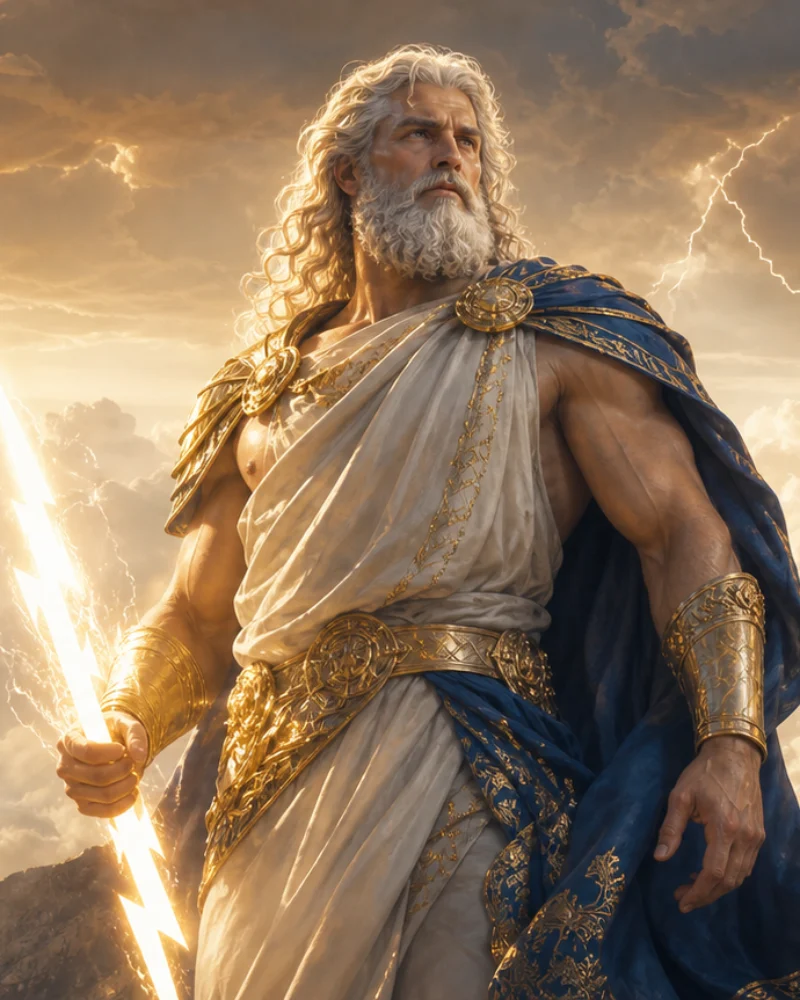 CharacterZeusZeus is king of the Olympian gods and ruler of the sky and thunder. He established the Olympian order after defeating Cronus and the Titans.Read the mythology entry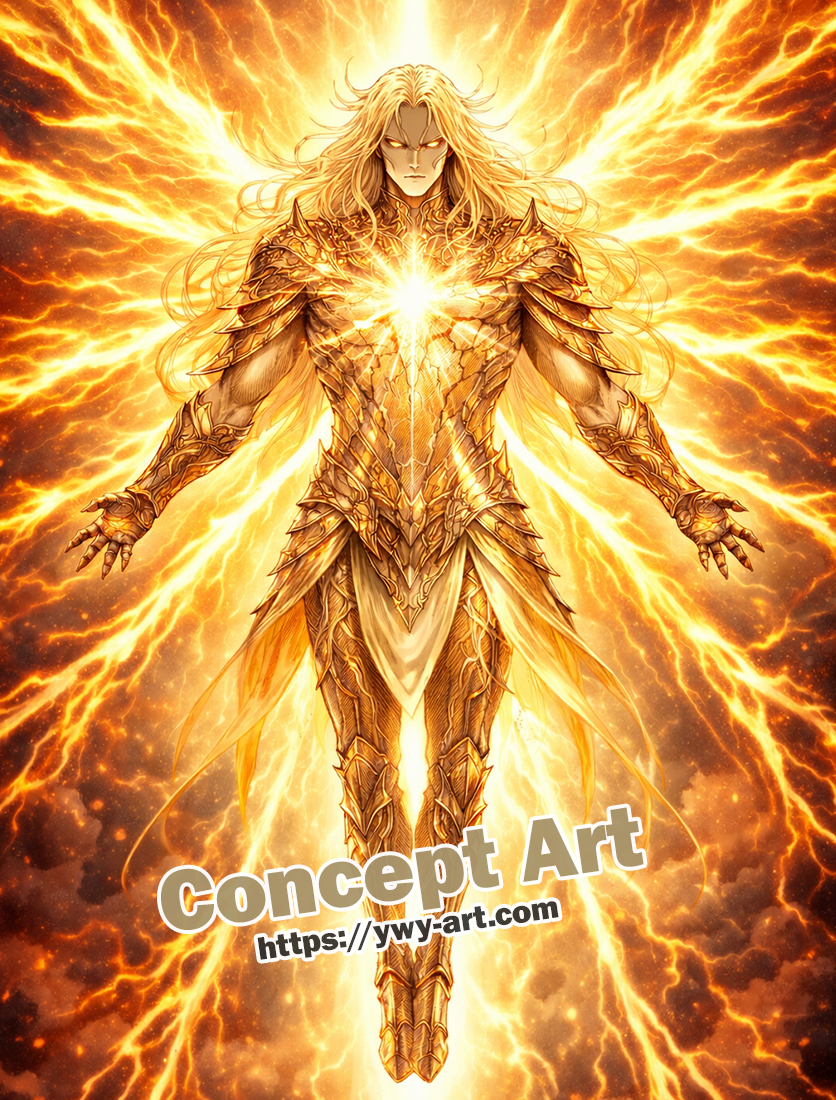
コメント