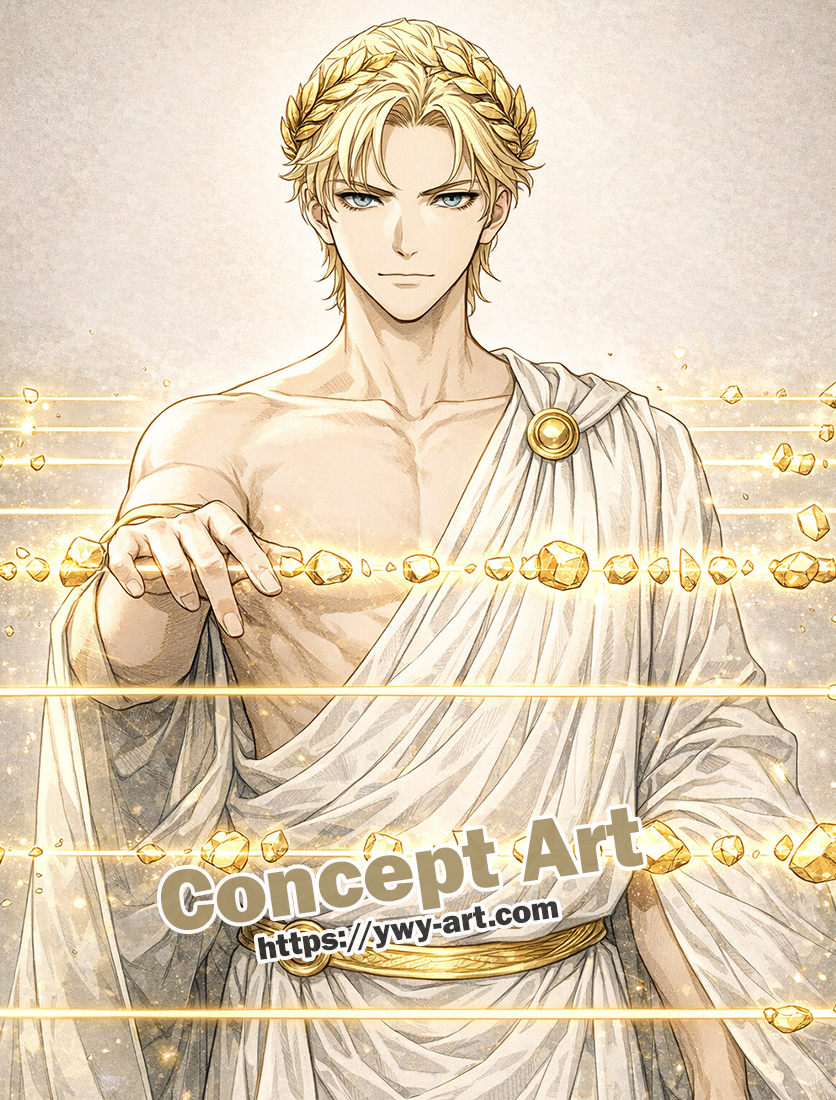
Apollo — Divine Order
He does not create chaos. He removes it.
Basic Profile
| Name | Apollo |
|---|---|
| Mythology | Greek Mythology |
| Gender | Male |
| Region | Ancient Greece |
| Era | Olympian Era |
| Domain | Light, Order, Harmony, Prophecy |
| Symbol | Sunlight, Lyre, Laurel Wreath, Bow |
| Culture / Religion | Ancient Greek Religion |
| Main Role | God of Divine Order and Harmony |
| Rank | Olympian |
| Position in Titanomachy | Architect of structural balance, ensuring the Olympian system remains stable |
| Associated Deity | Zeus, Artemis, Hermes |
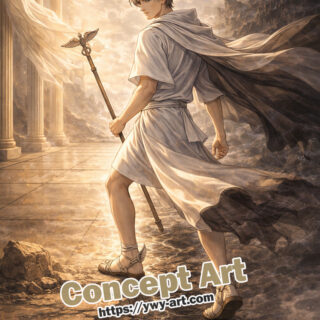
| Common Depiction | Idealized youth with laurel crown and radiant presence |
| Alignment | Lawful Neutral |
| Creative Reference | God who aligns and restores structure through absolute control of order |
Overview
Apollo is often recognized as a god of light, but his true domain lies deeper than illumination. He represents order—the invisible structure that defines reality itself. Where chaos spreads and distorts, Apollo does not fight it directly. He corrects it. He aligns it. He restores balance through precision.
Within the Titanomachy, this role becomes essential. The war between Titans and Olympians is not merely a collision of power, but a breakdown of structure. Forces that once held the world together begin to fracture. Apollo stands as the counterforce, not through destruction, but through reconstruction. He ensures that the world does not collapse under the weight of its own instability.
Characteristics
- Calm, controlled, and unwavering in judgment
- Sees disorder as something to be corrected, not fought
- Embodies harmony, symmetry, and balance
- Acts with precision rather than emotion
- Represents the inevitability of structure over chaos
Symbolism and Meaning
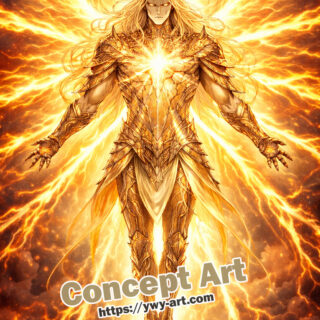
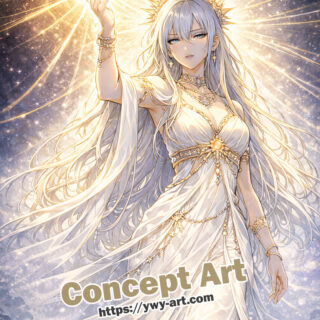
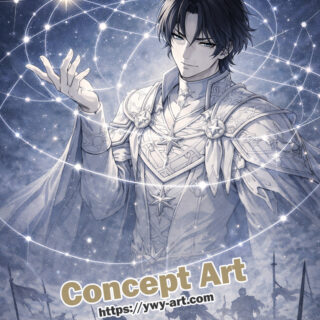
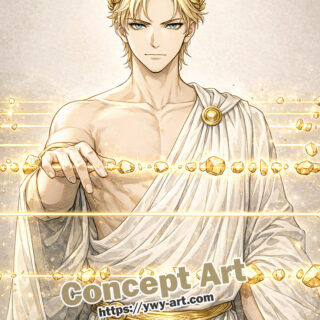
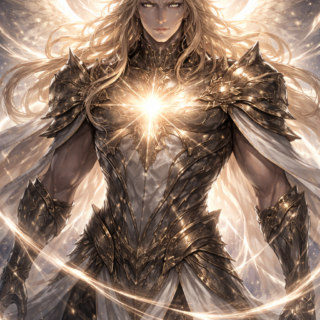
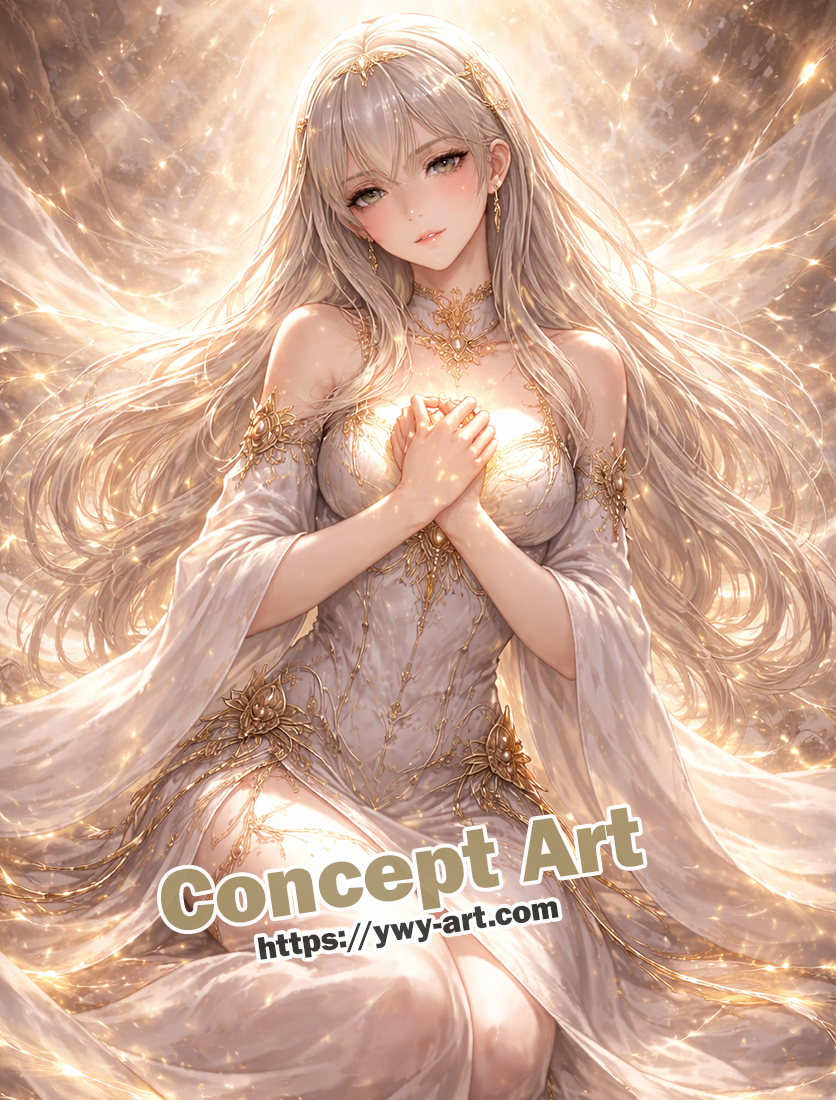
The straight lines of light in this artwork are not simply visual effects. They represent alignment—forces being brought into correct position. The floating fragments, once scattered, now form a coherent system under Apollo’s influence. This is the essence of divine order: nothing is destroyed, only rearranged into its proper state.
In the context of the Titanomachy, this symbolism carries significant weight. The Titans represent overwhelming, often unregulated power. Apollo does not oppose this with greater force. Instead, he introduces limits, structure, and clarity. By doing so, he transforms chaos into something that can be contained and understood.
Quick Creative Reference
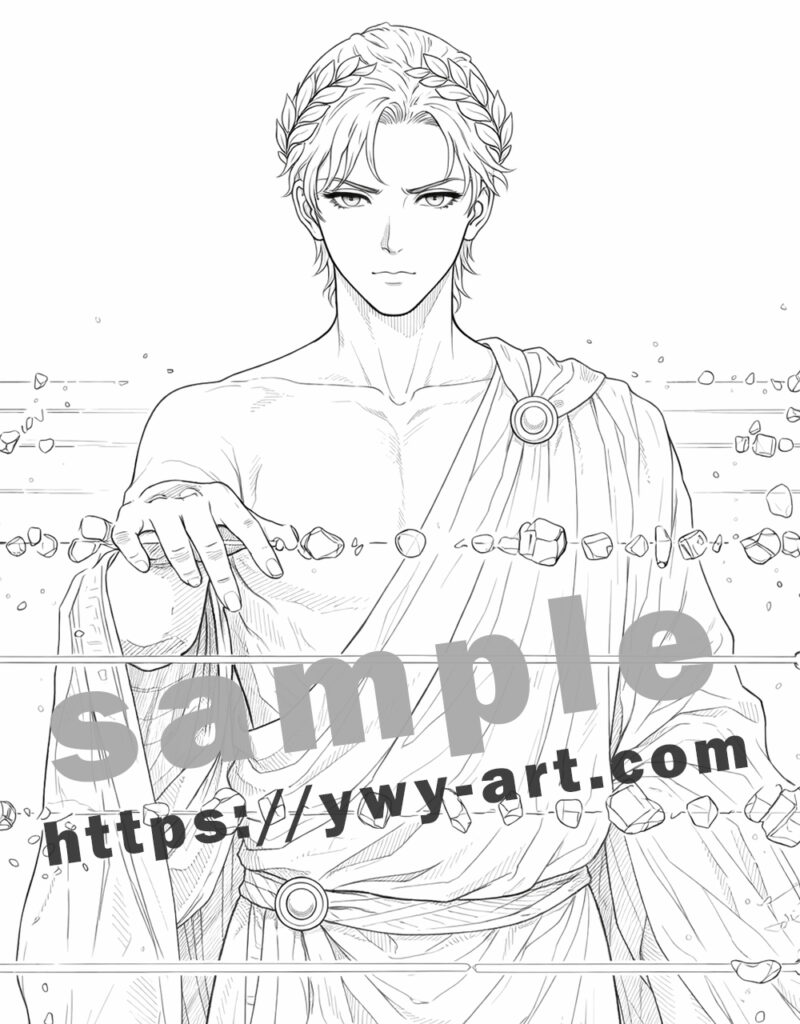
| Best For | Order vs chaos themes, structural control, divine balance |
|---|---|
| Visual Keywords | straight light lines, aligned fragments, laurel crown, symmetry, golden light |
| Mood | Calm, precise, authoritative |
| Useful Themes | order, balance, correction, harmony |
Compare with Similar Deities
| Name | Mythology | Main Domains | Overall Image |
|---|---|---|---|
| Ares | Greek | War, Violence | Impulsive force driven by conflict and aggression |
| Ra | Egyptian | Sun, Creation | Source of life and light, more primal and sustaining |
| Mitra | Indo-Iranian | Order, Contracts | Guardian of agreements and structured relationships |
The Nature of Order
Order is often misunderstood as rigidity, but Apollo represents something far more dynamic. True order is not static. It adapts, recalibrates, and maintains balance even as conditions change. This flexibility is what allows it to endure.
In this scene, the fragments are not frozen. They are moving into place. This suggests that order is an active process, constantly maintained rather than permanently established.
Correction Instead of Conflict
Where many gods would respond to chaos with force, Apollo takes a different approach. He does not escalate conflict. He resolves it by removing imbalance. This makes his power subtle, but incredibly effective.
This concept plays a critical role in the Titanomachy. While battles rage on the surface, Apollo operates beneath that layer, ensuring that the structure of reality does not fracture beyond repair.
Harmony as Power
Harmony is not weakness. It is the result of perfect alignment. Apollo’s domain includes music and prophecy, both of which rely on precise relationships between elements. This same principle extends to the battlefield.
By aligning forces correctly, he ensures that outcomes follow a predictable and stable path. This is power expressed not through dominance, but through control.
Light as Structure
Light in Apollo’s domain is not merely illumination. It reveals structure. It defines edges, clarifies form, and removes ambiguity. In this sense, light becomes a tool of order.
Through this interpretation, the glowing lines are not just beams. They are boundaries, guides, and corrections applied to the world itself.
Coloring Variations
- Divine Gold: White and gold tones emphasizing purity, light, and divine authority
- Balanced Radiance: Soft gold with subtle gray shadows to enhance depth and realism
- Broken Order: Muted gold with darker accents to suggest instability or disruption
Coloring Tips
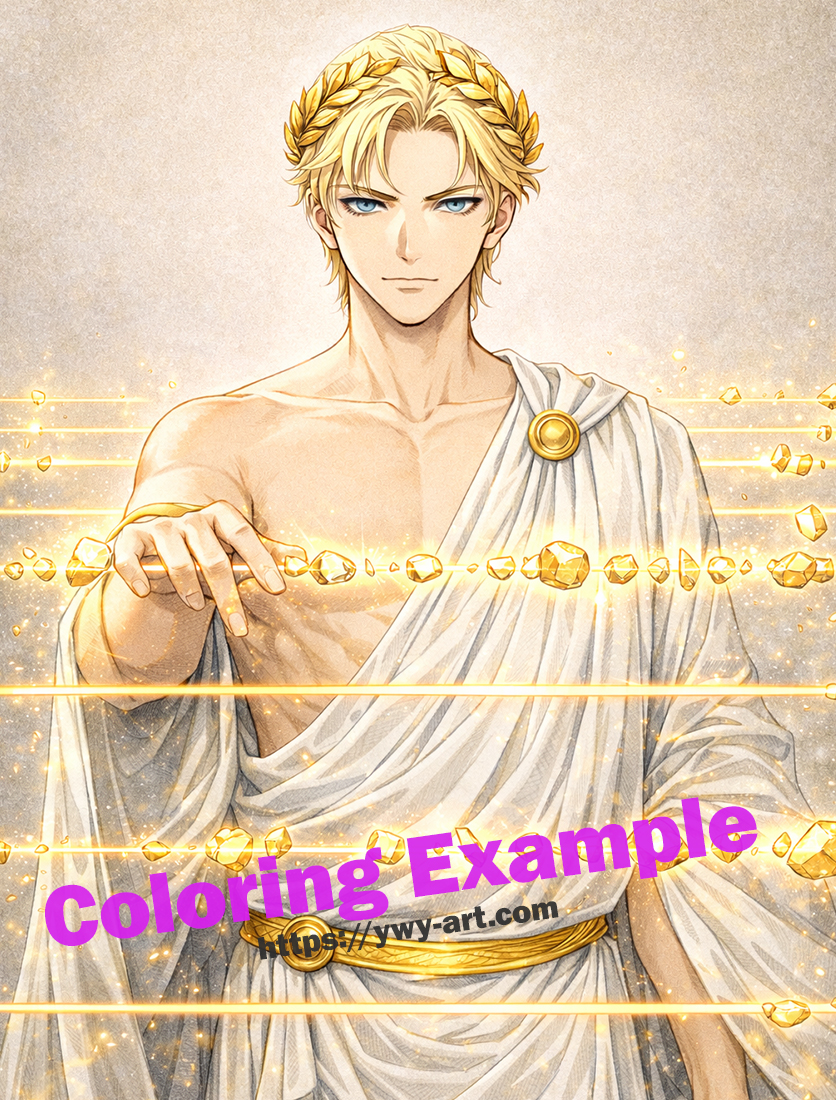
Use clean, bright tones for the main figure to emphasize clarity and control. Avoid muddy colors, as they weaken the sense of order.
Keep the light lines sharp and bright. This contrast is essential to maintaining the visual structure.
Apply gradual shading to the fabric to create depth without overwhelming the composition. Smooth transitions reinforce the concept of harmony.
Japanese Summary
アポロンは光の神として知られるが、その本質は「秩序の維持」にある。混沌を力で押さえつけるのではなく、正しい位置へ整えることで世界を安定させる存在である。
ティタノマキアにおいては、単なる戦力ではなく「構造の維持者」として機能する。戦いによって崩れかけた世界を再構築し、オリュンポス側の基盤を支える役割を担う。
秩序とは何か
秩序は固定された状態ではなく、常に調整され続けるプロセスである。アポロンはその調整を行う存在である。
この作品では、その動きが可視化されている。
戦いの裏側の力
戦場の表面では力と力がぶつかるが、その裏では構造が崩れたり整えられたりしている。
アポロンはその裏側を支配する。
光の意味
光は単なる明るさではなく、形を明確にする力を持つ。アポロンの光は世界を正しく見せるためのものでもある。
それが秩序の維持に繋がる。
塗りのポイント
白と金をベースにすることで、神聖さと秩序感を表現できる。
光のラインは最も明るく塗り、他との差をはっきりさせると効果的。
Explore Our Coloring Book Series
Discover a world where even chaos must submit to order.
Explore characters who define the structure of reality itself.
Step into the world of mythology..
Available on Amazon Titanomachia: The War Before the Olympians Open in a new tab
コメント