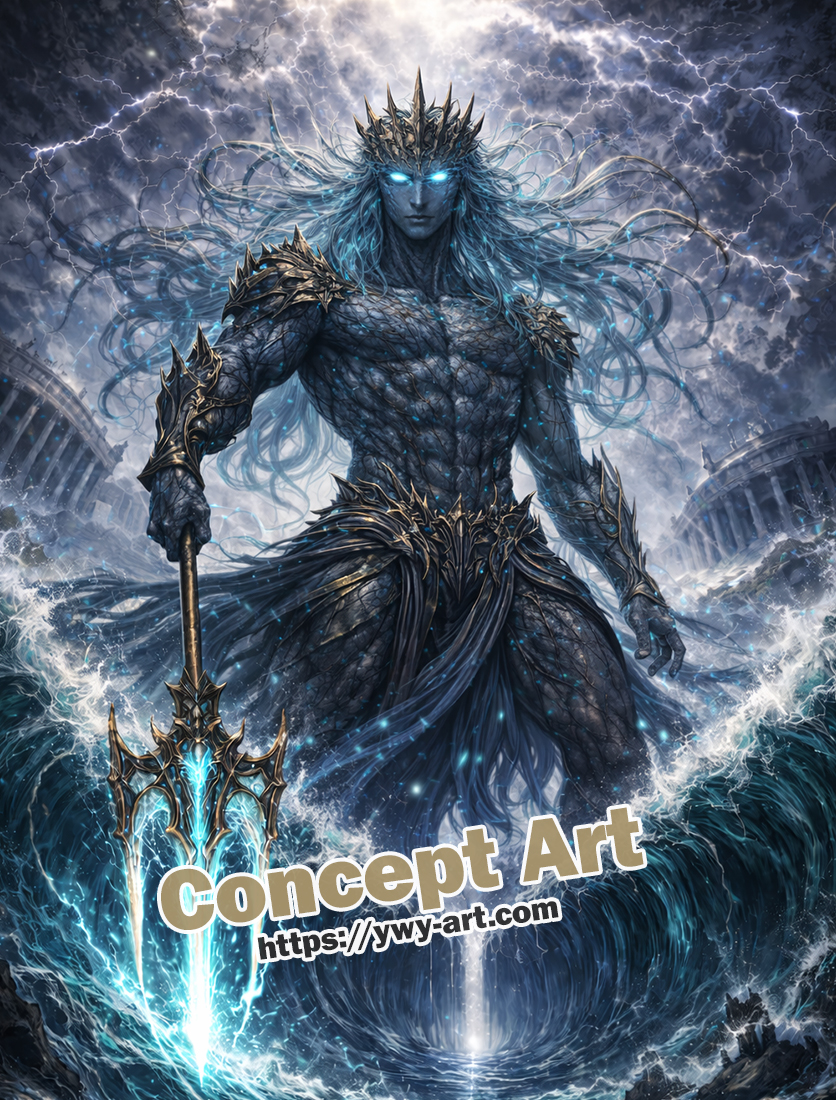
Poseidon — Cataclysm of the Seas
A presence that does not announce itself, yet reshapes the world the moment it stirs.
Basic Profile
| Name | Poseidon |
|---|---|
| Mythology | Greek Mythology |
| Gender | Male |
| Region | Ancient Greece |
| Era | Mythological Age |
| Domain | Sea, Earthquakes, Storms |
| Symbol | Trident, Waves, Horses |
| Culture / Religion | Ancient Greek Religion |
| Main Role | God of the Sea and Earth-Shaker |
| Rank | Olympian God |
| Position in Titanomachy | Ally of the Olympians |
| Associated Deity | Zeus, Hades |
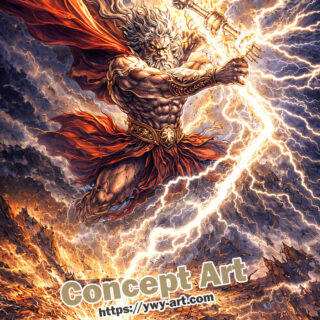
| Common Depiction | Bearded god with trident controlling the sea |
| Alignment | Neutral / Force of Nature |
| Creative Reference | Ocean as an uncontrollable, sentient force |
Overview
Poseidon is not merely a god who rules the sea. He is the sea when it chooses to move. In mythology, he governs not only the oceans but also earthquakes, representing a force that shapes both surface and depth. His presence is less about intention and more about inevitability, a natural authority that cannot be negotiated or resisted.
In the context of the Titanomachy, Poseidon does not behave like a typical warrior. While others clash directly, he alters the battlefield itself. The oceans respond to him, the ground trembles beneath unseen pressure, and entire landscapes shift before the conflict even reaches its peak. His role is not to fight within the war, but to define its environment.
Characteristics
- Embodies the sea as a living, uncontrollable force
- Maintains emotional distance, acting with inevitability rather than impulse
- Associated with both creation and destruction through water
- Represents deep, unseen power beneath the surface
- Alters the battlefield itself rather than engaging directly
Symbolism and Meaning
Poseidon symbolizes forces that exist beyond human control. The sea, while often calm, holds immense power beneath its surface, capable of reshaping entire civilizations. This duality reflects a deeper theme of hidden strength, where stillness does not imply safety but rather suppressed magnitude.
Within the Titanomachy, his symbolism becomes even more pronounced. The splitting ocean and rising ruins represent the collapse of old structures and the emergence of a new order. Poseidon does not simply support the Olympians. He ensures that the world itself is ready to be rewritten.
Quick Creative Reference
| Best For | Depicting overwhelming, environmental power |
|---|---|
| Visual Keywords | Split ocean, abyss, storm, ruins, trident |
| Mood | Silent, overwhelming, inevitable |
| Useful Themes | Control, inevitability, destruction, transformation |
Compare with Similar Deities
| Name | Mythology | Main Domains | Overall Image |
|---|---|---|---|
| Zeus | Greek | Sky, Thunder | Authority, command, divine leadership |
| Hades | Greek | Underworld | Stillness, inevitability, unseen control |
| Njord | Norse | Sea, Wind | Calm prosperity, balanced ocean force |
The Ocean Before the War
Before the Titanomachy erupts into full conflict, the world enters a state of tension. Poseidon stands at the edge of this moment, not preparing for battle in a conventional sense, but preparing the world itself. The seas begin to react long before the first clash.
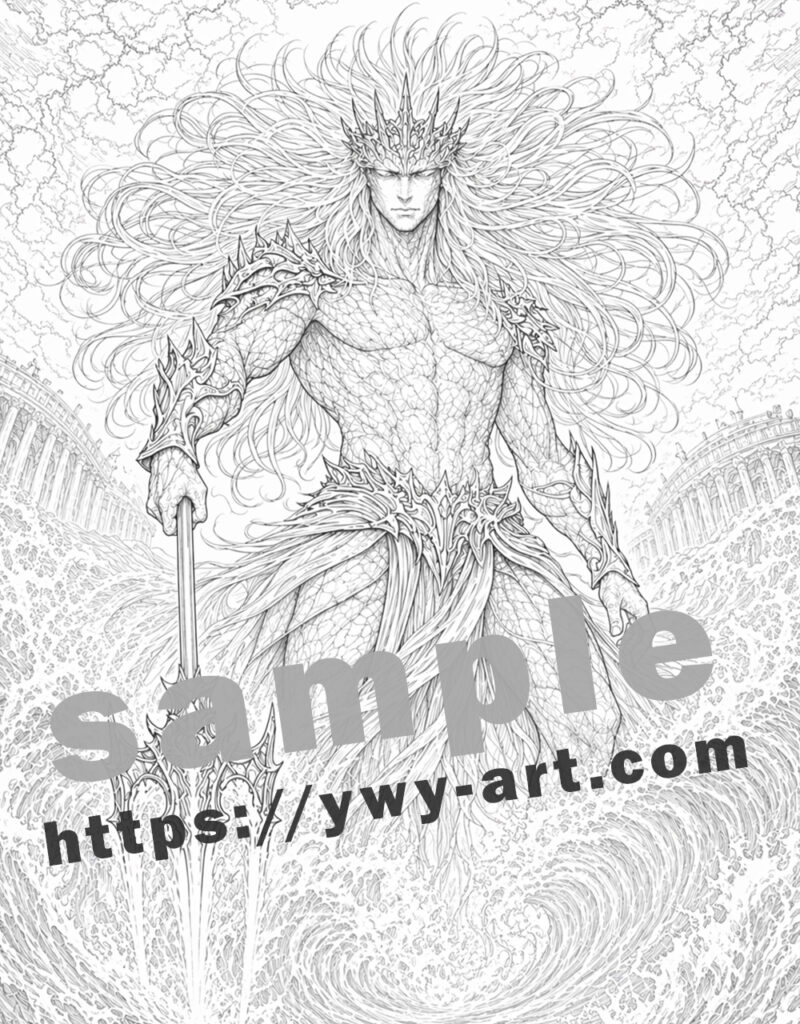
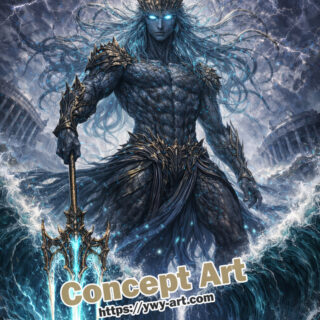
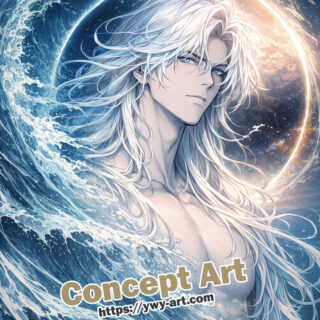
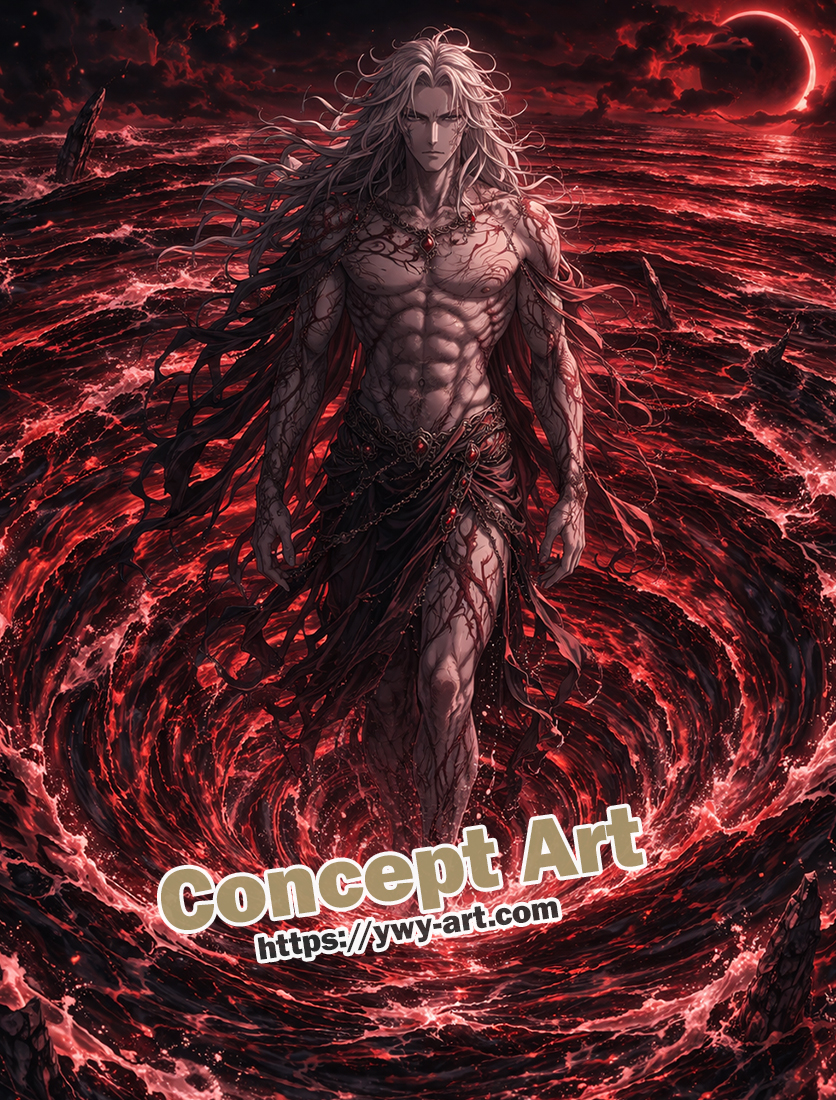
The scene depicted captures that exact threshold. The ocean splits, revealing a void beneath, as if reality itself is being pulled apart. This is not destruction for its own sake. It is preparation for something irreversible.
Power Without Emotion
Unlike many gods who act through anger or ambition, Poseidon operates without visible emotion. His actions are not driven by conflict, but by certainty. He does not rush, hesitate, or react. He simply acts, and the world follows.
This absence of emotion is what defines his presence. It creates a sense of unease, as there is no negotiation with something that does not feel. The ocean does not argue. It overwhelms.
The Role in Titanomachy
During the Titanomachy, Poseidon aligns with the Olympians, but his role is unique. He is not positioned as a frontline combatant, but as a force that reshapes the conditions of war. By controlling the sea and destabilizing the land, he ensures that the Titans cannot maintain stability.
The split ocean in this artwork symbolizes that advantage. The battlefield itself becomes hostile, unpredictable, and impossible to control. In this way, Poseidon contributes not through direct combat, but through environmental domination.
Embodiment of Cataclysm
This depiction emphasizes Poseidon as more than a deity. He is a phenomenon. The cracks in the sea, the rising ruins, and the storm above all suggest a world being rewritten in real time.
He is not a figure within the disaster. He is the disaster itself. This is the essence of “Cataclysm of the Seas.”
Coloring Variations
- Deep Abyss Blue: Use dark blues and blacks to emphasize depth and mystery beneath the ocean surface.
- Stormlight Contrast: Combine cold blues with bright white lightning for dramatic tension.
- Ancient Ruins Gold: Add muted gold tones to ruins to highlight lost civilizations beneath the sea.
Coloring Tips
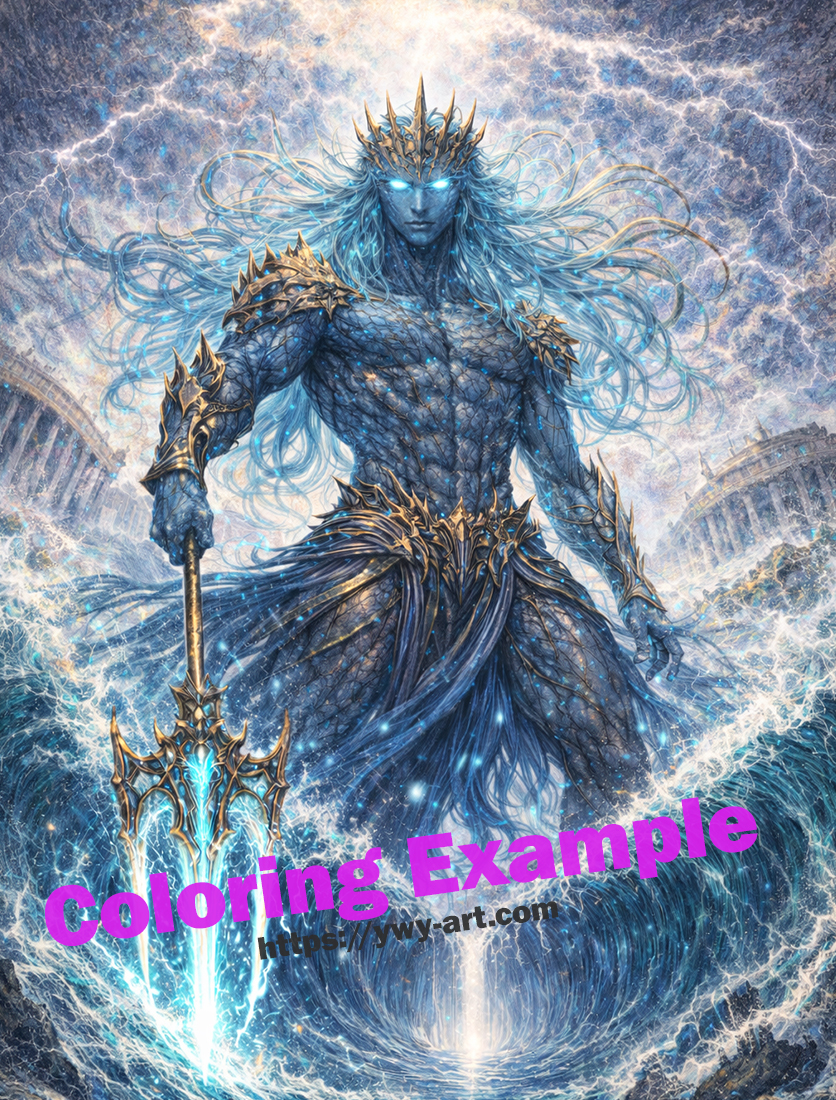
Focus on contrast between the character and the environment. Poseidon should feel integrated with the sea, not separated from it. Blending textures between skin and water will enhance this effect.
Use layered strokes to create depth in the ocean. Avoid flat coloring, as the scene relies on movement and pressure within the water.
Lighting should guide the composition. The glow from the trident and the abyss can act as focal points, pulling the viewer’s attention through the scene.
Japanese Summary
ポセイドンは単なる海の神ではなく、海そのものが意思を持って動いた存在として描かれるべき神である。ティタノマキアにおいても彼は戦うというより、戦場そのものを変化させる役割を担っている。
本シーンでは海が割れ、深淵が露わになることで、戦いが始まる前から世界が崩れ始めていることを表現している。これは怒りではなく、不可避の変化そのものである。
戦いの前兆としての海
ティタノマキアでは神々の戦いが中心となるが、その前段階として世界そのものが歪み始める。この歪みを象徴するのがポセイドンの力であり、海の変化は戦いの始まりを告げる兆候となる。
海が割れるという現象は単なる演出ではなく、秩序が崩壊し新たな時代へ移行する瞬間を示している。
感情を持たない力
ポセイドンは怒りや憎しみといった感情で動く存在ではない。むしろ感情を排した「現象」として描かれることで、より神格的な存在感を持つ。
この無機質さが、見る者に対して圧倒的な不安と畏怖を与える要素となっている。
存在そのものが破壊
このビジュアルでは、ポセイドンは戦う存在ではなく、災害そのものとして描かれている。海の崩壊、遺跡の浮上、空の荒れはすべて彼の存在と直結している。
彼が動くということは、すなわち世界が変わるということである。
塗りのポイント
青系のグラデーションを使いながら、深さと圧を表現すると世界観が強く出ます。特に海の奥行きは複数の色を重ねて表現するのが効果的です。
光の使い方が重要で、トライデントや深淵からの発光を強調すると全体の構図が引き締まります。
Explore Our Coloring Book Series
Discover more powerful gods and mythological beings through our detailed coloring book series.
Each illustration invites you to explore a world where myth and art become one.
Browse the full collection to experience the complete Titanomachy lineup.
Step into the world of mythology..
Available on Amazon Titanomachia: The War Before the Olympians Open in a new tab
コメント