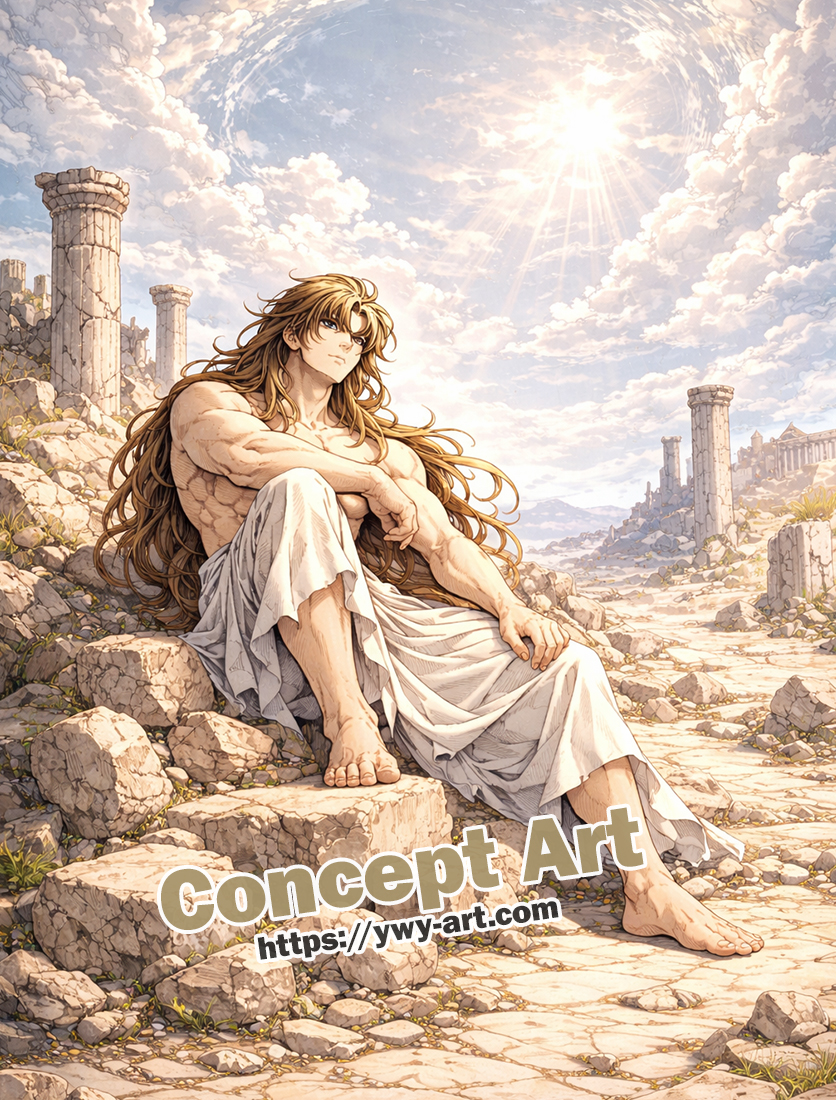
Atlas – The Titan Who Endures Before the Fall
He does not move. He does not speak. And yet, the weight of what is to come already surrounds him.
Basic Profile
| Name | Atlas |
|---|---|
| Mythology | Greek Mythology |
| Gender | Male |
| Region | Ancient Greece |
| Era | Mythological Age |
| Domain | Endurance, Strength, Burden |
| Symbol | Globe, Pillar, Ruins |
| Culture / Religion | Ancient Greek Religion |
| Main Role | Titan Leader, Bearer of Cosmic Burden |
| Rank | Titan |
| Position in Titanomachy | Leader of the Titans against the Olympians |
| Associated Deity | Cronus, Zeus |
| Common Depiction | Muscular figure supporting the heavens or standing among ruins |
| Alignment | Titan (Pre-Olympian Order) |
| Creative Reference | Silent endurance, pre-war tension, inevitable fate |
Overview
Atlas is one of the most powerful Titans, often remembered as the figure condemned to hold up the sky for eternity. But that punishment comes after the war. In the time before the Titanomachy reaches its end, Atlas is not yet a symbol of burden, but a leader preparing for an inevitable conflict.
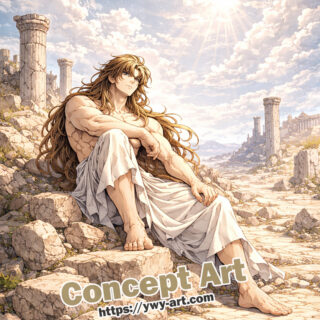
This scene captures a quiet moment before that fate is sealed. Surrounded by ruins and the remnants of a world already beginning to fracture, Atlas sits in stillness. He is not resting, nor retreating. He is thinking. The war has not yet begun in full, but its outcome already casts a shadow over everything. His gaze toward the sky reflects not hope, but understanding. He knows what is coming.
Characteristics
- Immense physical strength combined with mental endurance
- Calm, composed, and rarely driven by emotion
- A leader who carries responsibility without display
- Unwavering presence even in the face of inevitable defeat
- Symbol of burden, not chosen but accepted
Symbolism and Meaning
Atlas represents the concept of enduring what cannot be avoided. In later myths, he carries the heavens, but even before that, his role is defined by the willingness to bear weight others cannot. This scene reflects that transition point, where burden has not yet taken form, but is already understood.
The ruins surrounding him are not just remnants of the past, but foreshadowing. The Titanomachy is not merely a battle of strength, but a collapse of an entire order. Atlas, sitting among broken pillars, embodies the moment before destruction becomes reality. He is not fighting yet, but he has already accepted the cost.
Quick Creative Reference
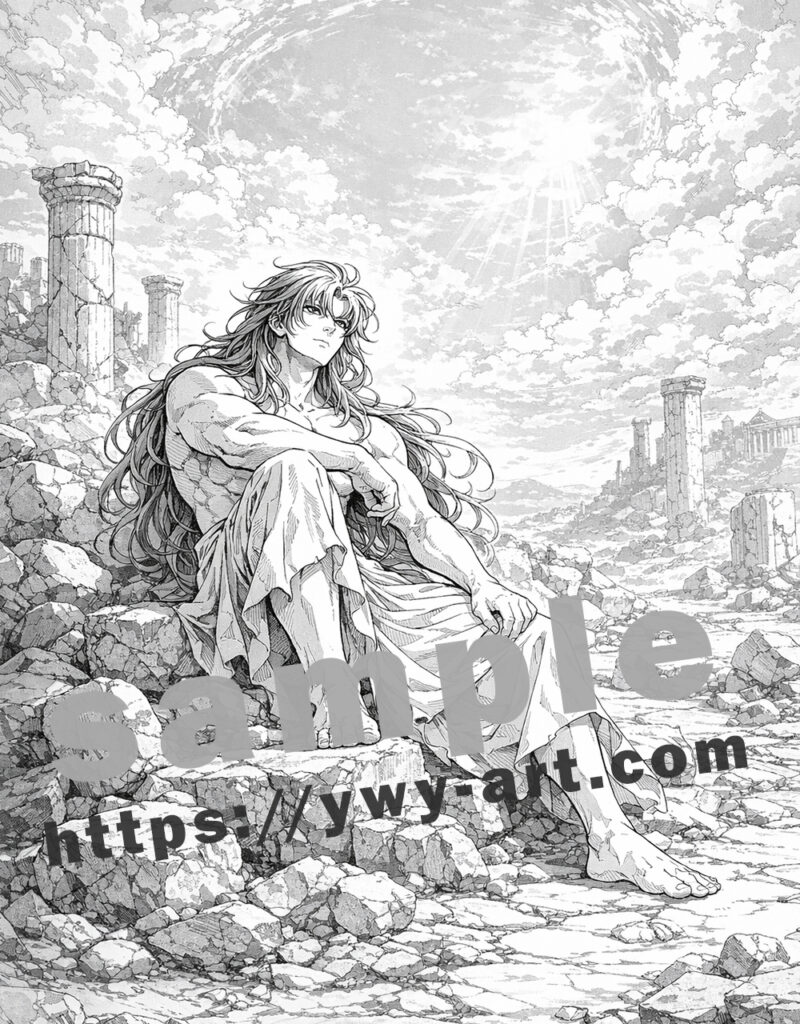
| Best For | Pre-war tension, silent strength, contemplative figures |
|---|---|
| Visual Keywords | Ruins, sky, stillness, stone, light, distance |
| Mood | Quiet, heavy, inevitable |
| Useful Themes | Fate, endurance, burden, acceptance |
Compare with Similar Deities
| Name | Mythology | Main Domains | Overall Image |
|---|---|---|---|
| Cronus | Greek | Time, Authority | Dominant, ruling, fearful of downfall |
| Zeus | Greek | Sky, Power | Active ruler, forceful and decisive |
| Prometheus | Greek | Knowledge, Sacrifice | Defiant, suffering for a cause |
The Moment Before Burden
This scene does not show Atlas carrying the heavens, but the moment before such a fate becomes possible. The Titanomachy is approaching, and the tension is not expressed through action, but through stillness.
Atlas is not unaware. His posture suggests acceptance rather than resistance. The war is not just about victory or defeat, but about what each being will become after it ends.
Silence in the Face of War
Unlike other Titans who might prepare through movement or aggression, Atlas remains still. This stillness is not weakness, but clarity. He understands that no preparation can change what is coming.
In the context of the Titanomachy, this makes Atlas unique. He does not seek to control the outcome. He prepares to endure it.
The Collapse of the Old Order
The broken pillars and scattered stones reflect more than physical destruction. They symbolize the end of the Titan era, already visible even before the war fully unfolds.
Atlas sitting among them suggests that he is already part of what will be lost. And yet, he remains present, grounded, and unshaken.
Gaze Toward the Sky
The sky above is not simply a backdrop, but a silent presence. It represents both the domain of the coming Olympians and the future burden Atlas will carry.
His gaze toward it is not hopeful. It is knowing. He does not question what is above. He accepts that it will soon define him.
Coloring Variations
- Golden Ruins: Warm sunlight with golden stone and soft blue sky to emphasize a fading era
- Faded World: Desaturated tones with gray-blue sky to create a melancholic atmosphere
- Divine Contrast: Bright sky with darker foreground to highlight the separation between Atlas and the heavens
Coloring Tips
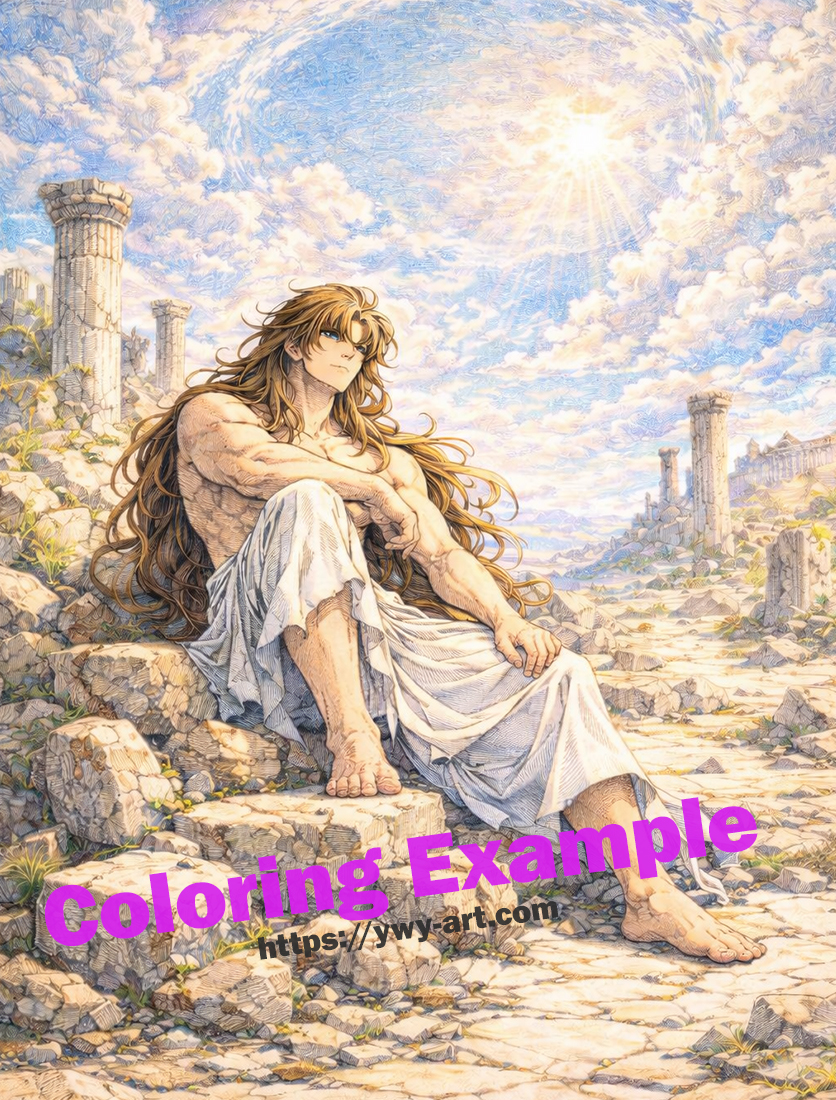
Use soft gradients in the sky to create depth, blending light blues into warm highlights near the sun. This helps draw the eye upward, following Atlas’s gaze.
For the stone ruins, avoid flat gray. Mix warm beige, subtle greens, and light browns to create natural variation and realism.
Keep the character slightly more defined than the background. Stronger contrast on Atlas will ensure he remains the focal point of the scene.
Japanese Summary
アトラスは、ティタノマキアにおいてティタン側の中心的存在として戦いに臨む神であり、後に天を支える罰を受けることで知られる存在である。
このシーンでは、その運命が決定する前、戦いの直前における静かな時間が描かれている。崩れた遺跡の中で座る姿は、すでに訪れる未来を理解しているかのようである。
戦いの前の静寂
アトラスは戦いに向けて動くこともなく、ただ静かに空を見つめている。この静けさは準備不足ではなく、すでにすべてを理解していることの表れである。
ティタノマキアは単なる力の衝突ではなく、時代の終焉を意味する戦いであり、彼はその重みを感じ取っている。
崩壊の予兆
周囲の遺跡は、まだ起きていないはずの崩壊を先取りするかのように描かれている。これはティタンの時代が終わりに向かっていることを象徴している。
その中で座るアトラスは、すでにその運命を受け入れている存在として描かれている。
空を見る意味
彼が見上げる空は、これから訪れるオリュンポスの支配、そして自身の未来を象徴している。
そこには希望ではなく、受容がある。彼はすでに、自らが背負うことになるものを理解している。
塗りのポイント
空はグラデーションを意識して塗ることで奥行きが生まれ、視線誘導が自然に行える。明るさを中心に構成すると効果的である。
石の質感は単色で塗らず、複数の色を重ねることで自然な風合いが出る。人物とのコントラストを意識すると仕上がりが引き締まる。
Explore Our Coloring Book Series
Discover more powerful mythological figures brought to life through unique compositions and storytelling.
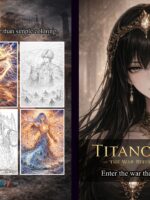
Explore the full Titanomachy series and experience each moment through your own colors.
Step into the world of mythology..
Available on Amazon Titanomachia: The War Before the Olympians Open in a new tab






コメント