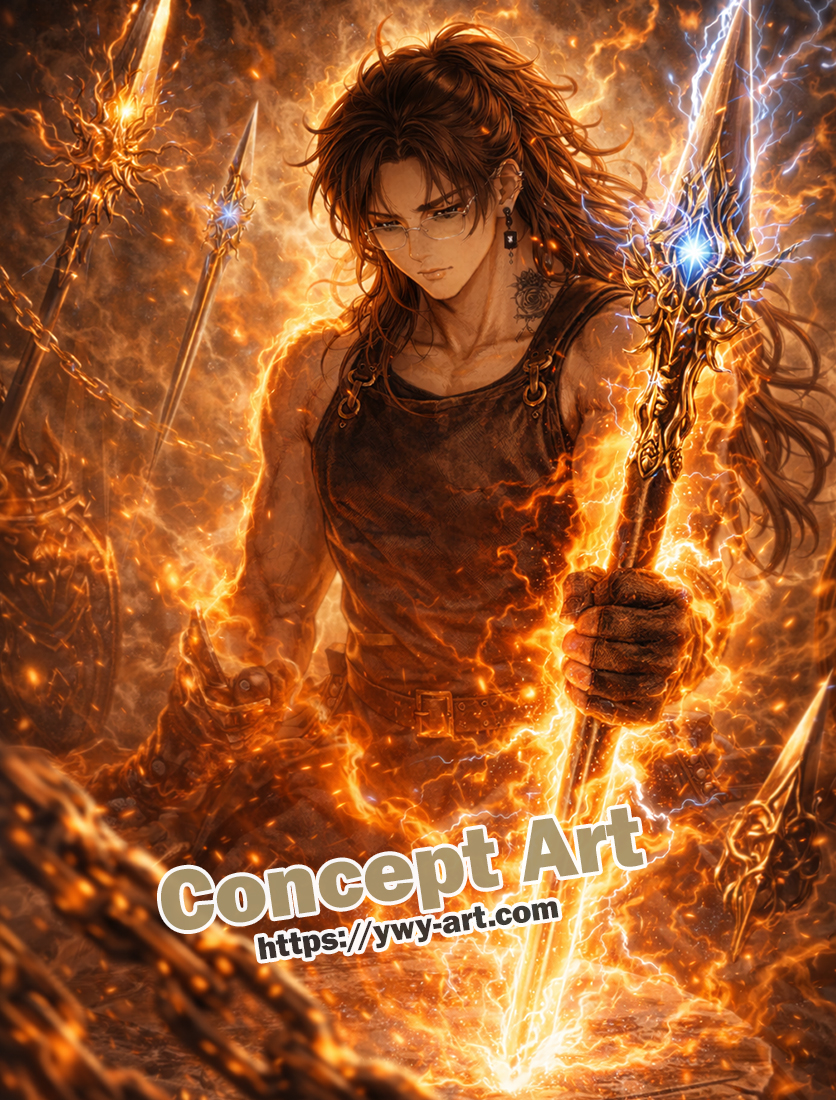
Hephaestus — Divine Creation: Perfected Power
The hammer has already fallen. What remains is not the act of forging, but the moment where creation itself becomes absolute.
Basic Profile
| Name | Hephaestus |
|---|---|
| Mythology | Greek Mythology |
| Gender | Male |
| Region | Ancient Greece |
| Era | Olympian Era |
| Domain | Forge, Fire, Craftsmanship, Creation |
| Symbol | Hammer, anvil, flame, divine weapons |
| Culture / Religion | Ancient Greek Religion |
| Main Role | Creator of divine weapons and artifacts |
| Rank | Olympian Twelve |
| Position in Titanomachy | Architect of victory through divine weapon completion |
| Associated Deity | Zeus, Athena, Hera |
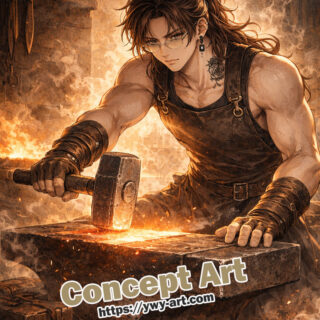
| Common Depiction | Blacksmith god surrounded by fire and crafted weapons |
| Alignment | Olympian |
| Creative Reference | Completion, precision, controlled flame, divine craftsmanship |
Overview
Hephaestus is often known as the god who forges weapons, but this depiction goes beyond that familiar role. Here, he is not working. He is finishing. The weapon is already formed, and what remains is the final act of creation—where intent, energy, and purpose align into something irreversible.
In the context of the Titanomachy, this moment carries immense weight. While Zeus prepares to strike and the battlefield tightens under primordial pressure, Hephaestus ensures that when the gods act, their power is complete. This scene represents the silent turning point where victory is no longer uncertain.
Characteristics
- Embodies completion rather than process
- Controls flame with precision instead of force
- Creates weapons as extensions of divine will
- Acts before battle to determine its outcome
- Represents transformation from labor to perfection
Symbolism and Meaning
Hephaestus symbolizes the transition from effort to inevitability. His flames do not merely heat—they refine, condense, and perfect. In this form, creation is no longer about making something new, but about finalizing something destined to exist.
Within the Titanomachy, this symbolism becomes decisive. The war is not won only through strength or strategy, but through preparation. The weapons he completes are not just tools, but the conditions that allow victory to happen. His role shifts the narrative from chaos to certainty.
Quick Creative Reference
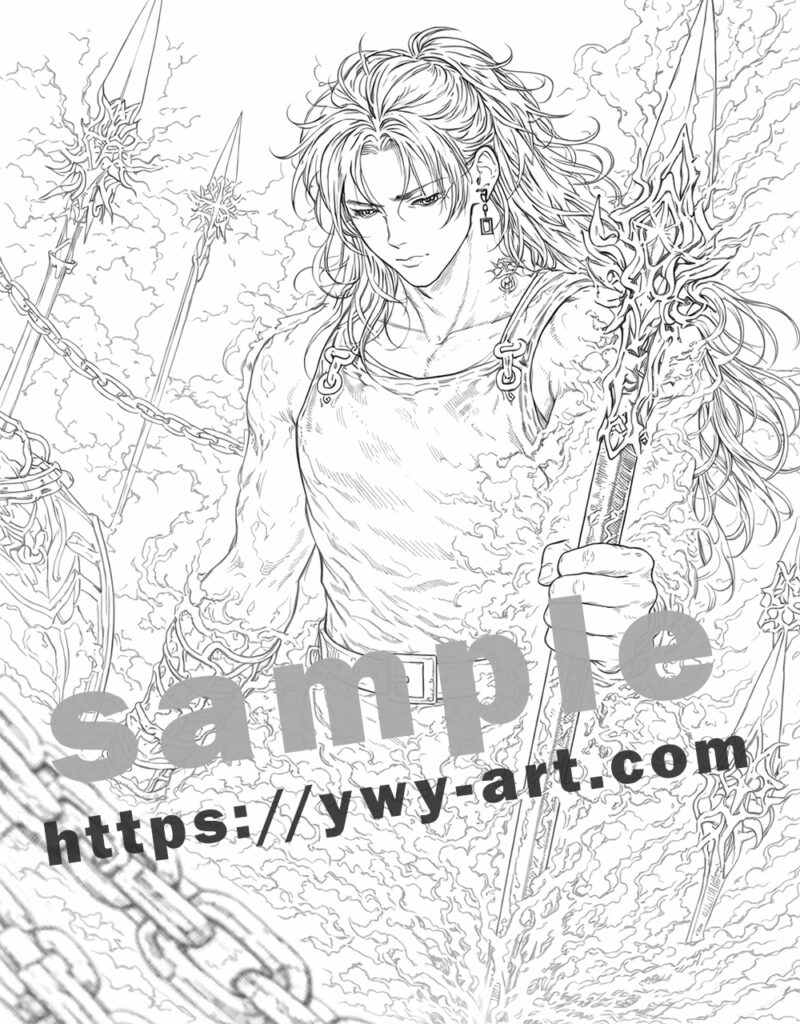
| Best For | Weapon creation scenes, divine power manifestation, pre-battle climax |
|---|---|
| Visual Keywords | Glowing spear, controlled fire, energy infusion, floating weapons |
| Mood | Focused, intense, inevitable |
| Useful Themes | Completion, inevitability, creation as power, preparation for war |
Compare with Similar Deities
| Name | Mythology | Main Domains | Overall Image |
|---|---|---|---|
| Vulcan | Roman | Fire, forge | More destructive fire aspect compared to Hephaestus’ precision |
| Agni | Hindu | Fire, ritual | Spiritual and sacrificial fire rather than crafted creation |
| Wayland | Norse | Blacksmithing | Skilled craftsman but lacks divine-scale influence on war |
The Moment of Completion
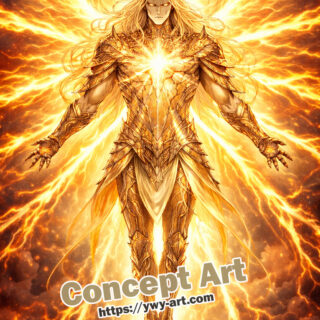
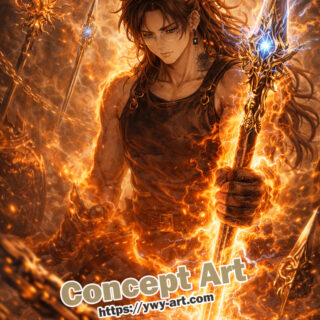
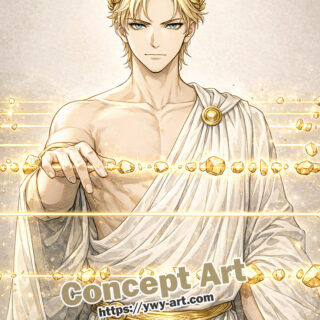
This scene captures the instant where the weapon is no longer being shaped, but awakened. The spear is held firmly, and the energy flows into it with precision, not chaos.
The absence of motion is intentional. There is no need for repeated strikes. Everything has already been prepared. What remains is the final convergence of power.
Creation as Power
Unlike gods who display their strength through destruction, Hephaestus expresses power through creation. His mastery lies in control—over fire, over form, and over purpose.
This makes his presence unique in the Titanomachy. He does not fight directly, yet his influence is embedded in every weapon that enters the battlefield.
Weapons of the Gods
The floating weapons surrounding him are not decorative elements. Each represents a role, a destiny, and a moment within the coming war.
They exist in a state of readiness, waiting only for the signal to become instruments of divine will. Together, they form a silent army before the battle even begins.
Before the War Begins
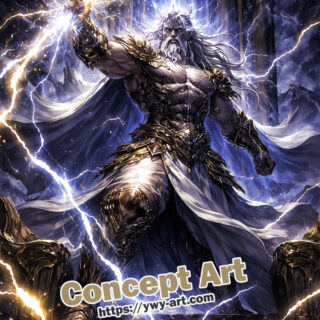
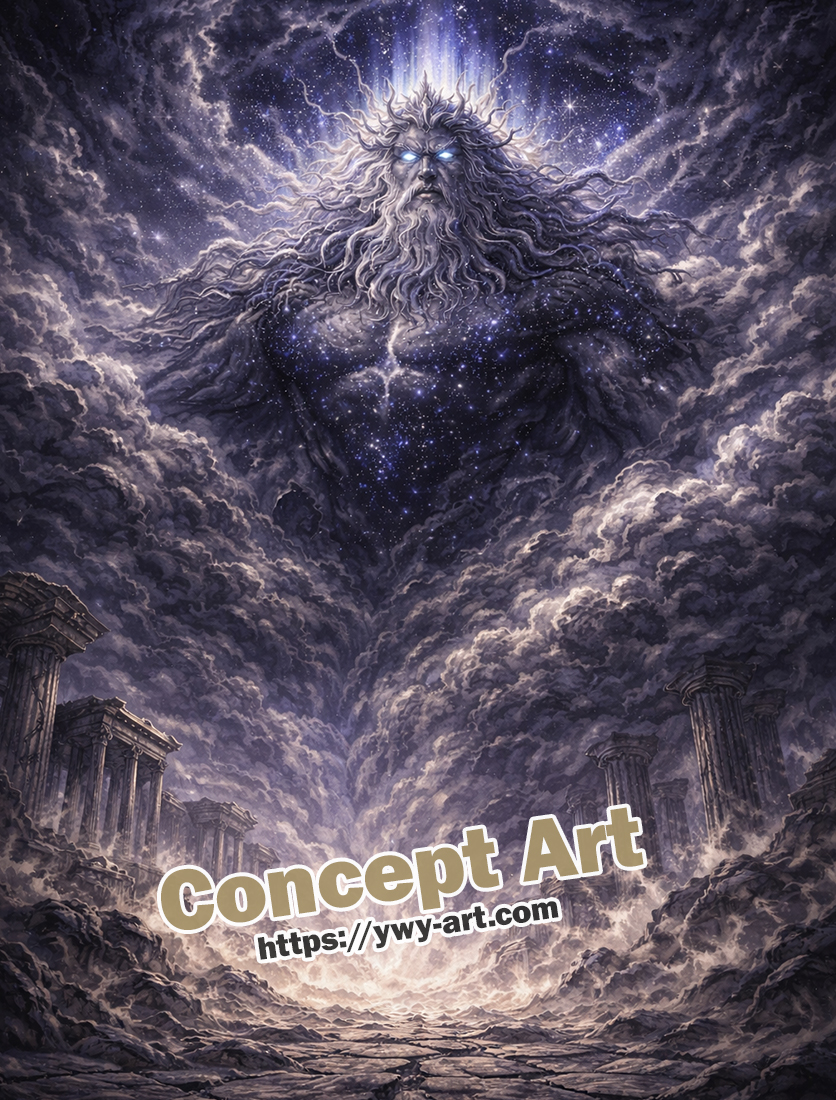
In the broader narrative, this moment sits just before action becomes unavoidable. Zeus prepares to initiate the war, Uranus imposes pressure from above, and Hephaestus ensures that the outcome is no longer left to chance.
This is the unseen layer of Titanomachy—the preparation that determines everything before the first strike is made.
Coloring Variations
- Divine Flame: Bright orange and gold tones to emphasize controlled fire and heat
- Forged Light: White-hot highlights with subtle gradients to show energy concentration
- War Preparation: Darker tones with glowing accents for a heavier, pre-battle atmosphere
Coloring Tips
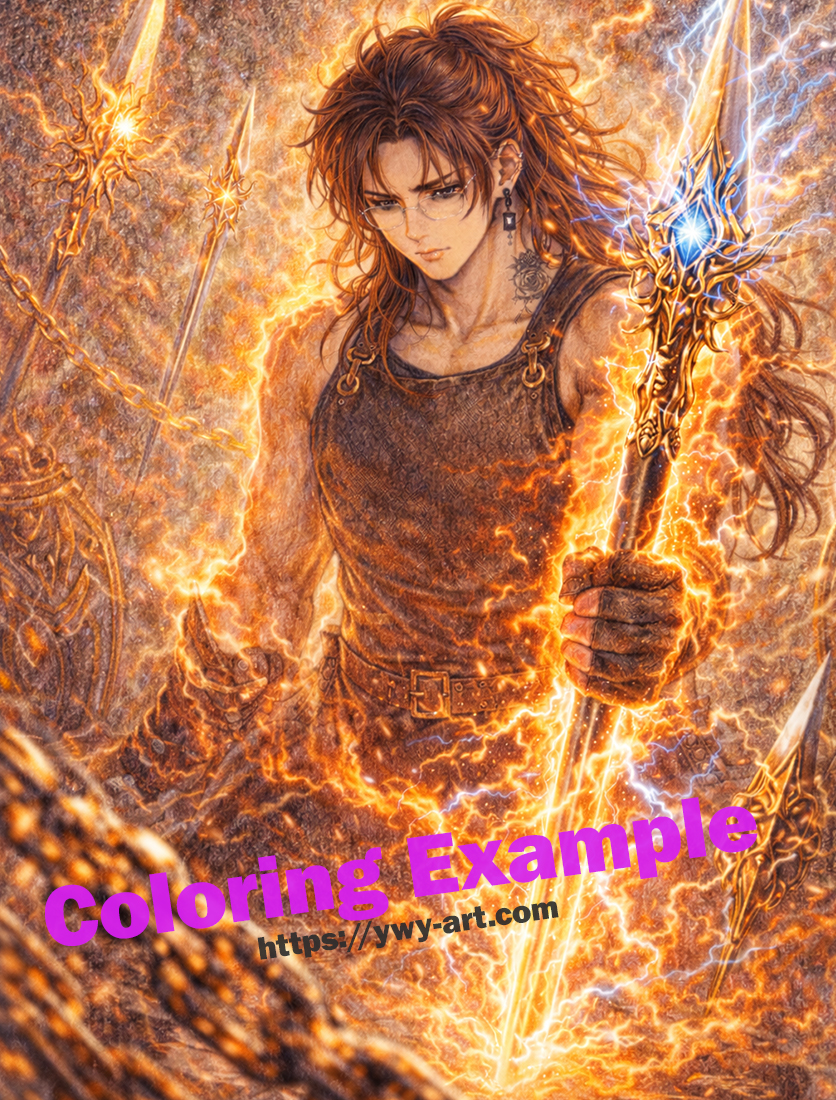
Use strong contrast between the glowing weapon and the darker surroundings to emphasize focus.
Layer warm colors gradually to create the sense of heat and controlled energy.
Avoid over-blending the flames; keeping some sharp edges will enhance the feeling of precision.
Japanese Summary
ヘパイストスは単なる鍛冶神ではなく、「完成」を司る存在として描かれています。このシーンは作業の途中ではなく、創造が力へと変わる決定的な瞬間です。
ティタノマキアにおいて彼は前線に立たないものの、神々が勝利するための条件を整える役割を担っています。戦いが始まる前に勝敗を決める存在とも言えます。
ティタノマキアとの関係
ゼウスが戦いを開始し、ウラノスが圧をかける中で、ヘパイストスはその裏で勝利を成立させています。
彼の完成させた武器は単なる装備ではなく、戦いの結果そのものに直結する存在です。
表現意図
「打つ」動作ではなく、「完成させる」瞬間を強調することで、進化した姿を表現しています。
炎や光は暴れるのではなく、制御され一点に収束することで神域の精度を演出しています。
塗りのポイント
武器部分は最も明るく塗り、視線を集中させるのが効果的です。
炎はグラデーションで段階的に色を重ねることで、制御された熱を表現できます。
Explore Our Coloring Book Series
Discover the unseen forces that shape the outcome of divine wars.
Each artwork reveals a different layer of power behind the Titanomachy.
Step into the world of mythology..
Available on Amazon Titanomachia: The War Before the Olympians Open in a new tab















コメント