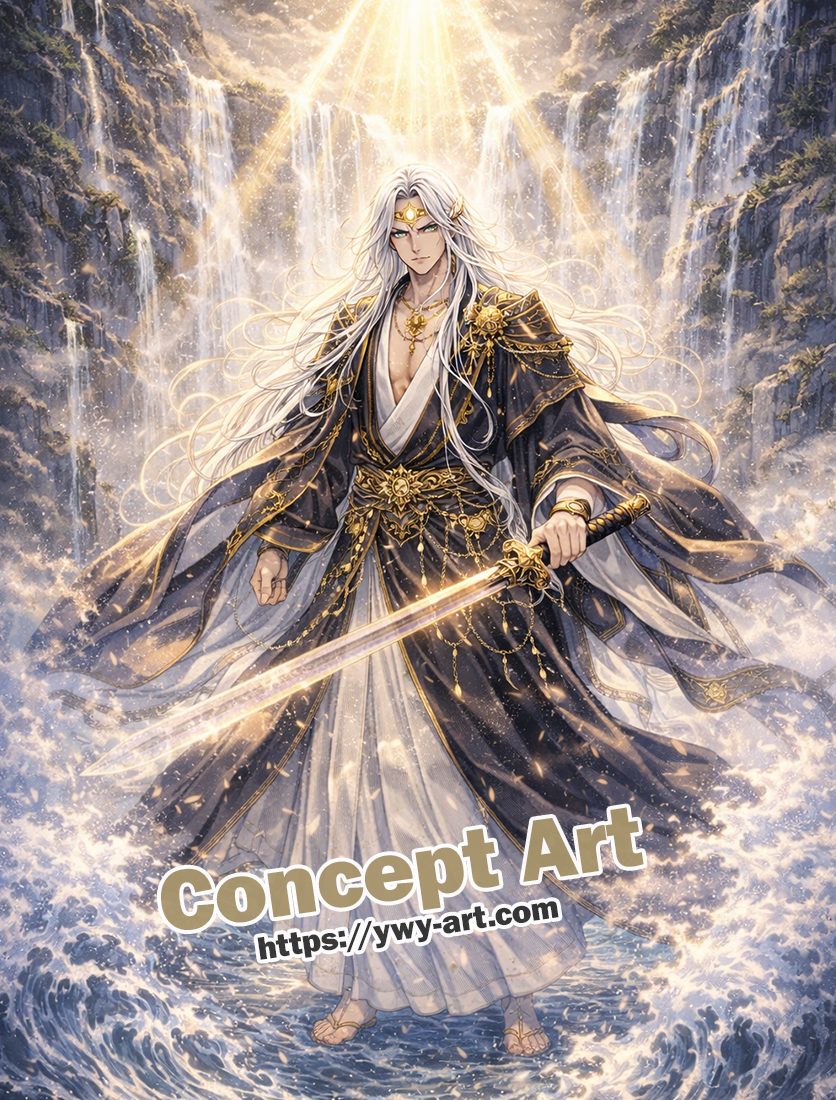
The Creator God of Purification and Light
The Creator Deity of Japanese Mythology
Izanagi (Izanagi-no-Mikoto) is one of the most important creator gods in Japanese mythology. Together with the goddess Izanami, he is said to have formed the land of Japan at the beginning of the world.
According to ancient myths recorded in the Kojiki and Nihon Shoki, the two deities stood upon the Floating Bridge of Heaven and stirred the primordial ocean with a sacred spear known as Amenonuhoko. When the spear was lifted from the sea, drops of water fell from its tip and solidified, forming the first island of Japan.
From this beginning, many islands and gods were born, establishing the foundation of the Japanese world.
The Journey to the Underworld
One of the most dramatic stories involving Izanagi occurs after the death of Izanami. Grief-stricken, Izanagi travels to Yomi, the land of the dead, hoping to bring his wife back.
However, when he finally sees her in the underworld, she has already become part of the realm of death. Terrified by the sight, Izanagi flees back to the world of the living while being pursued by spirits of the underworld.
This myth marks the permanent separation between the world of the living and the realm of the dead.
The Ritual of Purification
After escaping from Yomi, Izanagi performs a ritual purification known as misogi. This act of cleansing removes the spiritual impurities gained from the underworld.
During this purification, several of the most important gods in Japanese mythology are born from Izanagi’s body:
- Amaterasu, the sun goddess
- Tsukuyomi, the moon god
- Susanoo, the storm god
These three deities later become central figures in Japanese mythological stories.
Because of this event, Izanagi is closely associated with renewal, purification, and the restoration of cosmic order.
Symbolism of Water and Light
Water plays a powerful symbolic role in the story of Izanagi. In Shinto belief, purification with water represents the removal of spiritual pollution and the restoration of harmony.
The act of misogi is still practiced in Japan today as a form of spiritual cleansing.
For this reason, Izanagi is often depicted standing in flowing water or beneath a waterfall, surrounded by radiant light that symbolizes divine purity.
About This Illustration
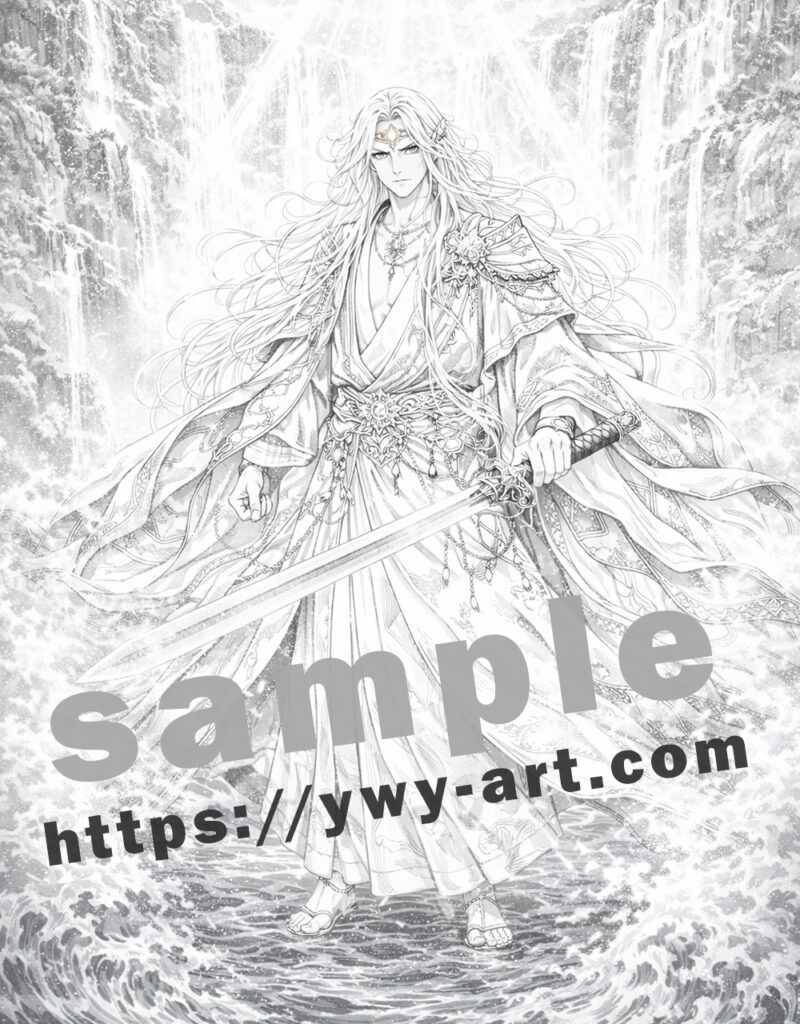
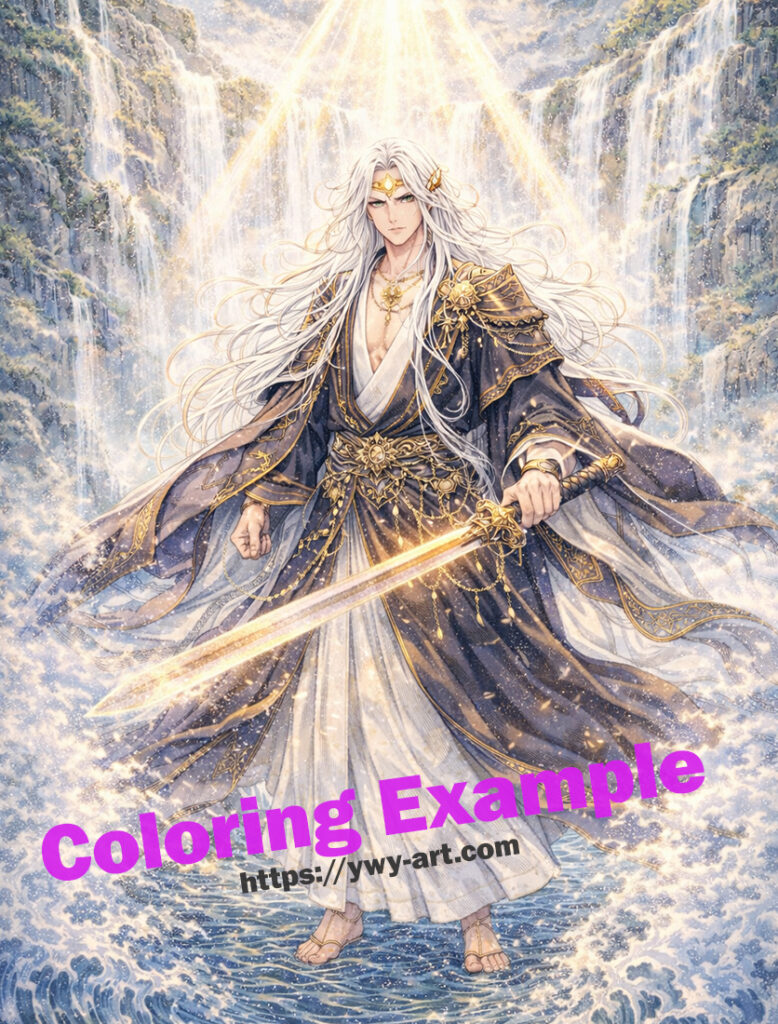
This artwork portrays Izanagi during the moment of divine purification.
Standing in rushing water beneath powerful waterfalls, he is illuminated by heavenly light descending from above. His flowing white hair and ornate garments represent divine authority, while the glowing sword symbolizes the power to restore order after chaos.
The scene blends traditional Japanese mythological imagery with a dramatic fantasy style, presenting Izanagi as both a creator god and a powerful guardian of balance.
伊邪那岐命(イザナギ)— 世界を創り浄化する神
日本神話の創造神
伊邪那岐命(イザナギノミコト) は、日本神話において世界の創造に関わった重要な神です。
女神 伊邪那美命(イザナミノミコト) とともに、日本の国土や多くの神々を生み出した存在として知られています。
『古事記』や『日本書紀』によると、二柱の神は天の浮橋に立ち、**天沼矛(あめのぬぼこ)**という神聖な槍で混沌とした海をかき混ぜました。
槍を引き上げたときに滴り落ちた雫が固まり、日本最初の島とされる オノゴロ島 が誕生したと伝えられています。
そこから日本の島々と多くの神々が生まれ、世界の基盤が築かれていきました。
黄泉の国への旅
伊邪那岐の神話の中でも特に有名なのが、亡くなった妻 伊邪那美 を追って黄泉の国へ向かう物語です。
最愛の妻を取り戻すため、伊邪那岐は死者の国 黄泉(よみ) に足を踏み入れます。
しかしそこで見た伊邪那美の姿はすでに死の世界の存在となっていました。
恐怖に駆られた伊邪那岐は黄泉の国から逃げ帰り、追ってくる黄泉の存在から必死に逃れます。
この出来事によって、生者の世界と死者の世界は完全に分かれたと語られています。
禊(みそぎ)と三貴子の誕生
黄泉の国から帰還した伊邪那岐は、穢れを落とすため 禊(みそぎ) を行います。
この神聖な浄化の儀式の中で、日本神話を代表する神々が誕生しました。
- 天照大神(アマテラス) — 太陽の女神
- 月読命(ツクヨミ) — 月の神
- 須佐之男命(スサノオ) — 嵐の神
この三柱の神は「三貴子」と呼ばれ、日本神話の中心的存在となります。
そのため伊邪那岐は、世界を再生させる神としても重要な役割を持つ神とされています。
水と光の象徴
伊邪那岐の神話では 水による浄化 が重要な意味を持っています。
神道において水は、穢れを清め、心身を整える神聖な存在です。
現在でも神社の手水や禊の儀式として、その考え方は受け継がれています。
そのため伊邪那岐は
- 滝
- 川
- 光
とともに描かれることが多く、浄化と再生の象徴とされています。
この作品について
このイラストでは、伊邪那岐が 禊の水の中で神の光を受ける瞬間 を表現しています。
流れる滝と水しぶきは浄化の象徴であり、上空から降り注ぐ光は神の力と世界の再生を表しています。
白銀の髪と豪華な装束は創造神としての威厳を示し、輝く剣は混沌の中から秩序を生み出す力を象徴しています。
日本神話の壮大な世界観と幻想的なデザインを融合させた作品です。
Enter the dark world of Yokai.
Available on Amazon Japanese Mythology Tattoo Coloring Book Gods & Divine Spirits Open in a new tab
コメント