The Moon God of Silence and Night

The Quiet Deity of the Moon in Japanese Mythology
Tsukuyomi (Tsukuyomi-no-Mikoto) is the Japanese god of the moon, a mysterious deity who governs the silent world of night. In Japanese mythology, he is one of the Three Noble Children (Mihashira-no-Uzunomiko) born from the creator god Izanagi during a purification ritual after returning from the underworld.
His siblings are the sun goddess Amaterasu and the storm god Susanoo, two of the most powerful deities in the Shinto pantheon. Together they represent fundamental forces of nature—sunlight, storms, and the calm glow of the moon.
While Amaterasu embodies the brilliance of daylight, Tsukuyomi represents the quiet balance that follows sunset.
A God of Stillness and Observation
Unlike many mythological gods who display their power through dramatic battles or heroic actions, Tsukuyomi is associated with calm authority and silent observation.
The moon does not shine with its own fire like the sun; instead, it reflects light gently across the night sky. In the same way, Tsukuyomi symbolizes reflection, balance, and the subtle rhythms of nature that unfold after darkness falls.
Because of this, the moon god is often seen as a guardian of night, time, and the hidden cycles of the world.
The Myth That Separated the Sun and the Moon
One of the most famous stories involving Tsukuyomi explains why the sun and moon appear separately in the sky.
In the myth, Tsukuyomi was sent by Amaterasu to visit the food goddess Uke Mochi. When she produced food from her body to offer as a feast, Tsukuyomi viewed the act as impure and reacted with anger, ultimately killing her.
When Amaterasu learned what had happened, she was deeply angered and refused to ever see Tsukuyomi again. From that moment on, the sun and moon were separated, giving rise to the cycle of day and night.
This story symbolizes the balance and distance between two fundamental cosmic forces.
The Symbolism of the Moon
Across many cultures, the moon represents mystery, emotion, and the passage of time. In Japanese tradition, the moon has long been connected to:
- the tides of the ocean
- the rhythm of seasons
- the quiet beauty of night
- contemplation and reflection
Tsukuyomi embodies these qualities. Rather than a god of overwhelming power, he is the presence that watches silently over the world when the sun has set.
About This Illustration
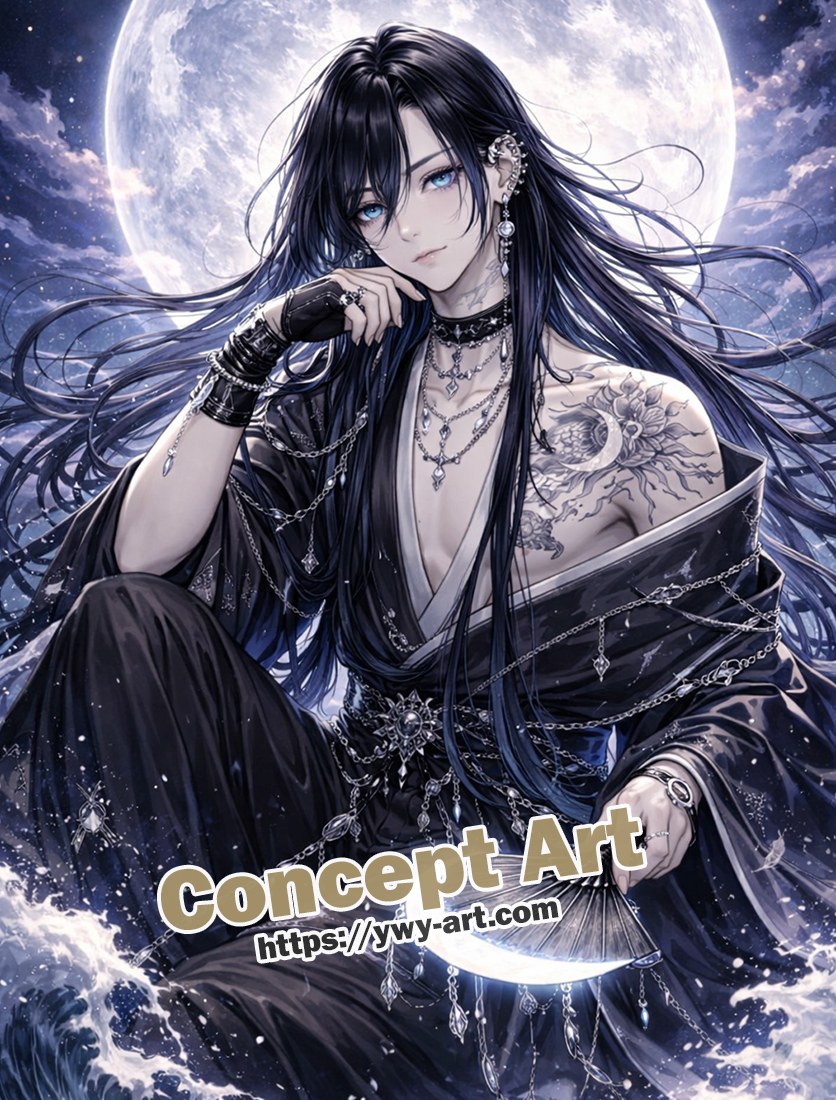
This artwork presents Tsukuyomi as an elegant and androgynous moon deity seated before a luminous full moon.
Flowing hair, silver ornaments, and crescent moon motifs emphasize the divine connection between the god and the night sky. The surrounding ocean waves reflect the influence of the moon over tides, while the calm posture of the deity represents quiet authority and watchful serenity.
The design blends elements of traditional Japanese mythology with a modern fantasy aesthetic, creating a mysterious figure that feels both ancient and timeless.
月読命(ツクヨミ)— 夜と静寂を司る月の神
日本神話における月の神
月読命(ツクヨミノミコト) は、日本神話に登場する月を司る神です。
創造神 イザナギ が黄泉の国から帰還した後、禊(みそぎ)を行った際に生まれた 三貴子(みはしらのうずのみこ) の一柱とされています。
その兄弟には
- 太陽の女神 天照大神(アマテラス)
- 嵐の神 須佐之男命(スサノオ)
がおり、日本神話の中でも特に重要な神々として知られています。
天照大神が昼の光を象徴する存在であるのに対し、月読命は夜の静かな光を象徴する神です。
静寂と秩序を見守る神
多くの神々が戦いや力強い行動によって神格を示すのに対し、月読命は 静かな威厳を持つ神 として語られます。
月は太陽のように自ら燃え輝くわけではなく、やわらかな光で夜の世界を照らします。
その姿は、静かに世界を見守る存在としての月読命の性格を象徴しているとも言えるでしょう。
月読命は
- 夜の世界
- 時の流れ
- 自然の循環
- 静かな秩序
を象徴する神として考えられています。
太陽と月が分かれた神話
月読命に関する神話の中でもよく知られているのが、食物の神 保食神(うけもちのかみ) に関する物語です。
天照大神の使いとして保食神のもとを訪れた月読命は、保食神が口や身体から食べ物を生み出してもてなす様子を見て、それを不浄なものだと感じてしまいます。
怒りに駆られた月読命は保食神を斬ってしまい、その出来事を知った天照大神は激怒します。
そして 二度と月読命と顔を合わせない と決めたため、太陽と月は同じ空に現れない存在になったと伝えられています。
この神話は、昼と夜が分かれて存在する理由を説明する物語とも言われています。
月の象徴
古来より月は、人々の生活と深く結びついてきました。
例えば
- 海の潮の満ち引き
- 夜の光
- 時間や暦
- 季節の移ろい
など、多くの自然現象が月と関係しています。
そのため月読命は、単なる天体の神ではなく
夜の世界を静かに見守る神秘的な存在 として信仰されてきました。
この作品について
このイラストでは、月読命を 満月の前に静かに佇む神秘的な神 として描いています。
長く流れる髪や月の装飾、銀色のアクセサリーは月光を象徴し、周囲の波は月の引力によって生まれる潮の満ち引きを表しています。
中性的な美しさを持つ姿は、月という存在の持つ 静けさと神秘性 を表現しています。
伝統的な日本神話の世界観に、幻想的で現代的なデザインを融合させた作品です。
Enter the dark world of Yokai.
Available on Amazon Japanese Mythology Tattoo Coloring Book Gods & Divine Spirits Open in a new tab
コメント