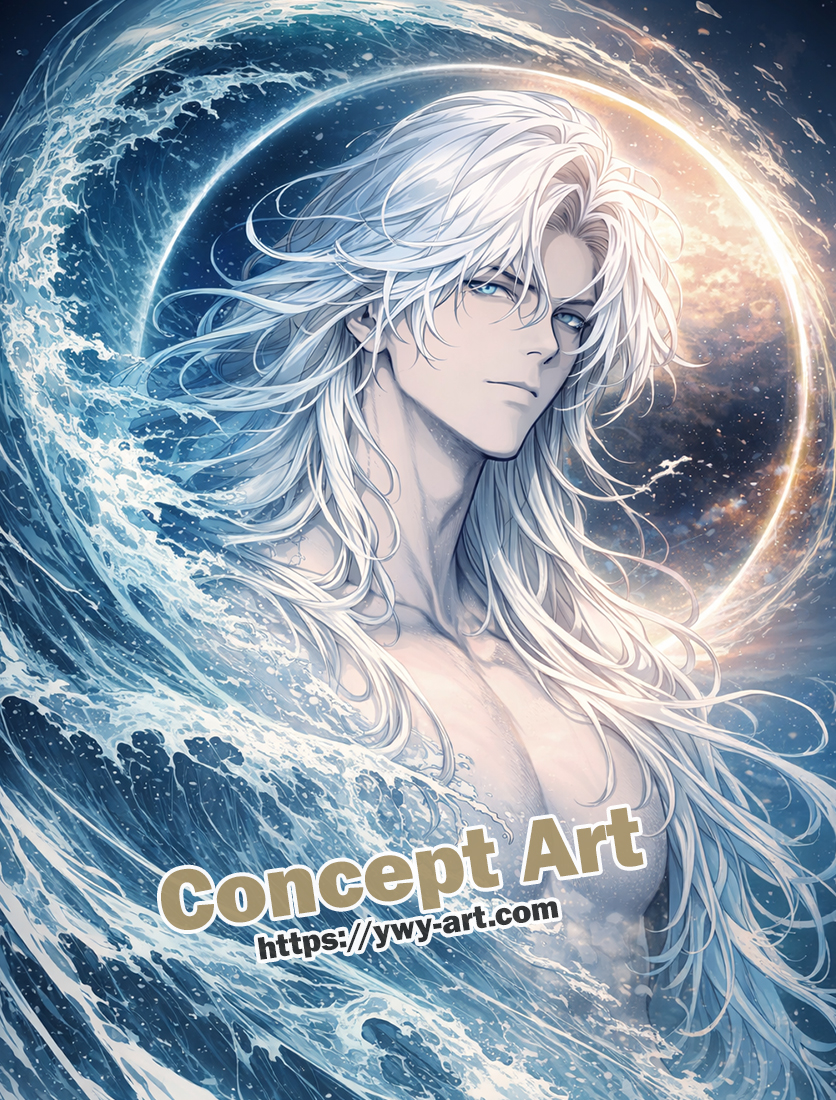
Oceanus — The Outer Boundary
He does not rise to fight. He ensures the world does not collapse before the battle begins.
Basic Profile
| Name | Oceanus |
|---|---|
| Mythology | Greek Mythology |
| Gender | Male |
| Region | Primordial World / Cosmic Ocean |
| Era | Pre-Olympian (Titan Era) |
| Domain | Cosmic Ocean, Boundary, Encirclement |
| Symbol | Encircling Ocean Ring, Flowing Water, Horizon Line |
| Culture / Religion | Ancient Greek Religion |
| Main Role | Encircler of the World / Keeper of Cosmic Limits |
| Rank | Titan Major |
| Position in Titanomachy | Non-Participant / Boundary Stabilizer Before Collapse |
| Associated Deity | Tethys, Titans |
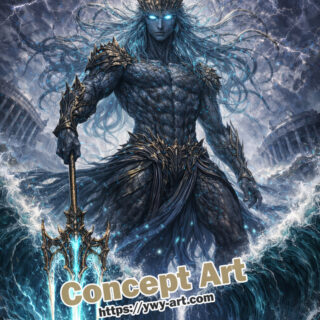
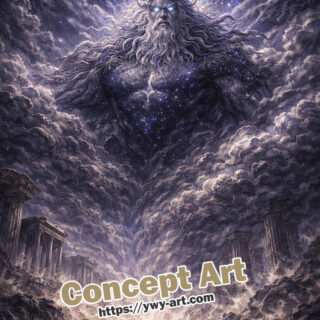
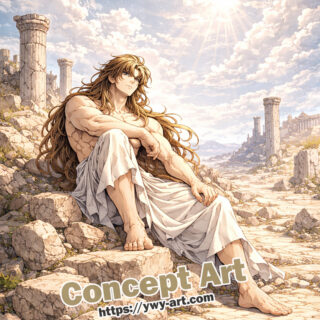
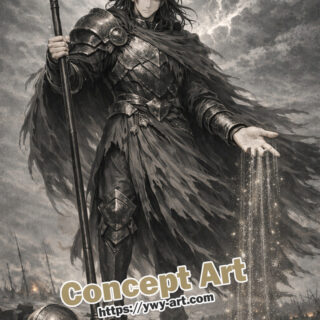
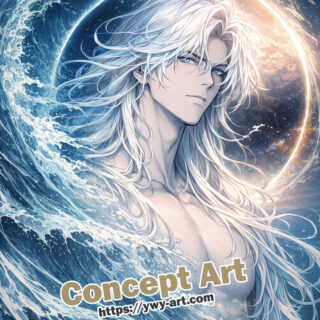
| Common Depiction | Massive figure emerging from flowing water, partially merged with an endless circular ocean |
| Alignment | Neutral Absolute (Non-Interfering, Structural) |
| Creative Reference | World boundary, circular horizon, layered currents, partial manifestation |
Overview
Oceanus is not a sea god in the conventional sense. He is the boundary that defines where the world ends. In ancient cosmology, he is described as the vast river that encircles all existence, separating what is known from what lies beyond. He does not rule the ocean. He is the reason the ocean has an edge.
As the Titanomachy approaches, this role becomes critical. While gods and titans prepare to clash within the world, Oceanus remains outside of it, holding the structure together. He does not intervene in conflict, yet without him, there would be no battlefield to fight upon. This scene captures the final moment before collapse, where the world is still contained, and the boundary still holds.
Characteristics
- Does not participate in battle, yet defines its stage
- Exists at the outer limit of the world, not within it
- Maintains structural stability rather than exerting force
- Partially manifests, never fully revealing his form
- Represents containment of reality itself
Symbolism and Meaning
Oceanus represents the concept of limits. He is not power expressed through action, but through restraint. His existence ensures that reality does not dissolve outward into nothingness. Without him, boundaries would fail, and separation between domains would collapse.
In the context of Titanomachy, this symbolism becomes foundational. War is only possible if space remains defined. Oceanus holds that definition in place. He does not decide the outcome, but he preserves the conditions under which outcomes can exist.
Quick Creative Reference
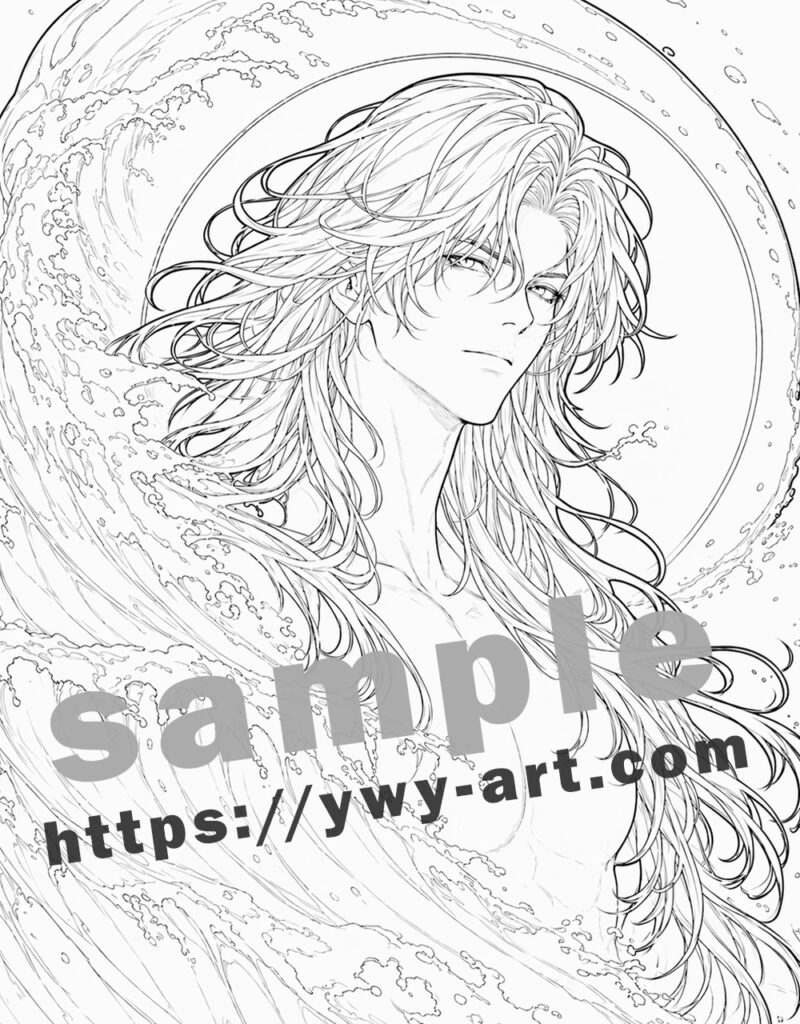
| Best For | Boundary concepts, cosmic scale, structural presence |
|---|---|
| Visual Keywords | Ocean ring, flowing currents, horizon arc, dissolving body |
| Mood | Calm, immense, inevitable |
| Useful Themes | Containment, outer edge, pre-collapse tension |
Compare with Similar Deities
| Name | Mythology | Main Domains | Overall Image |
|---|---|---|---|
| Poseidon | Greek | Sea, Earthquakes | Active force of destruction and control over oceans |
| Tethys | Greek | Water, Life Flow | Nurturing aspect of water and continuity of life |
| Uranus | Greek | Sky, Cosmic Overhead | Overarching presence pressing down on existence |
The Boundary Before Collapse
Oceanus exists at the final moment where the world is still intact. As conflict prepares to erupt, he holds the outer structure in place. Without this boundary, the tension building within would immediately spill outward, dissolving the very concept of a contained reality.
This scene represents that fragile balance. The war has not yet begun, but its pressure is already present. Oceanus does not stop the conflict. He ensures it happens within limits.
Presence Without Intervention
Unlike other figures, Oceanus does not act through movement or decision. His influence comes from remaining unchanged. He does not push or resist. He holds.
This form of power is absolute in a different way. It does not dominate through force, but through necessity. Everything depends on him, even if nothing acknowledges him directly.
The World as a Closed System
Oceanus defines the world as a contained system. Everything that exists remains within his boundary. This includes gods, titans, and the conflict itself.
In Titanomachy, this means that destruction does not lead to escape. It accumulates. Pressure builds instead of dispersing, making the conflict more intense and unavoidable.
Partial Manifestation
Oceanus is never fully visible because he is larger than what can be contained within the world he surrounds. Only fragments of his presence appear—flowing water, curved horizons, and shifting boundaries.
This incomplete visibility reinforces his nature. He is not meant to be fully seen. He is meant to be understood as structure.
Coloring Variations
- Deep Ocean Blue: Layered blues and dark tones emphasizing depth and pressure
- Twilight Boundary: Purple and gray gradients suggesting the edge between worlds
- Celestial Reflection: Subtle gold and pale blue highlights to express cosmic scale
Coloring Tips
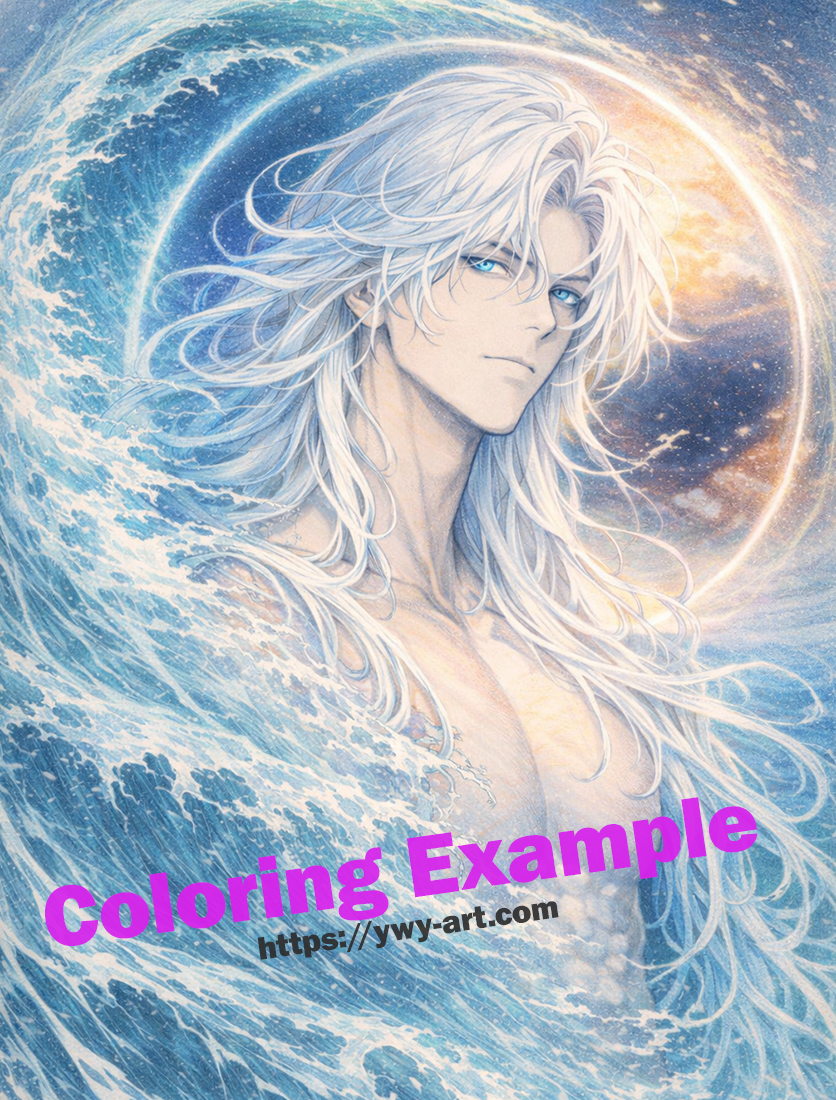
Focus on layered gradients rather than sharp contrasts. Oceanus should feel vast and continuous, not segmented.
Use flowing strokes to create a sense of movement within stillness. The water should appear active, while the overall composition remains stable.
Avoid heavy saturation. Controlled tones will better convey the idea of structure and containment rather than chaos.
Japanese Summary
オケアノスは海の神ではなく、世界そのものを取り囲む境界の存在である。彼は戦わず、干渉もしないが、その存在がなければ世界は外へと崩れ出してしまう。
ティタノマキアにおいて彼は戦場の外に位置しながら、世界の輪郭を維持し続ける。戦いが成立するための前提そのものを支えている存在である。
崩壊直前の境界
戦争が始まる直前、世界はまだ閉じられている状態にある。その外縁を保っているのがオケアノスである。
彼が崩れれば、戦いは成立せず、すべてが外へと流れ出してしまう。
干渉しない力
オケアノスは他の神のように力を行使しない。彼の力は「維持すること」にある。
動かないことで世界を支えるという、最も静かで最も根本的な力を持つ。
閉じられた世界
すべての存在は彼の内側に留められている。逃げ場のない構造が戦いの激しさを増幅させる。
それがティタノマキアの緊張を支えている。
塗りのポイント
グラデーションを重ねて深さを表現し、滑らかな色の変化で広がりを出すと良い。
強いコントラストよりも流れと連続性を重視することで、構造としての存在感が出る。
Explore Our Coloring Book Series
Discover powerful mythological figures shaped by conflict and transformation.
Each design captures a moment where existence shifts and meaning is redefined.
Step into the world of mythology..
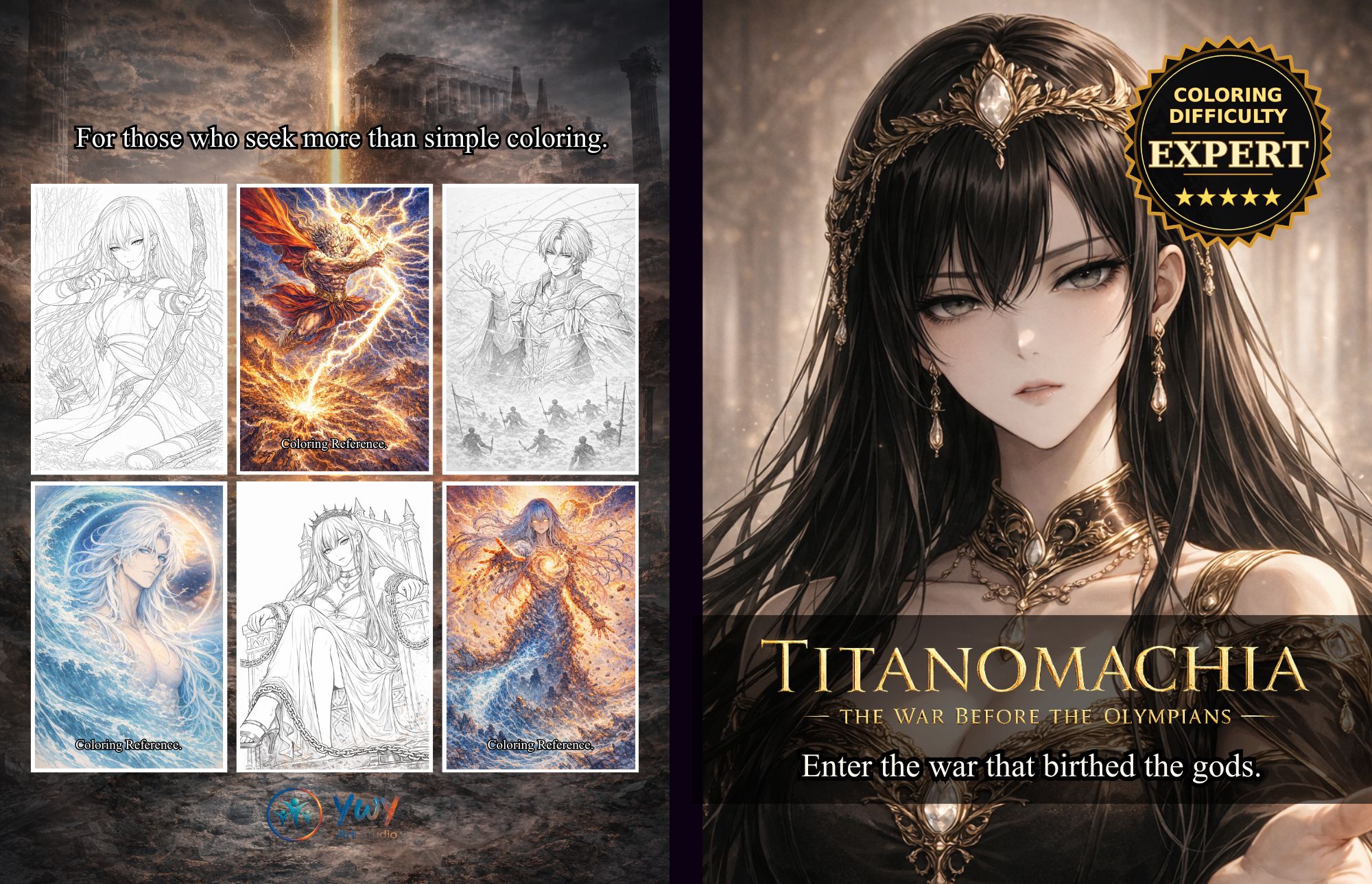
Available on Amazon Titanomachia: The War Before the Olympians Open in a new tab



コメント