Tartarus — The Abyss Beneath All Things
There exists a depth so profound that even gods do not speak its name lightly. Tartarus is not merely a place, nor a being, but the abyss that lies beneath existence itself. It does not rise, it does not move, yet everything inevitably falls into it.
Basic Profile
| Name | Tartarus |
|---|---|
| Mythology | Greek Mythology |
| Gender | Primordial (Non-human entity) |
| Region | Below the Underworld |
| Era | Primordial Age |
| Domain | Abyss, Imprisonment, Primordial Depth |
| Symbol | Chasm, Chains, Endless Void |
| Culture / Religion | Ancient Greek Religion |
| Main Role | Prison of the Titans and embodiment of the abyss |
| Rank | Primordial Entity |
| Position in Titanomachy | Destination of the defeated Titans |
| Associated Deity | Hades, Zeus, Titans |
| Common Depiction | Formless abyss or a shadow-like entity consuming all |
| Alignment | True Neutral |
| Creative Reference | Endless depth, consuming force, gravity of existence |
Overview
Tartarus is one of the oldest forces in Greek mythology, existing even before the Olympian gods rose to power. It is not defined by personality or intention, but by its function as the deepest point of existence. Unlike Hades, who governs the dead, Tartarus exists beyond governance. It is the place where even gods lose control.
In the Titanomachy, Tartarus becomes the ultimate end for the defeated Titans. When Zeus and the Olympians triumph, it is not destruction that awaits their enemies, but imprisonment within this endless abyss. The war does not end in victory alone. It ends in descent.
Characteristics
- Exists as both location and entity simultaneously
- Represents inevitability and irreversible descent
- Lacks emotion, intention, or moral alignment
- Consumes rather than destroys
- Embodies infinite depth and gravitational pull
Symbolism and Meaning
Tartarus symbolizes the concept of absolute finality beyond death. It is not merely an afterlife, but a state from which there is no return. While other gods act within the cycle of life and death, Tartarus exists outside of it, representing a point where all cycles end.
Within the Titanomachy, this meaning becomes more tangible. The war creates destruction, but Tartarus ensures permanence. The fallen are not simply defeated, they are removed from existence as participants. In this way, Tartarus represents the ultimate consequence of conflict.
Quick Creative Reference
| Best For | Abstract entities, abyssal forces, cosmic horror themes |
|---|---|
| Visual Keywords | Void, chains, abyss, falling, distortion, shadows |
| Mood | Oppressive, infinite, inescapable, cold |
| Useful Themes | Imprisonment, inevitability, collapse, end of existence |
Compare with Similar Deities
| Name | Mythology | Main Domains | Overall Image |
|---|---|---|---|
| Hades | Greek | Underworld, Death | Ruler and judge of the dead, structured and controlled |
| Hel | Norse | Underworld | Cold sovereign, but still maintains order and identity |
| Chaos | Greek | Primordial Void | Origin of existence, undefined but not consuming |
The Gravity of the Abyss
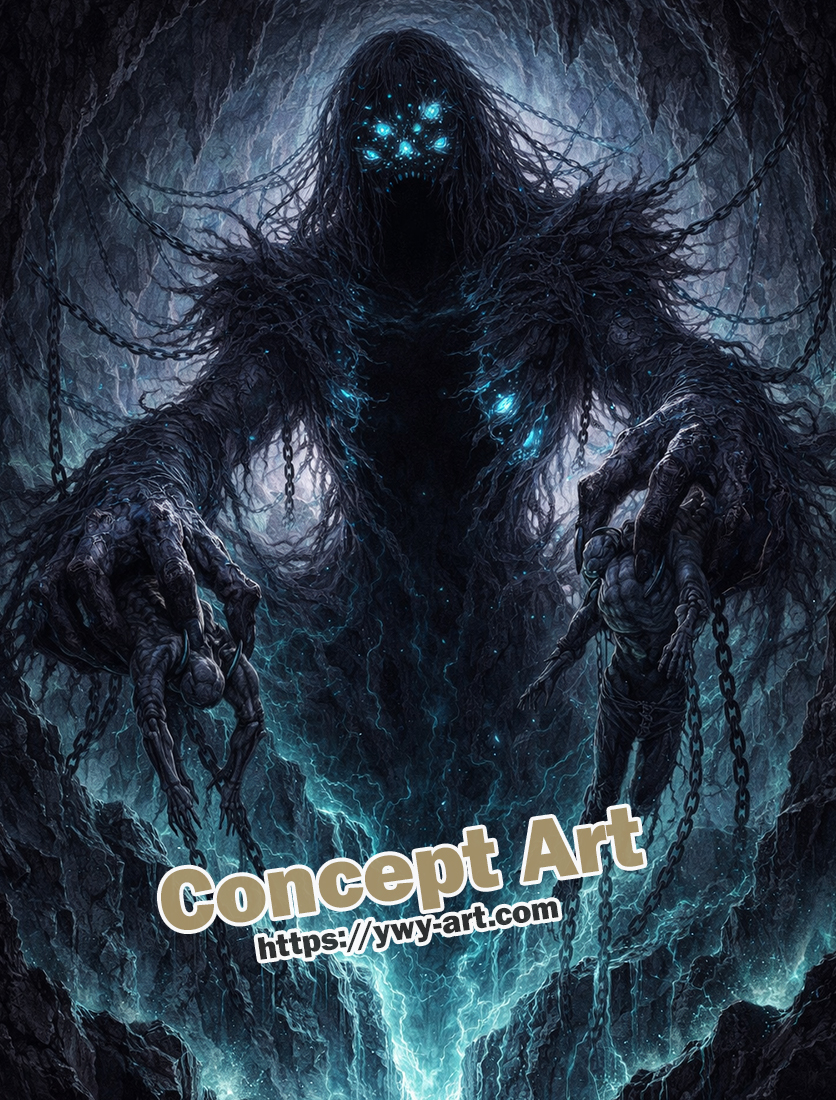
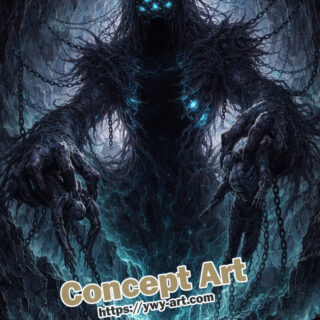
Tartarus does not reach upward. It does not need to. Everything falls into it naturally. In this scene, the downward pull is the central force, shaping both the figure and the environment. The chains, the bodies, and even the light itself are drawn toward the same inevitable center.
This is not an act of violence, but a condition of existence. Tartarus does not attack. It simply exists, and by existing, it consumes.
Role in the Titanomachy
During the Titanomachy, Tartarus serves as the final answer to the question of what happens to the defeated. The Titans, once rulers of the cosmos, are cast into this abyss, removed from power and from the world above.
This moment transforms Tartarus from a passive depth into an active presence in the story. It becomes the boundary between eras, sealing the old order beneath the new.
Form and Instability
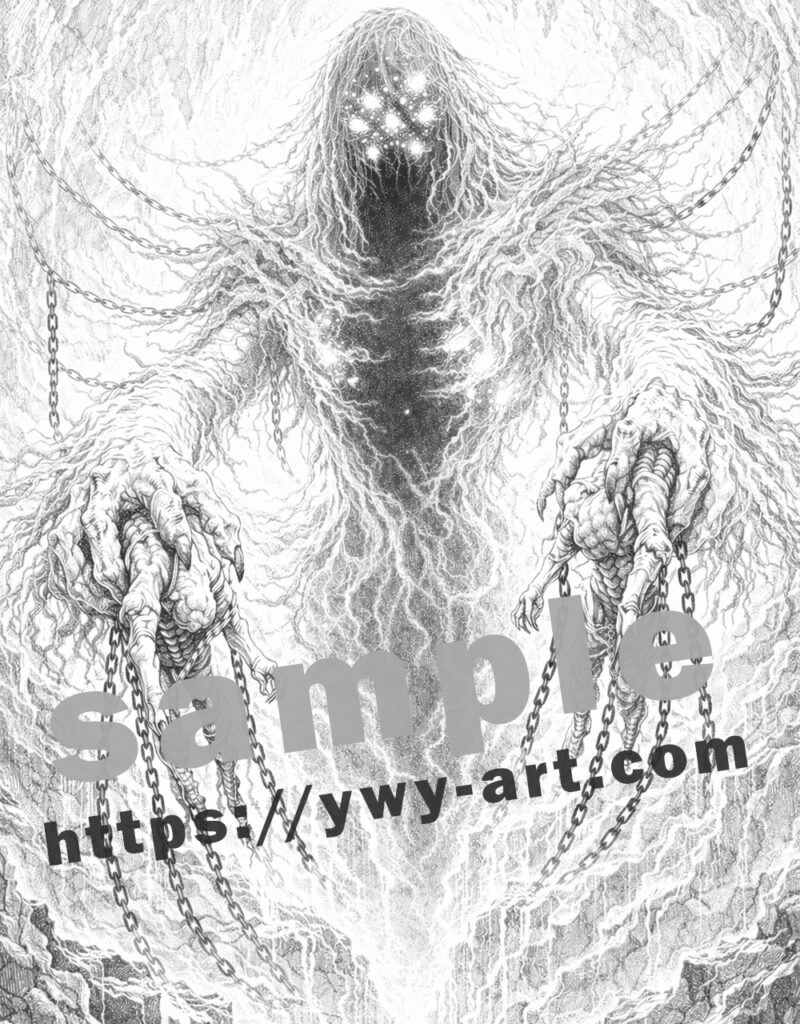
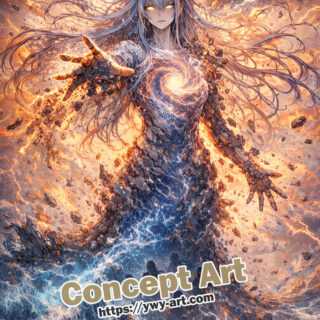
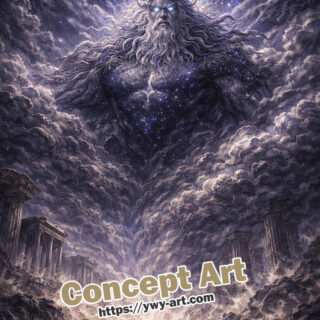
Unlike gods with defined bodies, Tartarus resists form. In visual interpretations, it often appears as a fragmented or dissolving entity. This instability reflects its nature as something that cannot be contained within a single shape.
The shifting silhouette, the broken edges, and the absence of clear boundaries all reinforce the idea that Tartarus is not a character, but a condition.
Visual Interpretation in This Scene
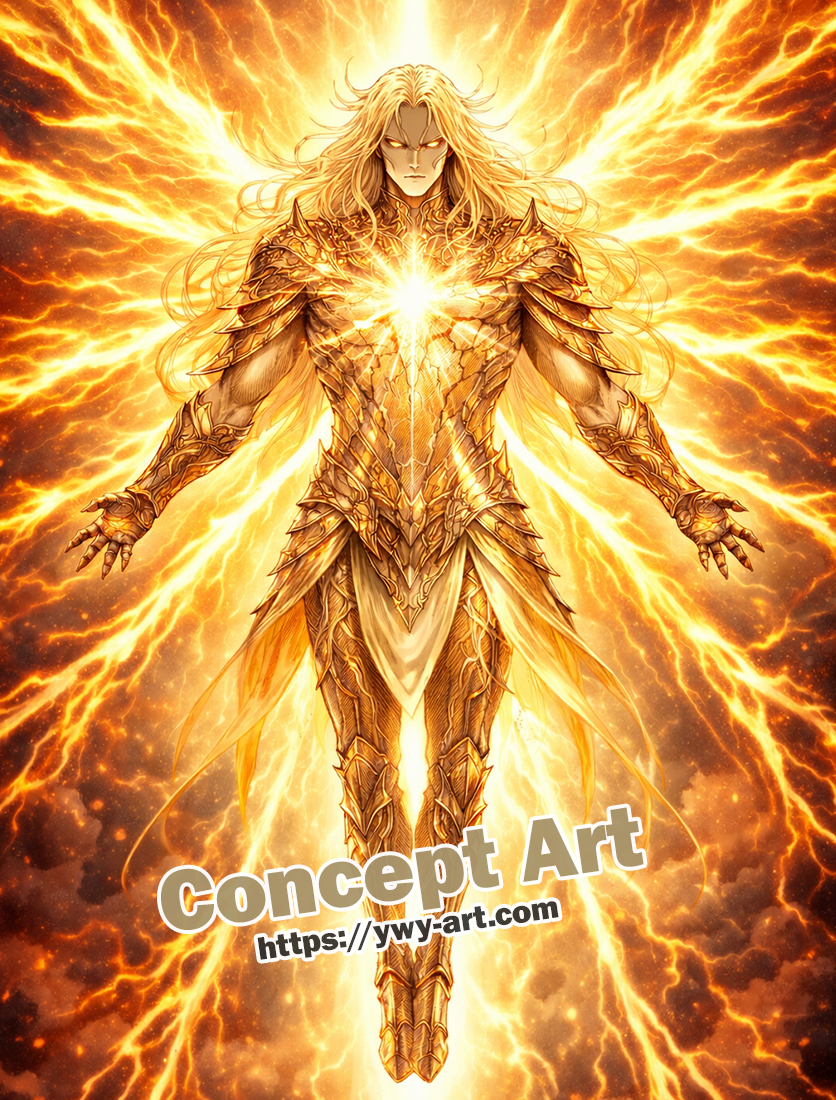
This artwork presents Tartarus as a fusion of entity and environment. The upper body suggests awareness, while the lower half dissolves into the abyss itself. The glowing eyes create a focal point, but they do not convey emotion, only presence.
The chained figures emphasize scale and consequence. They are not opponents, but inevitabilities, already claimed by the abyss before they fully understand their fate.
Coloring Variations
- Abyssal Depth: Use deep blues and purples with subtle gradients to emphasize infinite depth.
Keep the center nearly black while adding faint glowing lines for contrast. - Ether Distortion: Introduce greenish tones and soft glow effects to create an unnatural atmosphere.
Coloring Tips
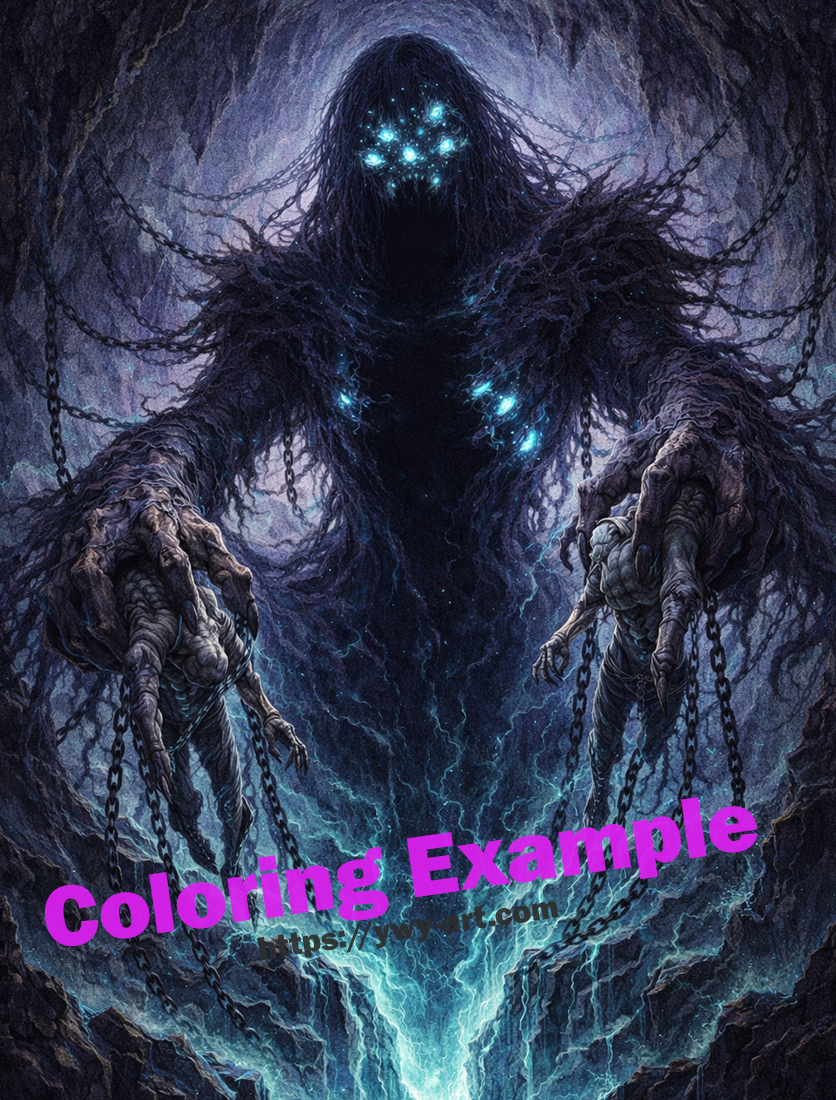
Focus on directional flow rather than solid areas. Use lines and gradients to guide the eye downward, reinforcing the sense of falling and absorption.
Avoid filling the central body with solid black. Instead, layer shades gradually to maintain detail while preserving the void-like quality.
Use contrast strategically. Bright highlights near the abyss entrance will enhance the illusion of depth and make the composition more dynamic.
Japanese Summary
タルタロスは単なる冥界の一部ではなく、存在そのものの最深部にある原初的な深淵である。神々ですら完全には支配できない領域であり、すべてが最終的に落ちていく場所である。
ティタノマキアにおいては、敗北したティタンたちの終着点として機能し、戦いの決着を「不可逆なもの」にする役割を担っている。
奈落という存在
タルタロスは攻撃する存在ではなく、ただ存在するだけで周囲を引きずり込む力を持つ。そのため、描写においては動きよりも「落ちる流れ」が重要になる。
今回の構図でも、中心に向かってすべてが収束する設計がその性質を表現している。
ティタノマキアとの関係
この戦いの本質は単なる勝敗ではなく、旧時代の完全な封印である。タルタロスはその役割を担い、ティタンたちを世界から切り離す。
つまり、タルタロスは戦いの終わりそのものであり、新たな秩序の土台となる存在である。
ビジュアル表現の要点
形を固定しないことが最も重要である。輪郭を曖昧にし、流れと吸引を意識することで、キャラクターではなく現象として成立する。
また、中央に向かう重力表現を強めることで、奈落としての説得力が大きく向上する。
塗りのポイント
黒で塗りつぶすのではなく、グラデーションと線で深さを表現することが重要である。特に中心部は完全な黒にせず、わずかな情報を残すと立体感が出る。
発光部分とのコントラストを強めることで、奥行きと吸い込まれる印象を強調できる。
Explore Our Coloring Book Series
Step deeper into the world of myth and primordial power.
Discover more entities and gods from the Titanomachy in our coloring book series.
Step into the world of mythology..
Available on Amazon Titanomachia: The War Before the Olympians Open in a new tab
コメント