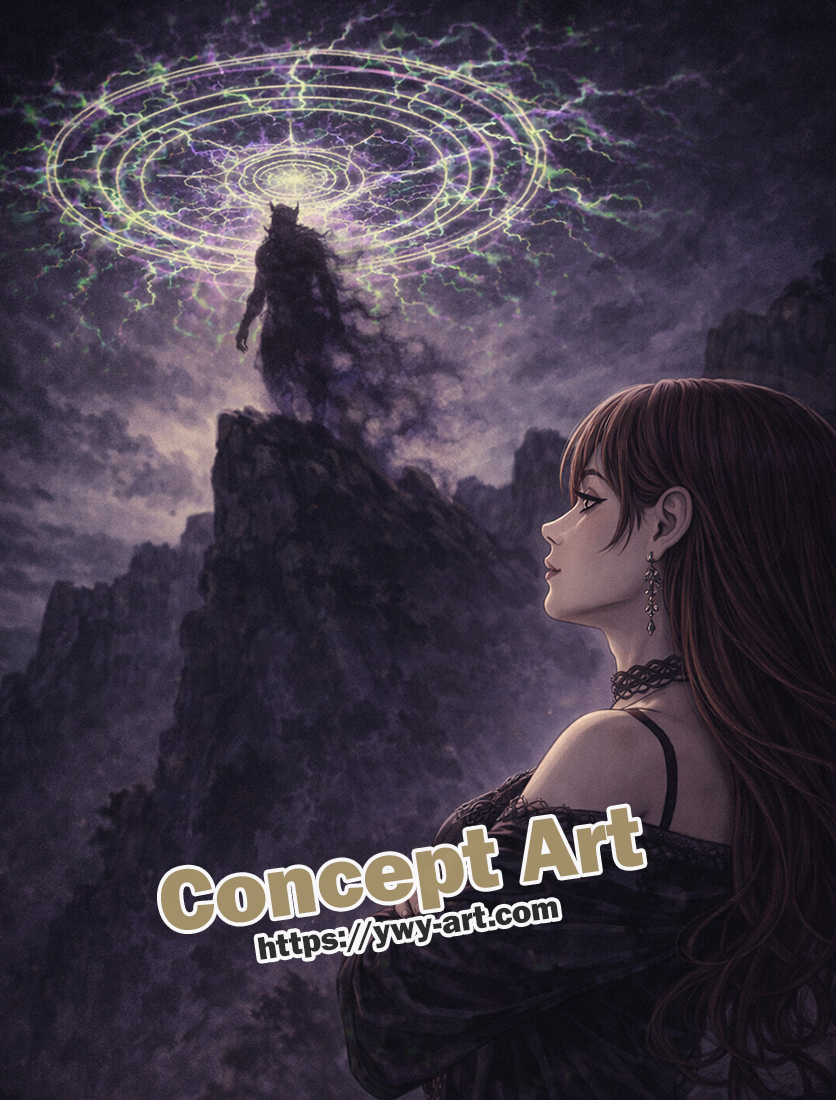
Circe is a Greek goddess-like sorceress of transformation, illusion, and revelation, known for exposing the hidden instincts that lie beneath human form.
- Basic Profile
- Overview
- Characteristics
- Symbolism and Meaning
- Quick Creative Reference
- Compare with Similar Deities
- The Enchantress of Hidden Truth
- The Meaning of Beast Transmutation
- The Scene Depicted in This Artwork
- Symbolism and Visual Elements
- Coloring Variations
- Coloring Tips
- Japanese Summary
- キルケーという存在
- 獣化の変容というテーマ
- このイラストの表現意図
- 塗りのポイント
- 掲載中の塗り絵本シリーズ
Basic Profile
| Name | Circe |
|---|---|
| Mythology | Greek |
| Gender | Female |
| Region | Ancient Greece / Aeaea |
| Era | Ancient |
| Domain | Transformation, Illusion, Revelation, Sorcery |
| Symbol | Magic sigil, island, beast form, potion, fog |
| Culture / Religion | Greek mythology |
| Main Role | Revealer of inner nature through magical transformation |
| Associated Deities | Helios, Perse, Odysseus |
| Common Depiction | A calm enchantress standing apart from the transformation she has already set in motion |
| Alignment | Ambiguous / Revelatory |
| Creative Reference Use | Enchantresses, transformation scenes, illusion-based characters, symbolic sorcery archetypes |
Overview
Circe is one of the most enigmatic figures in Greek mythology. She is not defined by overwhelming physical force, but by a more unsettling kind of power: the ability to alter form and expose hidden truth.
As the daughter of Helios and the ocean nymph Perse, Circe stands between divine clarity and primal instinct. Her magic is often interpreted not as random cruelty, but as revelation. Those transformed by her do not become something unnatural. Instead, their outward shape reflects something that already existed within them.
Characteristics
- Associated with transformation and hidden truth
- Uses magic to reveal inner nature rather than simply punish
- Often depicted as calm, distant, and fully in control
- Closely linked to the island of Aeaea
- Embodies the boundary between reason and instinct
Symbolism and Meaning
Circe symbolizes revelation through transformation. Her power does not merely change bodies. It forces what is internal to become visible. In this way, her magic functions almost like judgment, but without direct condemnation.
This makes her especially compelling in visual storytelling. She is not the chaos of uncontrolled magic, but the still intelligence behind it. Her distance from the transformed figure emphasizes that the truth has already been unveiled, and nothing more needs to be done.
Quick Creative Reference
| Best For | Enchantress archetypes, transformation-based scenes, illusion magic, dark ritual concepts |
|---|---|
| Visual Keywords | Sigil, cliff, beast shadow, fog, muted violet, cold green light, distance |
| Mood | Quiet, eerie, restrained, unnatural, revelatory |
| Useful Themes | Transformation, inner truth, instinct, illusion, symbolic punishment |
Compare with Similar Deities
| Name | Mythology | Main Domains | Overall Image |
|---|---|---|---|
| Circe | Greek | Transformation, Illusion, Sorcery | Calm revealer of inner nature |
| Medea | Greek | Magic, Passion, Revenge | Sorcery driven by emotion and choice |
| Kali | Hindu | Destruction, Transformation | Necessary change through divine force |
The Enchantress of Hidden Truth
Circe is most powerful when understood not simply as a witch who changes others, but as a figure who reveals what they already are. Her myth becomes more disturbing when transformation is treated not as invention, but as exposure.
This interpretation shifts the focus away from spectacle and toward consequence. The important moment is not the spell being cast, but the truth that remains afterward.
The Meaning of Beast Transmutation
“Beast Transmutation” suggests more than physical mutation. It represents the collapse of civilized identity and the emergence of instinctive nature. The beast form is not random. It is a visible answer to what was hidden beneath the human surface.
That is why the scene feels quiet rather than explosive. The transformation has already happened. What remains is recognition.
The Scene Depicted in This Artwork
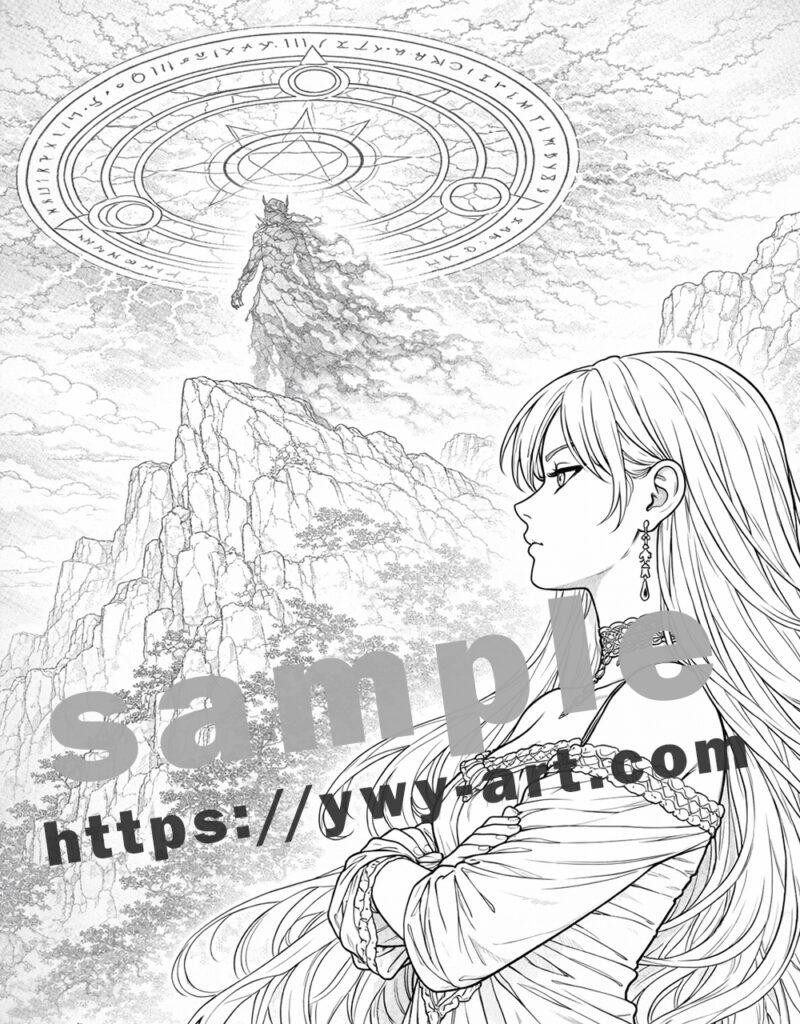
This illustration captures the aftermath of transformation. Circe stands apart from the central event, calm and composed, observing rather than acting. Her stillness is essential, because it shows that her role is already complete.
On the cliff, the transformed figure remains suspended between identities. It is no longer fully human, yet not entirely beast. This ambiguity creates the emotional tension of the scene, while the distance between Circe and the figure reinforces the feeling of judgment without direct confrontation.
Symbolism and Visual Elements
The luminous sigil in the sky dominates the composition. It does not feel like an active spell, but like a law that has already taken effect. It visually binds Circe’s will, the transformation, and its consequence into a single structure.
Fog and spatial distance are equally important. Rather than filling the scene with motion, the composition relies on emptiness, silence, and restraint. This creates a stronger atmosphere of unease than overt action would.
Coloring Variations
- Cold Arcane Style: Use pale yellow, green, and violet for a mystical but restrained magical atmosphere.
- Shadow Beast Style: Use deep purple, muted green, and dark blue to keep the transformed figure ambiguous.
- Fog and Distance Style: Use layered grays, desaturated blues, and dusty violet for a quiet, eerie landscape.
Coloring Tips
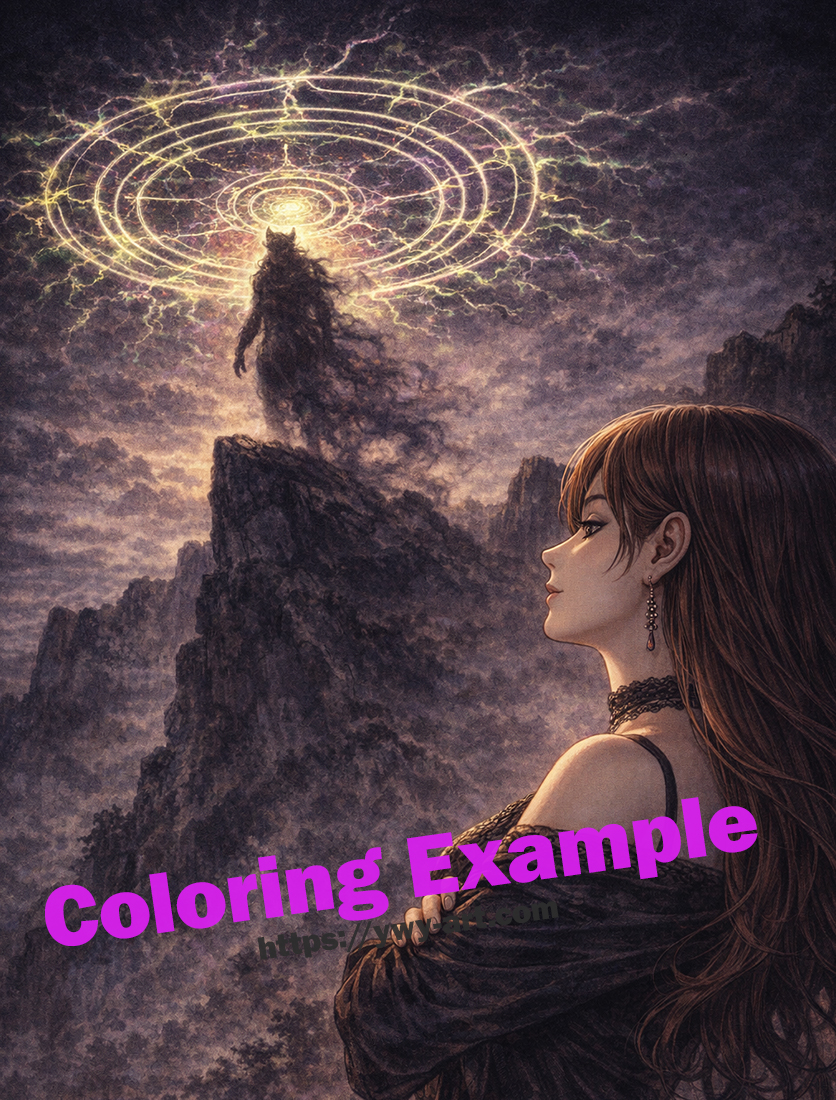
This piece works best through atmosphere rather than heavy contrast. Treat the sigil as a cold, unnatural light source. Pale yellow, green, and violet can create a mystical glow, but keep the effect subtle instead of bright or fiery.
The transformed figure should remain mostly in shadow. Avoid flat black. Instead, build form through muted purples, dark blues, and subdued greens so the identity stays uncertain.
Circe herself should feel grounded and composed. Use soft, slightly desaturated skin tones and moderate contrast so she remains visually stable against the transformation around her. The cliff, sky, and distant landscape should be layered with grays, purples, and desaturated blues to preserve depth and stillness.
Fog is one of the most important elements in this artwork. Apply it with soft transitions and low-opacity color so foreground, midground, and background separate naturally. The key is restraint. Over-coloring will weaken the unsettling calm that gives this piece its strength.
Japanese Summary
キルケーはギリシャ神話において、変身と幻術を司る非常に特異な存在です。彼女の魔法は単なる罰ではなく、相手の内側にある本質を外見として露わにする力として解釈されることが多いです。
そのためキルケーの魅力は、派手な破壊ではなく「静かな暴露」にあります。すでに起きてしまった変化をただ見つめる姿が、他の魔術系キャラクターにはない不気味さと知性を生んでいます。
キルケーという存在
キルケーは圧倒的な力でねじ伏せる神ではありません。彼女は相手の姿を変えることで、理性の裏に隠れていた本能や欲望を見える形にします。
この性質によって、彼女の魔法は単なる攻撃ではなく「真実を暴く鏡」として機能します。そこにキルケー独自の怖さがあります。
獣化の変容というテーマ
この作品で重要なのは、変化の瞬間ではなく、その結果です。人でありながら完全には人でなくなった存在が崖の上に立ち、キルケーはそれを静かに見ています。
つまり、このテーマは「変身の派手さ」ではなく、「本質が暴かれたあとに残る沈黙」を描くものです。その静けさが、不気味さと余韻を強くしています。
このイラストの表現意図
本作では、距離感と静けさを重視しています。キルケー自身は動かず、魔法陣も発動中のようには見えません。すでに結果だけが残っている状態を描くことで、場面全体に避けられない印象を与えています。
崖の上の存在は人と獣の境界に留まり、その曖昧さによって緊張感を作っています。霧や遠景も、直接的な説明を避けながら空気を支える重要な要素です。
塗りのポイント
この作品では強いコントラストよりも空気感が重要です。空の魔法陣は冷たい光として扱い、黄色、緑、紫をベースにしながら発光を抑えめにすると神秘性が出ます。
変化した存在は黒ベタで潰さず、紫、青、緑をわずかに重ねてシルエットとして処理すると曖昧さを保てます。キルケー自身はやや彩度を落とした自然な色で安定感を出し、背景はグレーやくすんだ青紫で距離感を作るとまとまりやすいです。
霧は非常に重要なので、柔らかいグラデーションで前後関係を分けながら塗るのが効果的です。描き込みすぎず、少し残すことでこの作品特有の余韻と不気味さが生きます。
掲載中の塗り絵本シリーズ
Explore the full series and discover more goddesses.
Step into the world of mythology..
Available on Amazon Dark Ritual Goddesses of Mythology Coloring Book Open in a new tab

コメント