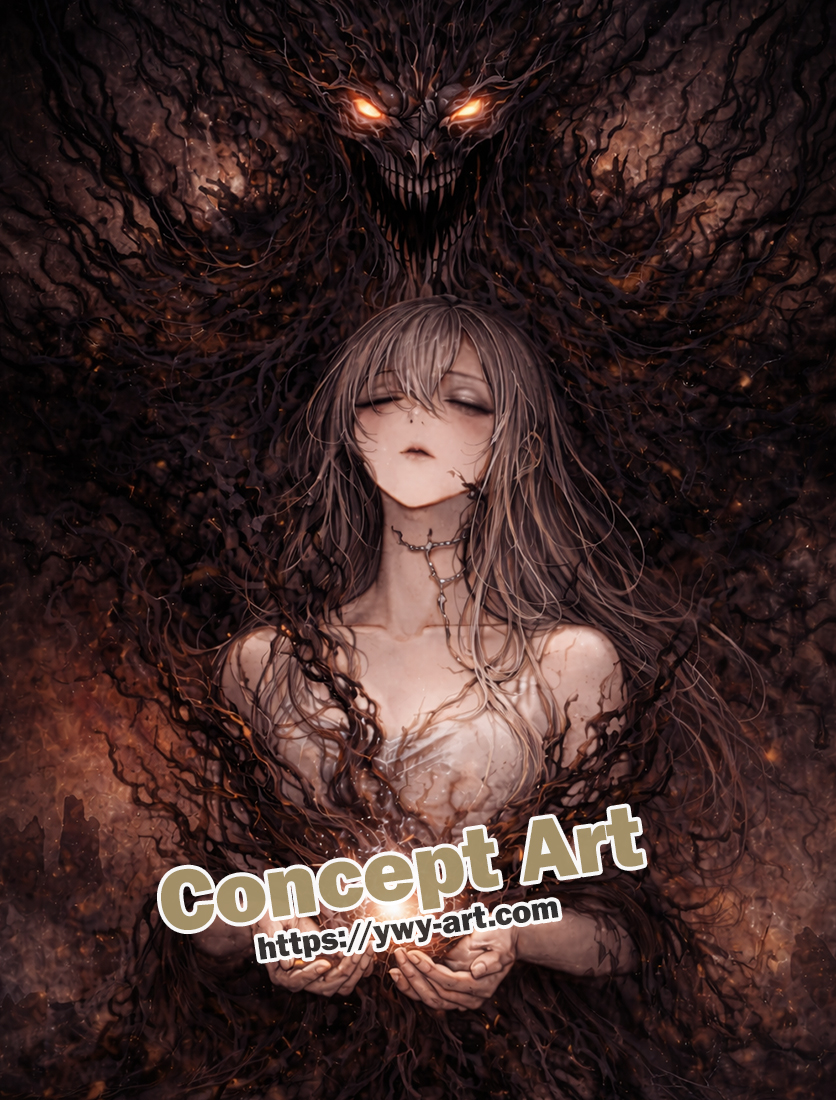
Rite of Final Silence – Angra Mainyu
A ritual where nothing is summoned, nothing is created—only erased. In the presence of Angra Mainyu, existence itself begins to fade, not violently, but inevitably, as if silence has finally taken form.
Basic Profile
| Name | Angra Mainyu |
|---|---|
| Mythology | Zoroastrian Mythology |
| Gender | Male (often conceptualized as a force) |
| Region | Ancient Persia |
| Era | Ancient Iranian Religion |
| Domain | Destruction, Chaos, Corruption, Darkness |
| Symbol | Void, Darkness, Decay, Shadow |
| Culture / Religion | Zoroastrianism |
| Main Role | Embodiment of Evil and Opponent of Creation |
| Associated Deity | Ahura Mazda (as opposing force) |
| Common Depiction | Shadowy entity, demonic presence, formless darkness |
| Alignment | Chaotic Evil |
| Creative Reference | End of existence, consuming void, silent collapse of reality |
Overview
Angra Mainyu, also known as Ahriman, is the destructive spirit in Zoroastrian mythology, representing the complete opposition to creation, order, and truth. Unlike many mythological figures who embody destruction as part of a cycle, Angra Mainyu exists solely to corrupt, dismantle, and ultimately erase existence itself.
He is not simply a god or a being with intent, but a force that operates through inevitability. Where Ahura Mazda represents light and creation, Angra Mainyu is the shadow that seeks to undo it all, not through sudden violence, but through gradual erosion, decay, and the collapse of meaning.
Characteristics
- Embodies absolute opposition to order and creation
- Acts as an inevitable force rather than an emotional entity
- Associated with decay, corruption, and existential collapse
- Often depicted as formless or shifting darkness
- Represents finality rather than transformation
Symbolism and Meaning
Angra Mainyu symbolizes the concept of irreversible decline, where once something begins to fall apart, it cannot be restored. Unlike destructive forces that lead to renewal, his presence signifies a true end, where nothing follows.
The void associated with him is not empty space, but the absence of possibility itself. In artistic representation, this translates into forms that consume rather than strike, dissolve rather than destroy, and silence rather than roar.
Quick Creative Reference
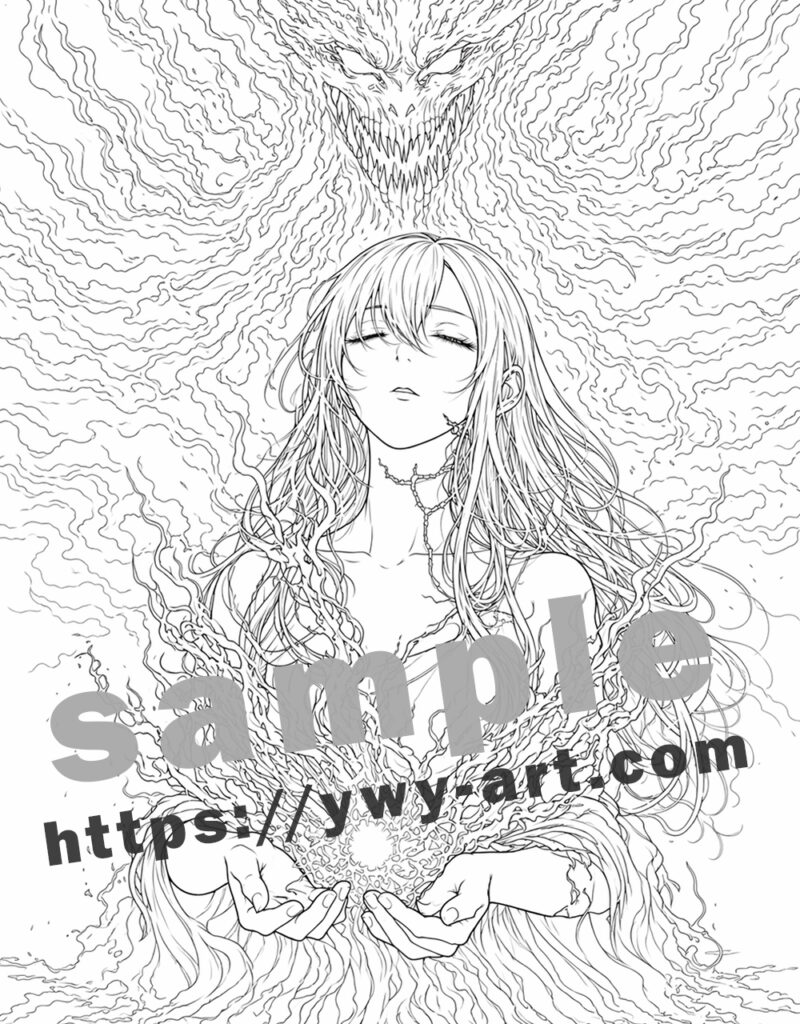
| Best For | End-of-world scenes, abstract destruction, silent horror compositions |
|---|---|
| Visual Keywords | Void, shadow entity, glowing eyes, consuming darkness, collapse |
| Mood | Oppressive, inevitable, silent, overwhelming |
| Useful Themes | Finality, entropy, corruption, existential dread, disappearance |
Compare with Similar Deities
| Name | Mythology | Main Domains | Overall Image |
|---|---|---|---|
| Hades | Greek Mythology | Underworld, Death | Ruler of the dead, not inherently destructive |
| Hel | Norse Mythology | Death, Underworld | Guardian of the dead rather than a destroyer |
| Apophis | Egyptian Mythology | Chaos, Darkness | Serpent of chaos opposing cosmic order |
The Nature of Final Silence
The ritual associated with Angra Mainyu is not one of summoning, but of conclusion. It marks the point where all resistance has already failed, and what remains is the quiet acceptance of an unavoidable end.
This silence is not peaceful, but absolute. It removes sound, movement, and meaning, leaving behind only the presence of something that cannot be opposed.
The Collapse of Form
Unlike deities that act through force or intention, Angra Mainyu dissolves structure itself. Forms begin to lose their boundaries, shadows consume light, and distinctions between existence and non-existence blur.
This makes his depiction particularly suited to abstract visual language, where clarity gives way to fragmentation and disappearance.
The Role of Inevitability
What defines Angra Mainyu most is inevitability. There is no escape, no negotiation, and no reversal. His presence does not demand action—it confirms that action no longer matters.
This concept creates a unique emotional response, where tension is replaced by realization, and fear is replaced by acceptance of the end.
The Presence Beyond Form
Angra Mainyu is often depicted not as a singular being, but as a presence that fills space. This allows for visual interpretations where the environment itself becomes part of the entity.
Darkness, smoke, and distortion are not separate elements, but extensions of his influence, reinforcing the idea that there is no boundary between him and the world he consumes.
Coloring Variations
- Void Dominance: Deep blacks and muted grays to emphasize overwhelming darkness
- Ember Contrast: Dark base with subtle reds and oranges to create inner heat
- Desaturation Theme: Nearly colorless palette to enhance the sense of absence
Coloring Tips
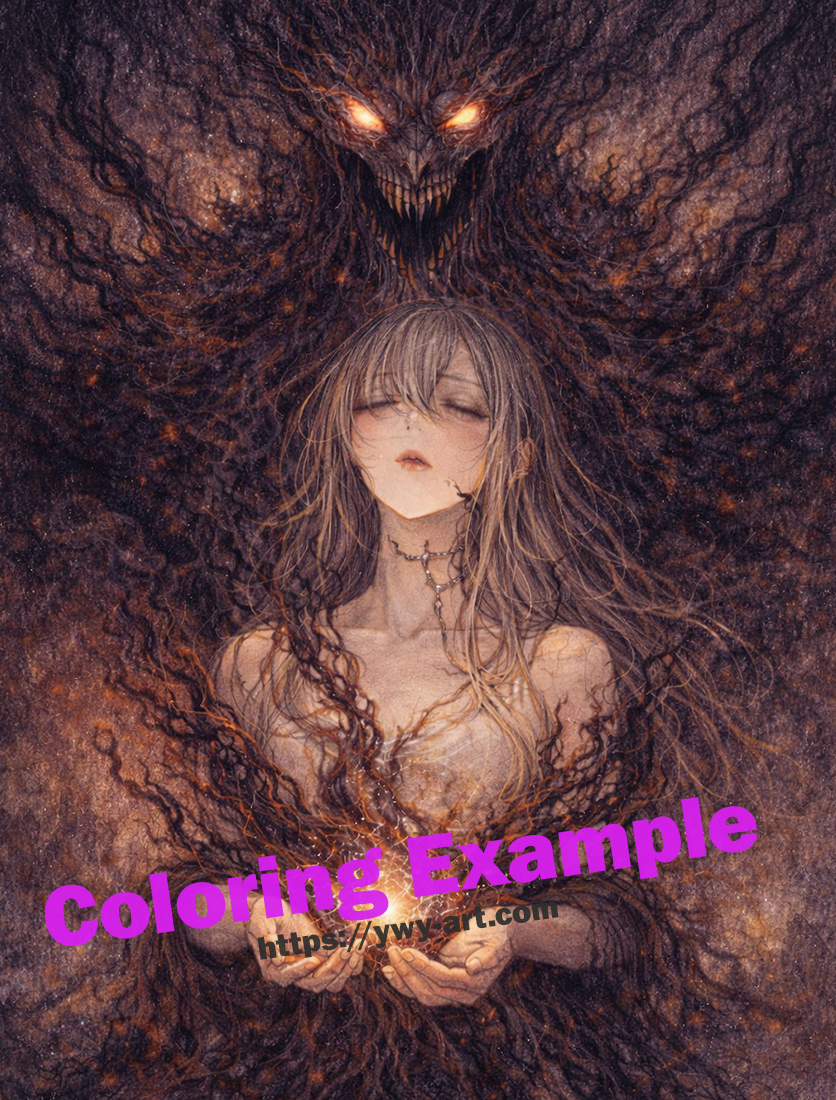
Focus on contrast between the central light and surrounding darkness. The glow should feel fragile, as if it is being consumed rather than expanding.
Use layered shading for the dark areas, allowing variation within black tones to avoid flatness while maintaining depth.
Keep the overall palette controlled and restrained, as excessive color can weaken the concept of silence and finality.
Japanese Summary
アングラ・マイニュはゾロアスター教における破壊の精霊であり、創造や秩序に対する絶対的な対立を象徴する存在です。その本質は破壊ではなく「消失」であり、存在そのものを徐々に侵食し、最終的に無へと導きます。
本作では召喚ではなく終焉の儀式が描かれており、すでにすべてが決した後の静寂の瞬間を表現しています。動きや衝突はなく、ただ不可逆の終わりだけが残る構図です。
終焉の静寂とは何か
この静寂は安らぎではなく、完全な停止を意味します。音も意味も失われ、存在そのものが薄れていく状態です。
それは恐怖というよりも、避けられない結果としての受容に近い感覚を生み出します。
形の崩壊
アングラ・マイニュの影響下では、形は維持されず崩れていきます。輪郭は曖昧になり、光は吸収され、境界が消えていきます。
この特性が視覚表現においても強く反映され、抽象的な構成が非常に有効となります。
不可逆性の表現
この存在の最大の特徴は、元に戻らないという点にあります。一度始まった崩壊は止まることがなく、すべてを巻き込んで終わりへと進みます。
そのため、表現としては「動き」ではなく「確定した結果」を描くことが重要になります。
塗りのポイント
中心の光を基準に、周囲へ向かって暗くなるグラデーションを意識すると構図が引き締まります。黒は一色で塗らず、濃淡をつけることで深みを出すと効果的です。
全体の彩度は抑えめにし、光だけを際立たせることで「終わり」の静けさを強調できます。
Explore Our Coloring Book Series
Explore more dark ritual scenes inspired by mythological forces.
Each piece captures a different aspect of power, silence, and transformation.
Step into the world of mythology..
Available on Amazon Dark Ritual Goddesses of Mythology Coloring Book Open in a new tab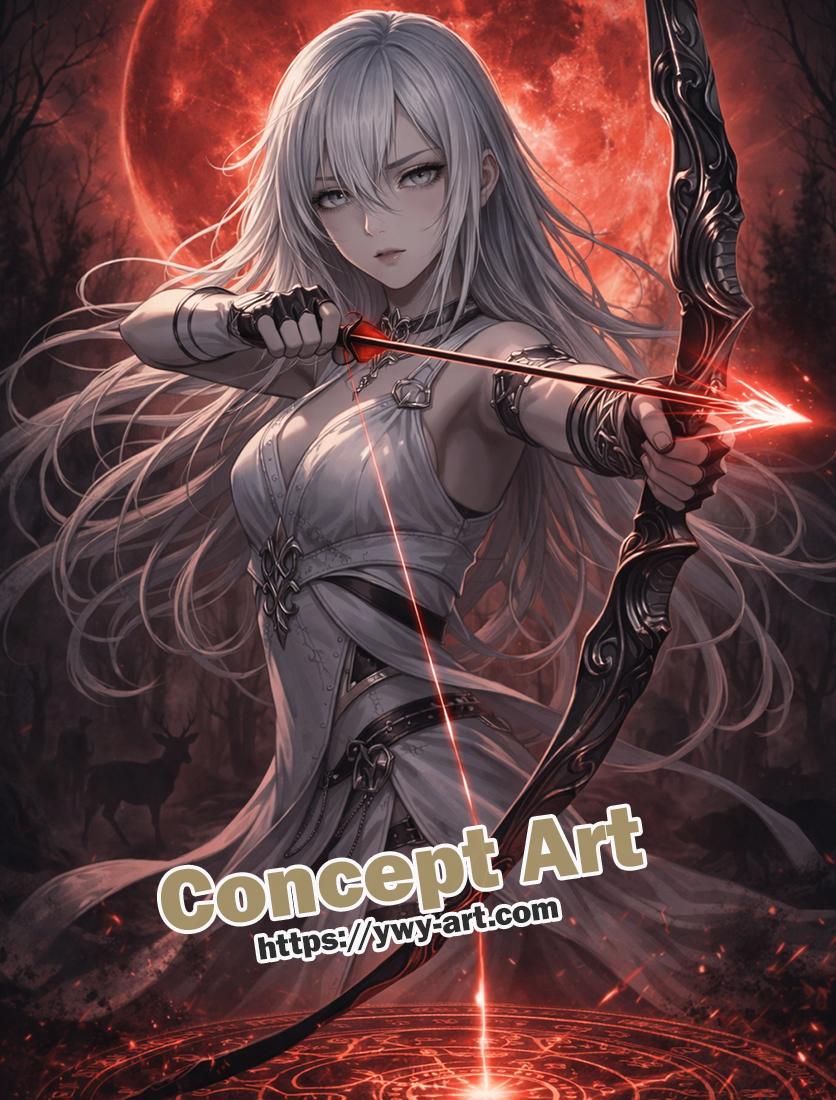

コメント