Basic Profile
| Name | Lamia |
|---|---|
| Origin | Greek Mythology |
| Type | Queen / Demon / Devouring Entity |
| Mythological Role | Child-devouring spirit, cursed lover of Zeus |
| Key Myth | Punished by Hera, lost her children, driven into madness and transformation |
| Abilities | Devouring, psychological influence, gaze-based domination (interpretative) |
| Symbolism | Loss, madness, hunger, transformation, distorted beauty |
| Associated Themes | Curse, grief, identity collapse, ritual consumption |
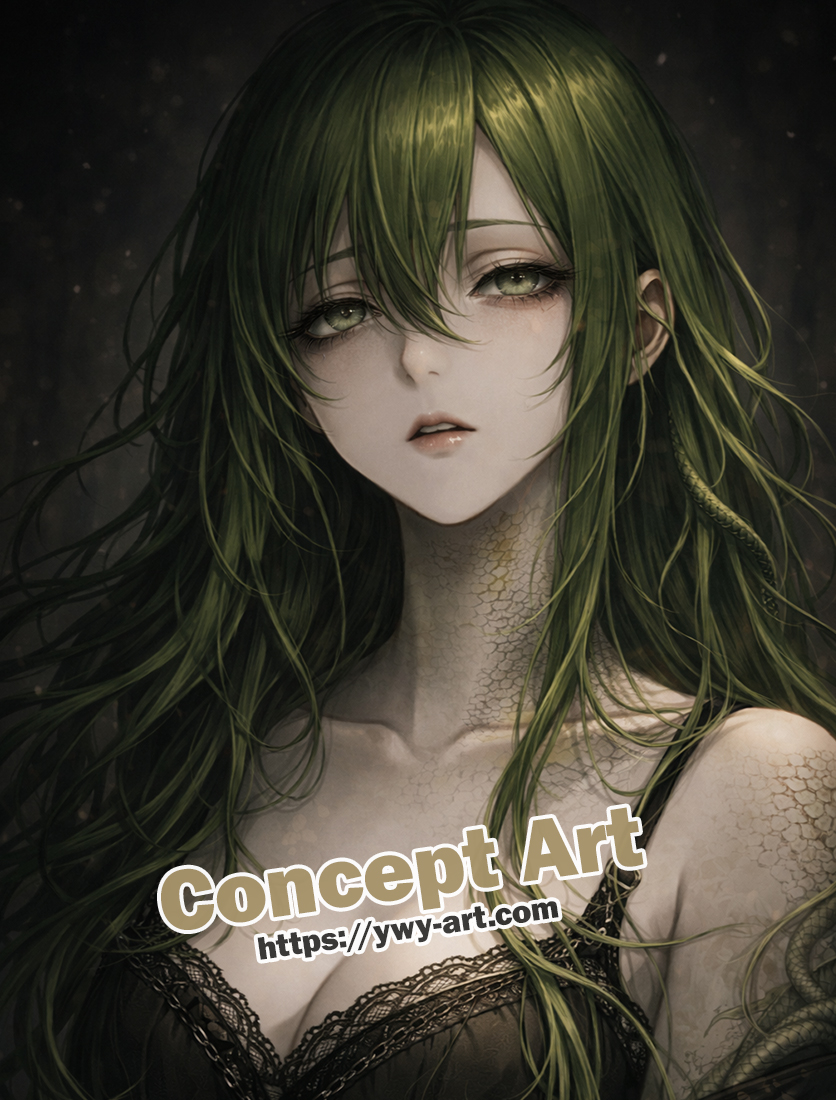
| Visual Traits | Beautiful woman with subtle monstrous features (scales, altered eyes) |
| Ritual Theme | Devouring through gaze and psychological collapse |
Overview
Lamia is one of the most psychologically complex figures in Greek mythology. Unlike creatures that are born monstrous, she represents transformation driven by loss. Once a beautiful queen, she became a devouring entity after being cursed by Hera, who took her children and destroyed her former identity.
This origin is essential to understanding Lamia. She is not defined by aggression, but by absence. Her hunger is not driven by instinct alone, but by something that can never be replaced. This makes her fundamentally different from predators who act out of necessity.
Over time, Lamia’s identity shifts. She exists in a transitional state, retaining human beauty while gradually losing human meaning. This duality — beauty and horror — defines her presence across myth and interpretation.
Characteristics
Lamia’s most defining characteristic is restraint. She does not act violently in a conventional sense. Instead, her influence unfolds through stillness and awareness. This makes her presence far more unsettling than overtly aggressive figures.
Visually, she is often depicted as human with subtle distortions. These include altered eyes, faint scales, or other small indicators of transformation. These details are not dominant but function as signals that something is no longer natural.
Her behavior suggests inevitability rather than intention. She does not react — she simply exists in a way that causes change around her.
Symbolism and Meaning
Lamia symbolizes unresolved loss and the transformation that follows it. Her story reflects how identity can collapse when fundamental connections are severed.
Her hunger represents absence rather than desire. It cannot be satisfied because it originates from something that cannot be restored.
Her gaze, especially in later interpretations, represents psychological collapse rather than physical destruction. It suggests that perception itself can become unstable, dissolving the boundary between subject and object.
Quick Creative Reference
| Core Theme | Transformation through loss |
|---|---|
| Emotional Tone | Calm, detached, inevitable |
| Visual Motifs | Gaze, scales, flowing hair, subtle distortion |
| Color Direction | Dark green, olive, pale skin, muted shadows |
| Atmosphere | Silent tension, psychological unease |
Compare with Similar Figures
| Figure | Difference |
|---|---|
| Medusa | Immediate physical transformation vs gradual psychological collapse |
| Lilith | Autonomy and rebellion vs loss-driven transformation |
| Succubus | Desire-driven interaction vs absence-driven devouring |
About This Artwork
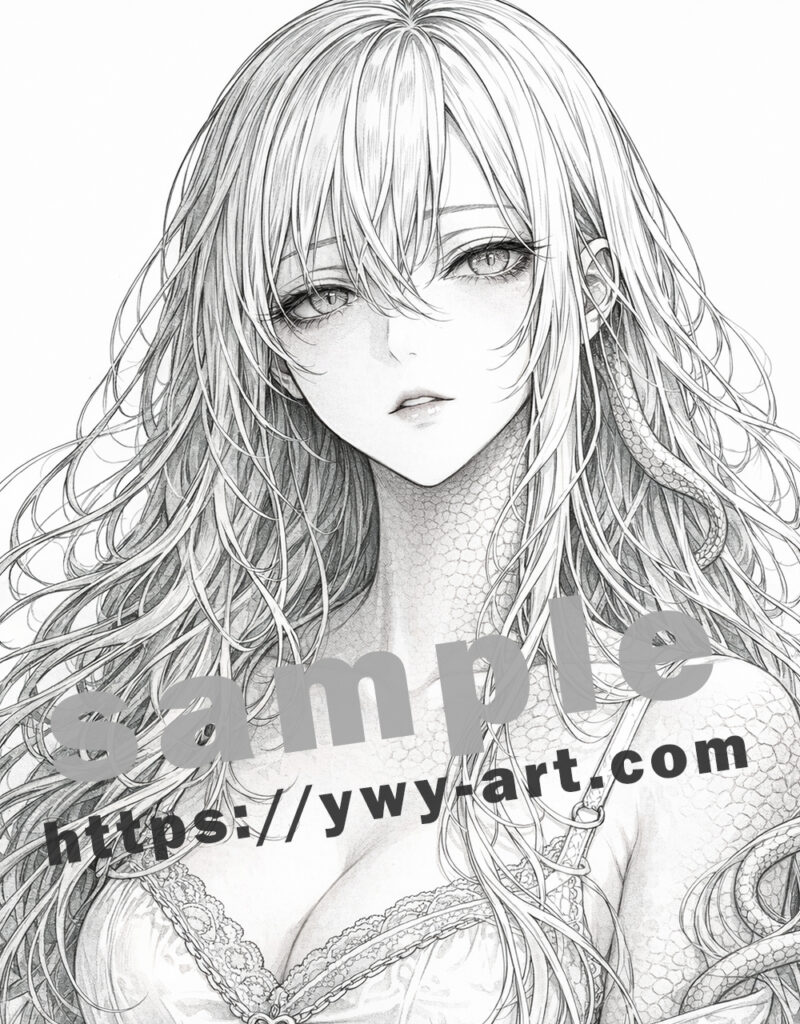
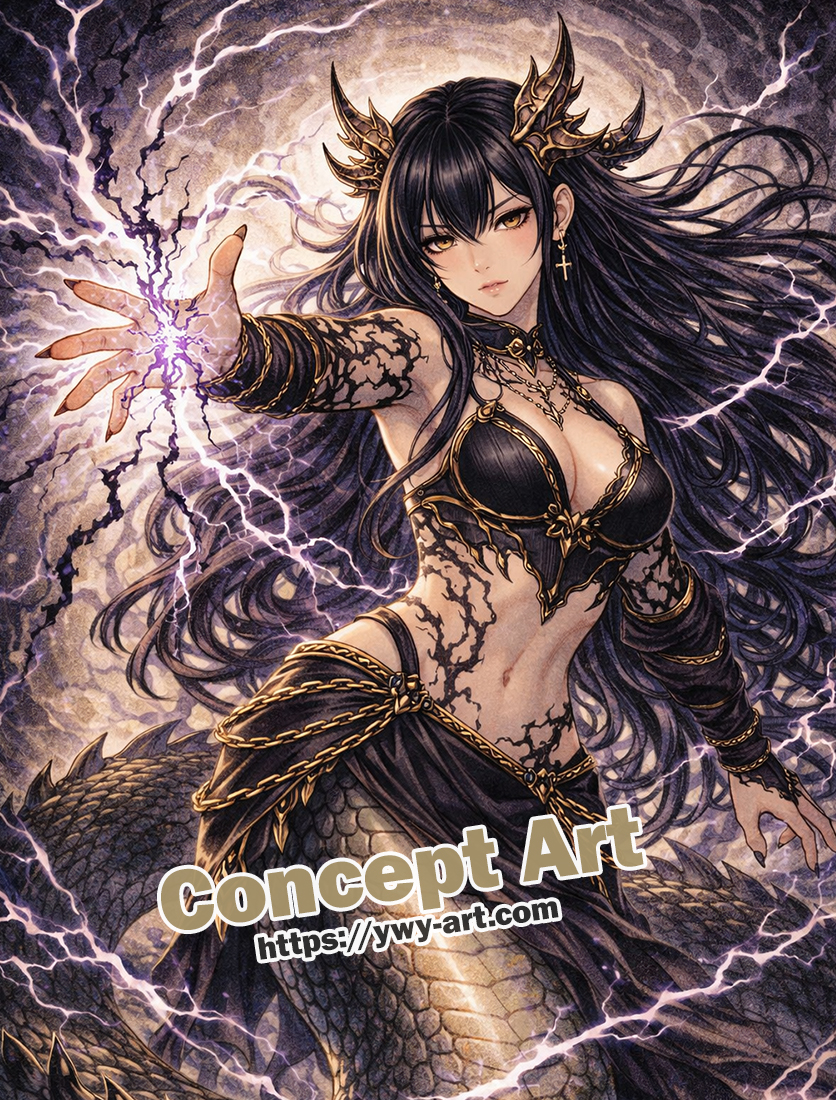
This illustration captures the moment just before Lamia’s ritual reaches completion.
The focus is not on action, but on perception. The viewer is placed directly within her gaze, reinforcing the idea that the process begins through observation rather than physical movement.
The subtle scales and altered expression suggest that the transformation has already occurred. What remains is the final stage — the completion of the ritual.
Symbolism and Visual Elements
The eyes function as the central mechanism of the ritual, representing control and inevitability. Their subdued expression avoids aggression, emphasizing psychological tension.
The green hair introduces a non-human element while maintaining visual cohesion. It reinforces the idea that Lamia is no longer entirely human.
The scales act as transitional markers, indicating the gradual shift from human identity to something else.
Coloring Variations
Using stronger green tones emphasizes her inhuman qualities, while softer tones retain more of her original human beauty.
Adjusting contrast can significantly change the mood, shifting between tension and stillness.
Coloring Tips
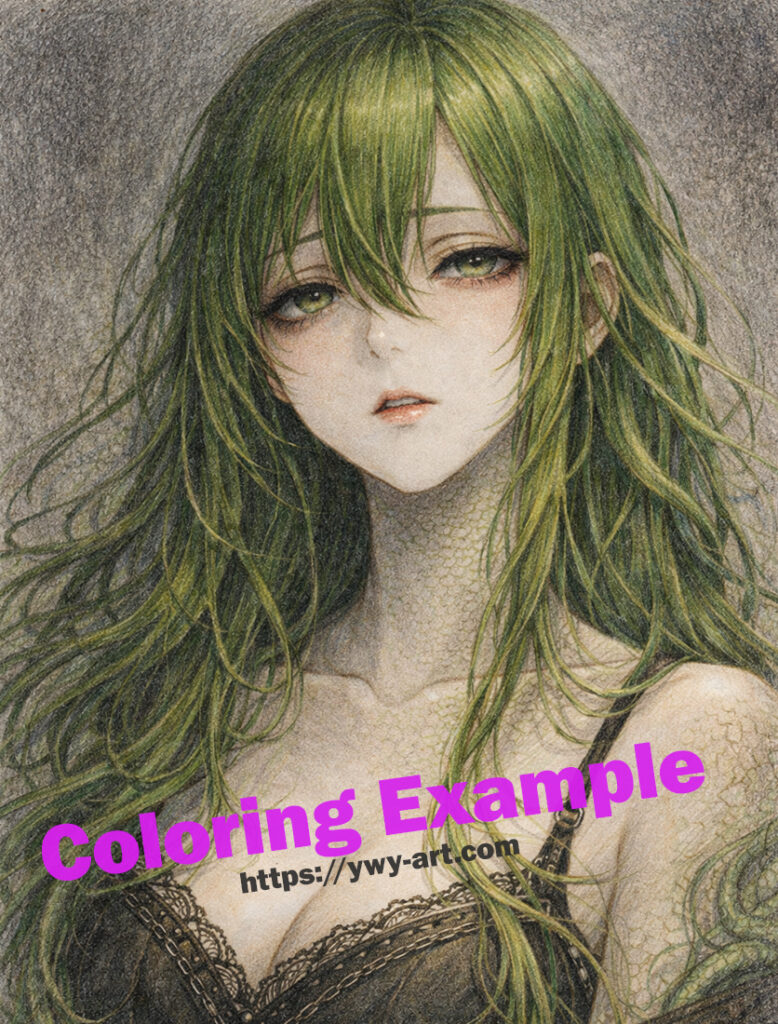
Layer greens in the hair to create depth rather than applying flat color.
Keep skin pale with cool-toned shadows to maintain detachment.
Blend scales subtly into the skin.
Reduce eye highlights to enhance quiet predation.
日本語要約
ラミアはギリシャ神話に登場する存在であり、喪失によって変化した象徴的なキャラクターです。かつては美しい女王でしたが、ヘラの報復によって子どもを失い、その結果として人間性が崩れていきました。
彼女の特徴は暴力ではなく静けさにあります。追うことも襲うこともなく、ただ存在することで影響を与える存在です。この性質が、他の神話的存在とは異なる不気味さを生み出しています。
この作品について
本作はラミアの儀式が完了する直前の瞬間を描いています。視線によって始まる捕食という解釈をもとに構成されており、動きではなく認識そのものが変化を引き起こす状態を表現しています。
塗りのポイント
髪はグリーンを重ねて立体感を出し、肌は冷たいトーンで仕上げます。鱗は強調しすぎず、違和感として残すことが重要です。
Explore Our Coloring Book Series
Explore more dark mythology illustrations designed for detailed coloring and atmospheric expression.
Step into the world of mythology..
Available on Amazon Dark Ritual Goddesses of Mythology Coloring Book Open in a new tab

コメント