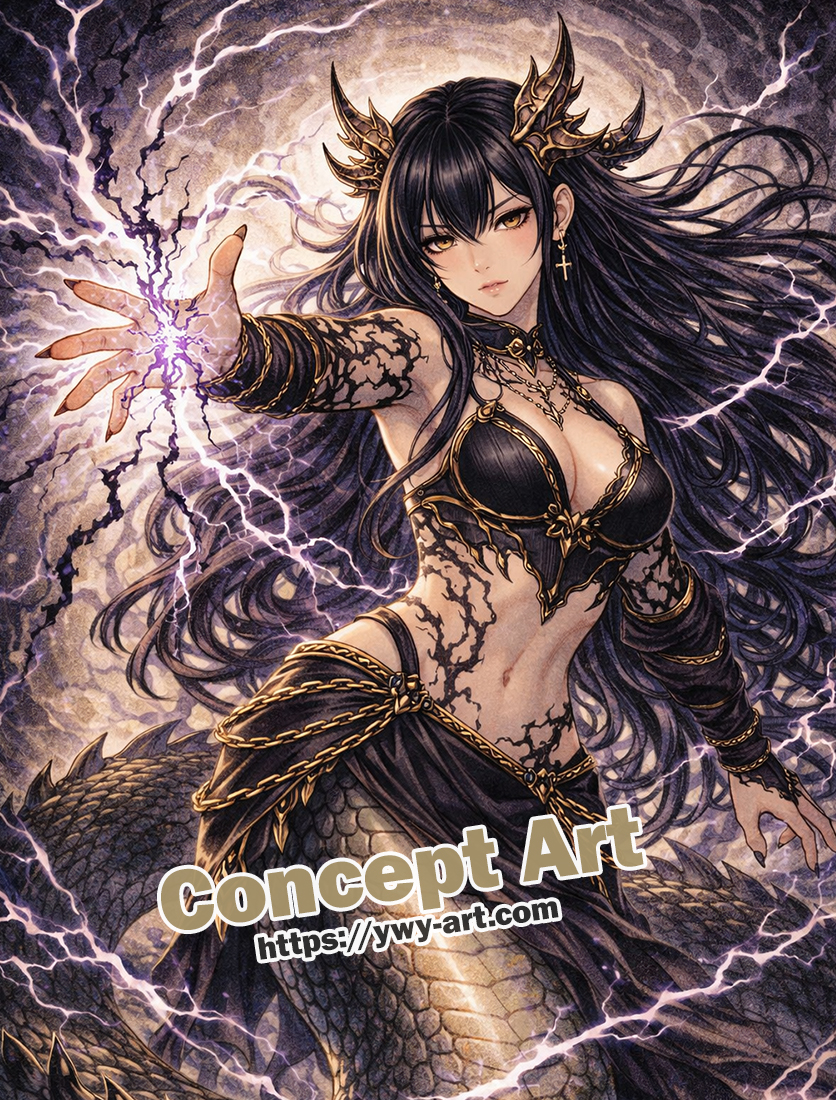
Tiamat is a primordial Mesopotamian goddess of chaos, the sea, and creation, known as the living source from which gods and worlds first emerged.
- Basic Profile
- Overview
- Characteristics
- Symbolism and Meaning
- Quick Creative Reference
- Compare with Similar Deities
- The Primordial Mother of Chaos
- The Meaning of Summoning of Chaos
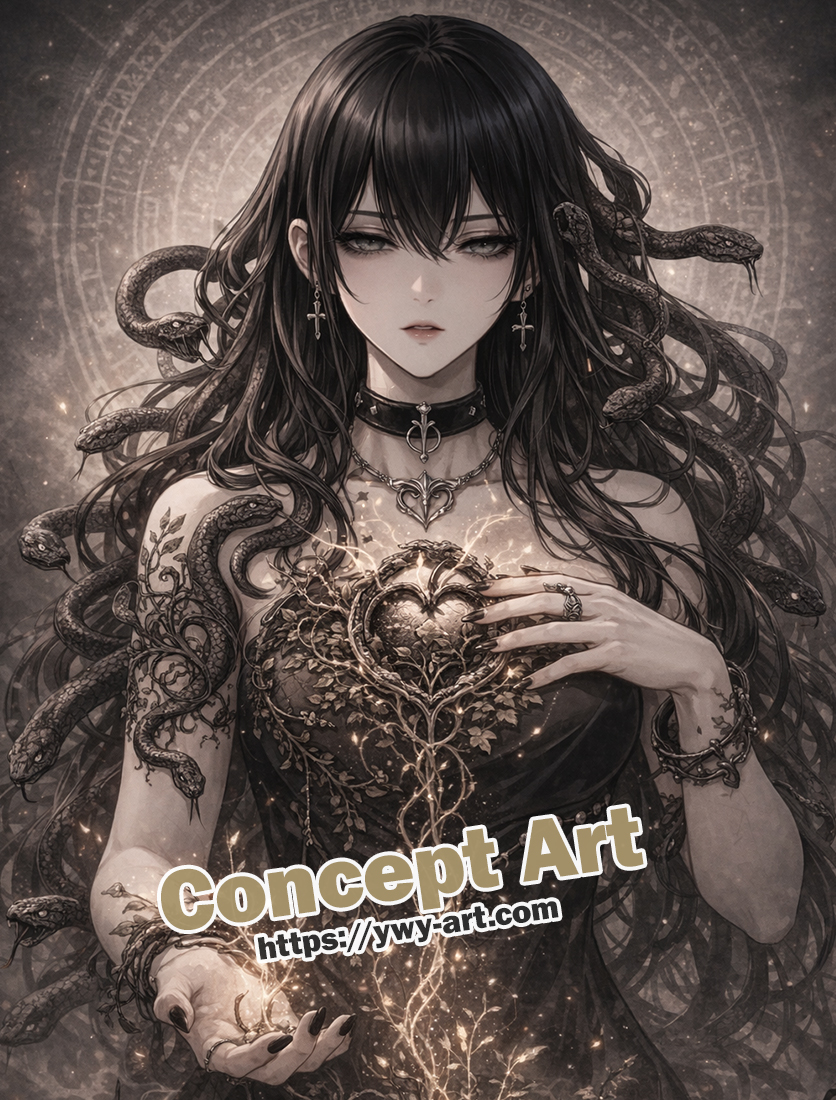
- The Scene Depicted in This Artwork
- Symbolism and Visual Elements
- Coloring Variations
- Coloring Tips
- Japanese Summary
- ティアマトという存在
- Summoning of Chaos の意味
- このイラストの表現意図
- 塗りのポイント
- Explore Our Coloring Book Series
Basic Profile
| Name | Tiamat |
|---|---|
| Mythology | Mesopotamian / Babylonian |
| Gender | Female |
| Region | Ancient Mesopotamia |
| Era | Ancient |
| Domain | Primordial Sea, Chaos, Creation |
| Symbol | Ocean, Serpent, Dragon, Abyss |
| Culture / Religion | Babylonian religion / Mesopotamian mythology |
| Main Role | Primordial mother, embodiment of chaos, source of cosmic creation |
| Associated Deity | Apsu, Marduk |
| Common Depiction | A vast sea-dragon or a divine feminine force fused with serpentine and oceanic imagery |
| Alignment | Creative / Destructive |
| Creative Reference | Use dark fantasy, primordial goddess, oceanic chaos, serpent queen, cosmic mother, abyssal power |
Overview
Tiamat is one of the most ancient and symbolically powerful beings in Mesopotamian mythology. She is not simply a goddess who rules over one element of the world. She is the primordial sea itself, the limitless and chaotic state that existed before the structured cosmos was formed. In many interpretations, she stands at the beginning of creation, not as a secondary figure within the divine order, but as the living source from which gods, life, and conflict first emerged.
Her mythology carries a dual nature that makes her especially compelling as a creative and visual reference. Tiamat is both mother and destroyer, origin and catastrophe, womb and abyss. She gives rise to divine existence, yet later becomes the overwhelming force that opposes the younger gods when cosmic order begins to turn against the old world she embodies. This tension between sacred creation and uncontrollable destruction is the core of her presence.
Unlike deities defined by morality, protection, or kingship, Tiamat belongs to a more primal level of myth. She represents reality before it was divided into safe categories. That is why she feels immense, ancient, and difficult to contain in a single image. For artists, storytellers, and mythology lovers, she offers a rare archetype: not merely a goddess of chaos, but the divine form of chaos before civilization gave it a name.
Characteristics
- Primordial goddess associated with the first oceanic chaos
- Regarded as a mother of early gods in Mesopotamian creation mythology
- Embodies both creation and destruction rather than a single moral role
- Often linked with serpentine, dragon-like, or abyssal imagery
- Represents a force older than order, law, or human civilization
- Associated with cosmic conflict and the birth of structured reality
- Works especially well in dark fantasy, divine horror, and myth-inspired art
Symbolism and Meaning
Tiamat symbolizes the primordial state of existence before order was imposed upon the universe. The sea in ancient myth is not merely water. It is depth without boundary, life without form, danger without limit. As the personification of this original abyss, Tiamat becomes a symbol of all possibilities before structure: creation, fear, fertility, dissolution, transformation, and uncontrollable power.
Her serpentine and dragon-like associations deepen this symbolism. Serpents in myth often carry meanings tied to ancient knowledge, cyclic power, danger, and a force that cannot be domesticated. In Tiamat’s case, the imagery suggests not just a monster, but a body large enough to hold storm, flood, and the unknown. She is terrifying not because she is evil, but because she belongs to a scale of existence beyond human safety.
At the same time, Tiamat also symbolizes the paradox that creation and destruction are not opposites, but neighbors. The same abyss that gives birth to gods can also erase worlds. This makes her uniquely powerful as a symbolic figure. She is not simply what must be defeated. She is the truth that order itself emerges from chaos and can never fully escape it.
Quick Creative Reference
| Best For | Dark fantasy character design, primordial goddess concepts, divine chaos themes, myth-inspired illustration, abyssal queen reference |
|---|---|
| Visual Keywords | Ocean, serpent, dragon, abyss, whirlpool, ancient symbols, horns, scales, flowing hair, cosmic storm |
| Mood | Ancient, vast, terrifying, majestic, inevitable, otherworldly |
| Useful Themes | Creation and destruction, primal motherhood, cosmic rebellion, chaos before order, divine abyss |
Compare with Similar Deities
| Name | Mythology | Main Domains | Overall Image |
|---|---|---|---|
| Tiamat | Mesopotamian | Chaos, Primordial Sea, Creation | Cosmic mother of the abyss and living source of ancient chaos |
| Kali | Hindu | Destruction, Time, Liberation | Sacred destruction and transcendence beyond fear |
| Nammu | Sumerian | Primeval Waters, Creation | Ancient mother of the watery void and divine birth |
The Primordial Mother of Chaos
Tiamat is one of the central figures in the Babylonian creation tradition and stands as one of the oldest divine mothers in recorded mythology. She is associated with the saltwater sea and exists alongside Apsu, the freshwater deep. From their union, the first generations of gods emerge, making Tiamat not merely a chaotic force, but a direct source of divine life itself.
As the myth develops, the younger gods become noisy, disruptive, and increasingly distant from the ancient stillness of the primordial world. Conflict rises between the old powers and the new divine order. After Apsu is killed, Tiamat’s role changes dramatically. She is no longer only the mother of gods. She becomes the ancient world resisting replacement.
In later scenes of the myth, she gathers monstrous beings and prepares for war. This shift is what gives Tiamat her unforgettable power as a mythological figure. She is not a simple villain created for heroic triumph. She is a wounded, cosmic mother whose transformation into an enemy reflects a deeper truth: every new order is born by confronting what came before it.
The Meaning of Summoning of Chaos
The title Summoning of Chaos does not suggest random violence or senseless destruction. In Tiamat’s case, chaos is older than civilization, older than law, and older than the gods who later claim dominion over the universe. It is the original condition of existence. To summon chaos, then, is to awaken the buried force from which all structure first emerged.
This gives the phrase a deeper mythological meaning. Tiamat does not create disorder in the ordinary sense. She calls forth the truth beneath imposed order — the abyss that still exists under every boundary and every throne. Her chaos is not emotional instability. It is primordial magnitude. It is the pressure of creation itself before it hardens into system and hierarchy.
Because of this, the scene can be read as both threat and revelation. What is being summoned is not merely destruction, but a return to origins. The moment carries the terror of collapse, yet also the awe of witnessing something older and greater than the world humans understand.
The Scene Depicted in This Artwork
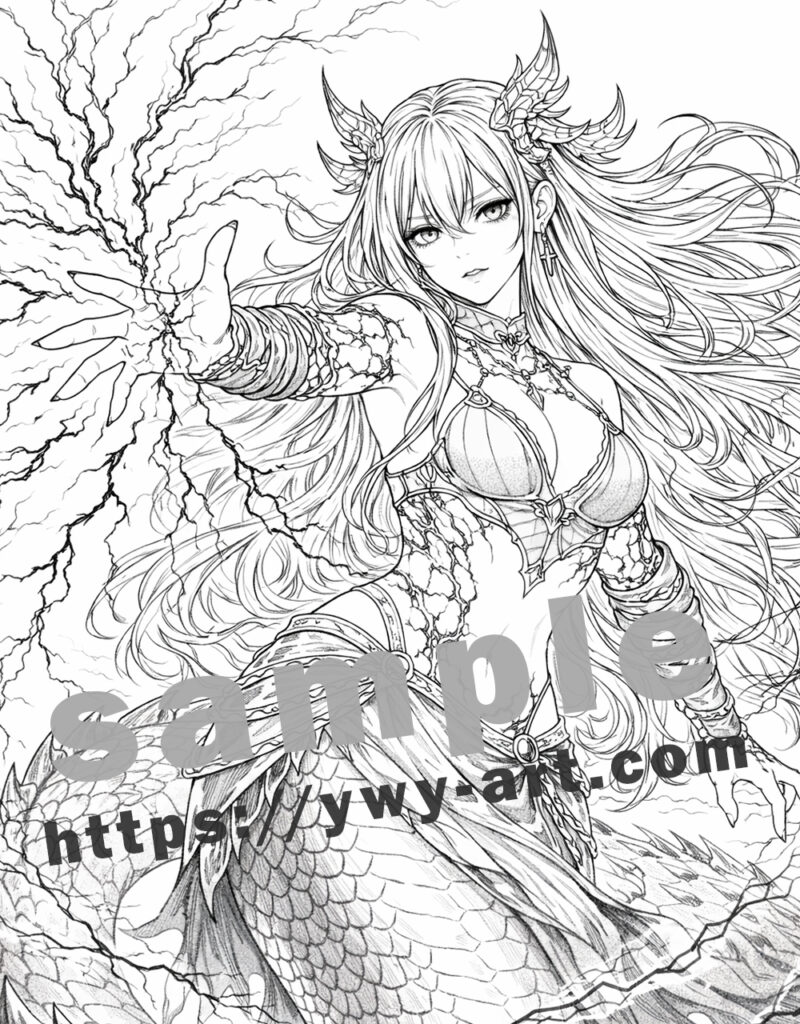
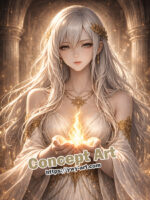
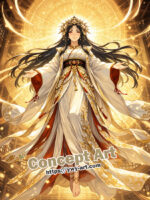
This illustration captures the moment when Tiamat calls the ancient abyss into visible form. Rather than presenting her as a distant sea monster or a purely beast-like dragon, the artwork frames her as a divine feminine presence standing at the center of an awakening storm. Her figure remains beautiful and imposing, but that beauty is inseparable from danger. She looks less like a queen seated on a throne and more like the living threshold between existence and dissolution.
The swirling energy around her suggests that the world is no longer stable. Waves, serpentine movement, ritual currents, and abyssal force gather in response to her will. Her body appears connected to the surrounding storm as though she is not standing inside chaos, but generating it. This makes the image feel less like a battle scene and more like a moment of cosmic manifestation.
There is also a deliberate sense of inevitability in the composition. Tiamat does not need exaggerated rage to appear powerful. Her authority comes from scale, stillness, and absolute presence. The viewer is placed in the position of witnessing the birth of a catastrophe too ancient to be stopped by ordinary means.
Symbolism and Visual Elements
The serpentine lines and flowing forms represent the instability of the primordial sea. Unlike rigid weapons or architectural structures, these shapes refuse fixed boundaries. They suggest movement without beginning or end, echoing the idea that Tiamat belongs to an age before the world was divided into stable realms.
Oceanic motifs carry the symbolism of birth and destruction at the same time. Water is the medium of life, but in myth it is also depth, erasure, and dissolution. By surrounding Tiamat with currents, spirals, and abyss-like energy, the artwork emphasizes her identity as a cosmic source rather than a merely terrestrial goddess.
If horns, scales, dragon forms, or ritual sigils appear in the composition, they reinforce the idea that Tiamat exists beyond one body. She is both woman and force, both deity and environment. These elements help communicate that her presence cannot be reduced to a single creature design. She is the ancient condition from which monsters, gods, and worlds can all emerge.
Coloring Variations
- Abyssal Ocean Style: Use deep blue, teal, indigo, and black-green tones to emphasize ancient sea depth and overwhelming mystery.
- Cosmic Chaos Style: Use violet, midnight blue, dark crimson, and muted gold to create a mythic, universe-shaping atmosphere.
- Primordial Earth Style: Use slate, copper, dark turquoise, ash gray, and mineral tones for an ancient world before civilization fully formed.
Coloring Tips
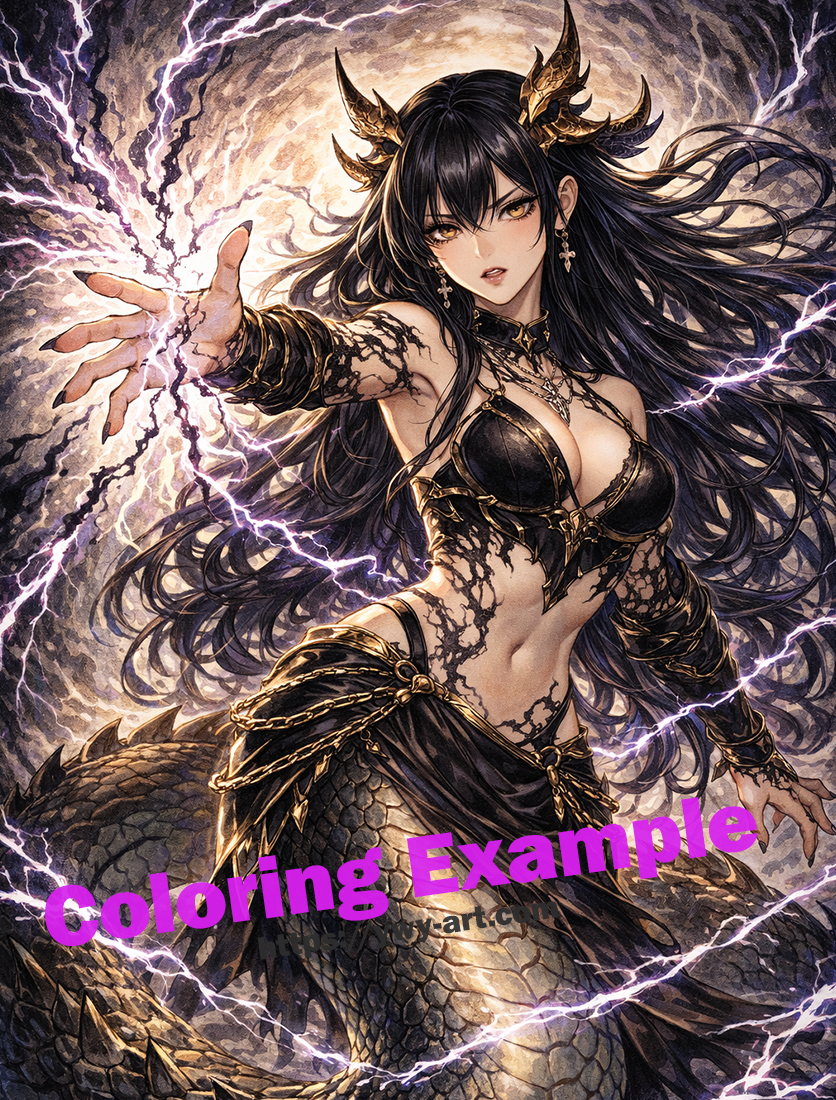
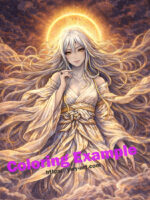
Start by deciding whether Tiamat should feel more oceanic or more cosmic. If the goal is an abyssal sea presence, build the palette around dark blues, blue-greens, and layered shadow tones. If the goal is divine chaos, introduce violet, crimson, and metallic accents in selected focal areas so the power feels supernatural rather than naturalistic.
Layering is especially important for this artwork. Tiamat works best when the image has depth rather than flat blocks of color. Gradual transitions in the background can make the space feel vast, while denser contrast near the face, hands, or central energy can create visual hierarchy. This approach helps the composition feel alive and dimensional.
For serpentine or wave-like details, follow the direction of the lines when blending colors. This preserves movement and prevents the design from becoming visually heavy. Metallic accents such as muted gold, antique bronze, or pale silver can be used sparingly to suggest sacred power without breaking the dark atmosphere. Keep the brightest highlights controlled so the image retains its ancient, ominous tone.
Japanese Summary
ティアマトはメソポタミア神話、特にバビロニアの創世神話に登場する原初の女神であり、生命と神々が生まれる以前から存在していた混沌の海を体現する存在です。後の神々のように明確な役割分担を持つ神ではなく、世界そのものがまだ形を持たなかった時代の力を象徴しています。
彼女は神々の母として創造の側面を持つ一方で、若い神々との対立の中で破壊的な存在へと転じ、宇宙規模の戦いを引き起こす側にも回ります。この創造と破壊の両面性こそが、ティアマトという存在の大きな魅力です。
創作資料として見ると、ティアマトは単なる怪物や悪役ではありません。秩序の外側にある原初の力、世界の根底に今も残っている深淵、そしてすべての始まりと終わりを同時に感じさせる、非常にスケールの大きい神格です。
ティアマトという存在
ティアマトは、古代メソポタミア神話において原初の海を象徴する女神です。淡水の深淵アプスーと並ぶ根源的な存在として語られ、そこから最初の神々が生まれたとされます。つまり彼女は混沌であると同時に、神々の母でもあります。
しかし神話が進むにつれて、若い世代の神々と古い世界のあいだに対立が生まれます。その中でティアマトは単なる母ではなくなり、古き世界そのものの力として立ち上がります。ここで彼女は破壊的な側面を強め、怪物たちを従え、秩序へ対抗する存在として描かれるようになります。
この変化がティアマトを非常に魅力的な神格にしています。最初に生命を生み出した存在が、同時に世界を飲み込む深淵でもあるという構造が、他の神々にはない圧倒的なスケール感を生んでいます。
Summoning of Chaos の意味
「Summoning of Chaos」という題名は、単なる暴走や無秩序を意味しているわけではありません。ティアマトにおける混沌とは、秩序が作られる以前から存在していた世界の原型です。まだ境界も支配も確立していない、すべての始まりとなる状態そのものです。
そのため、ここで呼び起こされる混沌は感情的な怒りではなく、世界の土台に眠っていた原初の力の再浮上といえます。文明や神々の秩序によって押さえ込まれていた深淵が、再び表面へ現れてくるイメージです。
この言葉には、破壊の恐ろしさだけでなく、起源へ立ち返るような神話的な畏れも含まれています。崩壊の予兆であると同時に、世界の始まりをもう一度目撃するような感覚を与える題名です。
このイラストの表現意図
本作では、ティアマトを単なる巨大な怪物として描くのではなく、混沌そのものを呼び出す神聖かつ危険な存在として表現しています。女性的な威厳を残しながら、その周囲に渦巻く海流や蛇のような流れ、深淵のエネルギーによって、人の形に収まりきらないスケール感を持たせています。
画面の中心に立つティアマトは、怒りを露骨に見せる必要がありません。静かな顔や落ち着いた姿勢であっても、周囲の世界そのものが彼女に反応して変形していることで、かえって強大さが際立ちます。暴れる存在ではなく、存在しているだけで世界の均衡を崩すような圧力が重要です。
そのためこのイラストは、戦闘の瞬間よりも「何かが始まってしまった瞬間」に重点を置いています。見る側は、これから起こる大きな破壊を想像しながら、同時に原初の神話的スケールに引き込まれる構図になっています。
塗りのポイント
ティアマトらしさを強く出すなら、深い青、青緑、藍、黒に近い緑など、海の深さを感じさせる色が非常に相性が良いです。そこに紫や暗い赤を差し込むと、単なる水の表現ではなく、神話的な混沌や不穏さを加えることができます。
全体を単色でまとめるよりも、暗い色の層を重ねて奥行きを作るほうが、このテーマには向いています。背景は広がりを意識してなめらかに、中心に近い部分はコントラストを少し強めることで、ティアマトの存在感が自然に際立ちます。
蛇や波のような流れの部分は、線の向きに沿って色を重ねると動きが出しやすくなります。金属感を足したい場合は、金や古びた銅色をほんの一部に使う程度に留めると、暗く神秘的な雰囲気を壊さずに神格らしさを出せます。
Explore Our Coloring Book Series
Discover the full collection.
Explore more goddesses and bring them to life with your colors.
Step into the world of mythology..
Available on Amazon Dark Ritual Goddesses of Mythology Coloring Book Open in a new tab

コメント