- Ritual of Slaughter – Anat
- Basic Profile
- Overview
- Characteristics
- Symbolism and Meaning
- Quick Creative Reference
- Compare with Similar Deities
- The Goddess of Sacred Slaughter
- The Meaning of Ritual of Slaughter
- The Scene Depicted in This Artwork
- Symbolism and Visual Elements
- Coloring Tips
- アナトという存在
- Ritual of Slaughter という意味
- このイラストの表現意図
- 塗りのポイント
- Conclusion
- Explore Our Coloring Book Series
Ritual of Slaughter – Anat
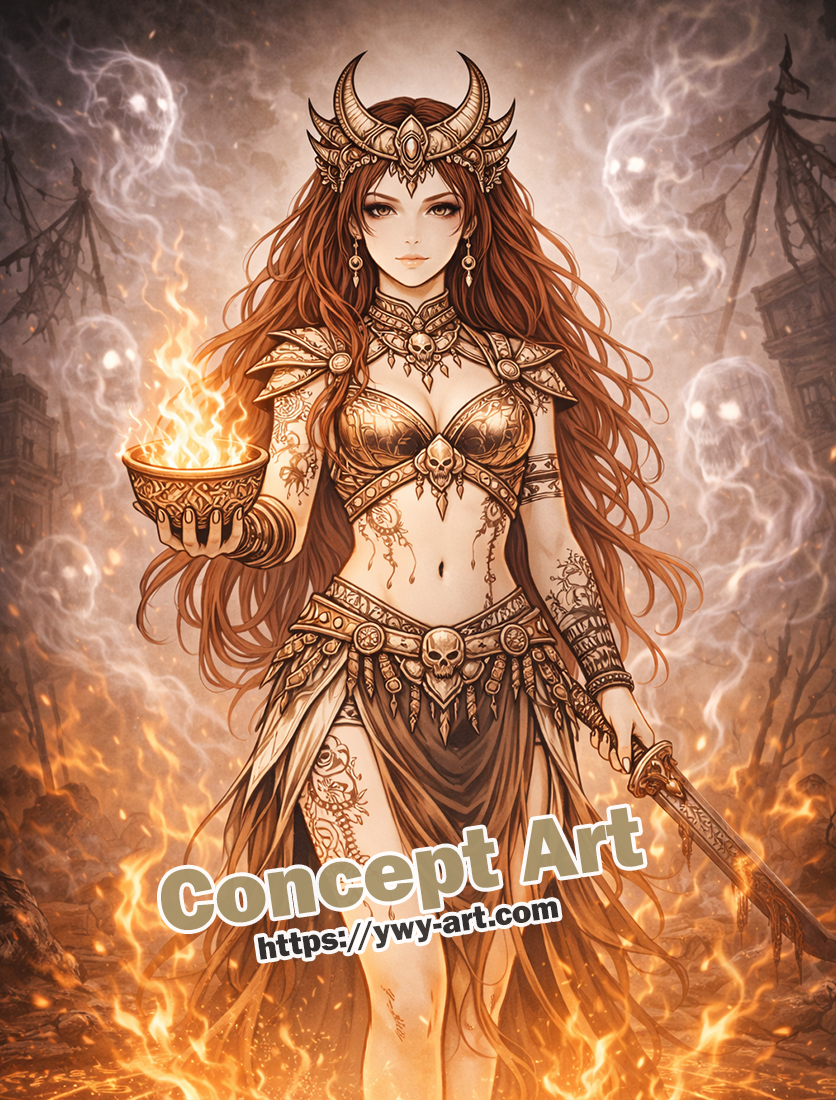
Enter the ritual of destruction with Anat — a goddess who does not stand apart from violence, but steps directly into it. In this artwork, slaughter is not chaos. It is intention. It is power given form through stillness, fire, and absolute certainty.
Basic Profile
| Name | Anat |
|---|---|
| Mythology | Canaanite / Ugaritic |
| Gender | Female |
| Region | Ancient Near East |
| Era | Ancient |
| Domain | War, Violence, Bloodshed |
| Symbol | Weapons, battlefield, ritual force |
| Culture / Religion | Ugaritic religion |
| Main Role | War goddess and embodiment of divine violence |
| Associated Deity | Baal |
| Common Depiction | A youthful warrior goddess engaged in relentless combat |
| Alignment | Destructive / Absolute |
| Creative Reference Use | Dark fantasy, ritual violence, divine war, controlled destruction |
Overview
Anat is one of the most striking and violent figures in ancient Near Eastern mythology. In Ugaritic texts, she is not portrayed as a distant deity of strategy or command, but as a goddess who enters the battlefield herself, embodying the act of violence directly. :contentReference[oaicite:0]{index=0}
She is closely associated with the storm god Baal, acting as both his ally and a force of overwhelming destruction in her own right. :contentReference[oaicite:1]{index=1} Unlike other deities who represent war symbolically, Anat transforms it into something immediate, physical, and absolute.
Characteristics
- A warrior goddess who engages directly in combat
- Associated with extreme violence and total annihilation
- Combines youthful beauty with merciless brutality
- Acts with certainty rather than emotional chaos
Symbolism and Meaning
In myth, Anat’s violence is described with unusual intensity. She is portrayed as overwhelming her enemies completely, pushing destruction to a level that becomes almost ritualistic in repetition and scale. :contentReference[oaicite:2]{index=2}
Yet this is not uncontrolled rage. Anat represents violence as divine execution — a force that does not hesitate, does not question, and does not stop. Her actions impose a form of order through destruction, making her one of the clearest embodiments of sacred violence in mythology.
Quick Creative Reference
- Core Mood: Violent, sacred, inevitable
- Visual Tone: Calm face within destructive atmosphere
- Color Direction: Crimson accents, gold, bronze, dark neutrals
- Best Coloring Approach: Strong contrast with restrained use of red
- Key Emotional Impression: Beauty fused with unstoppable force
Compare with Similar Deities
- Sekhmet represents solar wrath and divine punishment, while Anat embodies direct physical destruction
- Morrigan influences battle and fate, whereas Anat fully inhabits the act of war itself
- Kali expresses cosmic destruction, while Anat’s violence feels grounded and immediate
The Goddess of Sacred Slaughter
What defines Anat is not simply her power, but the way that power manifests. She does not lose control in battle. She never had it to begin with.
Ancient descriptions portray her as a goddess who continues her destruction until nothing remains. This persistence transforms violence into something structured — not chaotic, but repetitive, deliberate, and absolute.
That is where the ritual begins.
The Meaning of Ritual of Slaughter
The phrase “Ritual of Slaughter” reflects a shift in perception. This is not a moment of uncontrolled battle. It is a moment where violence becomes ceremony — an act shaped by intention and inevitability.
In this interpretation, slaughter is no longer simply an event. It becomes a language. A manifestation of divine will that does not require explanation, only execution.
The Scene Depicted in This Artwork
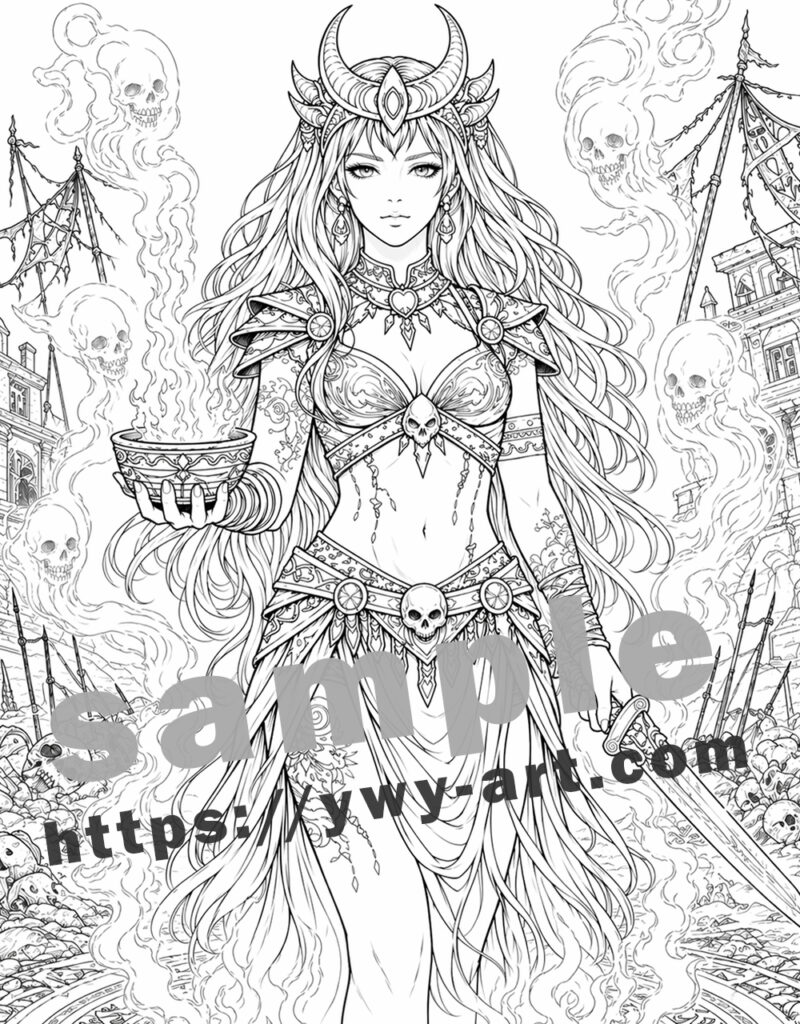
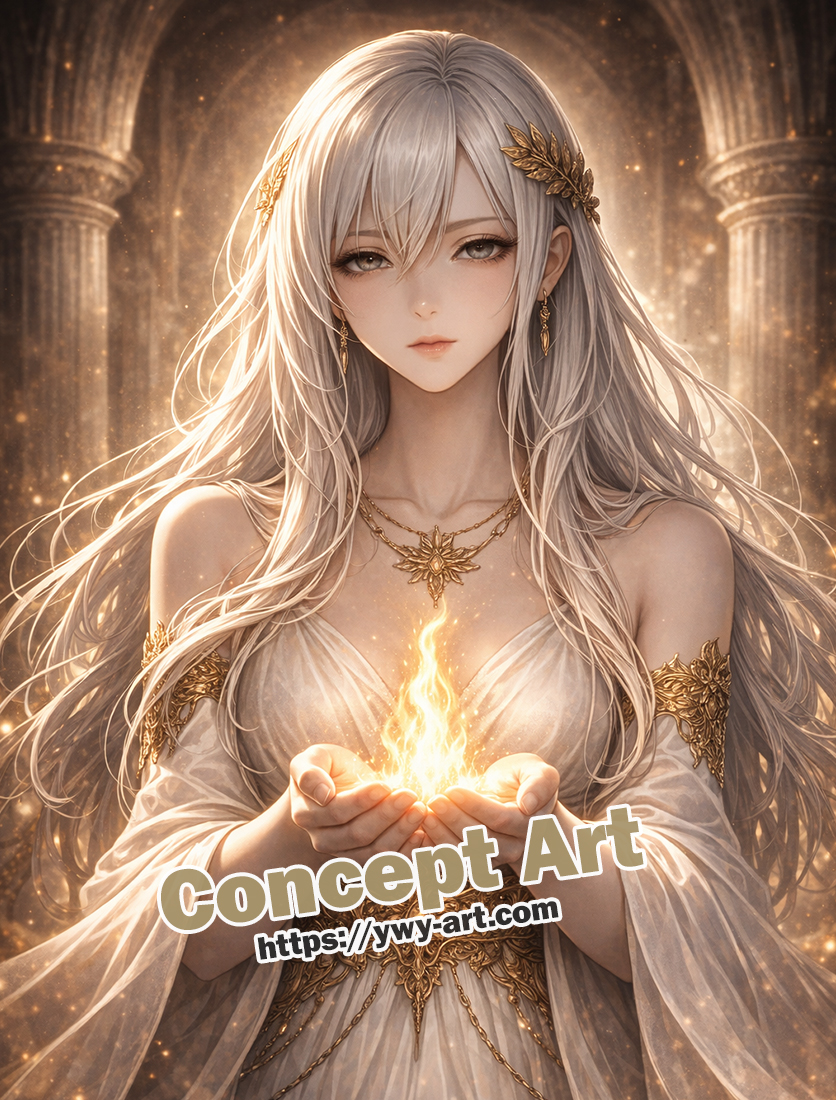
This illustration captures Anat at the center of that ritual.
She stands within a defined space, surrounded by fire and symbolic markings, suggesting that the destruction associated with her is not random, but contained and directed. Her posture is steady. Her gaze is calm.
Nothing in her expression suggests hesitation. Nothing in her stance suggests struggle.
She is not reacting to violence. She is its origin.
Symbolism and Visual Elements
The extended hand holding flame represents controlled power — destruction that is held, not unleashed without direction.
The ritual circle beneath her feet establishes structure. It transforms the surrounding chaos into something intentional, reinforcing the idea that this is a sacred act rather than a collapse of order.
The surrounding atmosphere, filled with drifting forms and heat, suggests presence without explicit depiction. Violence is implied, not shown — making the scene more powerful through restraint.
Her expression remains the key element. It removes emotion from the act, replacing it with certainty.
Coloring Tips
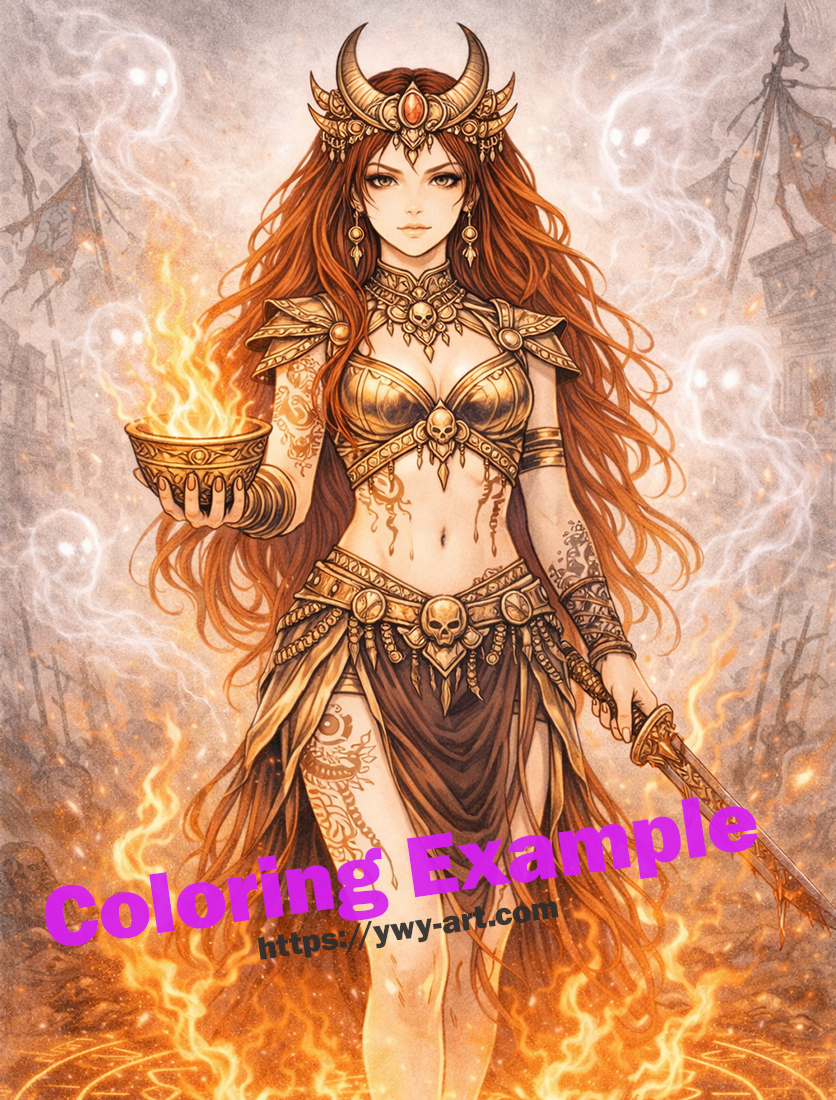
Use controlled contrast to balance intensity and structure.
Hair works best in warm tones such as reddish-brown, layered with darker browns and subtle violet shadows. Add orange or ochre highlights to connect visually with the surrounding fire.
Skin should be slightly stronger in contrast than softer characters, using warm beige with deeper shadows around the jawline and collarbone to emphasize presence.
Clothing should avoid flat black. Use deep brown or charcoal tones with warm edge highlights. Metallic elements benefit from gold, bronze, or copper layering.
For the flames, leave the center white and build outward with yellow and orange. Use red sparingly at the edges to avoid flattening the glow.
Keep the background restrained. The figure should remain the focal point.
アナトという存在
アナトは古代カナン神話・ウガリット神話において、戦いと暴力を体現する女神として知られています。彼女は戦場を指揮する存在ではなく、その中心に立ち、破壊そのものを実行する神です。
神話の中では、敵を圧倒的な力で殲滅する存在として描かれ、その激しさは他の戦いの神々と比べても際立っています。しかしその暴力は単なる混乱ではなく、意志を持った行為として表現されています。
Ritual of Slaughter という意味
この作品が示しているのは、単なる戦闘ではなく「儀式としての破壊」です。繰り返される行為、構造化された動き、そして揺るがない意思によって、暴力は神聖なものへと変化します。
ここでは破壊は終わりではなく、神の力が最も明確に現れる瞬間として描かれています。
このイラストの表現意図
本作では、アナトの暴力性を“動き”ではなく“静けさ”で表現しています。荒れ狂う戦場の中にありながら、彼女自身は完全に制御された存在として描かれています。
その対比によって、単なる戦闘シーンではなく、神話的な儀式の一瞬として成立しています。
塗りのポイント
全体はコントラストを意識しつつ、赤の使い方を制御することが重要です。赤を広げすぎると単調になるため、アクセントとして使うことで強さが引き立ちます。
髪は赤茶をベースに奥行きを出し、炎と自然に繋がるようにすると効果的です。衣装は黒ではなくダークブラウンやグレーを使い、暖色のハイライトを加えることで立体感が出ます。
背景は塗り込みすぎず、余白を残すことで主役の存在感が際立ちます。
Conclusion
Ritual of Slaughter presents Anat not as chaos, but as certainty. Through stillness, fire, and controlled composition, the artwork captures a form of divine violence that feels inevitable rather than uncontrolled.
Explore Our Coloring Book Series
Discover more mythological figures and explore the darker aspects of divine power through our growing coloring collection.
Step into the world of mythology..
Available on Amazon Dark Ritual Goddesses of Mythology Coloring Book Open in a new tab

コメント