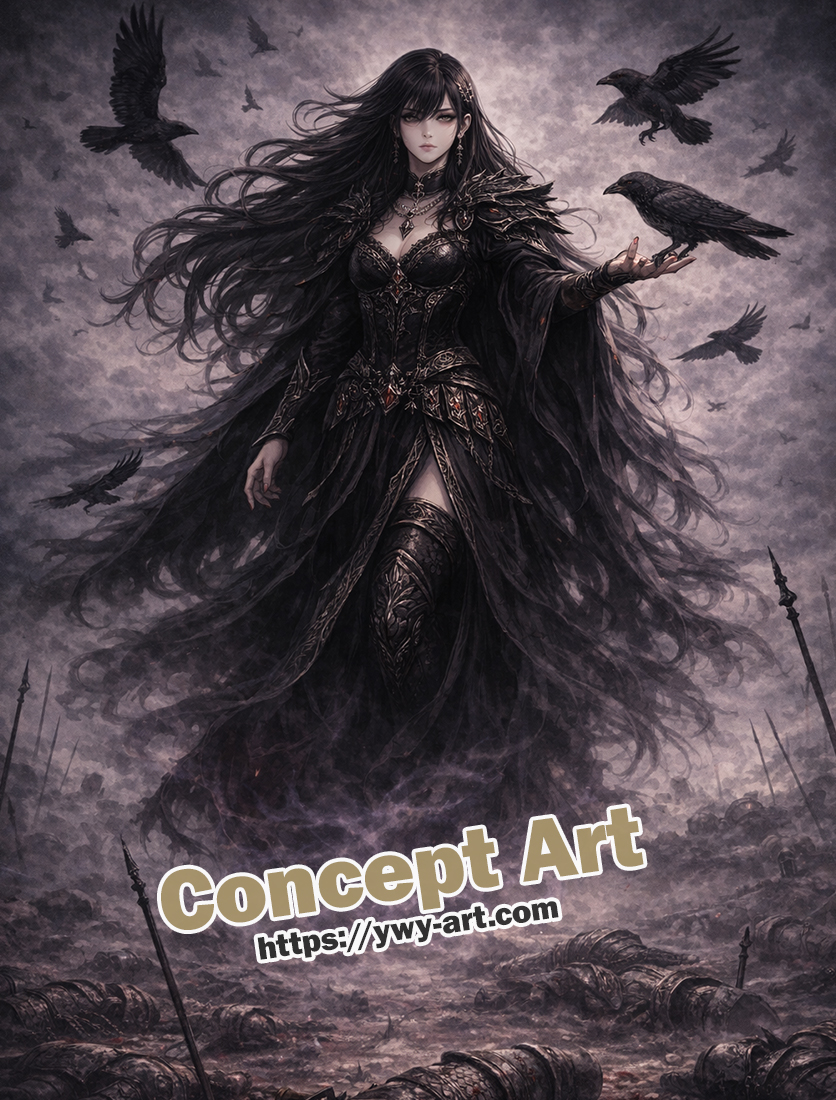
Morrigan is a Celtic goddess of fate, prophecy, and death, embodying the silent certainty that settles over a battlefield after everything has already been decided.
- Basic Profile
- Overview
- Characteristics
- Symbolism and Meaning
- Quick Creative Reference
- Compare with Similar Deities
- The Goddess Above the Battlefield
- The Meaning of the Fallen Fate
- The Scene Depicted in This Artwork
- Symbolism and Visual Elements
- Coloring Variations
- Coloring Tips
- Japanese Summary
- モリガンという存在
- 倒れた運命の儀式というテーマ
- このイラストの表現意図
- 塗りのポイント
- 掲載中の塗り絵本シリーズ
Basic Profile
| Name | Morrigan |
|---|---|
| Mythology | Celtic |
| Gender | Female |
| Region | Ancient Ireland / Celtic world |
| Era | Ancient |
| Domain | Fate, Prophecy, Death, War |
| Symbol | Raven, mist, battlefield, prophecy |
| Culture / Religion | Celtic mythology |
| Main Role | Embodiment of battle’s outcome, prophecy, and inevitable fate |
| Associated Deities | Badb, Macha, Nemain |
| Common Depiction | A dark goddess accompanied by ravens, appearing over the battlefield after the outcome is sealed |
| Alignment | Inevitable / Prophetic |
| Creative Reference Use | Battlefield queens, omen figures, fate-driven characters, dark prophetic archetypes |
Overview
Morrigan is often described as a goddess of war, but that description is incomplete. In Celtic mythology, she is less a battlefield warrior than a presence that stands above conflict itself. She does not simply fight. She signifies what the battle will become.
Because of this, Morrigan is deeply connected to fate, prophecy, and death. Her power feels calm rather than chaotic. She is compelling not because she creates noise, but because she embodies the certainty that remains when struggle is already over.
Characteristics
- Associated with fate, prophecy, and the outcome of battle
- Closely linked to ravens as symbols of death and foresight
- Represents quiet inevitability rather than direct violence
- Often portrayed as distant, emotionless, and untouchable
- Embodies the stillness that follows destruction
Symbolism and Meaning
Morrigan symbolizes the moment when a result has already been decided. She is not the chaos of combat, but the certainty that hovers above it. In mythological interpretation, she represents destiny revealed through silence rather than spectacle.
This is what makes her visually and conceptually powerful. Her presence removes battle from the realm of human struggle and places it into something larger and colder. She does not grieve, celebrate, or rage. She simply is the outcome.
Quick Creative Reference
| Best For | Battlefield omen figures, dark fantasy queens, prophetic entities, fate-driven character design |
|---|---|
| Visual Keywords | Raven, fog, dark hair, scattered weapons, fallen warriors, prophecy, quiet battlefield |
| Mood | Silent, severe, distant, inevitable, restrained |
| Useful Themes | Fate, prophecy, aftermath, inevitable death, battlefield silence |
Compare with Similar Deities
| Name | Mythology | Main Domains | Overall Image |
|---|---|---|---|
| Morrigan | Celtic | Fate, Prophecy, Death, War | Battle’s outcome embodied in silence |
| Hel | Norse | Death, Judgment, Finality | Still ruler of unavoidable endings |
| Sekhmet | Egyptian | War, Destruction, Healing | Divine wrath unleashed through force |
The Goddess Above the Battlefield
Morrigan does not belong in the middle of battle. She belongs above it. This is one of the most important ways to understand her. Her role is not to swing a weapon, but to define what the conflict will mean when it is over.
That makes her fundamentally different from many warrior goddesses. She is not a fighter in motion. She is fate standing still.
The Meaning of the Fallen Fate
The title “Ritual of the Fallen Fate” suggests that the battlefield has already become a place of prophecy fulfilled. The fallen warriors, scattered weapons, and lingering fog do not show chaos in progress. They show the aftermath of a decision already sealed.
This is why Morrigan feels quiet instead of explosive. Her ritual is not an act of attack, but a form of confirmation. She stands where human effort has ended and inevitability has taken over.
The Scene Depicted in This Artwork
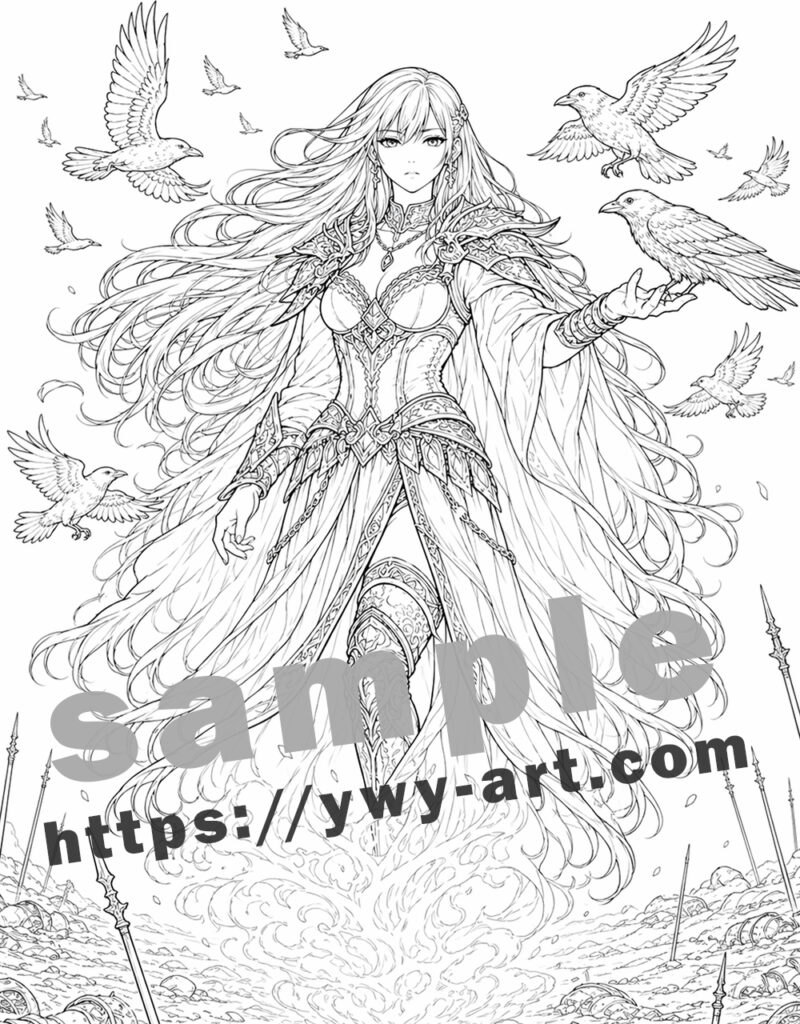
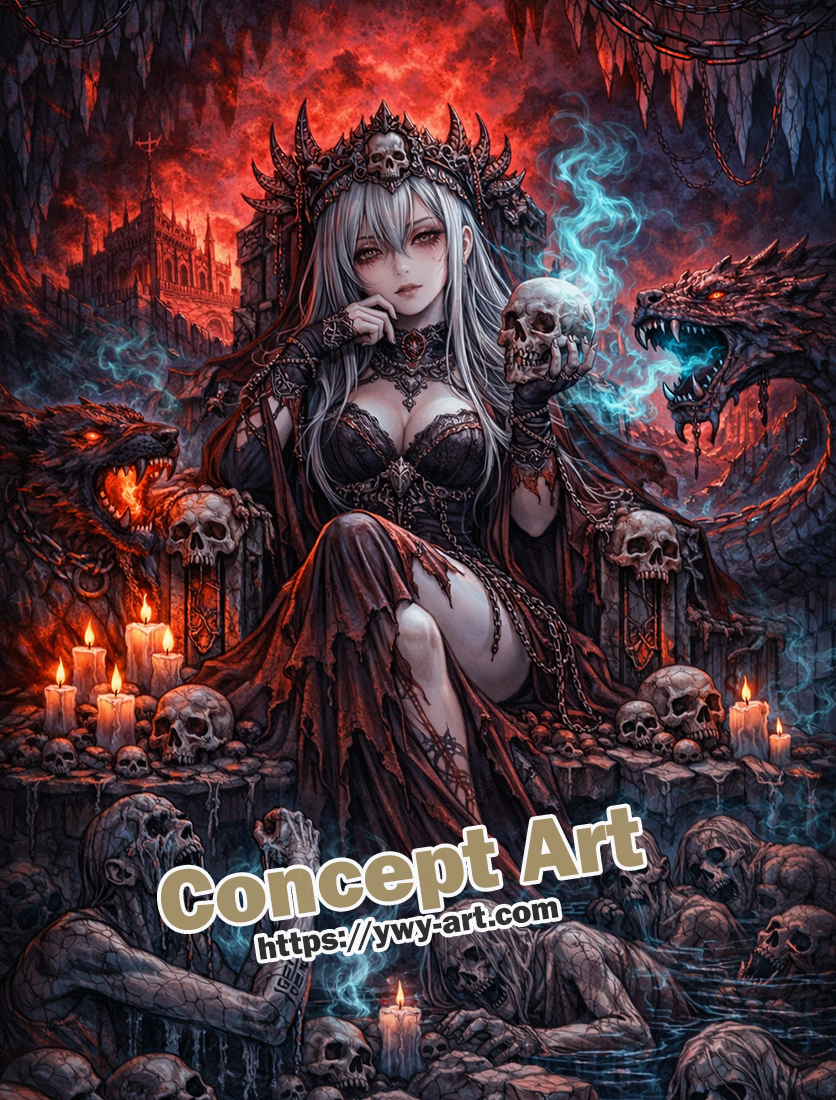
This illustration captures Morrigan standing over a battlefield that has already gone still. The warriors have fallen, the weapons lie scattered, and the air is filled with a lingering mist that softens the violence into silence.
Her expression is deliberately restrained. There is no anger, grief, or satisfaction. That emotional distance is essential, because it places her beyond the human experience of battle and makes her feel absolute.
Symbolism and Visual Elements
The ravens are central to the composition. In mythology, they are deeply associated with Morrigan as signs of death, foresight, and battlefield presence. Here, they are not aggressive. They exist like extensions of her awareness, reinforcing her role as a watcher of fate rather than a participant in combat.
The drifting mist, flowing hair, and fallen remains guide the eye through the composition without turning it chaotic. Even with many details, the structure stays calm and controlled, reflecting Morrigan’s nature as a goddess of certainty rather than frenzy.
Coloring Variations
- Silent Battlefield Style: Use black, dark gray, and desaturated crimson for a restrained aftermath mood.
- Prophetic Raven Style: Use deep charcoal, muted blue-black, and soft silver highlights to emphasize the ravens and hair.
- Mist and Fate Style: Use gray-violet, foggy blue, and pale muted red for a more atmospheric and omen-like finish.
Coloring Tips
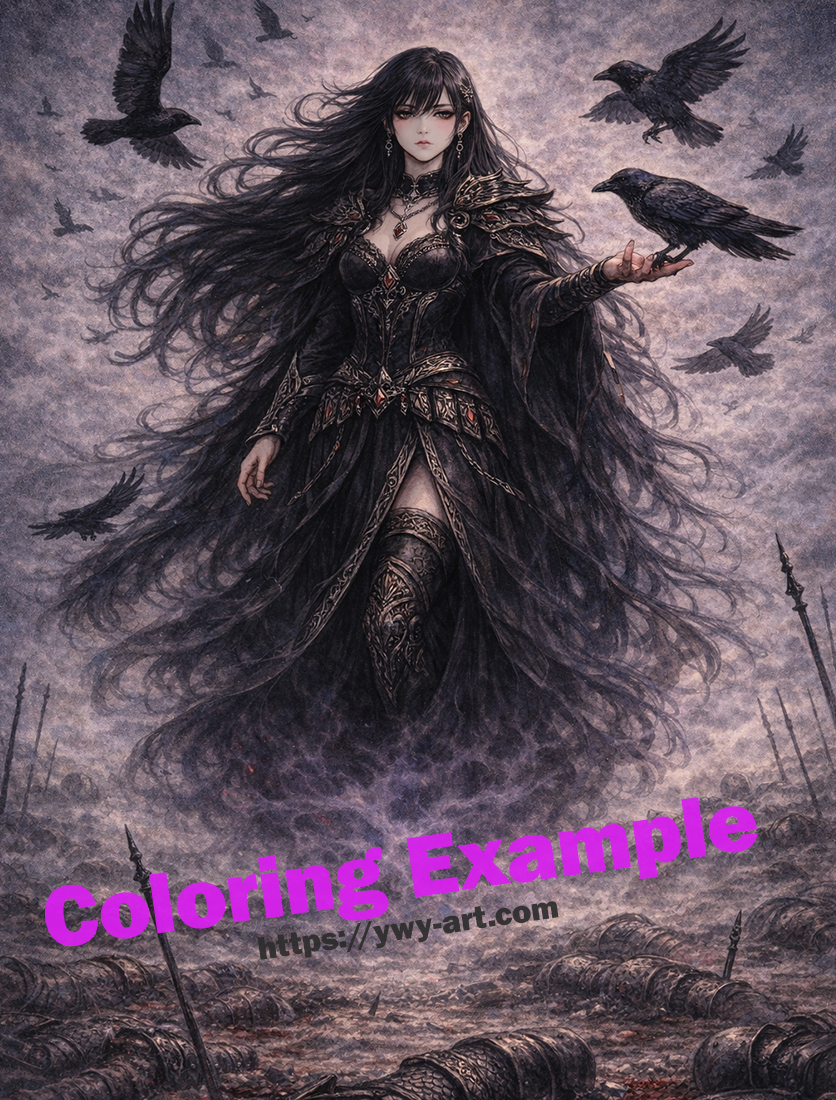
The key to coloring Morrigan is restraint. Avoid using too many strong colors at once. Instead, build the atmosphere through subtle transitions and layered shading. Her hair should begin with a dark base, but should not be filled in as a flat mass. Leave thin highlights and deepen it gradually.
For the clothing, dark gray often works better than pure black because it preserves ornamental detail. The ravens should be treated in the same way. Use soft shading rather than solid black so the feathers keep volume and texture.
Mist is one of the most important elements in this piece. Use light pressure and blurred edges to create soft gradients rather than hard outlines. A slight touch of warmth in the skin, especially the cheeks and lips, can create a subtle contrast against the overall dark composition. Leaving some areas slightly unfinished will often make the final result feel more natural and atmospheric.
Japanese Summary
モリガンはケルト神話において、戦そのものよりも「戦いの結末」や「運命の確定」に深く関わる女神です。戦士のように前線で戦う存在ではなく、すべてが決まった後の静かな支配を象徴する神格として捉えると、その本質が見えやすくなります。
そのためモリガンの魅力は、激しさよりも静けさにあります。怒りや悲しみを見せず、ただ結果そのものとして立つ姿が、人間とは異なる絶対性を感じさせます。創作資料としても、予兆、運命、死の静かな確定といったテーマに非常に相性が良い存在です。
モリガンという存在
モリガンは「戦の女神」と呼ばれることが多いですが、実際には剣を振るって戦う存在ではありません。彼女は戦場の上に立ち、勝敗や死の行方をすでに知っているような存在として描かれます。
この距離感がモリガンの特異さです。戦いの最中ではなく、その結末が決まってしまったあとの静かな空気そのものに近い神として表現できます。
倒れた運命の儀式というテーマ
この作品のテーマは、破壊の瞬間ではなく「結果が決まった後の静けさ」です。倒れた兵士や散らばった武器、漂う霧は、戦いの途中ではなく、そのすべてが終わった後の余韻を示しています。
モリガンはそれを見届ける存在ではなく、その結果そのものとして立っています。ここに、この作品の静かで重い魅力があります。
このイラストの表現意図
本作では、モリガンを激しい戦の中心ではなく、すべてが終わった戦場の中心に立たせています。表情はあえて無機質に抑え、怒りも悲しみも見せないことで、人間の感情から切り離された存在感を強めています。
カラスは死や予兆の象徴として配置されていますが、攻撃的には描かれていません。髪の流れ、霧、地面の残骸なども含めて、全体を落ち着いた視線誘導の中に収めることで、静かな支配の印象を作っています。
塗りのポイント
モリガンは塗りすぎないことが重要です。黒を多用しすぎるより、グレーや青みを含んだ暗色を重ねていく方が雰囲気が出しやすいです。髪は細いストロークを残して流れを見せると自然な動きが生まれます。
服やカラスもベタ塗りではなく、陰影で立体感を出す方が効果的です。霧は境界をはっきりさせず、ぼかすように塗ると空気感が出ます。肌には少しだけ赤みを足すと、全体の暗いトーンの中で自然なコントラストが生まれます。
掲載中の塗り絵本シリーズ
Explore the full series and discover more goddesses.
Step into the world of mythology..
Available on Amazon Dark Ritual Goddesses of Mythology Coloring Book Open in a new tab
コメント