The sky-forged weapon that turned Zeus from hidden child into king of the gods
- Divine Power
- Justice
- Kingship
- Lightning
- Sky
- Origin
- Creation
- Major Appearance
- Later Tradition
- Legacy
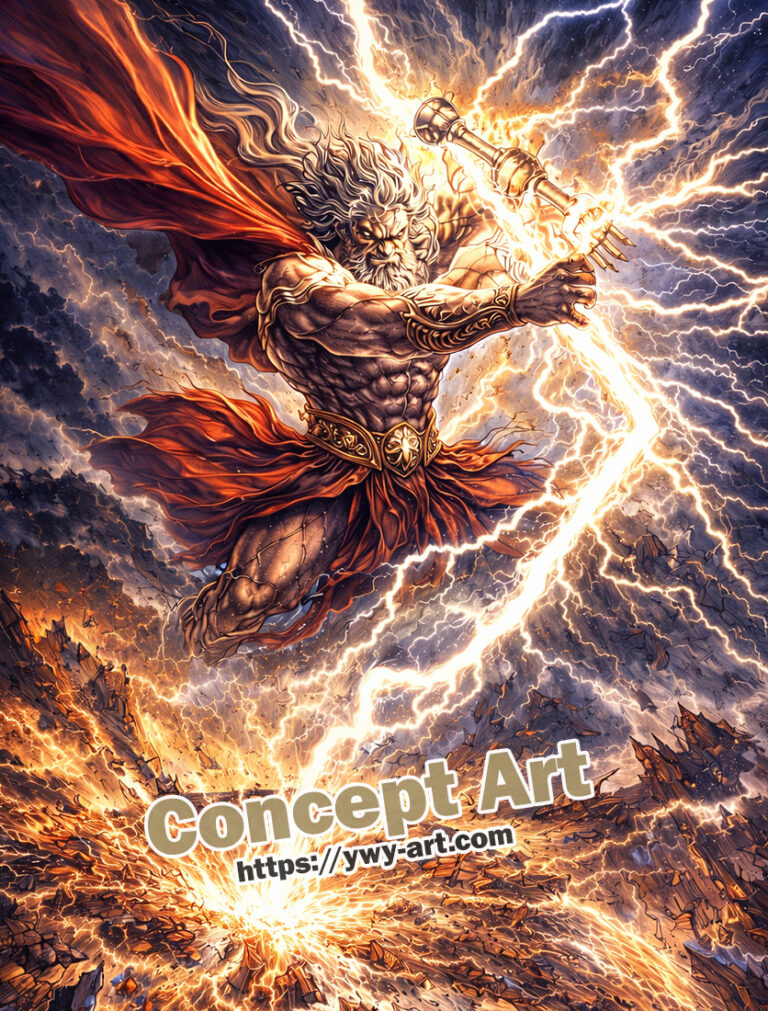
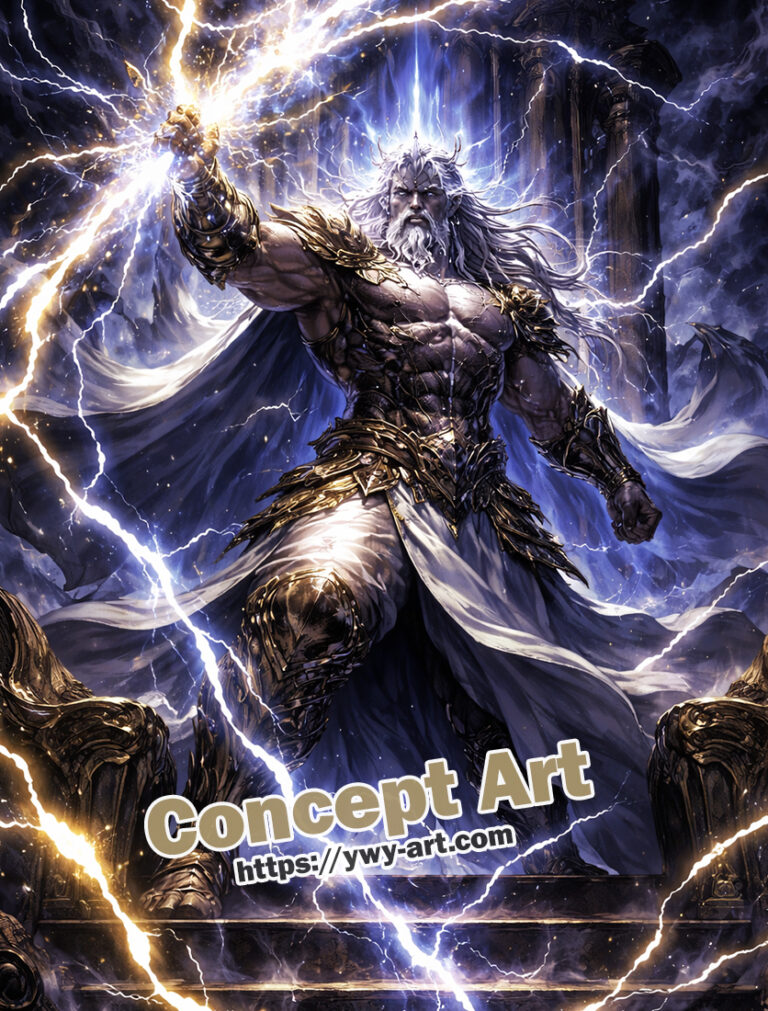
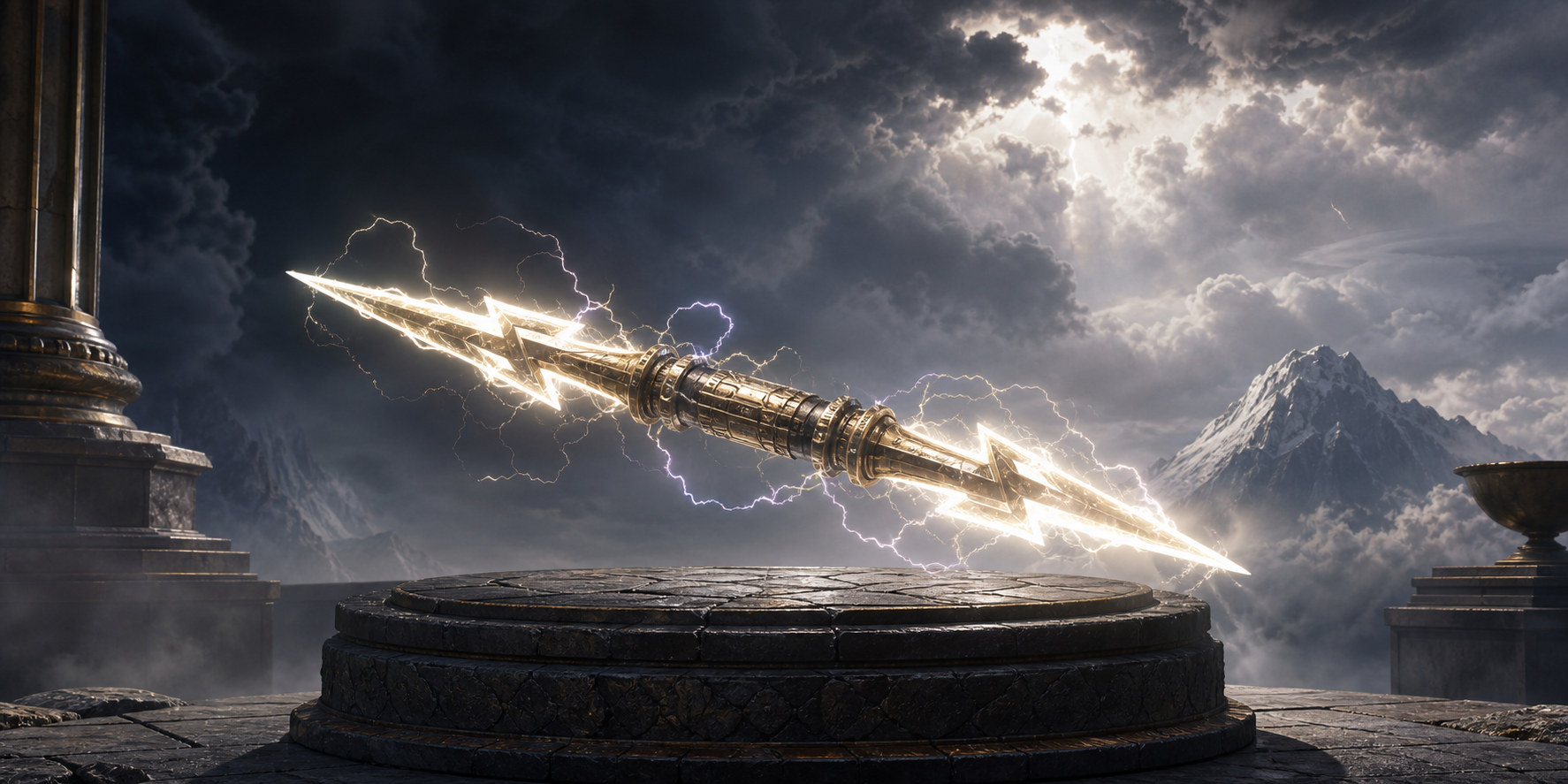
The Thunderbolt is the signature weapon of Zeus, forged by the Cyclopes after he released them from Tartarus. It helped break the stalemate of the Titanomachy and became the enduring sign of heavenly power, divine judgment, and Zeus’s right to rule.
A Weapon That Changed the Balance of Heaven
The Thunderbolt is the defining weapon of Zeus and one of the most recognizable objects in Greek mythology. Yet its importance does not begin with Zeus standing securely on a throne. It begins while the outcome of the Titanomachy is still uncertain, when the younger gods cannot defeat Cronus’s order by strength alone.
The weapon enters the story as a gift of gratitude. Zeus frees the Cyclopes from imprisonment, and they answer by placing the power of the storm into his hands. From that moment, the Thunderbolt becomes more than lightning. It becomes proof that Zeus can transform rejected powers into allies—and that his kingship will be built through a coalition rather than inherited without challenge.
Forged by the Cyclopes
The Cyclopes were ancient children of Uranus and Gaia associated with thunder and extraordinary craft. Their traditional names—Brontes, Steropes, and Arges—evoke thunder, lightning, and brightness. They had been forced beneath the earth by earlier rulers who feared their power.
When Zeus released them, they armed the three brothers. Zeus received thunder, lightning, and the Thunderbolt; Poseidon received the Trident; Hades received the Helmet of Invisibility. The three gifts form a set, but each reflects a different kind of rule. The Thunderbolt dominates the visible sky. The Trident commands the moving sea and shaking earth. The helmet grants mastery through concealment and the unseen.
What Was the Thunderbolt Made Of?
Greek sources do not describe an ordinary material that could be mined, melted, and shaped. The weapon is better understood as celestial force given form: thunder as sound, lightning as light, and the bolt as the striking instrument of Zeus.
Ancient art often turns it into a compact, stylized bundle held like a short spear or many-pointed missile. This visual solution makes an instant of natural violence into an object that can be carried. It also raises a fascinating question: did Zeus control lightning because he was sky god, or did the weapon help establish the identity by which later generations knew him?
The Decisive Gift of the Titanomachy
During the war, Zeus used celestial fire against the Titans while the Hundred-Handers overwhelmed them with volleys of stones. The Thunderbolt did not win the conflict alone, but it gave visible focus to the younger alliance’s power.
Its first great use therefore carries a political meaning. The weapon does not merely destroy enemies; it helps end one age and inaugurate another. Every later image of Zeus holding it silently recalls the war that made him king.
Divine Judgment, Not Random Destruction
Lightning is terrifying because it appears sudden, distant, and impossible to resist. Greek myth turns that natural fear into the language of authority. Zeus strikes oath-breakers, rebels, monsters, and challengers whose actions threaten divine order.
This does not make every use of the weapon morally simple. Zeus himself is frequently contradictory. The Thunderbolt can represent justice, but it can also remind readers that the ruler defines which challenge counts as disorder. That tension makes the object more interesting than an all-purpose magical weapon.
Enemies Struck by the Thunderbolt
The weapon remained active after the Titanomachy. Zeus used it in later cosmic conflicts and against figures who threatened his rule. Traditions connect the bolt with the defeat of Menoetius, the monstrous Typhon, and other challengers.
Each encounter expands the network around the artifact. Reading about the Thunderbolt leads not only back to Zeus, but outward to Tartarus, the Titans, Typhon, Mount Etna, the Cyclopes, and the continuing instability beneath Olympian order.
The Thunderbolt on Mount Olympus
Later imagination places Zeus’s weapon within the divine world of Olympus, close to the throne and councils of the gods. This creates an evocative contrast: the object that shattered the old order is now part of the machinery that maintains the new one.
Was it ever truly at rest? Myth repeatedly returns Zeus to moments when order must be defended again. The weapon’s presence on Olympus is therefore both reassurance and warning.
From Zeus to Jupiter
The Romans identified Zeus with Jupiter and preserved the lightning bolt as a primary emblem of divine sovereignty. It appeared in state religion, imperial symbolism, coins, sculpture, and later European art.
Modern storytelling often reduces the Thunderbolt to spectacular electricity. Its deeper legacy is richer: it is the artifact through which raw storm becomes law, victory becomes government, and a fugitive child becomes the visible ruler of heaven.
Questions That Open the Next Path
- Why could the Cyclopes forge what no other gods could? Their imprisonment and release explain far more than the origin of one weapon.
- Why did each brother receive a different artifact? The Trident and Helmet of Invisibility reveal how weapons can foreshadow destiny.
- Did Zeus win because of power or alliance? The Titanomachy shows that the Thunderbolt was only one part of a much larger victory.
YWY Artwork Connection
Explore coloring pages and studio articles connected to this mythology entry.