Mythic places do more than hold a scene. Mountains announce rival claims to power, prisons preserve the memory of defeated generations, and divine realms reveal who belongs inside an order—or beneath it. Explore each place as part of the story it makes possible.
Places
Divine realms, sacred mountains, prisons, and legendary landscapes.
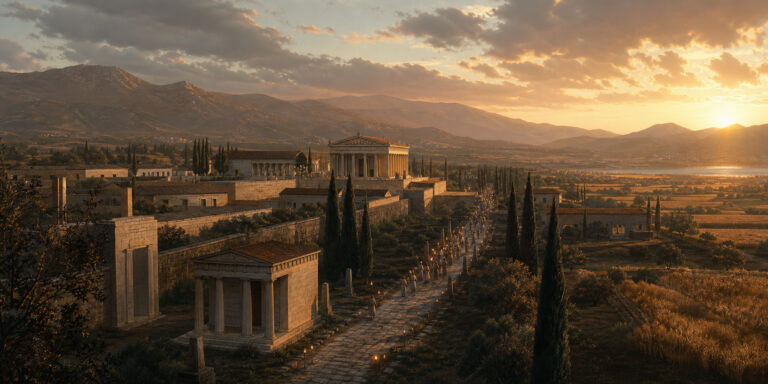 Sacred City of Demeter and PersephoneEleusisEleusis was the Attic settlement and sanctuary where Demeter's search for Persephone became the foundation of the Eleusinian Mysteries. Its wells, Sacred Way, and Telesterion joined mythic place with a long-lived initiatory institution.Explore entry
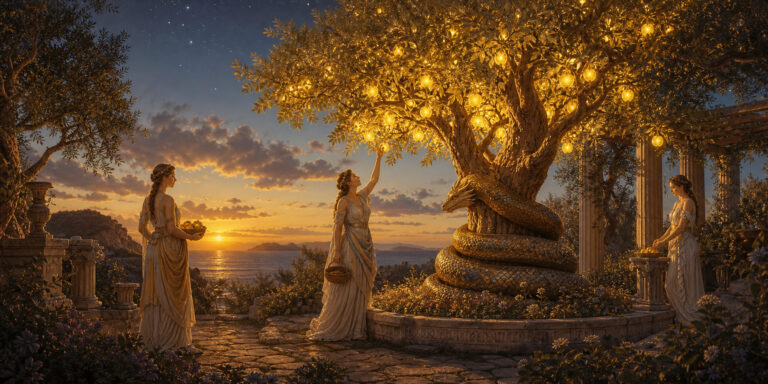 Guarded Garden at the Edge of the WorldGarden of the HesperidesThe Garden of the Hesperides is the remote divine orchard guarded by the Hesperides and the serpent Ladon. Ancient sources place it beyond Ocean, in the far west, Libya, or other distant regions, and Heracles reaches it through either Atlas's help or a direct encounter.Explore entry
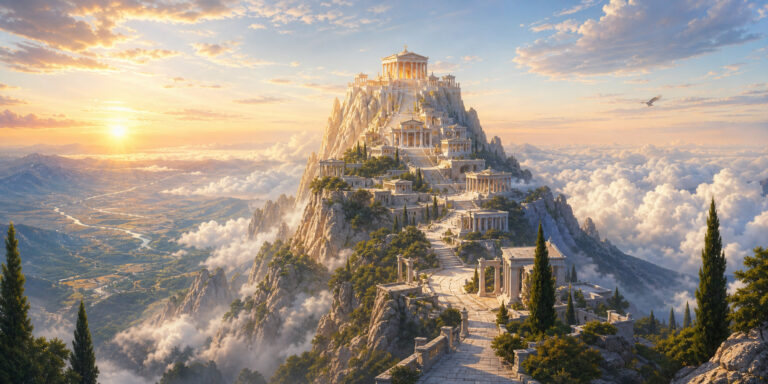 Divine Mountain and Heavenly CourtMount OlympusMount Olympus is both Greece’s highest mountain and the mythic home of the Olympian gods. In epic poetry it functions as a divine palace complex and council seat, where Zeus rules, gods debate mortal affairs, and the victories of the Titanomachy become an enduring political order.Explore entry
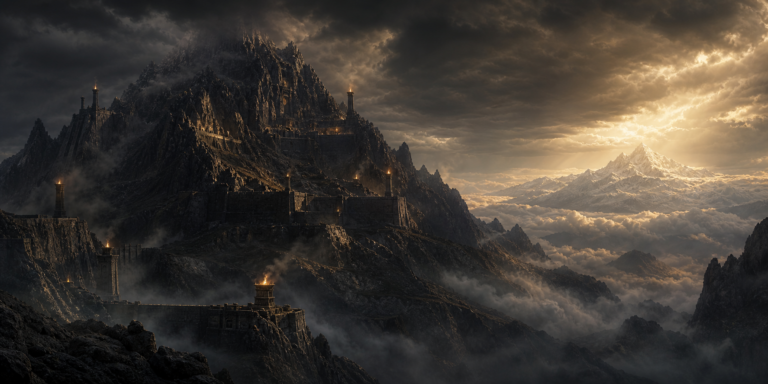 Titan StrongholdMount OthrysMount Othrys was the Titan stronghold opposed to Mount Olympus during the Titanomachy. Hesiod names the two rival heights but does not describe a Titan palace or city. The real mountain range lies in central Greece; its mythic role is best understood as the seat of Cronus’s embattled order.Explore entry
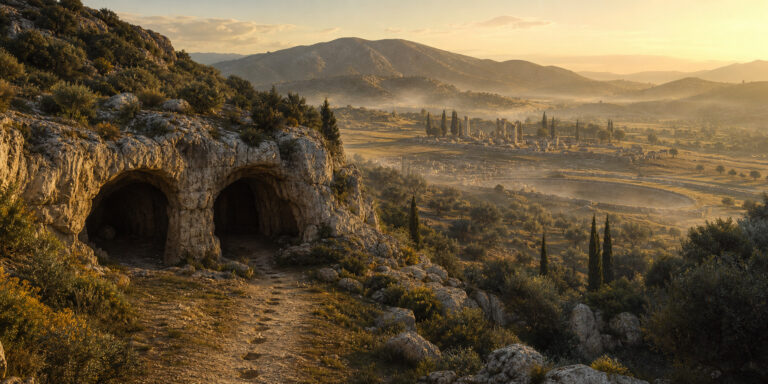 Valley of the First Labor and Sacred GamesNemeaNemea is the northeastern Peloponnesian landscape of Heracles's first labor and the sanctuary of the Nemean Games. Its lion cave, Molorchus tradition, Zeus sanctuary, and Opheltes foundation story connect heroic danger with hospitality, ritual, and athletics.Explore entry
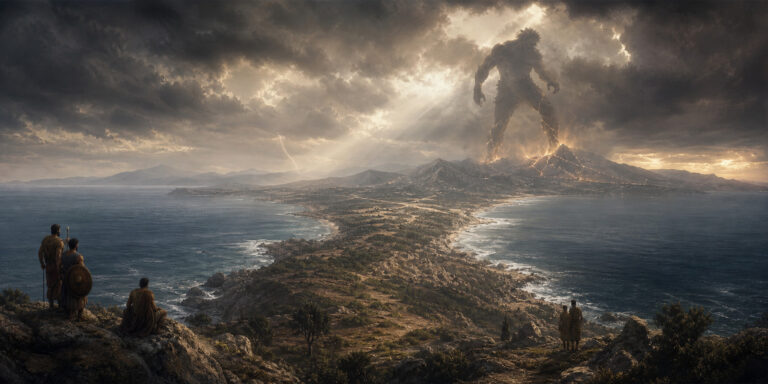 Native Land of AlcyoneusPallenePallene is an ancient peninsula of Chalcidice associated with Phlegra and the Giants. In Apollodorus, Alcyoneus revives whenever he falls on his native land, so Athena tells Heracles to drag him beyond Pallene before the Giant can die.Explore entry
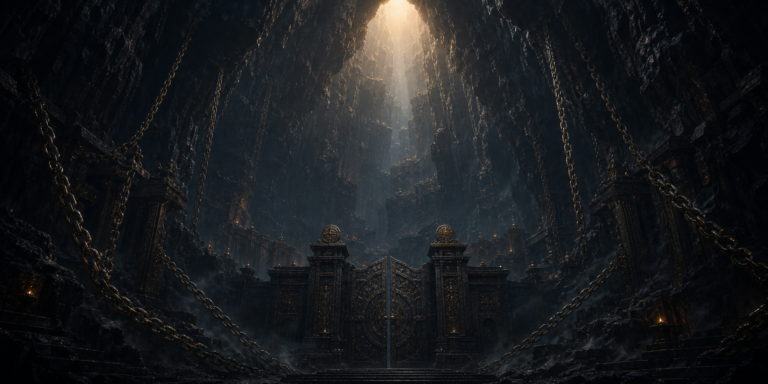 Primordial Abyss and Divine PrisonTartarusTartarus is both a primordial power and the deepest abyss of Greek cosmology, distinct from the Underworld as a whole. It imprisoned the Cyclopes and Hundred-Handers before their liberation, then held defeated Titans under Hundred-Hander guard. Later traditions increasingly made it a place of punishment for exceptional mortal offenders.Explore entry
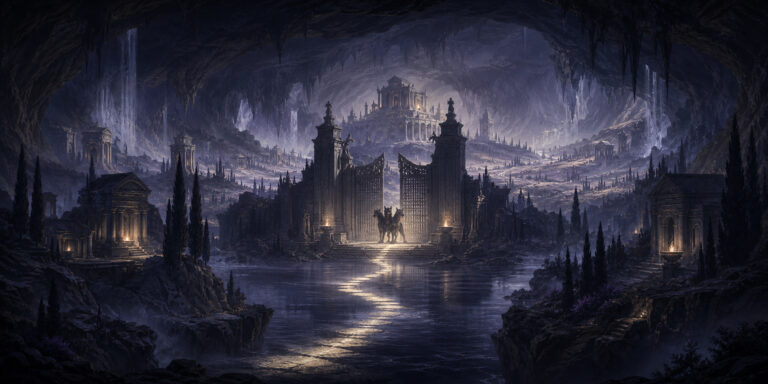 Realm of the DeadUnderworldThe Greek Underworld is the realm of the dead ruled by Hades and Persephone. Its entrances, rivers, and regions vary across ancient sources. It must be distinguished from Tartarus, the deeper cosmic abyss and prison. Living visitors such as Odysseus and Heracles reveal different routes, rituals, and rules governing return.Explore entry