The older divine height that faced Olympus across the Titanomachy.
- Central Greece
- Cronus
- Rival Height
- Titanomachy
- Titans
- Origin
- Divine Occupation
- Major Myths
- Cult / Tradition
- Legacy
Mount Othrys was the Titan stronghold opposed to Mount Olympus during the Titanomachy. Hesiod names the two rival heights but does not describe a Titan palace or city. The real mountain range lies in central Greece; its mythic role is best understood as the seat of Cronus’s embattled order.
Before Olympus became the name of divine rule, another mountain held the older throne. Across the long war of succession, the Titans gathered at Mount Othrys, looking toward an enemy height that would eventually replace them in memory as completely as Zeus replaced Cronus in power.
The Mountain on the Titan Side
Hesiod’s Theogony gives Mount Othrys a brief but decisive role: the Titans fight from lofty Othrys while the gods born from Cronus fight from Olympus. The poem does not tour a palace, describe streets, or map a Titan court. Its few words establish a powerful opposition between two divine generations and two mountains.
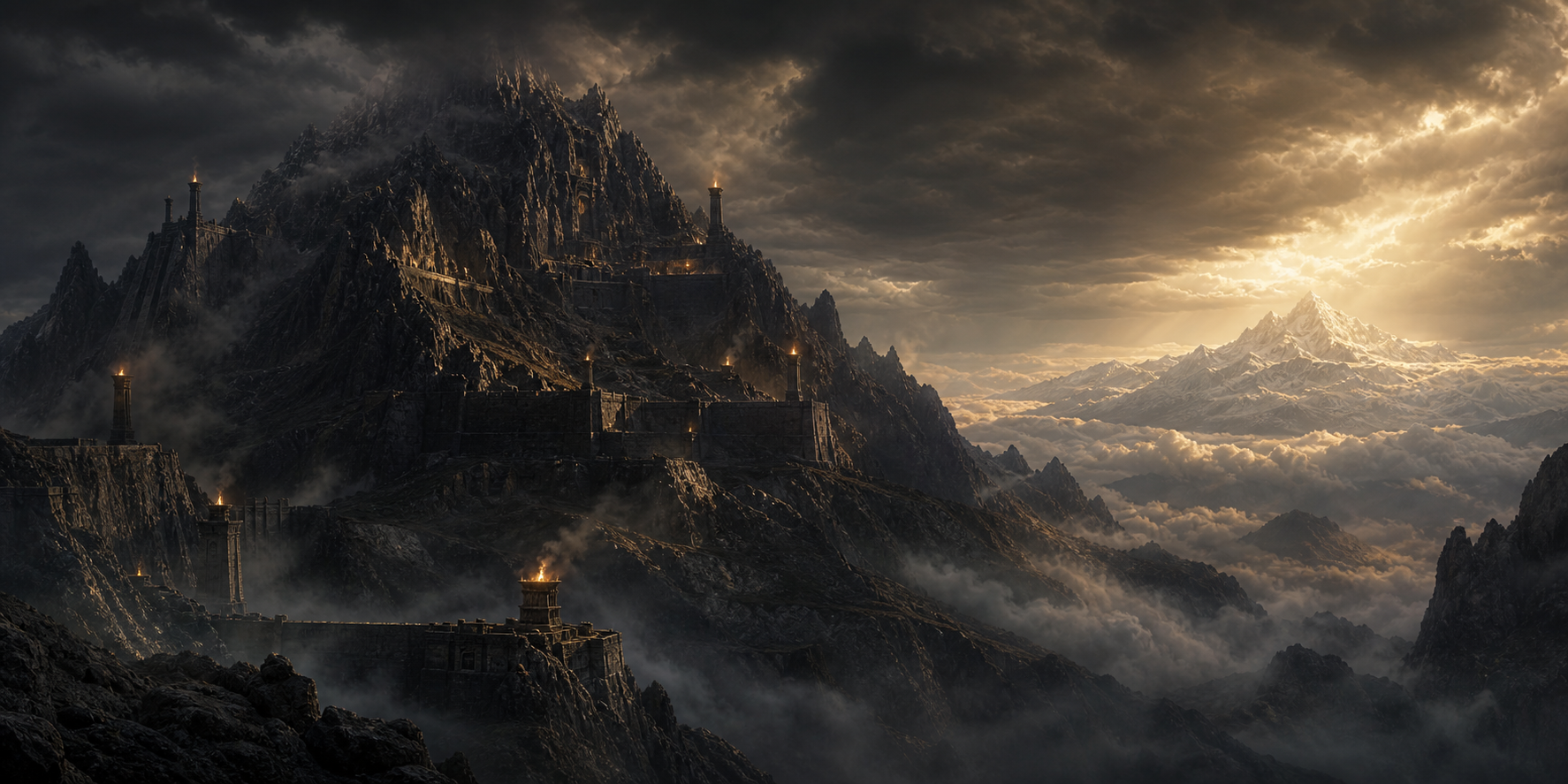
That restraint matters. Modern images often imagine dark fortresses, halls, or armies on Othrys, but those are visual interpretations rather than surviving details from the primary text. What did the stronghold of Cronus actually look like? Ancient poetry leaves the space open, inviting imagination without authorizing certainty.
A Real Mountain and a Mythic Height
Mount Othrys is also a real mountain range in central Greece. The mythic location cannot be reduced to modern geography, yet its physical presence gives the story weight. Othrys belongs to a landscape of ridges, passes, storms, and long views. A listener could understand why a mountain becomes a natural emblem of endurance and command.
The distinction between real and mythic place should remain visible. Archaeology does not reveal a Titan capital, and the poem is not a travel record. Project Mythos treats the historical landscape as the ground from which the sacred contrast grows, not as proof that the divine war happened in ordinary terrain.
Why Not Olympus?
Why did the Titans stand on Othrys rather than Olympus? The sources do not provide a strategic briefing. In narrative terms, separate heights allow the war to become a contest of orders. Olympus belongs to the younger alliance and will become the center of the world after victory. Othrys holds the reign that already exists and intends to endure.
The choice also keeps Cronus from being imagined as a resident of the future Olympian court. His rule has its own center. To move from Othrys to Olympus is therefore not a change of address but a change in what divine kingship means.
Ten Years Across Two Heights
The Titanomachy lasts for ten years in Hesiod, neither side able to force a conclusion. Othrys thus represents more than a final camp. It is the durable base of an order strong enough to resist Zeus, Hera, Poseidon, Hades, and their allies through a generation of conflict.
Yet the deadlock is broken by powers neither mountain fully contains. Zeus releases the Cyclopes and the Hundred-Handers from Tartarus. Divine weapons and a barrage of stone enter the war from below the established camps. The geography becomes vertical: Olympus and Othrys above, forgotten allies beneath, and the defeated Titans driven farther down.
Seeing the War from Cronus’s Side
From Othrys, Zeus is not yet king of the gods. He is the leader of a rebellion advancing against the reigning generation. This viewpoint does not make Cronus innocent; traditions remember his own violence, imprisonment of siblings, and swallowing of children. It does remind the reader that the outcome was not inevitable to those defending the older order.
Atlas belongs naturally to this perspective as a prominent Titan associated with the war’s defeated side. Ancient sources vary in the details of individual Titan participation, so a complete roster should not be invented. Othrys functions best as the collective emblem: the mountain from which the threatened reign faced its challengers.
The Silence After Defeat
Olympus grows more vivid after the Olympian victory. It becomes a court, a meeting place, a feast hall, and the familiar seat of Zeus. Othrys does not receive an equivalent afterlife in the major narratives. Its mythic importance contracts when the Titans lose.
What happens to the sacred place of a defeated side? In this case, it is not necessarily destroyed; it is narratively abandoned. The mountain remains in the landscape while the center of sacred attention moves elsewhere. That silence can feel more complete than ruin.
Othrys in the Mythic Network
Following Othrys outward reveals the architecture of the succession story. Cronus explains the ruler it defended. Olympus shows the height that replaced it. Tartarus reveals the destination of many defeated Titans. The Cyclopes and Hundred-Handers explain why the stalemate ended, while the Titanomachy binds every location and participant into one conflict.
Othrys is therefore valuable precisely because ancient literature says so little about its interior. It asks the reader to stand at the edge of a lost order, distinguish evidence from imagination, and look across the clouds toward the world that will inherit the story.
Later Imagination and Responsible Reconstruction
Because the primary description is spare, later readers naturally supply walls, halls, standards, and gathering places for the Titans. Such reconstructions can make the mountain legible in art, games, and modern storytelling. They become misleading only when presented as details preserved by Hesiod. A responsible visual Othrys signals severity, age, and opposition without claiming a canonical floor plan.
The same discipline protects the mountain’s mystery. Empty spaces in a source are not defects that must be filled. They can direct attention toward what the poet chose to emphasize: height, division, endurance, and the pressure between generations.
The View Back from Olympus
Once Zeus rules, Othrys becomes the place from which the victorious story looks backward. It holds the possibility that another order once seemed permanent. That memory makes Olympus more than a beautiful residence. The new court is also a political answer to a mountain that resisted it for ten years.
Readers who move next to Cronus can explore the ruler at the center of that lost world. Those who follow Atlas encounter the burden assigned to a defeated Titan, while Tartarus reveals the harsh foundation beneath the victory. Othrys stands quietly between all three paths.
Trivia
- Hesiod describes the Titans as fighting from lofty Othrys and the younger gods from Olympus.
- The real Othrys range lies in central Greece, but no ancient source confirms a literal Titan fortress on the mountain.
- Unlike Olympus, Othrys largely disappears from the center of divine narrative after the Titanomachy.