The living Earth whose children and grievances reshaped every divine dynasty.
- Creation
- Earth
- Giants
- Motherhood
- Succession
- Primordial Age
- Titan Age
- Olympian Age
- Heroic Age
- Trojan Cycle
Gaia is both the primordial goddess of Earth and Earth itself, appearing near the beginning of Hesiod’s cosmos. She bears Uranus, Mountains, Sea, Titans, Cyclopes, and Hundred-Handers. Her shifting support for Cronus, Zeus, and the Giants reflects a recurring defense of children whom divine rulers imprison.
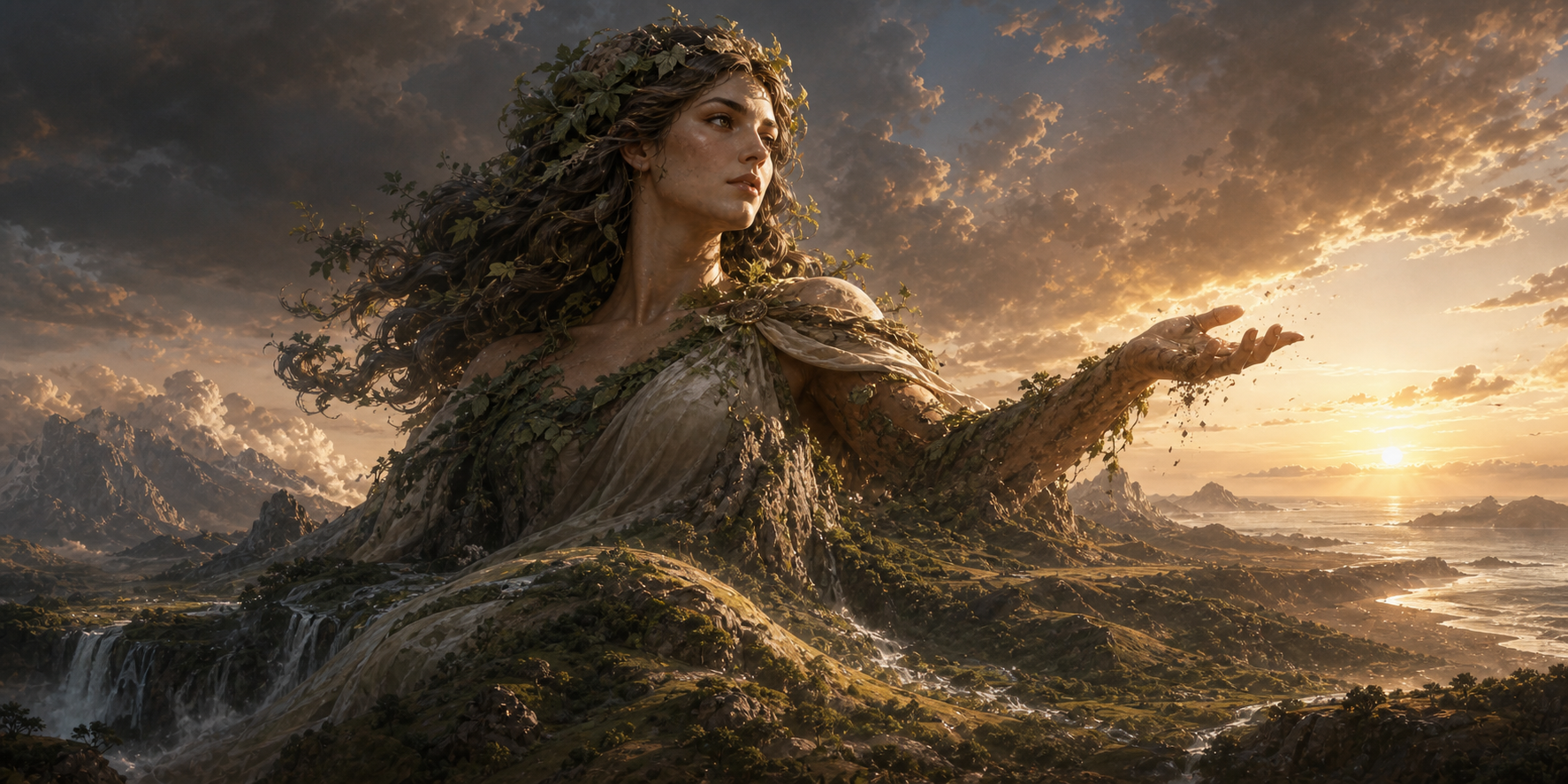
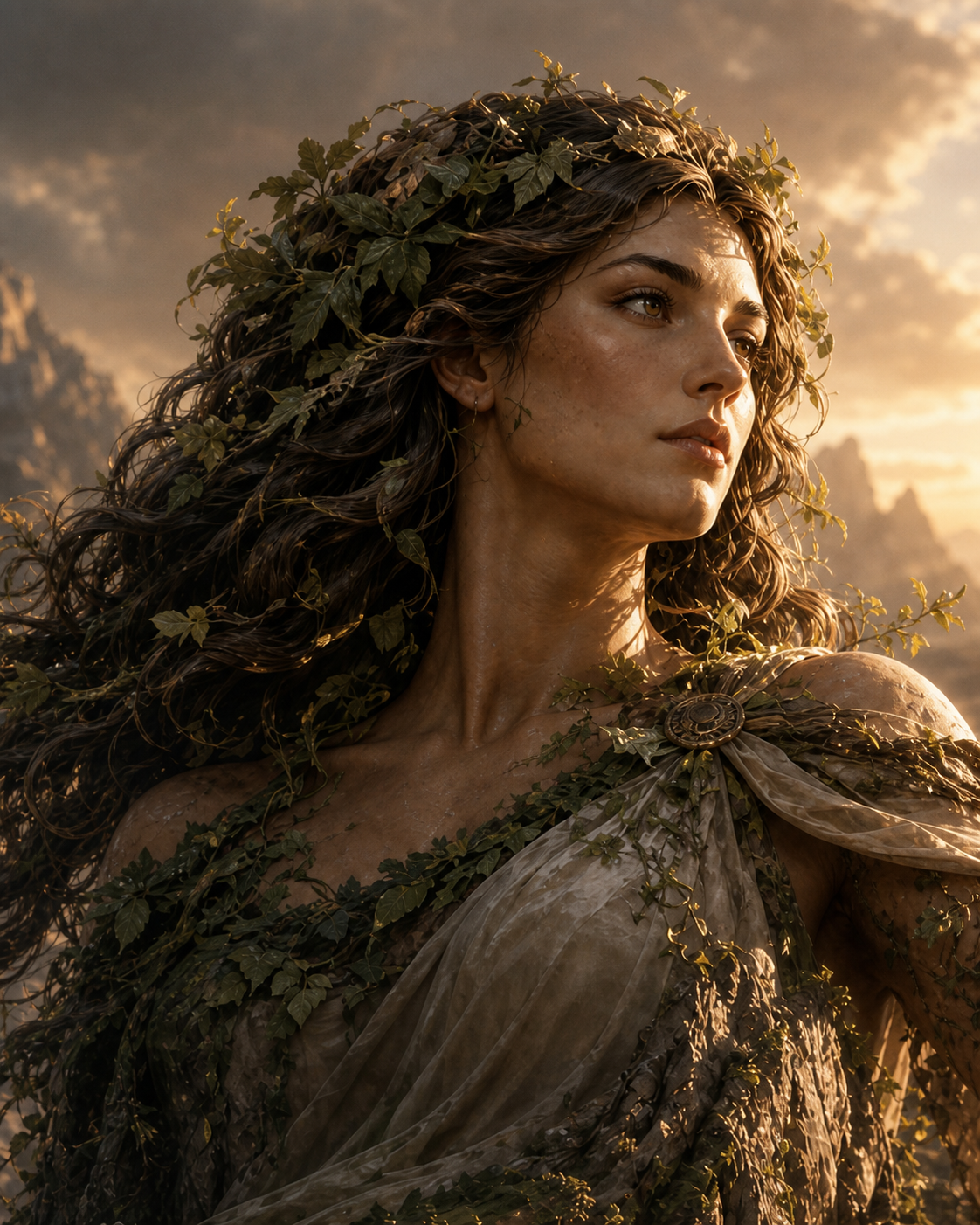
Before any god ruled from a throne, the ground beneath every future throne was already alive. Gaia was not simply a goddess assigned to the Earth. She was the Earth: the enduring body from which mountains rose, seas opened, divine families emerged, and every struggle for cosmic rule found its battlefield.
Primary Tradition: Earth Comes into Being
In Hesiod’s Theogony, Chaos comes first, followed by broad-breasted Gaia, dim Tartarus, and Eros. The poem does not plainly say that Chaos gave birth to Gaia, so it is safest to treat these as primordial powers appearing near the beginning rather than forcing them into a simple parent-and-child genealogy. Gaia is both a divine being and the stable foundation of the deathless gods.
Is Gaia a mother, a goddess, or the physical Earth? Greek myth allows all three answers at once. She speaks, plans, suffers, and forms alliances, yet mountains, fields, and buried chambers are also described through her body. Her personhood never separates completely from the world people inhabit.
Sky, Mountains, and Sea
Gaia first brings forth starry Uranus, the Mountains, and Pontus, the Sea, without a partner. Uranus is made equal to her so that he may cover her on every side and provide a dwelling for the gods. Their union then produces the Titans, the Cyclopes, and the Hundred-Handers, creating the first great divine household.
This genealogy turns landscape into family. Sky is both Gaia’s son and consort; mountains are her offspring; the sea comes from her before later sea lineages multiply. Creation is not assembled from distant materials. The structure of the cosmos unfolds from Earth herself.
The Children Hidden Within Her
Uranus hates or fears some of his children and hides them in Gaia’s depths. The imprisonment is not remote from their mother: she bears the pressure inside herself. Hesiod describes her as distressed and constricted, and she devises a plan to end Uranus’s rule. Her rebellion begins as a response to confinement.
Gaia fashions the Adamantine Sickle and asks her children to act. Only Cronus accepts. When Uranus descends, Cronus strikes and separates Sky from Earth, opening space for a new divine age. The weapon therefore belongs to a larger question: when a ruler buries his own children, does resistance become part of creation?
Why Gaia Turns Against Cronus
Cronus becomes ruler with Gaia’s help, but he repeats the logic of the father he overthrew. In later mythographic tradition he confines the Cyclopes and Hundred-Handers in Tartarus, and he swallows his own children because he fears succession. Gaia then helps Rhea preserve Zeus and later counsels the younger gods about the allies hidden below.
Why oppose the son she helped make king? Gaia’s allegiance is not to one dynasty forever. Again and again she reacts when a ruling generation secures itself through imprisonment. Her choices are inconsistent only if kingship is treated as her highest value. Liberation of buried children gives them a clearer pattern.
Gaia and the Titanomachy
The Titanomachy places descendants of Gaia on both sides. Cronus and the Titans defend the older reign from Mount Othrys; Zeus and his siblings challenge them from Olympus. The turning point comes when Zeus releases the Cyclopes and Hundred-Handers. Their weapons and overwhelming strength break the deadlock.
Gaia’s counsel helps make that coalition possible. Yet victory creates another prison population when many defeated Titans are cast into Tartarus. The settlement may protect the new order, but it also repeats a familiar image: children of Earth forced beneath the world.
Gaia’s New Challenge
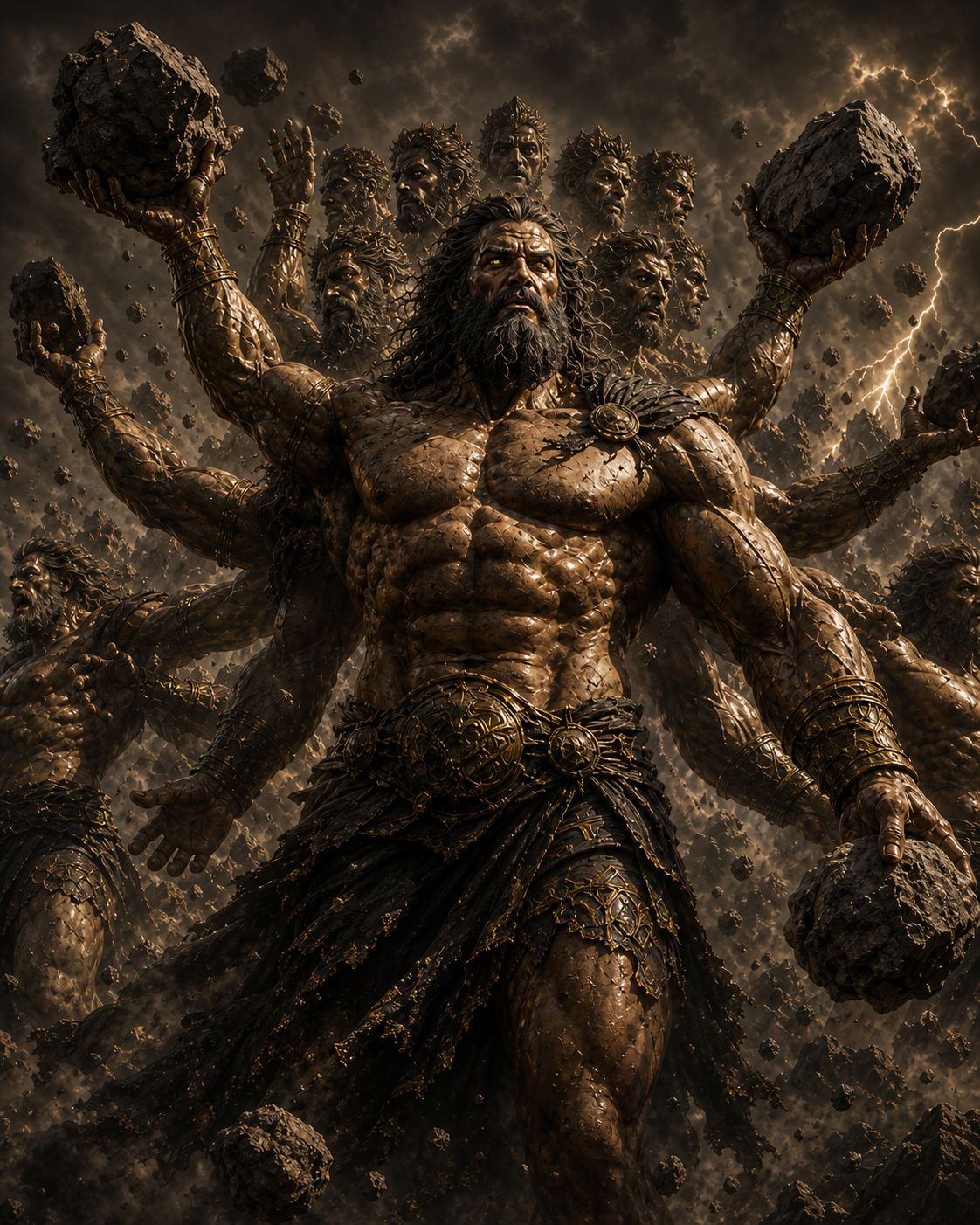
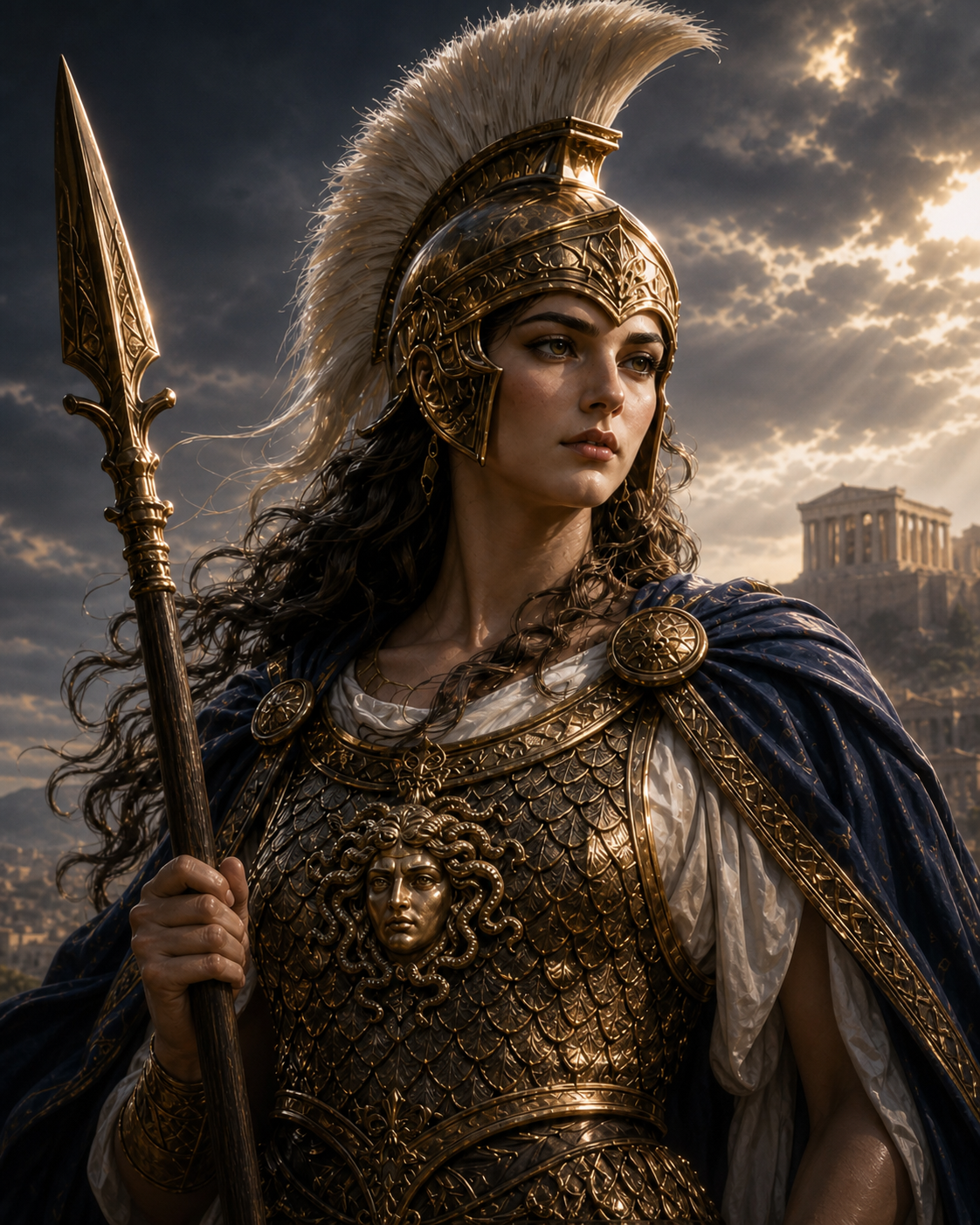
In Apollodorus, Gaia is angered by the treatment of the Titans and brings forth the Giants, who challenge the Olympians in the Gigantomachy. The gods learn that they cannot destroy the Giants without mortal aid, so Heracles joins Zeus and Athena. Gaia even seeks a plant that could protect her children from mortal attack, but Zeus obtains it first.
This does not make Gaia a simple enemy of order. She helped create the conditions for Zeus’s victory, then resisted the punishment that followed. Why raise the Giants against gods she once aided? The answer lies in the cost of Olympian peace. From Gaia’s perspective, the war may be another attempt to answer what victory left buried.
Alternative Traditions and Other Children
Ancient authors preserve different genealogies for Giants, monsters, and local powers. Hesiod links the Giants to blood from the wounded Uranus falling upon Gaia, while Apollodorus emphasizes Gaia’s anger over the Titans. These traditions can illuminate one another, but they should not be flattened into a single precise birth scene.
Gaia also joins with Pontus and, in later genealogical layers, with Tartarus to produce further powers. Her family spreads through Titans, sea gods, monsters, nymphs, and divine lineages. No short list can make her merely the mother of one faction.
Symbolism and Meaning
Gaia represents foundation, fertility, endurance, and the dangerous memory of what rulers hide. She is generous without being passive. Crops and families depend on Earth, but earthquakes, buried forces, and earth-born challengers remind divine kings that the foundation beneath them is not silent.
Her story also resists easy moral sorting. Uranus, Cronus, and Zeus each answer threats differently, while Gaia’s support shifts according to the treatment of her descendants. She can be read as a principle of generational correction: every order must account for those it excludes.
Legacy and Paths Forward
Later Greek religion honored Gaia in oaths, local cult, prophecy, and agricultural life, while art often personified Earth as a maternal figure rising from the ground. Modern ecological language frequently returns to her name, though modern uses should not be confused with one uniform ancient theology.
Follow Uranus to the first imprisonment, Cronus to the first successful rebellion, Zeus to the Olympian settlement, and the Giants to Gaia’s renewed challenge. Tartarus connects every dynasty through what it chooses to bury. Gaia remains the network’s ground: every path away from her eventually touches Earth again.
For readers, that circular structure is the key to Gaia’s lasting power. She cannot be left behind when one dynasty falls because the next dynasty still stands upon her. Every promise of final order is tested by what happens to the defeated, the unusual, and the children a ruler would rather conceal. Gaia turns genealogy into geography and geography back into consequence, ensuring that family conflict is written into the world itself.
Trivia
- Hesiod places Gaia among the earliest powers after Chaos and describes her as the secure foundation of the immortals.
- Gaia produces Uranus, the Mountains, and Pontus before her union with Uranus creates the first great divine family.
- The modern scientific name “Gaia hypothesis” borrows her name but is not itself an ancient Greek doctrine.