The many-headed hound who enforces death's one-way boundary.
- Boundary
- Hades
- Persephone
- Serpents
- Three Heads
- Primordial Age
- Titan Age
- Olympian Age
- Heroic Age
- Trojan Cycle
Cerberus is the hound guarding the Greek Underworld. Ancient sources vary from fifty heads to two or three, while the later three-headed form became standard. Heracles subdues him without weapons for the final Labor and returns him alive to his post.
At the entrance to the Greek Underworld stands a guardian designed for a one-way boundary. Cerberus welcomes the dead into Hades’ realm and prevents them from leaving. His many heads, serpent features, and enormous strength make him terrifying, but his purpose is not random cruelty. He embodies the rule that death admits travelers more readily than it releases them.
Child of a Monstrous Line
Hesiod makes Cerberus a child of Echidna and Typhon, placing him beside Orthrus, the Hydra, and the Chimera in one of mythology’s most dangerous families. The genealogy connects different heroic landscapes: Heracles will confront several of these siblings during the Twelve Labors. Cerberus is therefore both an individual guardian and part of a larger pattern in which boundary monsters concentrate dangers that heroes cannot meet through ordinary combat.
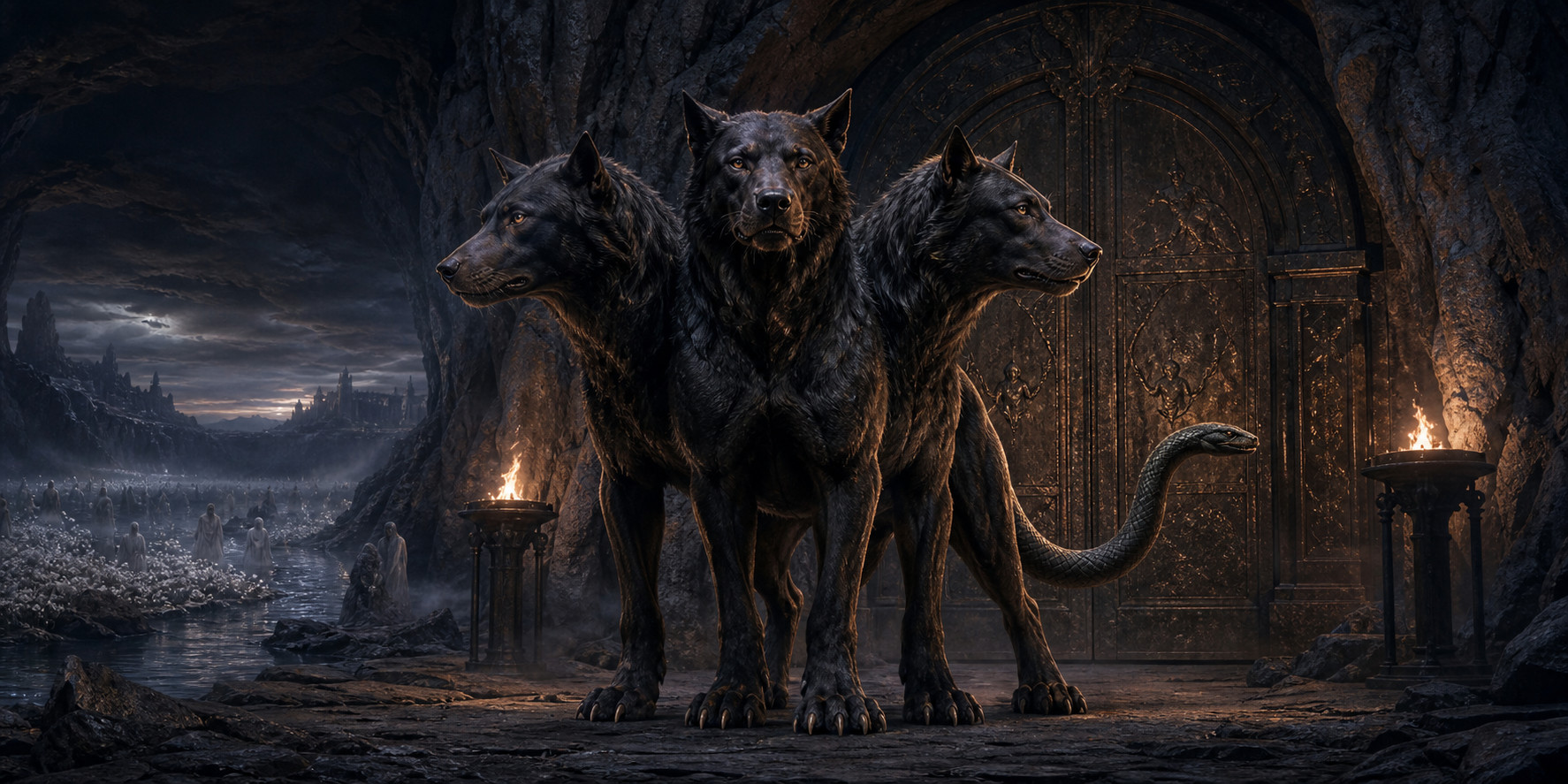
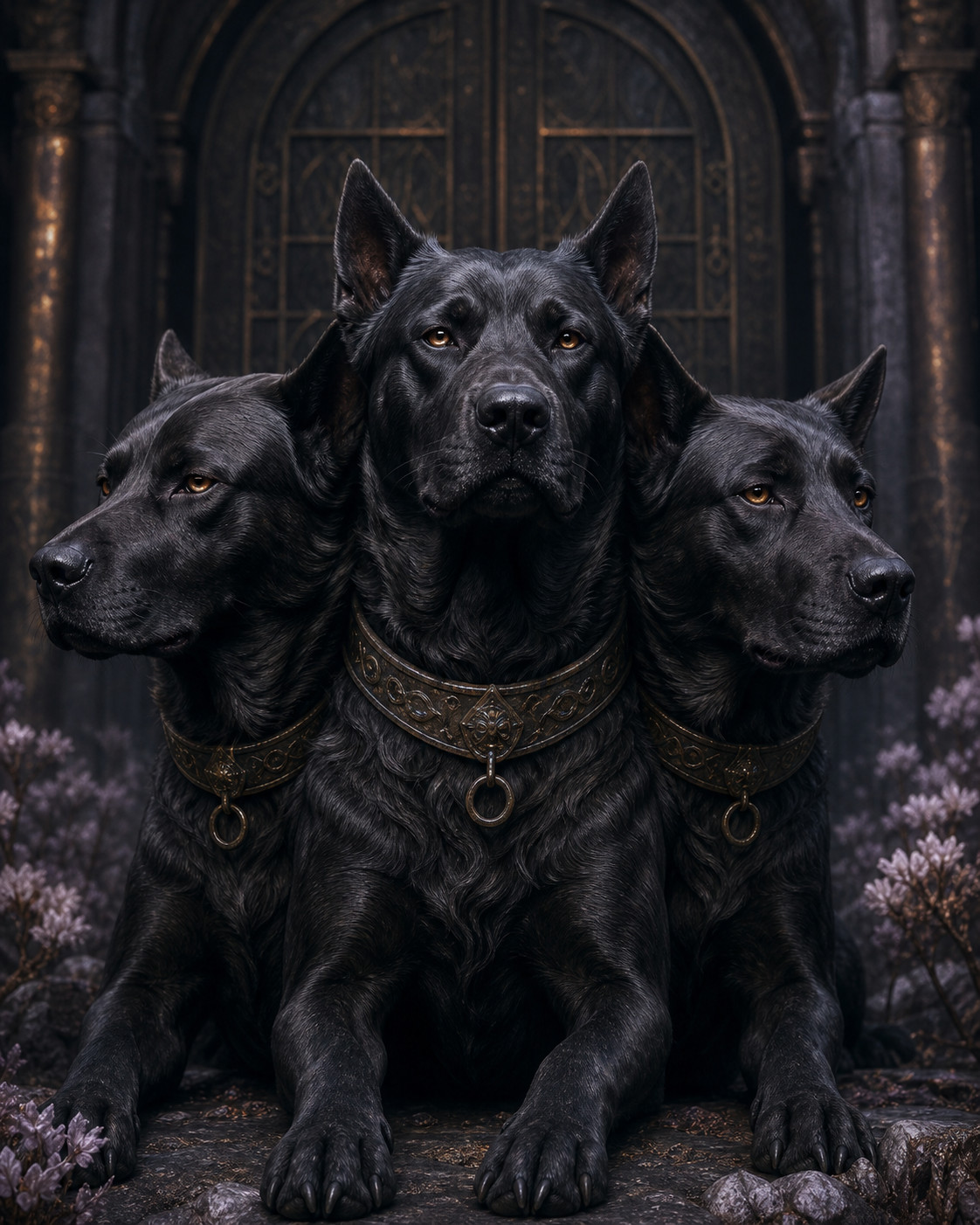
His appearance changes across time. Hesiod describes a brazen-voiced hound with fifty heads, while the familiar three-headed form becomes dominant in later literature and art. Some vase paintings simplify him to two heads; others add snakes rising from his body or a serpent for a tail. There is no single ancient model sheet. The stable idea is multiplicity joined to canine watchfulness: he can attend to more than one direction and make the gate difficult to pass unnoticed.
The Hound at Hades’ Gate
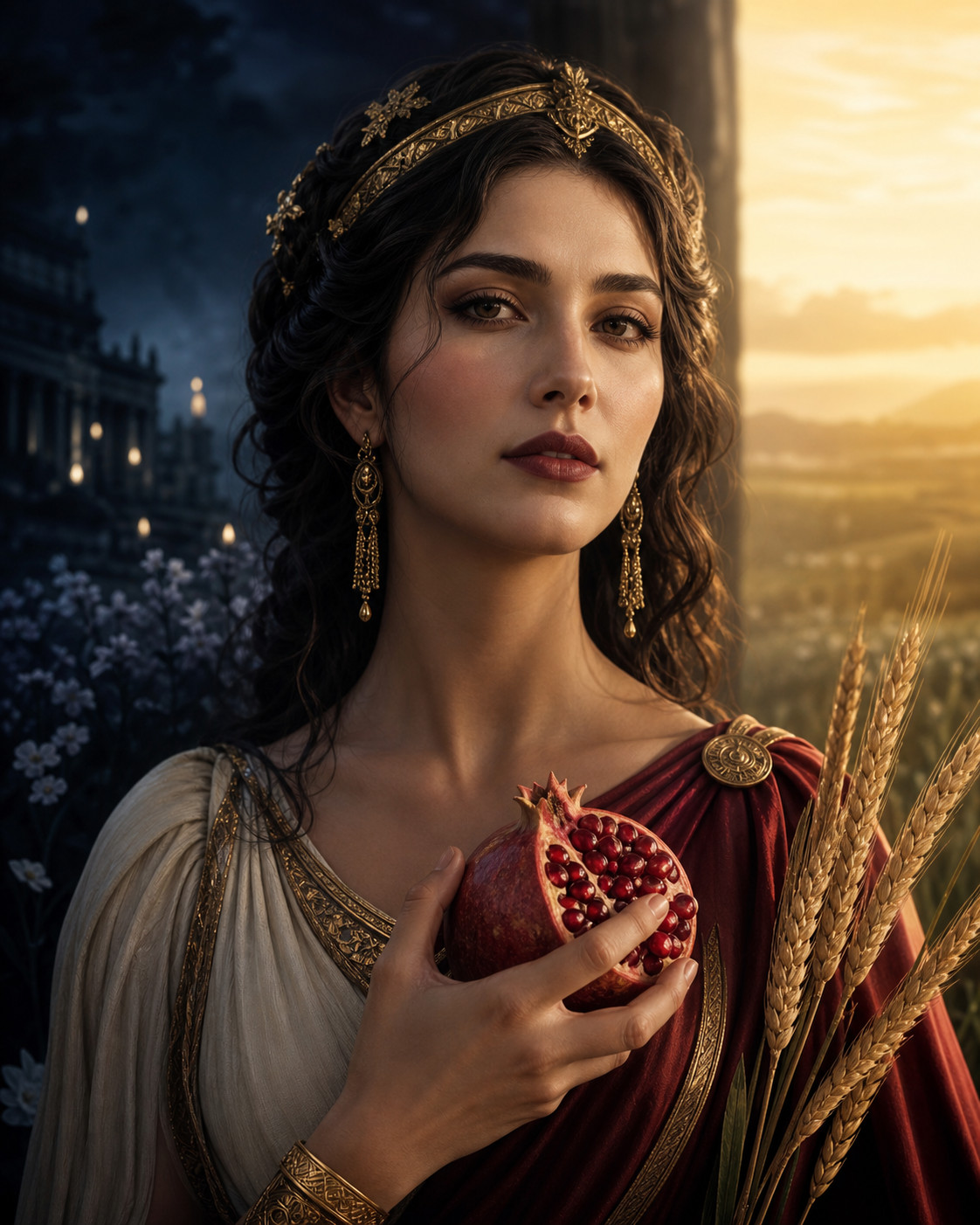
Cerberus belongs to Hades, but he also serves the structure of the Underworld ruled by Hades and Persephone. Greek descriptions of the realm differ, and poets do not always provide a fixed map. Cerberus nevertheless marks an intelligible threshold. He is friendly or at least permissive toward shades entering and savage toward those attempting to return. His behavior reverses the ordinary household dog, which keeps strangers out: the Underworld guardian keeps its population in.
This role explains why living visitors need more than bravery. A descent to the dead, or katabasis, demands permission, ritual knowledge, disguise, music, food, or overwhelming strength. Cerberus tests whether a traveler can cross a cosmic law and still come back. The method used against him reveals the visitor’s distinctive kind of power.
The Final Labor of Heracles
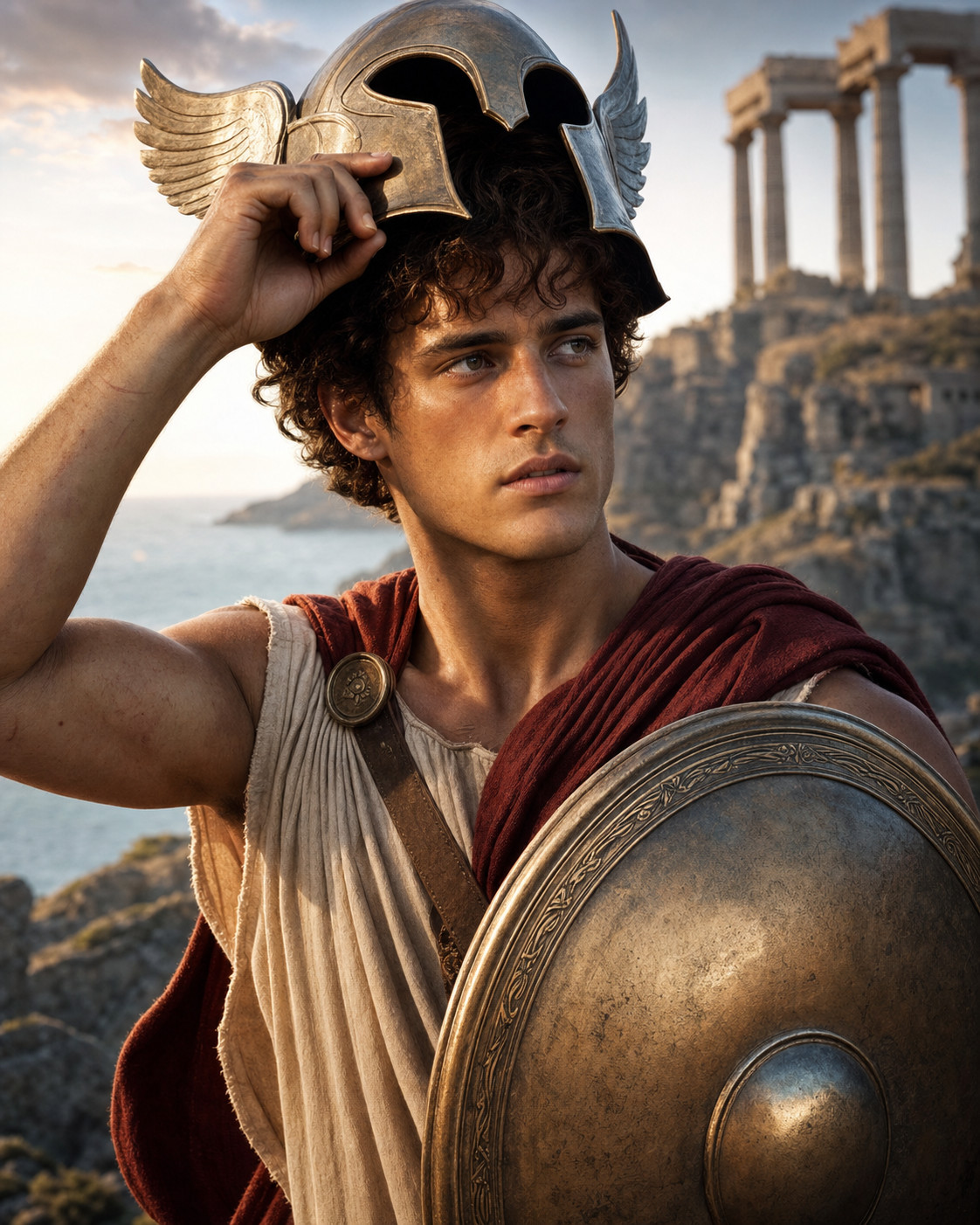
Eurystheus commands Heracles to bring Cerberus up from the Underworld as the final Labor in the familiar sequence. Before descending, Heracles receives initiation at Eleusis in Apollodorus’s account, preparing for contact with the realm of the dead. Guided by Hermes and Athena in some traditions, he reaches Hades and asks to take the hound. Hades permits the attempt on the condition that Heracles use no weapons.
Heracles grips Cerberus, protected by his lion skin, and subdues him through strength despite the serpent tail’s attack. He brings the guardian into daylight and presents him to Eurystheus. Ancient art often concentrates on this moment: the hero leads or drags the hound while the king recoils. Cerberus is not killed. After proof is delivered, he returns to his proper post. The Labor becomes a controlled violation of death’s boundary rather than the destruction of its guardian.
Orpheus, Psyche, and Other Passages
Other travelers use different means. Orpheus charms Cerberus with music during his attempt to recover Eurydice. In the later Latin story of Cupid and Psyche, Psyche carries cakes to pacify the hound on her journey below. Virgil gives the Sibyl a drugged honey cake when she guides Aeneas. These episodes are later than the early Greek genealogy, but they develop the same narrative principle: even an apparently irresistible guard has a passage suited to the traveler’s gifts and instructions.
The proverbial phrase “a sop to Cerberus” grows from this tradition of calming a dangerous gatekeeper with food. Yet the stories do not reduce him to a pet distracted by any snack. The successful visitor arrives with divine guidance, exact ritual knowledge, or exceptional art. The gate remains dangerous because the return from death is exceptional.
Plant, Poison, and Place
Later writers connect the hound to the toxic plant aconite. In Ovid’s account, foam from Cerberus’s mouths falls on the earth when Heracles drags him into daylight, and the poison grows from it. Places in Greece and southern Italy claimed entrances by which Heracles emerged, localizing a cosmic journey in visible landscapes. Such traditions let communities place the impossible gate near a cave, cape, or chasm they knew.
The name Kerberos has inspired many proposed etymologies, but no explanation is certain enough to define the myth. What matters within the stories is the hound’s office and relationship to the rulers below. He is not an independent devil and the Greek Underworld is not the Christian hell. The realm holds the dead broadly, while Tartarus is a deeper abyss and prison with a more specific punitive role.
What Cerberus Means
Cerberus makes an abstract limit visible. Multiple heads suggest unrelenting attention; serpents connect him with earth and chthonic danger; the dog’s familiar role makes the boundary feel like a guarded household. He can be subdued, charmed, or fed, but never casually ignored. Every successful crossing confirms how extraordinary the traveler is.
His survival is equally important. Heracles completes the final Labor without killing the guardian. Cerberus returns, and the world of the living does not permanently seize control of the dead. The episode celebrates heroic power while restoring the boundary it temporarily crosses.
Where the Story Leads
Follow the Underworld to understand the realm Cerberus protects, Hades and Persephone for its rulers, and the Twelve Labors for the command that brings him above. Heracles reveals the path of strength, while future entries for Orpheus, Echidna, Typhon, and the Eleusinian Mysteries open music, genealogy, and ritual preparation.
Trivia
- Hesiod gives Cerberus fifty heads; the familiar three develop as the dominant later form.
- Heracles captures him without weapons and returns him alive.
- Later travelers calm the guardian through music or specially prepared food.