Ruler of the Underworld and Guardian of the Dead
- Boundaries
- Dead
- Hidden Riches
- Underworld
- Wealth
- Primordial Age
- Titan Age
- Olympian Age
- Heroic Age
- Trojan Cycle
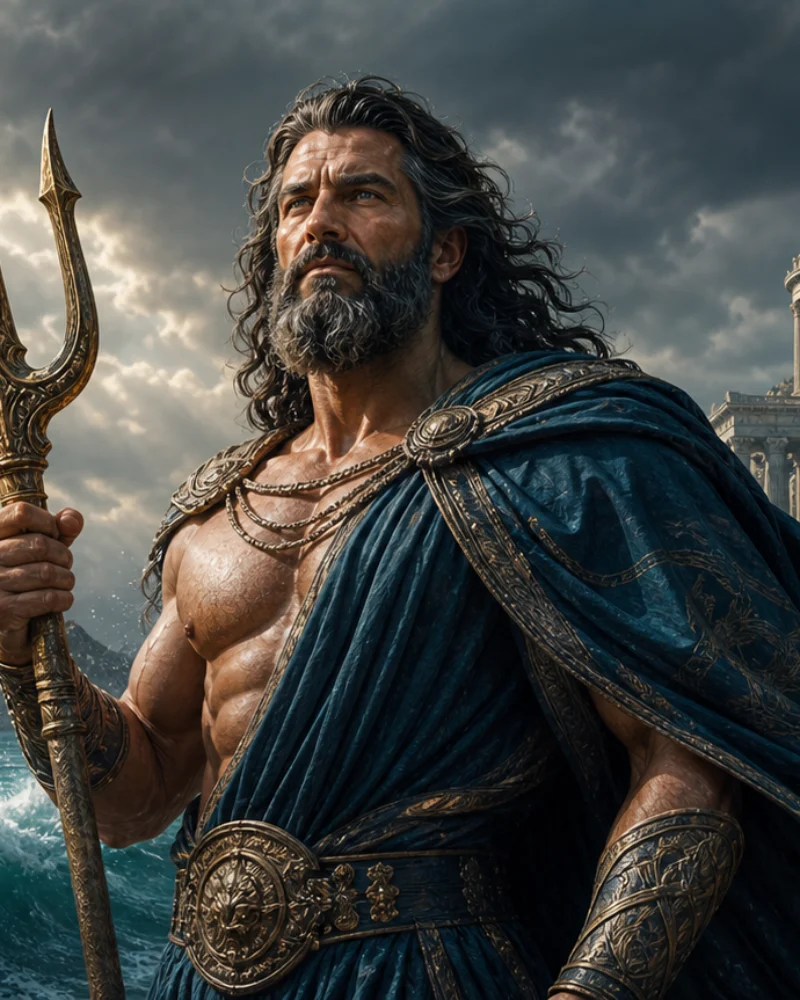
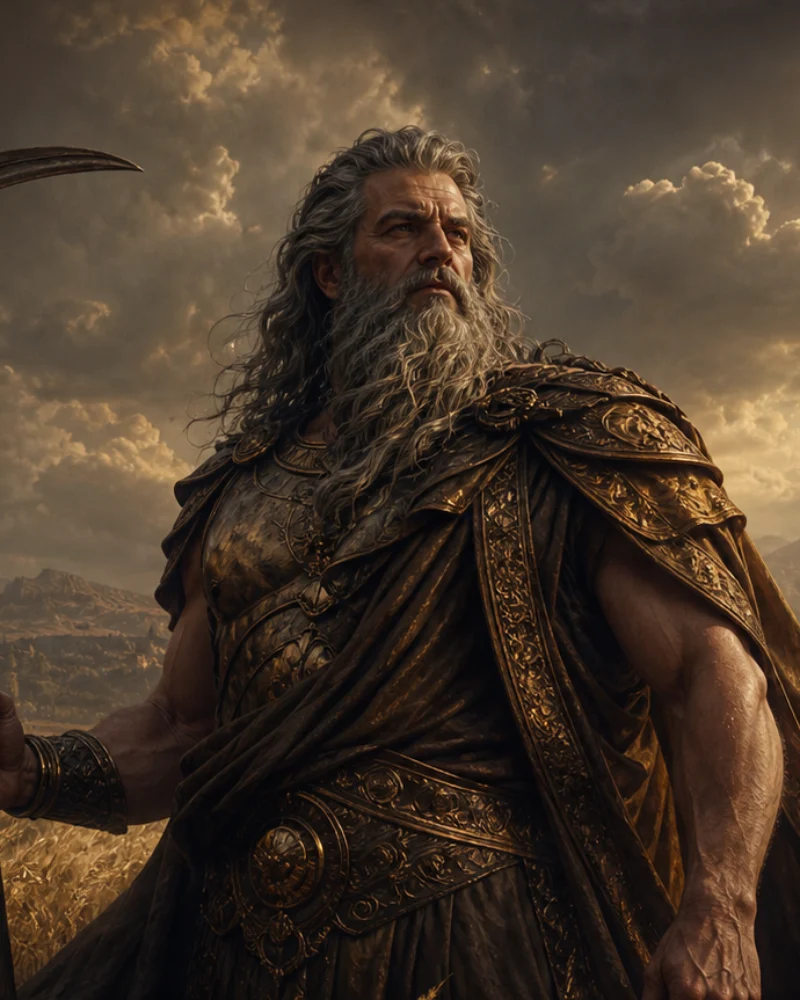
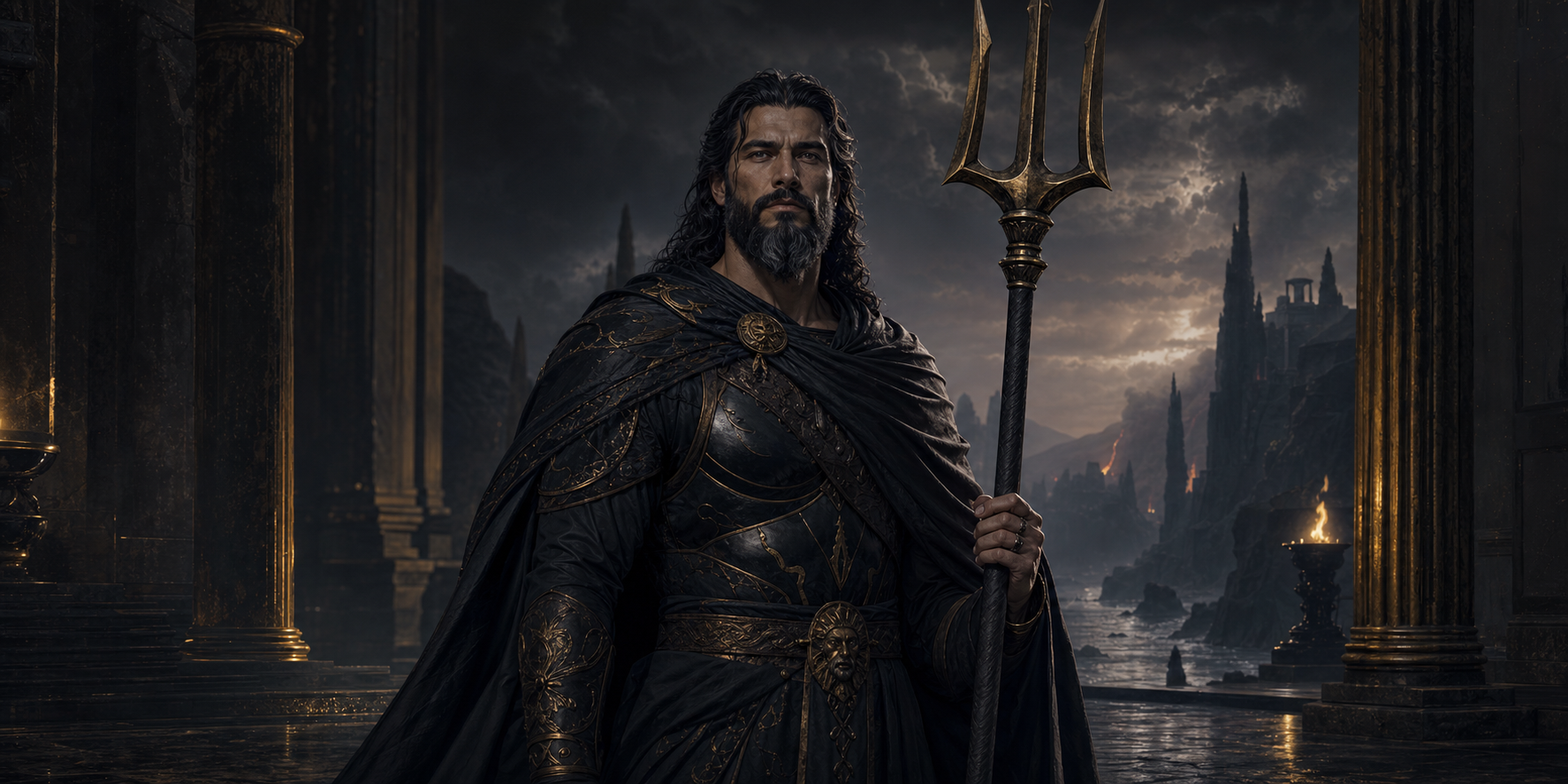
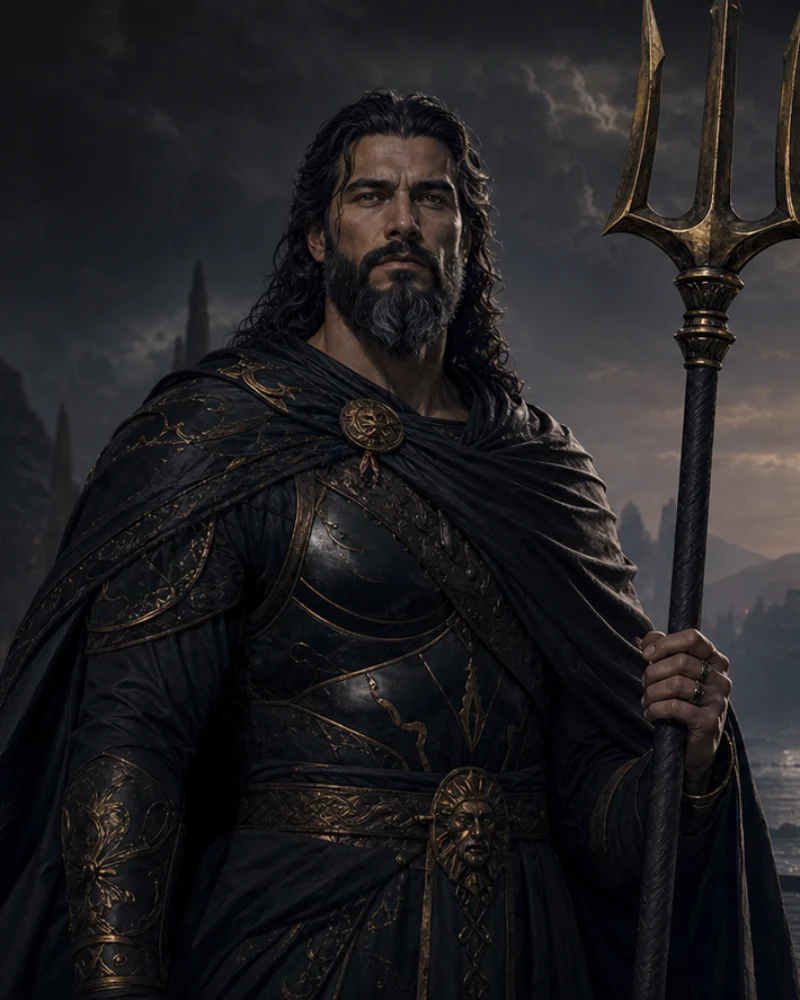
Hades rules the underworld and presides over the dead and the hidden riches beneath the earth. He maintains the boundary between the living and the dead.
Hades is the ruler of the underworld and guardian of the dead. He is one of the three sons of Cronus who divided the cosmos after the Titanomachy, receiving the realm beneath the earth while Zeus gained the sky and Poseidon the sea. Hades is often mistaken for a god of death or an embodiment of evil, but Greek myth presents him more precisely as a stern king who maintains the boundary between the living and the dead.
Swallowed and Released
Hades was born to Cronus and Rhea and swallowed by his father soon after birth. Zeus later forced Cronus to release Hades and the other siblings. During the war against the Titans, the Cyclopes gave Hades a helmet of invisibility, a powerful artifact that helped the younger gods secure victory.
Lord of the Underworld
After the Titans fell, Hades received the underworld by lot. His name came to refer both to the god and to his realm. He rarely leaves his kingdom, and unlike the Olympians who gather in the sky, his authority is rooted in permanence, boundaries, and the inescapable destination of mortal life.
Hades and Persephone
The central myth of Hades concerns Persephone, daughter of Demeter. Hades takes her to the underworld to become his queen, and Demeter’s grief causes the earth to become barren. A settlement allows Persephone to return to her mother for part of the year, but because she has eaten food from the underworld she must also spend part of the year below. The myth became closely connected with agriculture, seasonal change, marriage, death, and the hope of return.
A Stern but Lawful King
Hades is feared, yet he is not usually portrayed as chaotic or needlessly cruel. He enforces the rules of his realm and rarely allows the dead to leave. Heroes such as Heracles, Orpheus, and Theseus enter the underworld, but each encounter shows how difficult it is to cross its boundaries. The actual personification of death is Thanatos; Hades rules those who have died.
Wealth Beneath the Earth
Hades was also called Plouton, “the Wealthy One,” because crops, precious metals, and buried riches emerge from the earth. This title softened the fearful associations of his name and emphasized that the same earth receiving the dead also produces abundance.
Legacy
The Romans associated Hades with Pluto and Dis Pater. Later religious and popular traditions often turned him into a devil-like villain, but that image does not accurately reflect his ancient role. In Greek myth, Hades is a remote, formidable, and necessary ruler of the cosmic order.