God of the Sea and Shaker of the Earth
- Earthquakes
- Horses
- Maritime Power
- Sea
- Storms
- Primordial Age
- Titan Age
- Olympian Age
- Heroic Age
- Trojan Cycle
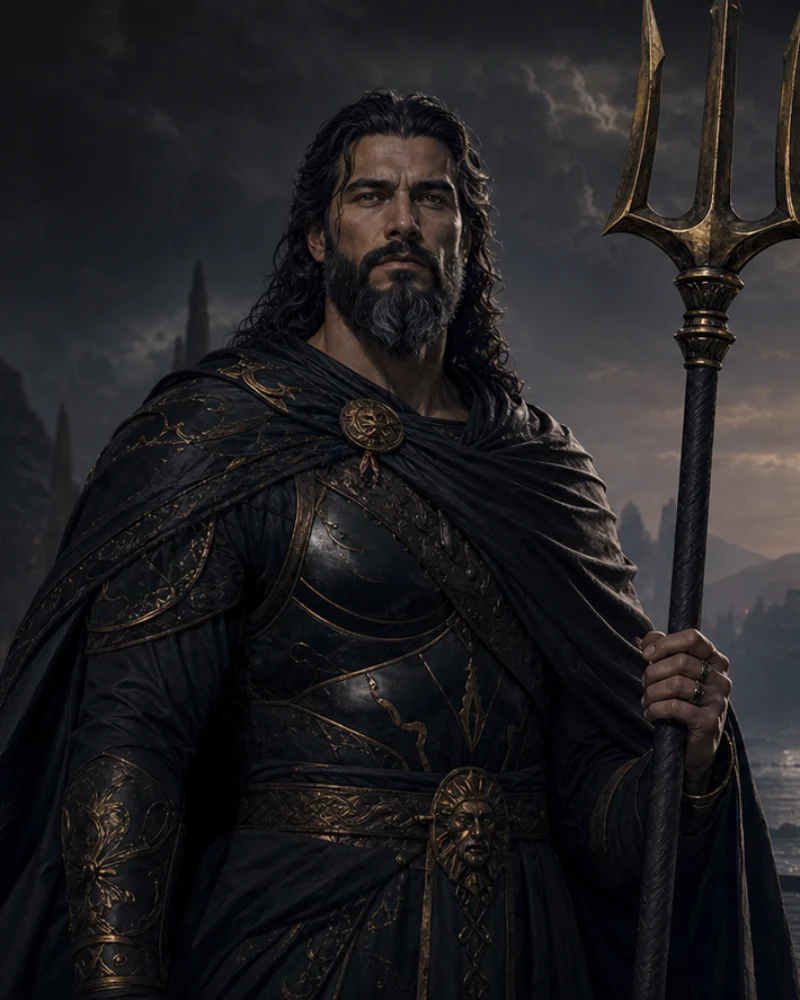
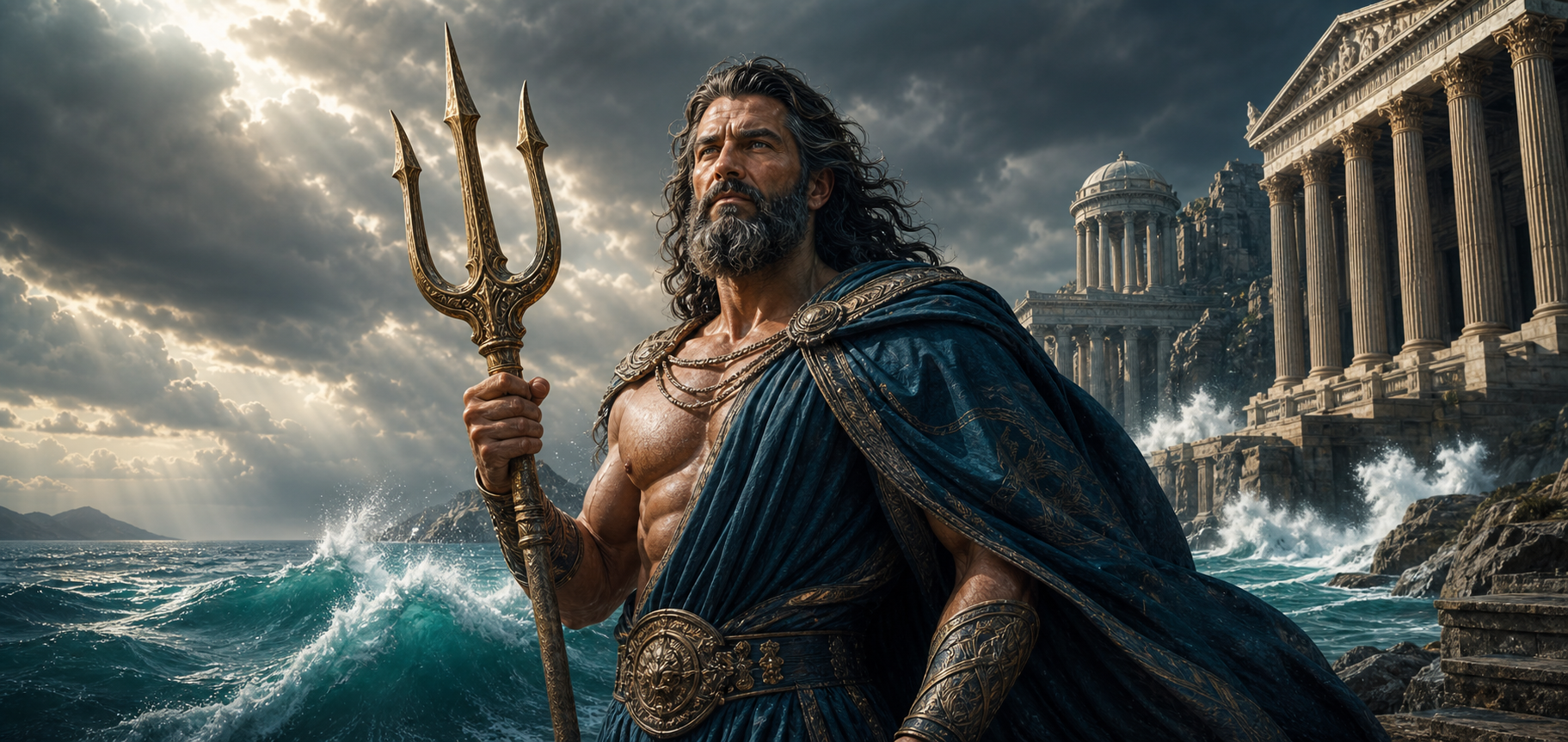
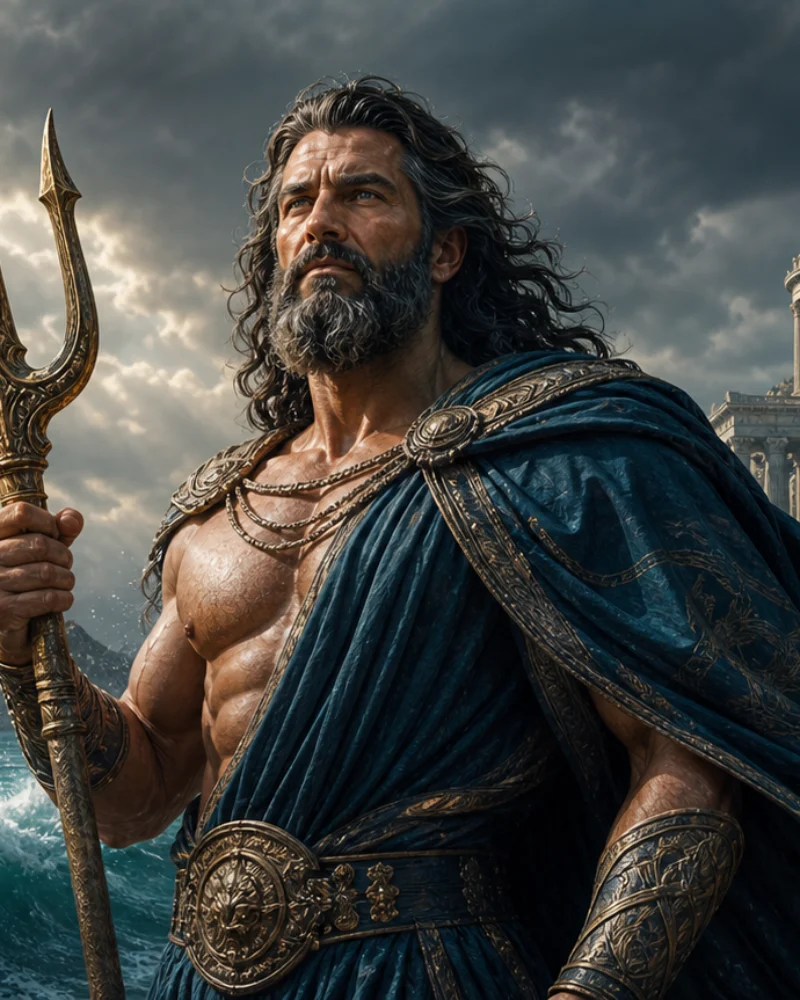
Poseidon is the Olympian god of the sea, earthquakes, storms, and horses. With his trident he commands the waters and shakes the earth.
Poseidon is the Olympian god of the sea, earthquakes, storms, and horses. Brother of Zeus and Hades, he rules a domain that is both life-giving and violently unpredictable. Sailors depended on his favor, cities feared his earthquakes, and myths repeatedly portray him as proud, forceful, and quick to defend his honor.
From the House of Cronus
Poseidon was born to Cronus and Rhea and swallowed by his father along with most of his siblings. After Zeus forced Cronus to release them, Poseidon joined the younger gods in the Titanomachy. The Cyclopes armed him with the trident, the weapon that became the unmistakable sign of his authority.
Ruler of the Sea
After the defeat of the Titans, Zeus, Poseidon, and Hades divided the cosmos by lot. Poseidon received the sea, while the earth and Mount Olympus remained shared. He was imagined traveling across the waves in a chariot drawn by powerful horses, accompanied by sea gods, nymphs, and creatures. His calm could grant safe passage; his anger could raise storms and wreck fleets.
The Earth-Shaker
Poseidon was not only a sea god. Under titles such as Enosichthon, the Earth-Shaker, he was believed to cause earthquakes by striking the ground with his trident. This connection explains why his power reaches inland and why his cult could be important in regions threatened by seismic activity.
Horses and Contested Cities
Poseidon also had a strong association with horses and was worshipped as Poseidon Hippios. Myths credit him with creating or fathering extraordinary horses. His competition with Athena for the patronage of Athens is among his best-known stories: Poseidon produced a salt-water spring or struck the rock with his trident, while Athena offered the olive tree. Athena won the city, and Poseidon’s defeat became a lasting symbol of rivalry between maritime power and civic order.
Anger, Oaths, and Heroes
Poseidon frequently appears as an obstacle in heroic narratives. In the Odyssey, he persecutes Odysseus after the hero blinds his son Polyphemus. He also plays a major role in stories surrounding Troy, where traditions connect him with the building of the city’s walls and with divine anger when promises were broken.
Legacy
The Romans identified Poseidon with Neptune. His trident, horses, dolphins, and sea chariot became enduring symbols of maritime power. He remains one of mythology’s clearest personifications of nature as majestic, necessary, and impossible to control.