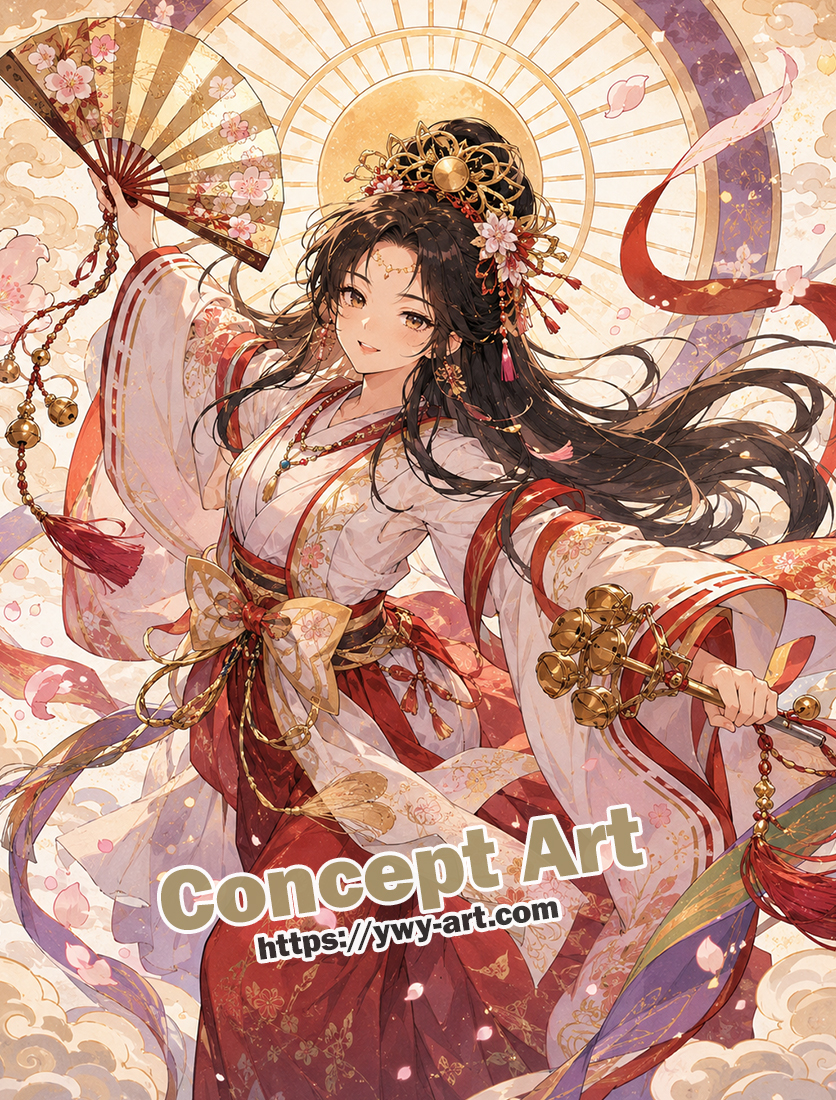
Ame-no-Uzume and the Kagura Suzu – Dance That Calls Back the Sun
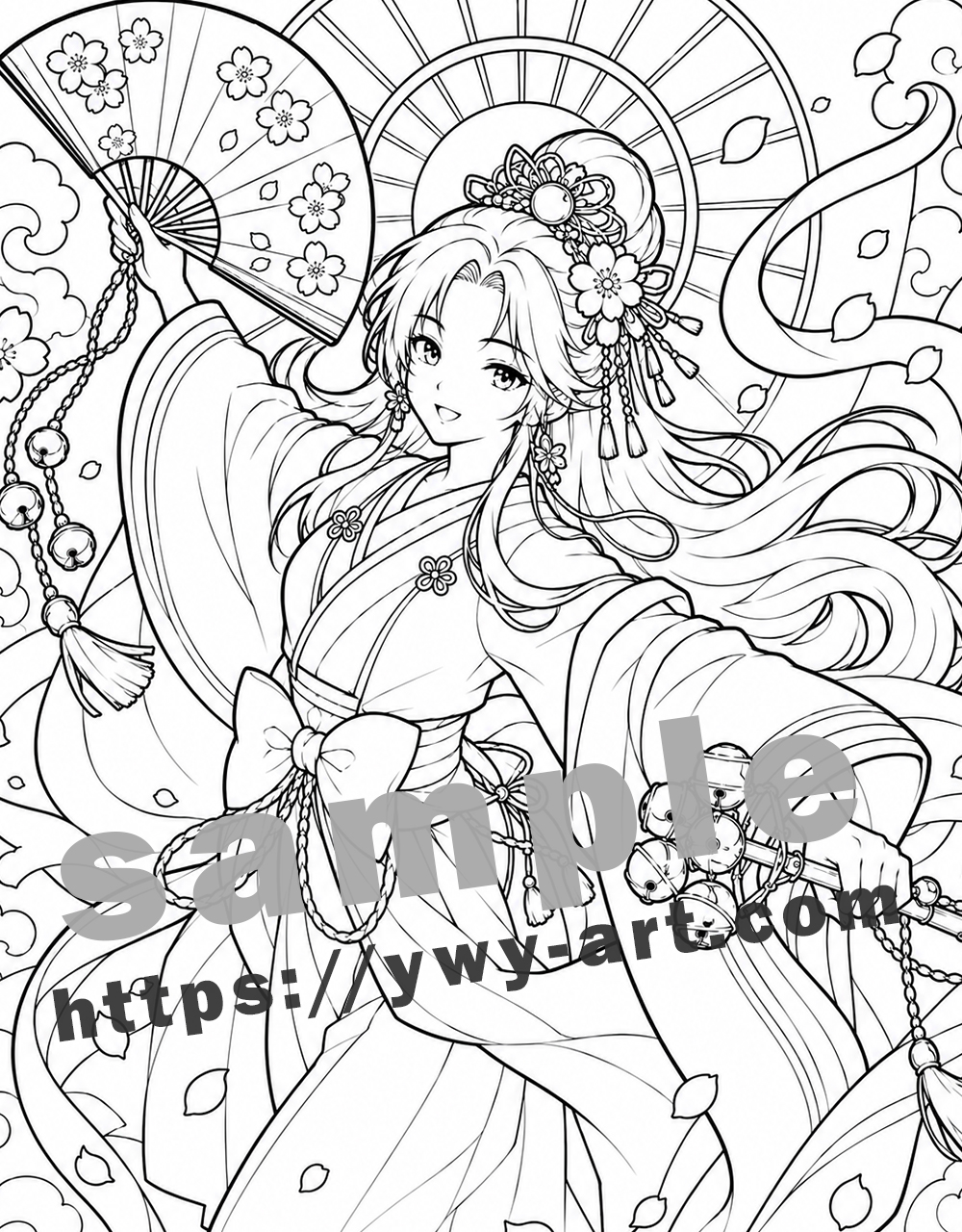
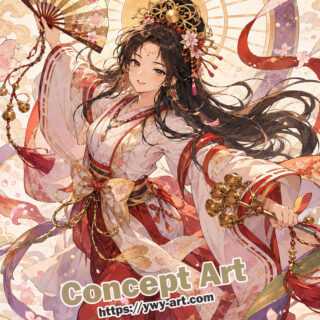
This page is bright, warm, and full of movement. Ame-no-Uzume dances among ribbons, clouds, cherry blossoms, and a large golden sun wheel behind her. One hand lifts a decorated folding fan, while the other holds a cluster of golden bells. The whole composition feels like sound and sunlight at once, as if the page is catching the exact moment when a sacred dance begins.
What stands out to me is the expression. She is smiling, but not in a flat or careless way. There is confidence in her pose, and the wide sleeves, trailing ribbons, and falling petals all make the scene feel alive. After pages built around storm, swords, and moonlit water, this one brings a different kind of divine power: joy, performance, and the ability to change the atmosphere.
Who Is Ame-no-Uzume?
Ame-no-Uzume is a Japanese goddess associated with dawn, dance, mirth, performance, and sacred celebration. She is especially famous for the myth in which Amaterasu, the sun goddess, hides herself away in a cave, plunging the world into darkness. Ame-no-Uzume performs a bold, joyful dance outside the cave, causing the other kami to laugh. Curious about the commotion, Amaterasu emerges, and light returns to the world.
That myth makes this artwork feel very fitting. The golden sun disc behind her is not just decoration. It quietly suggests the return of light. The fan, bells, ribbons, and blossoms all support the feeling of festival energy, while her dance pose gives the page its rhythm.
In the Anime Gods and Mythic Relics Coloring Book, Ame-no-Uzume adds a lively ceremonial page to the Japanese section. Her relics are not weapons, but they still carry power. They create movement, sound, and attention.
The Kagura Suzu
The main relic here is the kagura suzu, the cluster of bells in her right hand. These bells are used in Shinto ritual dance, and they immediately connect the image to sacred performance. In the artwork, the bells sit close to the viewer, with tassels and cords trailing from the handle. They are small compared with the full figure, but they should shine clearly.
I would color the bells with warm gold, leaving small white highlights on each rounded surface. The handle can be darker gold, bronze, or red-brown. The cords and tassels can repeat the red from the clothing, tying the relic into the whole costume.
One practical warning: do not make the bells all the same flat yellow. Each bell is rounded, so a little shading will make a big difference. Use bright gold on the upper curves, ochre in the middle, and bronze or brown near the lower shadows.
The Fan as a Second Focal Point
The folding fan in her raised hand is just as important visually. It opens across the upper left part of the page and carries cherry blossom patterns that echo the petals around her. Because the fan is broad and decorative, it can easily become too busy if every panel is colored with high contrast.
A gentle approach works well: pale gold or cream for the fan paper, red-brown for the ribs, and soft pink blossoms. You can add a few warmer gold panels, but let some sections stay light. This keeps the fan elegant and helps it stand apart from the sun wheel behind it.
The fan and bells work together beautifully. One suggests graceful visual motion, the other suggests sound. Together, they make Ame-no-Uzume’s divine artifact feel like a performance rather than a single object.
A Palette I Would Try
This page naturally invites a festive palette: vermilion red, ivory white, soft pink, warm gold, and a little purple for contrast. The colored reference leans into a shrine-dance feeling, and that direction suits the myth very well.
- Vermilion, crimson, or deep red for the hakama, sleeve trim, ribbons, and tassels
- Ivory, cream, or soft white for the main kimono fabric
- Warm gold for the bells, hair ornaments, fan accents, and sun wheel
- Soft pink and peach for cherry blossoms and falling petals
- Brown-black or dark chestnut for the hair
- Pale lavender or muted purple for background ribbons and shadow accents
Be careful not to overuse red. The page has many areas where red makes sense, but if every ribbon, flower, shadow, and trim line is equally saturated, the composition can become heavy. Let the strongest red sit in the skirt and main tassels, then use softer coral or pink-red for smaller accents.
Coloring the Sun Wheel
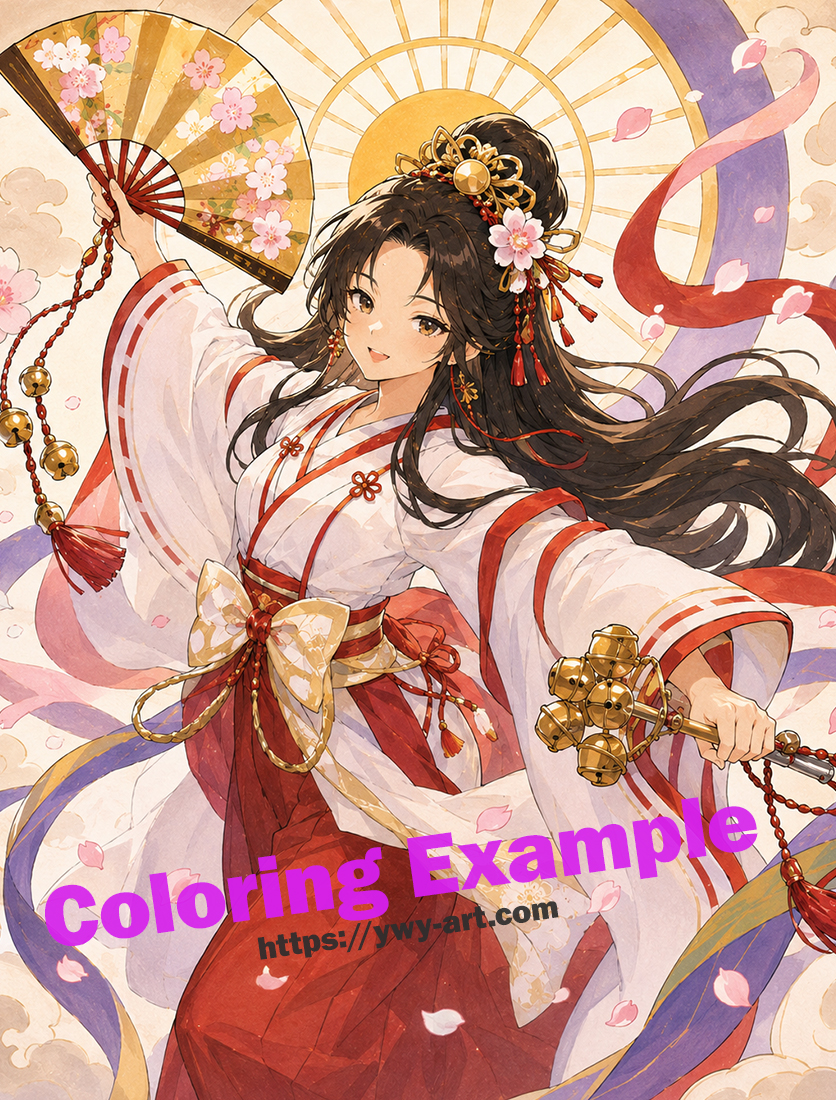
The large sun wheel behind Ame-no-Uzume is one of the page’s strongest symbolic elements. It should glow, but it should not overpower her face. I would use pale gold, warm cream, and soft yellow rather than harsh orange. The radiating lines can be slightly darker gold, while the center remains bright.
If you want a dawn effect, add peach or light pink around the edges of the sun. This will connect it to the cherry blossoms and make the whole page feel warmer. Keep the area behind the face lighter, so her expression stays readable.
Fabric, Hair, and Motion
The flowing sleeves and ribbons are a big part of this page’s charm. The fabric should feel light, not stiff. For the white kimono, use pale beige, blush pink, or very light lavender in the folds. Leave broad areas bright so the red trim and gold ornaments can stand out.
The hair creates a strong dark shape across the right side of the artwork. I would color it with dark brown or black-brown, then add warm highlights where the sun catches the strands. Avoid making it a solid block of black; the movement of the hair is part of the dance.
The bow at the waist is another focal point. A translucent cream-gold bow would look lovely against the red skirt. Add shadows where the fabric overlaps, but keep the edges clean.
Cherry Blossoms and Festival Air
The blossoms should feel light and scattered. Use soft pink at the petal tips, pale peach near the centers, and a tiny touch of yellow or warm brown in the stamens. Some petals can be left nearly white to keep the page airy.
The falling petals and curved ribbons help show the direction of the dance. I would color the ribbons with alternating red, pink, purple, and pale gold, but keep the values organized. The ribbons in the background can be lighter, while the ones closest to the figure can be stronger.
Final Coloring Thought
Ame-no-Uzume’s page is about sacred joy. The kagura suzu, folding fan, sun wheel, and cherry blossoms all point toward performance as a divine act. This is not quiet meditation or battle power; it is the kind of brightness that gathers attention and brings light back into the world.
When coloring this anime mythology coloring book page, I would start with the face, bells, and fan, then build the red-and-gold costume around them. Keep the sun warm, the blossoms soft, and the bells bright enough to feel musical. The finished page can feel like a festival dance captured in golden morning light.
Step into the world of mythology..
Available on Amazon Anime Gods and Mythic Relics Coloring Book Open in a new tab
コメント