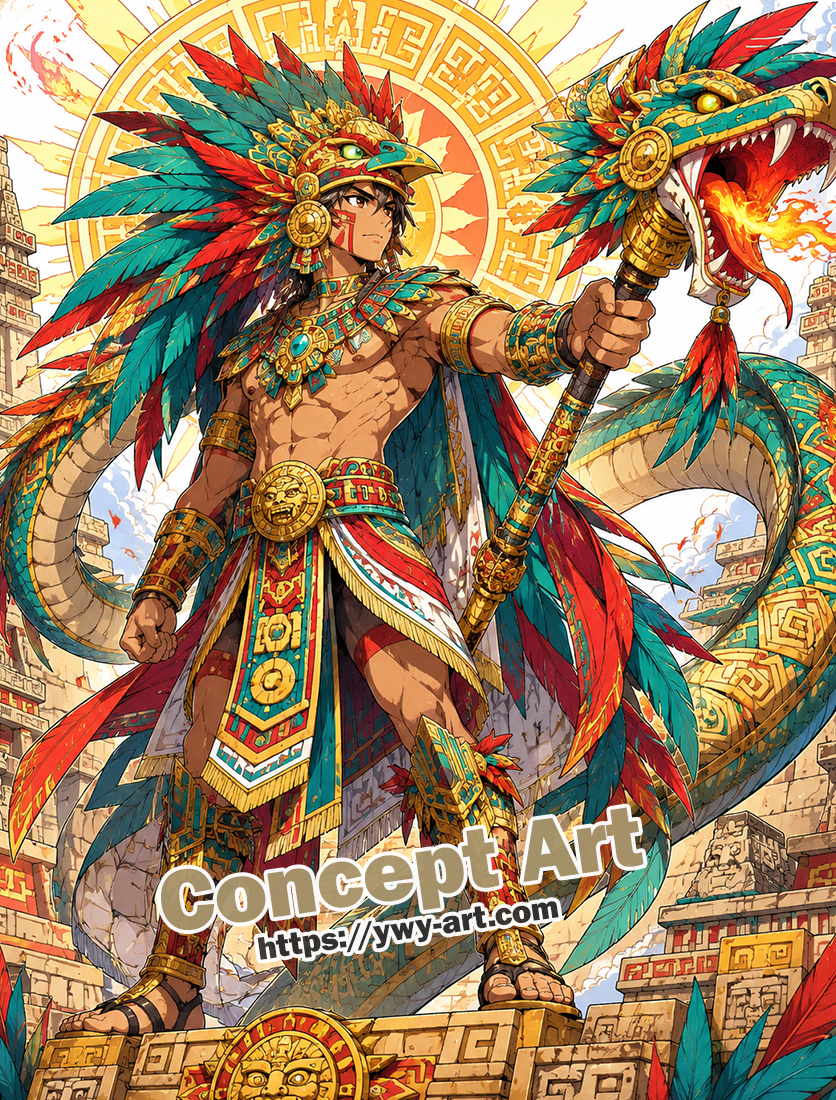
Huitzilopochtli and Xiuhcoatl – The Fire Serpent of the Sun
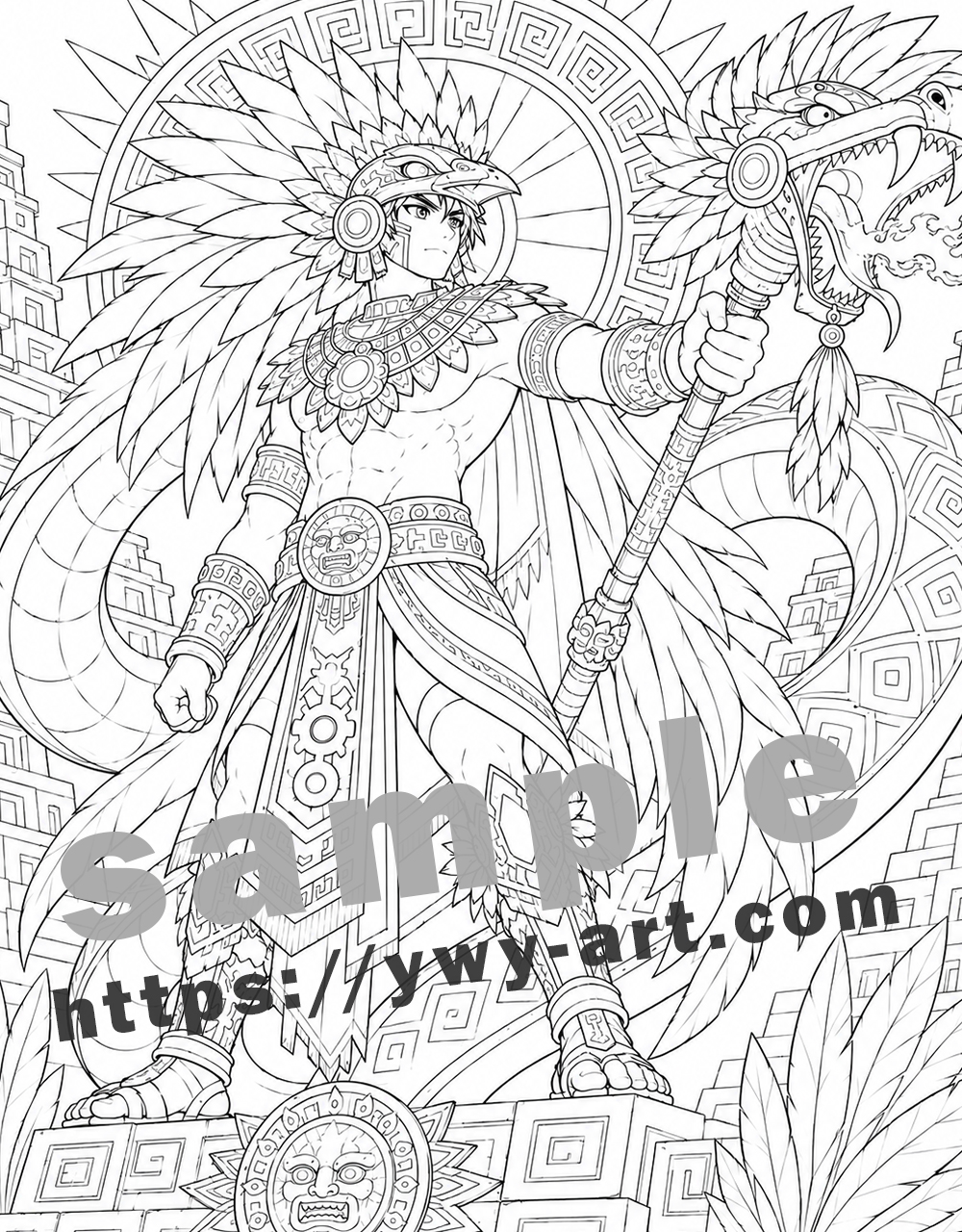
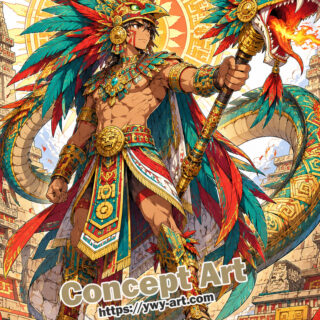
This page has a very different energy from the quieter divine portraits in the Anime Gods and Mythic Relics Coloring Book. Huitzilopochtli stands forward like a warrior at the top of a temple, surrounded by stone steps, feathered ornaments, a blazing sun disk, and the great serpent weapon Xiuhcoatl in his hand. The whole composition feels hot, ceremonial, and full of movement.
What immediately catches my eye is the diagonal pull of the serpent staff. Huitzilopochtli’s body is steady and vertical, but Xiuhcoatl curves across the page with its open mouth, fangs, feathers, and fire. That contrast makes the artwork exciting: the god is controlled and focused, while the sacred weapon feels alive.
Who Is Huitzilopochtli?
Huitzilopochtli is one of the major gods of Aztec mythology, strongly connected with the sun, war, sacrifice, and the protection of the Mexica people. He is often described as a powerful solar warrior, a divine force who drives back darkness and helps the sun continue its journey.
In mythology, he is not a gentle background presence. He is active, commanding, and intense. That personality comes through clearly in this fantasy coloring page. His stance is firm, his gaze is serious, and the large feathered headdress gives him the feeling of someone both human and more-than-human.
The artwork does not try to be a museum reconstruction. It uses an anime mythology coloring book style, with dramatic proportions, sharp costume details, and a heroic fantasy pose. Still, many visual cues point toward Mesoamerican inspiration: stepped temples, geometric borders, sun symbols, featherwork, turquoise-like colors, and gold ornamentation.
Xiuhcoatl, the Fire Serpent
The mythic relic here is Xiuhcoatl, often understood as a fire serpent or turquoise serpent. In Aztec stories and symbolism, Xiuhcoatl is closely tied to solar fire, divine power, and weapon-like force. It is not just a snake; it is a sacred weapon, a streak of heat and authority.
In this illustration, Xiuhcoatl appears as a serpent-headed staff held outward from the body. The head is large and fierce, with open jaws, curved fangs, circular ornaments, feathers, and flames pouring from its mouth. This is a good example of how mythic relics can be drawn as characters in their own right. The weapon has almost as much expression as the god holding it.
When coloring this page, I would treat Xiuhcoatl as the second face of the composition. Huitzilopochtli’s face is calm and watchful; the serpent’s face is wild and explosive. If both areas receive the same level of color intensity, the page may feel crowded. If you let the god stay strong and solid while allowing the serpent’s mouth and flame to glow brighter, the artwork becomes much easier to read.
Looking at the Artwork
This page is packed with detail, but the structure is actually very clear. The large sun disk behind the head works almost like a halo. The feathered headdress spreads outward to the left, while the serpent curves behind and around the figure on the right. The temples in the background create a sense of scale, making Huitzilopochtli feel monumental.
The most important visual areas are:
- the face and eyes of Huitzilopochtli, which should remain readable;
- the sun disk behind him, which sets the warmth of the whole page;
- the feathered headdress and cape, where red, teal, green, and gold can create rhythm;
- Xiuhcoatl’s head and flame, which should feel hot and alive;
- the stone temples, which need quieter colors so they do not compete with the figure.
There are many repeated geometric patterns in the clothing, armor, belt, staff, and serpent body. These are beautiful, but they can become visually noisy if every small shape is colored with a different bright color. I would choose a limited palette first, then repeat it with discipline.
A Palette I Would Try
For this page, I would start with a classic sun-and-turquoise palette: warm gold, deep teal, red, cream stone, burnt orange, and small touches of black or dark brown. This combination fits the solar feeling of the artwork and also helps the feathered serpent stand out.
For the gold parts, I would not use one flat yellow everywhere. The page has a lot of ornaments, so three levels of gold will make a big difference: pale yellow for highlights, golden ochre for the main metal, and brown-orange for shadow. This keeps the jewelry, sun disk, belt, staff, and armor from looking like one single block of color.
For the feathers, teal and red are a strong pairing. You can make the outer feathers darker and the inner feathers brighter, or reverse it by giving the headdress a bright crown-like center and deeper edges. Either approach works, but try to repeat the same logic across the headdress, shoulder feathers, serpent feathers, and foreground leaves.
The flame from Xiuhcoatl’s mouth should be planned before the rest of the weapon. I would place the lightest yellow or near-white at the center of the flame, then move outward into orange and red. If you want a more magical effect, add a thin rim of hot yellow around the serpent’s teeth and mouth.
Coloring the Background
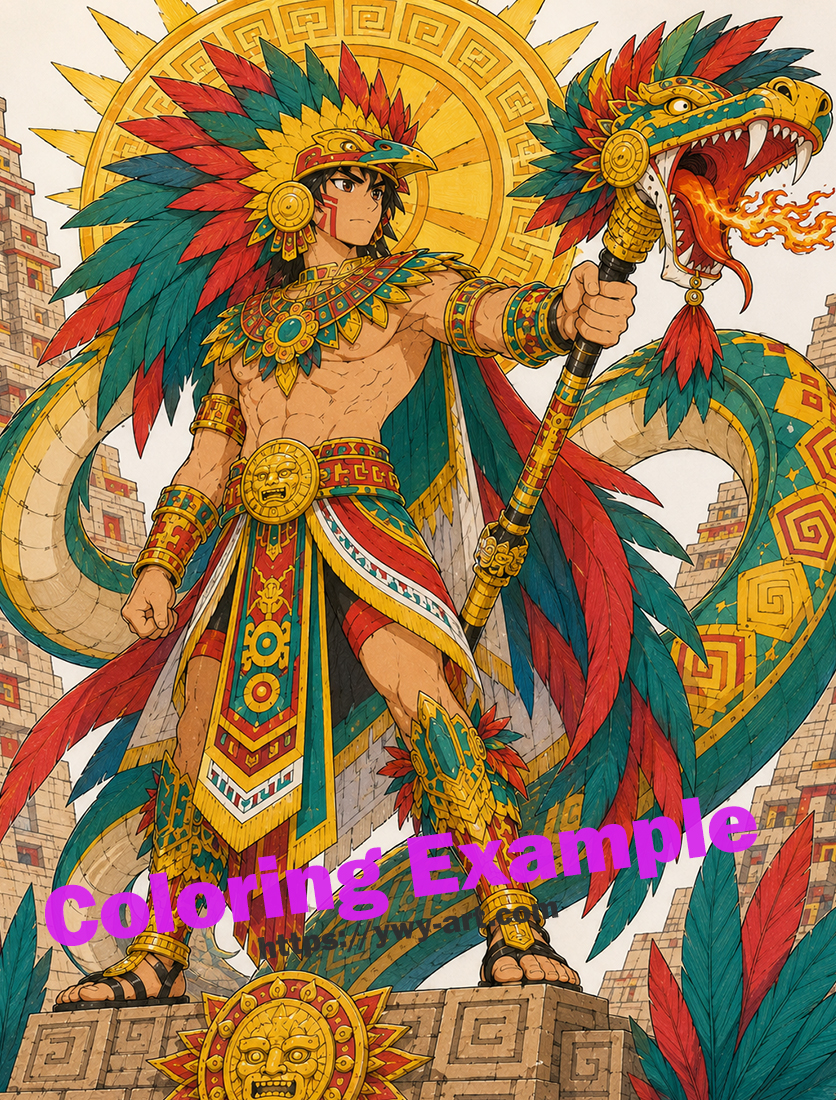
The temples are important, but they should not steal the scene. Soft sandstone, muted beige, light gray-brown, or warm ivory will work well. Add small red and gold accents only in selected bands or doorway details. If every temple block receives heavy shading, the background may become too dark and compete with the main figure.
The sun disk behind Huitzilopochtli is a wonderful place for controlled brightness. You can color the outer rays in golden yellow, the inner circular pattern in orange-gold, and the carved lines in a slightly darker shade. Leave a little light near the center so the head and headdress do not disappear into the halo.
One practical warning: avoid making the sun disk and gold armor exactly the same color. They are both warm, but they serve different purposes. The sun disk is light and atmospheric; the armor is solid and metallic. A subtle difference in shade will help the page feel more layered.
Small Details Worth Slowing Down For
The face paint is a small but powerful detail. A red or dark crimson mark on the cheek gives Huitzilopochtli a ceremonial, warrior-like presence without needing much space. Keep the skin tones balanced around it so the mark remains intentional rather than looking like stray color.
The circular mask at the belt and the sun-face ornament near the bottom are also worth attention. They echo the larger sun disk and make the whole design feel connected. I would color them with similar golds, but add darker shadows in the eyes and mouth so they have a carved, ancient look.
The serpent body behind the figure can be slightly darker than the serpent head. This helps push the body backward while keeping the head and flame as the active focal point. If you use teal on the serpent scales, try adding narrow gold or red accents in the geometric bands.
Final Coloring Tips
This is a page where restraint matters as much as boldness. The subject invites bright colors, and the artwork can absolutely handle them, but the strongest result will come from choosing where the brightest colors belong. Let the flame, sun disk, turquoise ornaments, and red feathers carry the drama. Let the stone, skin shadows, and cloth folds support them quietly.
If you are using colored pencils, build the gold and teal areas slowly in layers. If you are using markers, test your yellows and reds first, because the flame and sun disk will be hard to soften once they are too saturated. A white gel pen or fine highlight pencil can be useful at the end for small sparks in the flame, metal edges, and the serpent’s eye.
Huitzilopochtli and Xiuhcoatl make one of the most energetic pages in this part of the Anime Gods and Mythic Relics Coloring Book. It has sacred weapon imagery, temple architecture, feather patterns, solar symbols, and a heroic pose all working together. Take your time with the color plan, and this fantasy coloring page can become a bright, powerful tribute to myth, fire, and sunlight.
Step into the world of mythology..
Available on Amazon Anime Gods and Mythic Relics Coloring Book Open in a new tab
コメント