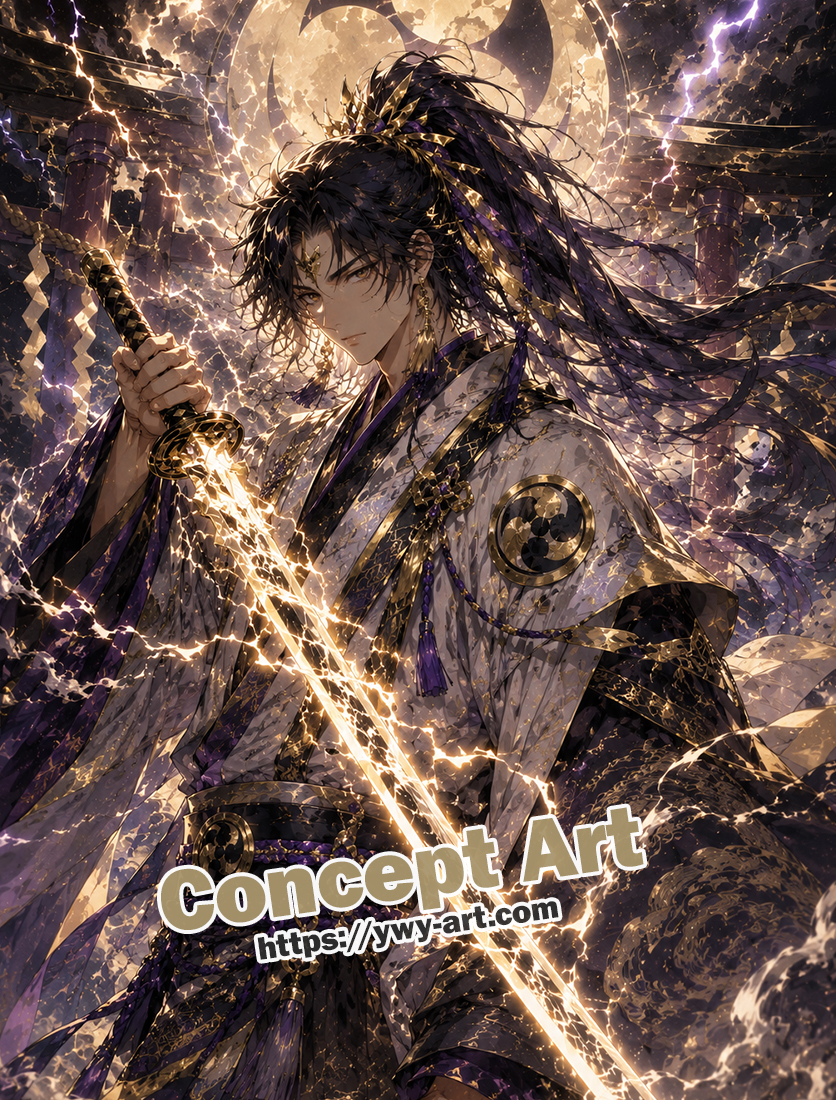
Takemikazuchi and Futsu-no-Mitama – The Lightning Sword at the Shrine Gate
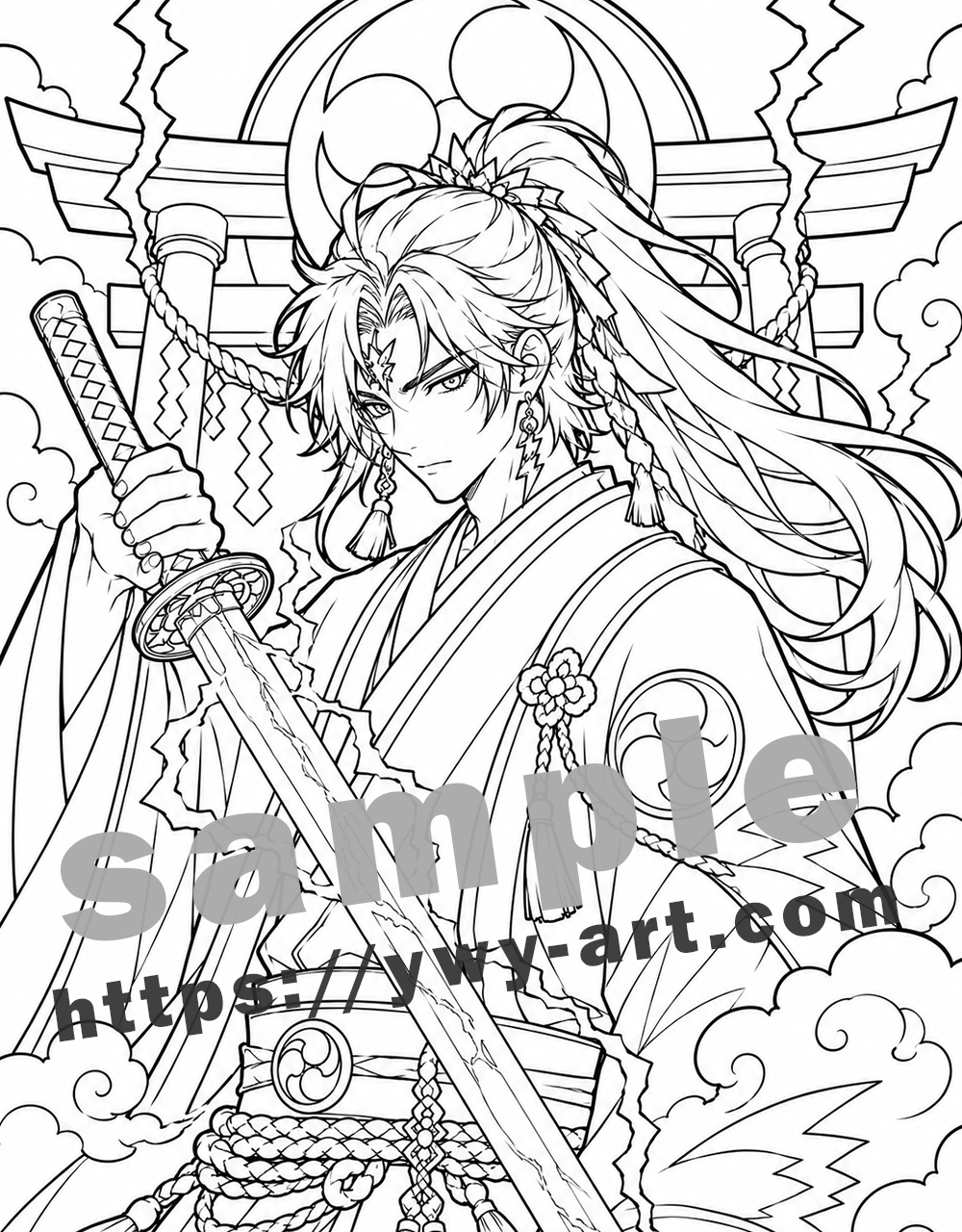
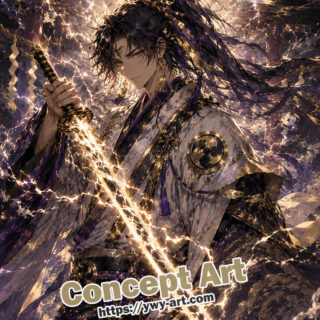
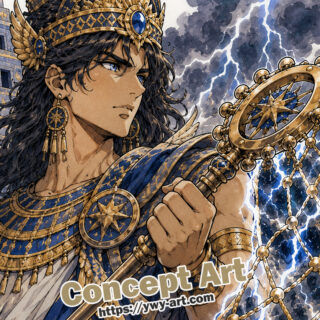
This page has a sharp, electric stillness to it. Takemikazuchi stands before a shrine gate, holding a sword that looks less like ordinary metal and more like lightning given form. The blade cuts diagonally across the whole composition, glowing through clouds, storm cracks, and dark violet shadows. Behind him, the large circular crest and shrine architecture make the scene feel ritualized, not just dramatic.
What stands out most is the tension between discipline and violence. The lightning is wild, the clouds are restless, and the hair is pulled by storm wind, but Takemikazuchi’s face remains focused. He is not swinging blindly. He looks like someone who knows exactly where the strike will fall.
Who Is Takemikazuchi?
Takemikazuchi is a Japanese deity associated with thunder, swords, martial power, and divine authority. He appears in important myths connected with the pacification of the land and is strongly linked with warrior culture. He is also connected with Kashima Shrine, where he is honored as a powerful protective kami.
In mythology, Takemikazuchi is not only a storm figure. He represents decisive force, the kind of power that resolves conflict and establishes order. That makes him a natural fit for a sword-centered page in the Anime Gods and Mythic Relics Coloring Book. His power is bright, severe, and controlled.
This illustration captures that very well. The shrine setting keeps the image sacred, while the lightning blade gives it immediate energy. It feels like a divine warrior appearing at the exact moment before action.
Futsu-no-Mitama, the Sacred Sword
The relic here can be read as Futsu-no-Mitama, a legendary sword connected with Japanese myth and divine power. Swords in Japanese mythology are often more than weapons. They can represent authority, purification, protection, and the cutting away of disorder.
In this artwork, the sword is the brightest element by far. It is not simply held in the hand; it dominates the entire page. The blade runs from the upper left toward the lower right, crossing the body and pulling the viewer’s eye through the storm. The crackling energy around it makes the sword feel alive.
For coloring, the blade should stay luminous. I would leave the central line almost white, then build pale yellow, warm gold, or blue-white around it. The surrounding lightning can be stronger near the blade and softer as it moves into the clouds. If the sword is colored too dark, the whole page loses its main source of power.
The Shrine and Storm Symbols
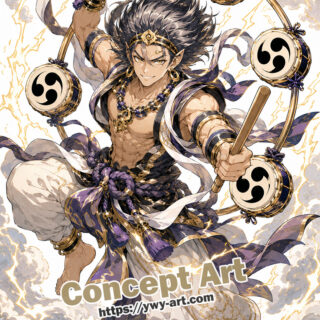
The background gives the page a strong Japanese atmosphere. The torii gate, hanging shide paper streamers, ropes, clouds, and crest-like circular symbol all frame Takemikazuchi as a sacred figure. The three-comma tomoe design appears on the sleeve and belt, echoing storm, motion, and divine energy.
I would keep those tomoe symbols crisp. They are small compared with the sword, but they help unify the design. Black and gold is a strong choice, especially if the surrounding fabric uses white, violet, and dark purple.
The large circle behind the figure can be treated like a moon, a shrine crest, or a glowing sacred backdrop. It does not need to be as bright as the sword. A muted gold, pale cream, or smoky yellow will help separate it from the lightning without competing with the blade.
A Palette I Would Try
This page naturally suggests a storm palette: black, white, purple, gold, and flashes of yellow lightning. It can be very striking if the colors are kept limited and high contrast.
- White or pale gray for the main robe
- Deep purple and black for inner layers, ribbons, clouds, and shadows
- Warm gold for trim, ornaments, sword guard, and shrine details
- Bright yellow-white for the lightning blade
- Lavender, violet-gray, or blue-gray for storm clouds
- Dark brown or black with violet highlights for the hair
One practical warning: do not let the purple take over everything. Purple works beautifully here, but the page needs white robe areas and bright lightning to stay open. If all the clouds, fabric, hair, and shadows become the same dark violet, the sword will still glow, but the rest of the line work may flatten.
Coloring the Lightning Sword
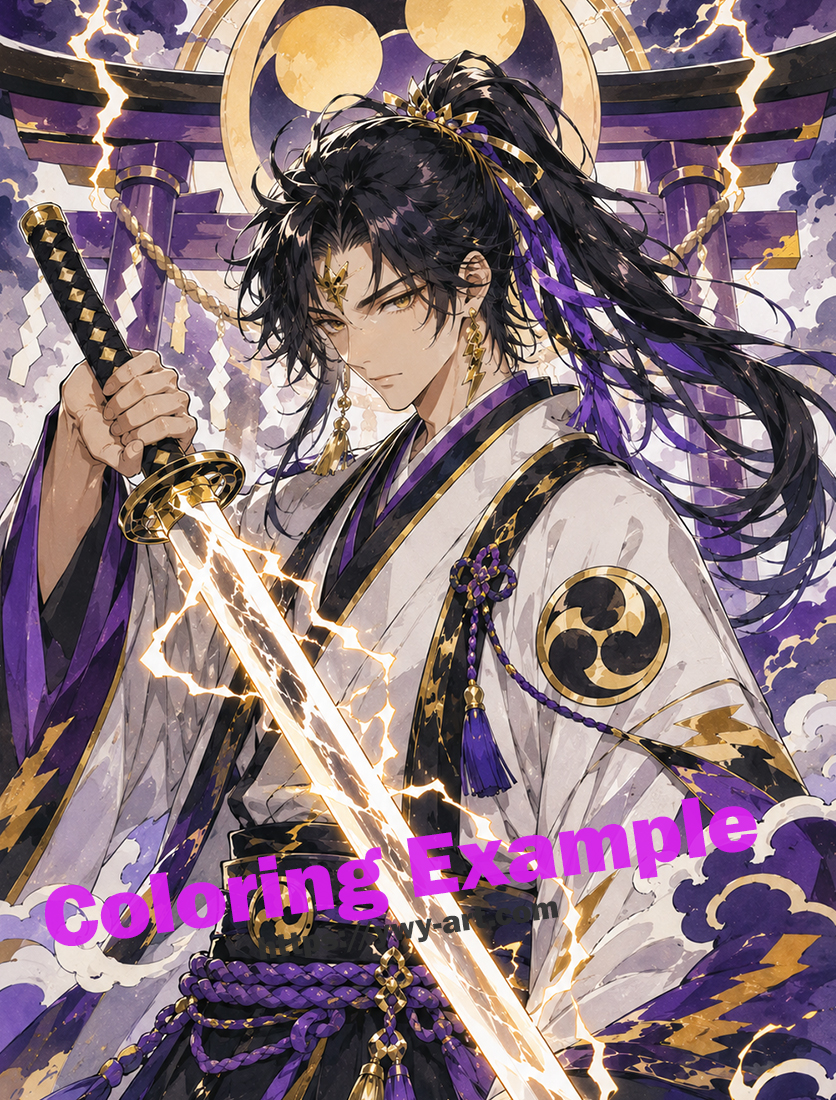
The sword should probably be colored before the costume. It is the anchor of the page. Start by deciding whether the lightning will be warm or cool. A warm lightning effect uses white, lemon yellow, gold, and a touch of orange. A cool version uses white, pale blue, electric cyan, and violet shadows.
For this particular artwork, warm gold lightning fits the shrine setting beautifully. The sword can have a white center, gold edges, and darker cracks running along the blade. Around the lightning, use very light yellow or pale lavender to suggest glow. Keep the brightest part near the blade and hand.
If you are using gel pens, this is the best place for metallic or glitter accents. A thin line along the sword edge, a few sparks, and small highlights on the guard can make the blade feel charged. Use those accents sparingly so the glow still looks intentional.
Hair, Face, and Costume
Takemikazuchi’s hair is dramatic, but it should not overpower the face. A dark base with purple or blue highlights will connect it to the storm clouds. Leave some narrow highlights where the hair crosses the light from the sword or the moon-like circle behind him.
The face should remain clean and focused. Because the page has so much lightning and cloud texture, the eyes are important. Warm amber, gold, or sharp gray-violet would suit the expression. Keep the shadows around the eyes controlled so the gaze stays readable.
The robe has large white areas that are easy to underestimate. They help the page breathe. Use pale gray, lavender, or beige shadows in the folds, especially near the sleeves and waist. The black and purple trim can be richer, with gold lines to separate the layers.
Managing the Storm Clouds
The clouds around the lower and upper parts of the page are active but should stay secondary. I would color them with soft violet-gray, smoky purple, and a little blue-gray. Leave the cloud tops lighter where they touch the lightning.
The background lightning bolts can be slightly less bright than the sword. This is important. If every bolt is equally intense, the viewer will not know where to look first. Let the sword be the strongest light, then use the surrounding bolts as echoes.
The shrine gate can be dark purple, black, deep red, or muted brown depending on the mood. A red torii would make the page feel more traditional, while a black-and-gold gate makes it feel more supernatural. Either can work, as long as it does not steal attention from the blade.
Final Coloring Thought
Takemikazuchi’s page is about decisive divine power. The sword is not only a weapon; it is a sacred force that cuts through storm and shadow. The shrine gate, tomoe symbols, and lightning clouds all support that idea, giving the artwork a strong mythic atmosphere.
When coloring this anime mythology coloring book page, I would protect the brightness of Futsu-no-Mitama first. Then build the dark purples, gold trim, and smoky clouds around it. If the blade stays brilliant and the robe keeps enough white space, the finished page will feel intense, elegant, and charged with sacred thunder.
Step into the world of mythology..
Available on Amazon Anime Gods and Mythic Relics Coloring Book Open in a new tab


コメント