The princess made to pay for another's boast who became mother of a heroic dynasty.
- Dynasty
- Perseus
- Poseidon
- Rescue
- Sea Monster
- Stars
- Primordial Age
- Titan Age
- Olympian Age
- Heroic Age
- Trojan Cycle
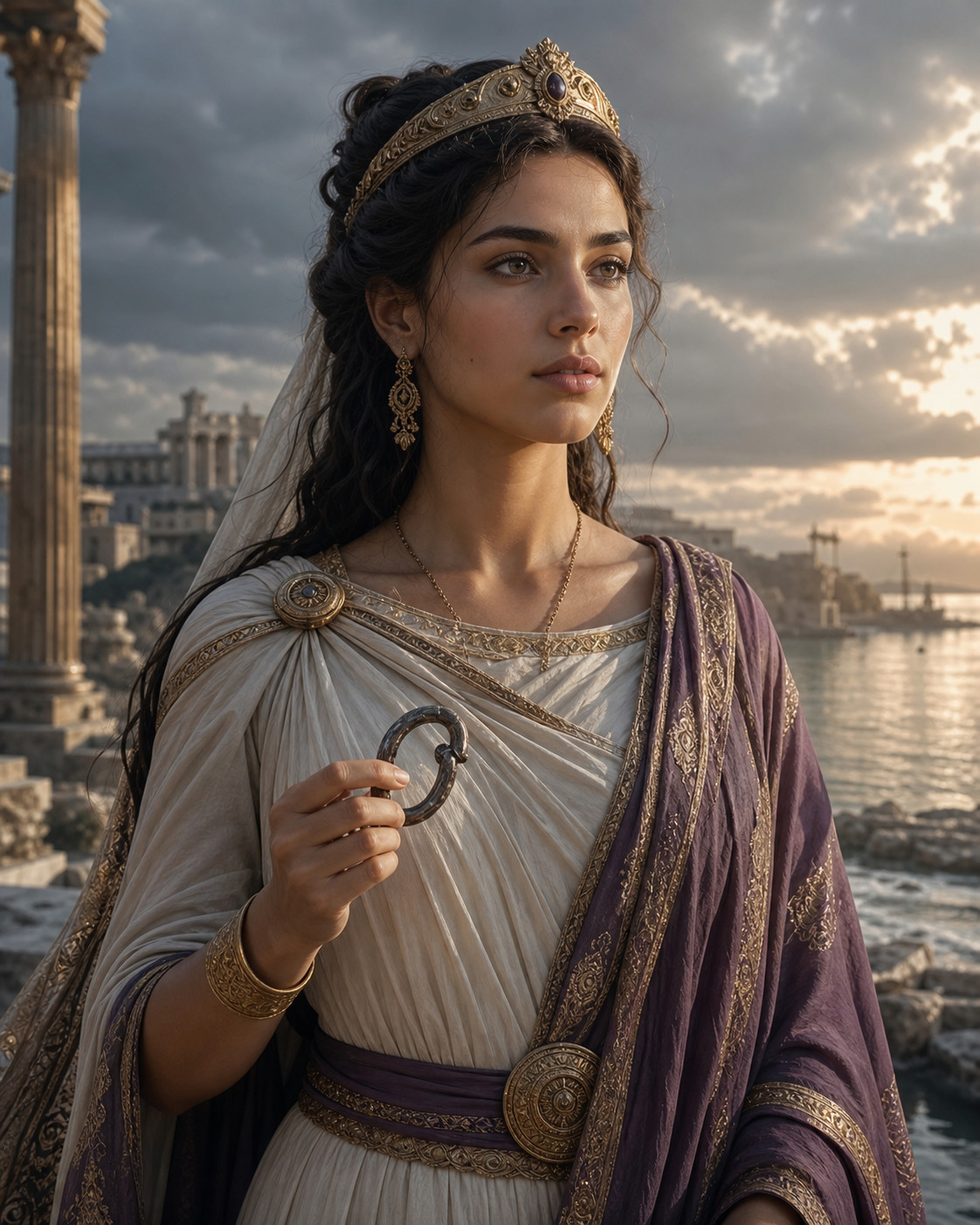
Andromeda is the daughter of Cepheus and Cassiopeia, exposed to a sea monster after her mother's boast angers sea powers. Perseus rescues and marries her. As mother of the Perseid line, she becomes an ancestor of both Heracles and Eurystheus.
Andromeda is often introduced as the princess Perseus rescues from a sea monster, yet the scene begins with a failure of royal speech and ends with a dynasty. Exposed for a boast she did not make, she becomes the human cost of a conflict among parents, rulers, and sea powers. Her survival then joins the Gorgon quest to the family line that will produce Heracles.
A Princess Pays for a Boast
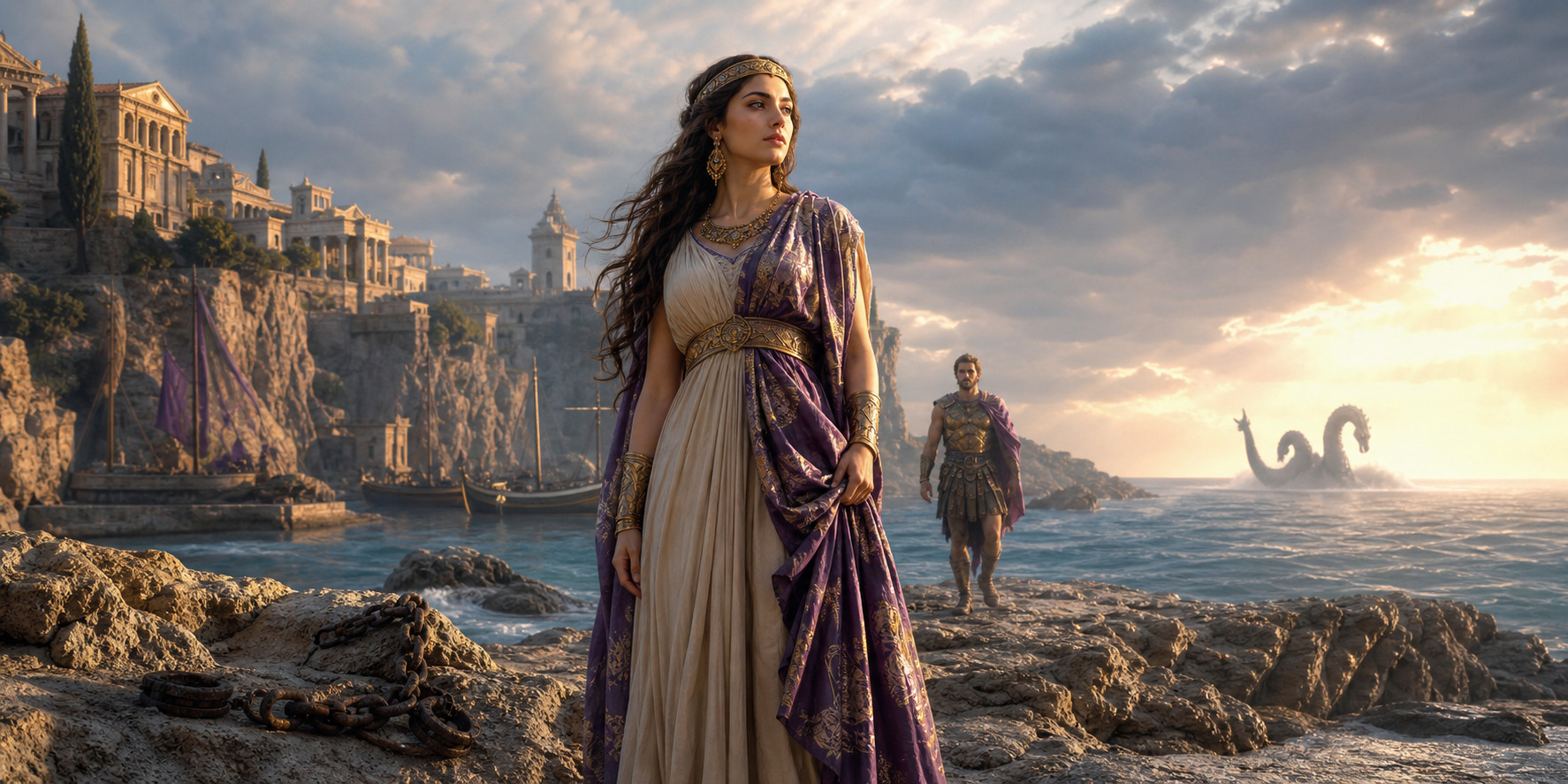
Andromeda is the daughter of Cepheus and Cassiopeia, rulers placed by Greek tradition in Aethiopia, a mythic geography associated broadly with peoples at the edges of the known world. Cassiopeia boasts that she or her daughter surpasses the Nereids in beauty. The insult reaches Poseidon, who sends flooding and a sea monster—often called Cetus in later retellings—to devastate the kingdom.
An oracle declares that the disaster will end if Andromeda is exposed to the monster. Her parents bind her to a rock by the shore. Ancient accounts differ in details, including the target of Cassiopeia’s comparison and the exact location later communities claimed. The constant moral pressure is clear: the person punished is not the speaker who caused the offense. Andromeda’s body becomes the price by which a royal household attempts to save its people.
Perseus Arrives from the Gorgon Quest
Perseus sees Andromeda while returning with Medusa’s head. In Apollodorus and Ovid he learns the cause and bargains with Cepheus for marriage if he rescues her. The agreement can feel uncomfortable to modern readers because the bound princess has little room to negotiate. Ancient heroic marriage plots frequently combine rescue, contract, and dynastic alliance; recognizing that structure does not require ignoring Andromeda’s constrained position.
Perseus defeats the monster either through his weapons and divine equipment or, in influential later versions, by exposing it to Medusa’s gaze. Ancient vase painting often shows a more direct fight in which Andromeda or attendants may participate around the monster. Modern art tends to isolate a passive woman and airborne hero, but the surviving visual tradition is more varied.
No Pegasus in the Rescue
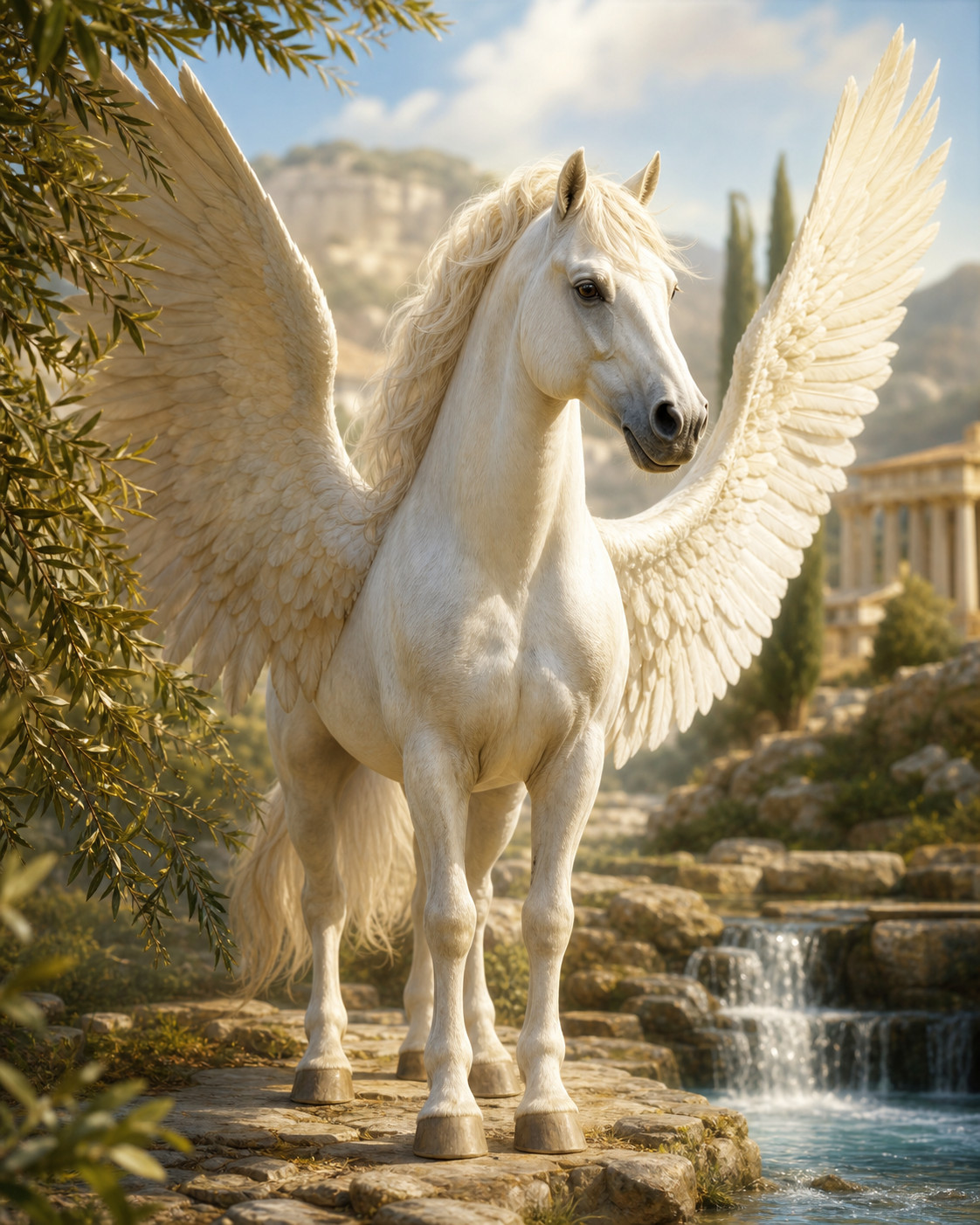
A familiar modern image places Perseus on Pegasus. The combination is attractive because the winged horse is born when Perseus beheads Medusa, yet the ancient hero’s own flight is normally supplied by winged sandals. Pegasus later belongs above all to Bellerophon. Keeping the two heroes separate clarifies both myths and preserves the importance of the equipment Athena, Hermes, and the nymphs provide.
The confusion also reveals how mythic images combine over time. A hero in the air, a threatened princess, and a sea beast form a powerful visual template. Later artists borrowed the most recognizable mount available even when early texts did not. Reception is part of Andromeda’s story, but it should be labeled as reception rather than substituted for the ancient narrative.
Phineus and the Contested Wedding
Rescue does not end the danger. Andromeda has previously been promised to Phineus, usually described as a relative of Cepheus. At the wedding he challenges Perseus’s claim and violence erupts. Perseus finally reveals Medusa’s head and turns the attackers to stone. In Ovid’s extended Roman account, the banquet becomes a crowded battle displaying the head’s power.
The conflict exposes the weakness of the agreement that put Andromeda on the shore. Her father promises her to the rescuer while an earlier claimant still exists, and armed men fight over the result. Andromeda again stands inside decisions made by others. Yet she leaves the endangered court and becomes Perseus’s queen, giving her a future beyond the rock that later art so often treats as her whole identity.
Mother of the Perseid Line
Andromeda and Perseus have several children. Lists vary, but Perses, Alcaeus, Sthenelus, Electryon, Heleus, Mestor, and Gorgophone appear in mythographic tradition. Perses becomes an ancestor associated by Greeks with Persia, while the remaining family anchors dynasties at Mycenae, Tiryns, and related Argive centers.
Through Electryon comes Alcmene, mother of Heracles; through Sthenelus comes Eurystheus, the king who commands the Labors. Andromeda therefore stands behind both the strongest hero and the relative who rules him. The rescue story opens directly into the political puzzle of the Perseid dynasty: shared ancestry produces unequal power, rival inheritance, and divine interference.
Constellation and Cultural Afterlife
Andromeda, Perseus, Cassiopeia, Cepheus, and the sea creature were all placed among constellations, creating a connected story across the sky. The exact origins and dates of every identification are complex, but the celestial grouping helped preserve the family drama as an image that could be retold whenever the stars were named.
European art made the chained princess a major subject and often used her body to explore beauty, vulnerability, foreignness, and heroic possession. Representations have repeatedly changed Andromeda’s appearance and the imagined location of Aethiopia. These choices belong to the history of the artists and their societies as much as to ancient evidence. A responsible modern account separates Greek mythic geography from later racial conventions.
What Andromeda Means
Andromeda’s story asks who bears the consequences of public speech. Cassiopeia boasts, Poseidon punishes a kingdom, Cepheus accepts an oracle, and the daughter is placed at the boundary between land and sea. Perseus can solve the immediate danger, but rescue does not make the original decision just.
Her later role also resists the frozen image of a victim. As queen and mother, she becomes a foundation of the heroic genealogies that dominate the next generation. The woman displayed as payment on the shore enters the sky and the royal lineage, outlasting the rulers who agreed to sacrifice her.
Where the Story Leads
Follow Perseus for the rescue and contested wedding, Poseidon for the punishment sent from the sea, and Medusa for the power carried home from the Gorgon quest. Pegasus explains a famous later visual confusion, while future entries for Cassiopeia, Cepheus, Phineus, and Cetus open the boast, decision, rival claim, and monster.
Trivia
- Ancient Perseus normally flies with winged sandals rather than riding Pegasus.
- Andromeda becomes an ancestor of both Heracles and Eurystheus.
- Her entire royal family and the sea creature appear as neighboring constellations.