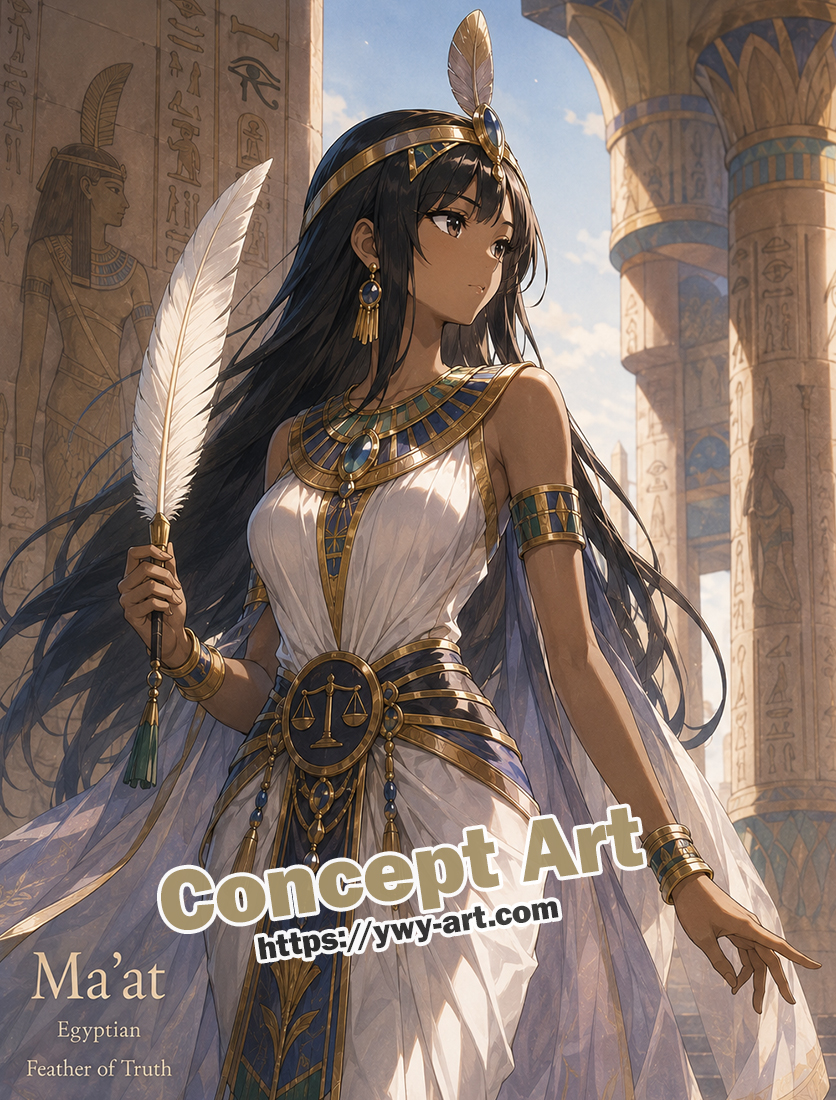
Ma’at and the Feather of Truth – Balance in a Sunlit Temple
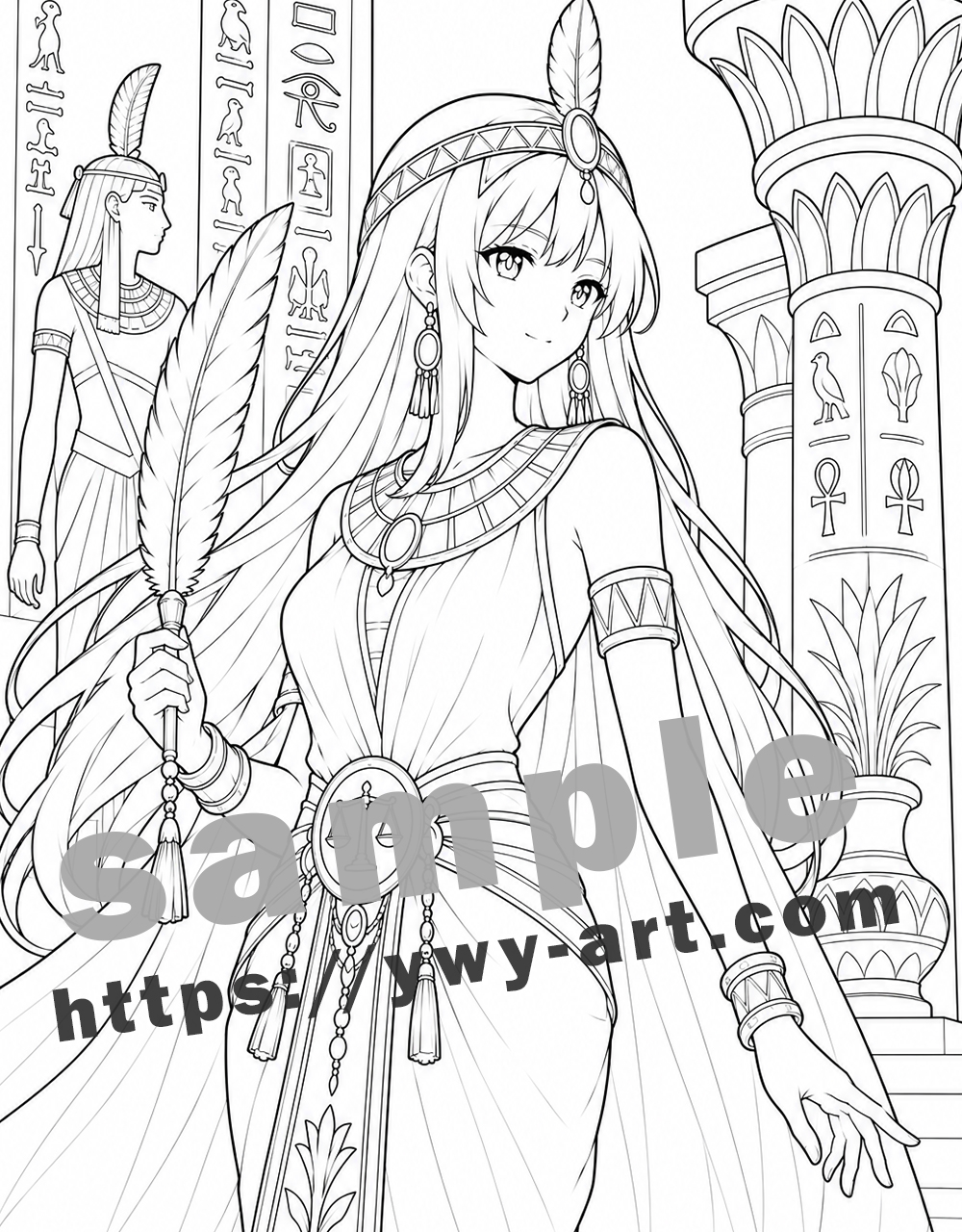
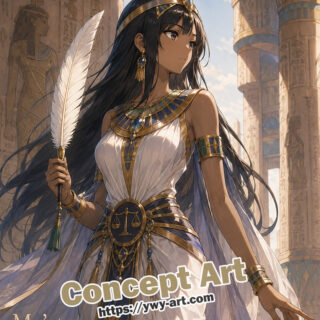
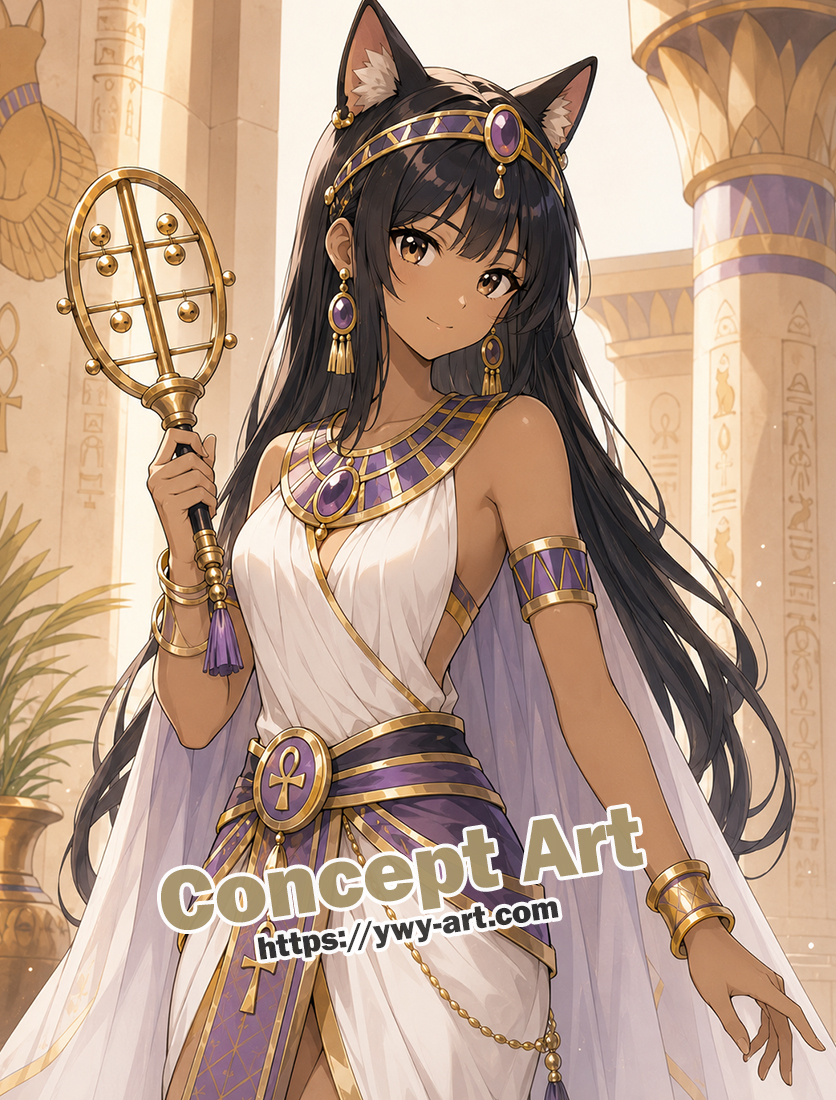
This page has a quiet dignity to it. Ma’at stands inside an Egyptian temple, holding a white feather that immediately becomes the emotional center of the artwork. There are no flashing weapons, no storm clouds, and no battle pose. Instead, the power of the image comes from balance: the feather in her hand, the scales on her belt, the straight temple columns, and the calm direction of her gaze.
What I like about this illustration is that it feels ceremonial without being cold. The long black hair, soft white dress, blue-and-gold collar, and translucent lavender fabric give the page a graceful rhythm. The background is full of hieroglyph-like carvings and tall columns, but Ma’at remains clearly in front, almost as if she has just stepped into a shaft of morning light.
Who Is Ma’at?
Ma’at is the ancient Egyptian goddess of truth, justice, balance, harmony, and cosmic order. She is also the idea of order itself: the principle that keeps the world from falling into chaos. In Egyptian thought, Ma’at was not only a goddess to admire, but a standard by which life, kingship, ritual, and the afterlife were measured.
She is often shown with a feather, and that feather is one of the most recognizable symbols connected with Egyptian judgment. In the weighing of the heart, a person’s heart was weighed against the feather of Ma’at. If the heart was balanced with the feather, it showed a life aligned with truth and order.
That background gives this page a beautiful seriousness. The artwork is not dramatic in a loud way. It is about inner clarity, moral balance, and the kind of strength that does not need to raise its voice.
The Feather of Truth
The feather is the main relic here, and it should not be underestimated because it looks delicate. In this design, it is almost pure white, held upright in Ma’at’s hand. Against the darker hair and temple shadows, it becomes one of the brightest shapes on the page.
For coloring, I would keep the feather light. It can have pale gray, cream, or very soft blue shadows, but the center should remain bright. If the feather becomes too beige or too heavily shaded, it may lose the symbolic purity that makes it important.
A good method is to shade only along the central shaft and the lower edges of the feather barbs. Leave thin white highlights between the lines. If you use colored pencils, a very light touch will work best. If you use markers, choose a pale gray-blue or warm ivory and avoid soaking the small feather details.
The Scales and the Costume
The scales on Ma’at’s belt are a lovely second focal point. They quietly repeat the theme of judgment and balance without pulling attention away from the feather. I would color the circular belt ornament with deep blue, black, or dark teal behind the gold scales, so the symbol stays readable.
The costume has a strong Egyptian blue-and-gold structure. The collar, belt bands, armlet, headpiece, and lower panel all carry repeating geometric sections. These details can become very beautiful if they are planned before coloring.
Try choosing a small set of colors and repeating them throughout:
- Deep blue or lapis for the collar, belt, and headpiece accents
- Antique gold for trim, jewelry, tassels, and the scale symbol
- Ivory or soft white for the dress
- Pale lavender or misty violet for the sheer cape
- Warm sandstone for the temple columns
- Black, charcoal, or blue-black for the hair
One practical warning: do not make the dress and feather the exact same flat white. They are both light elements, but they need different textures. The dress can have warmer beige shadows, while the feather can stay cooler and cleaner. That small difference will help the relic stand apart.
Coloring the Hair and Veil
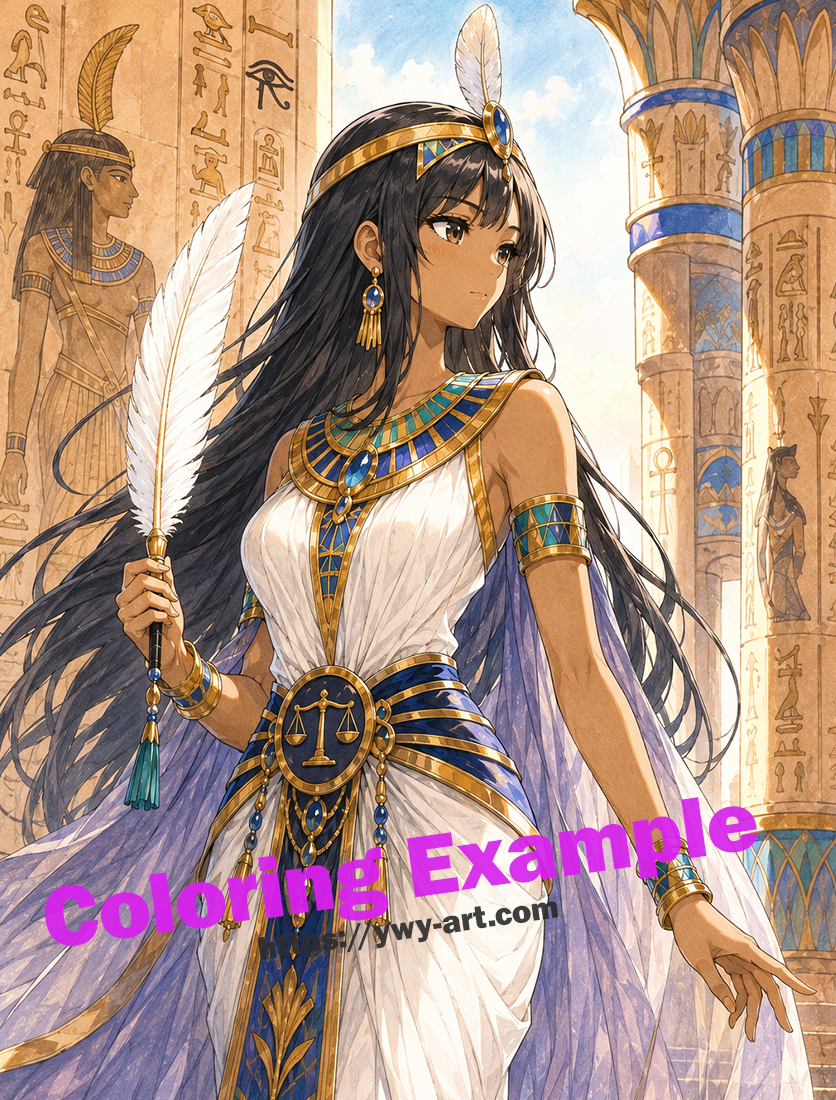
Ma’at’s hair is a major visual shape. It flows behind her and contrasts beautifully with the white dress. I would avoid filling it with solid black from top to bottom. Instead, use dark gray, blue-black, or deep brown as the base, then deepen only the shadowed strands.
A few soft highlights along the hair near the shoulder and forehead will keep it from looking too heavy. Because the artwork has a sunlit temple setting, you can add warm brown highlights on the outer strands or cool blue highlights in the deeper parts. Either direction works, as long as the hair still frames the face gently.
The translucent cape is another important area. Pale lavender is a natural choice, especially because it gives the white dress more depth. Keep the cape lighter at the edges and slightly darker where it overlaps the body or background. This will make it feel sheer rather than solid.
Keeping the Temple Background Calm
The background includes carved walls, columns, and Egyptian figures, but it should support Ma’at rather than compete with her. I would use sandstone, warm beige, soft ochre, and a little muted blue or teal on the column bands. The farther carvings can be colored with low contrast, almost like they are part of the stone.
The line-art version has many small symbols on the columns. You do not need to color each one separately. A light shadow around the carved lines is enough to suggest depth. If every symbol is filled with bright colors, the background may become too busy and distract from the feather.
The sky glimpsed between the columns can be pale blue with soft white clouds. This helps the page breathe and gives the gold details a warm glow.
What Makes This Page Different
Many divine artifacts in an anime mythology coloring book are weapons, shields, or magical tools. Ma’at’s relic is different. The Feather of Truth is fragile in appearance, but it carries enormous meaning. That makes the coloring approach different too. The page should not feel overloaded or aggressive. It should feel measured.
I would use clean contrasts: dark hair against light fabric, white feather against warm stone, gold symbols against deep blue. The best finished version will probably come from restraint. Let the feather stay simple. Let the scales remain readable. Let the temple feel sunlit and spacious.
Final Coloring Thought
Ma’at’s page is about harmony. The artwork gives you beautiful jewelry, flowing fabric, temple architecture, and symbolic details, but the heart of the page is still that single feather. It represents truth, balance, and the quiet weight of a life honestly lived.
When coloring this page from the Anime Gods and Mythic Relics Coloring Book, I would start with the feather and face, then build the blue, gold, and lavender around them. Keep the background warm and gentle, protect the brightness of the feather, and let Ma’at feel calm, luminous, and perfectly balanced.
Step into the world of mythology..
Available on Amazon Anime Gods and Mythic Relics Coloring Book Open in a new tab
コメント