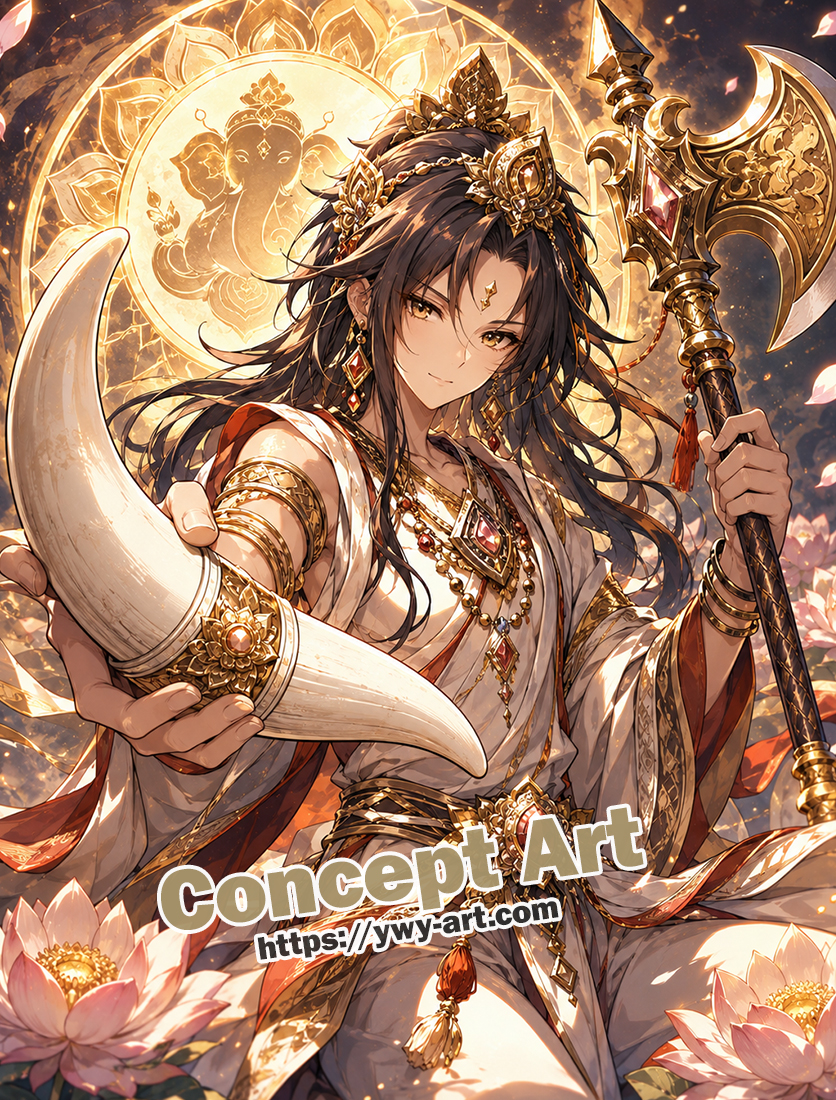
Ganesha and the Broken Tusk – Wisdom Held Gently in the Hand
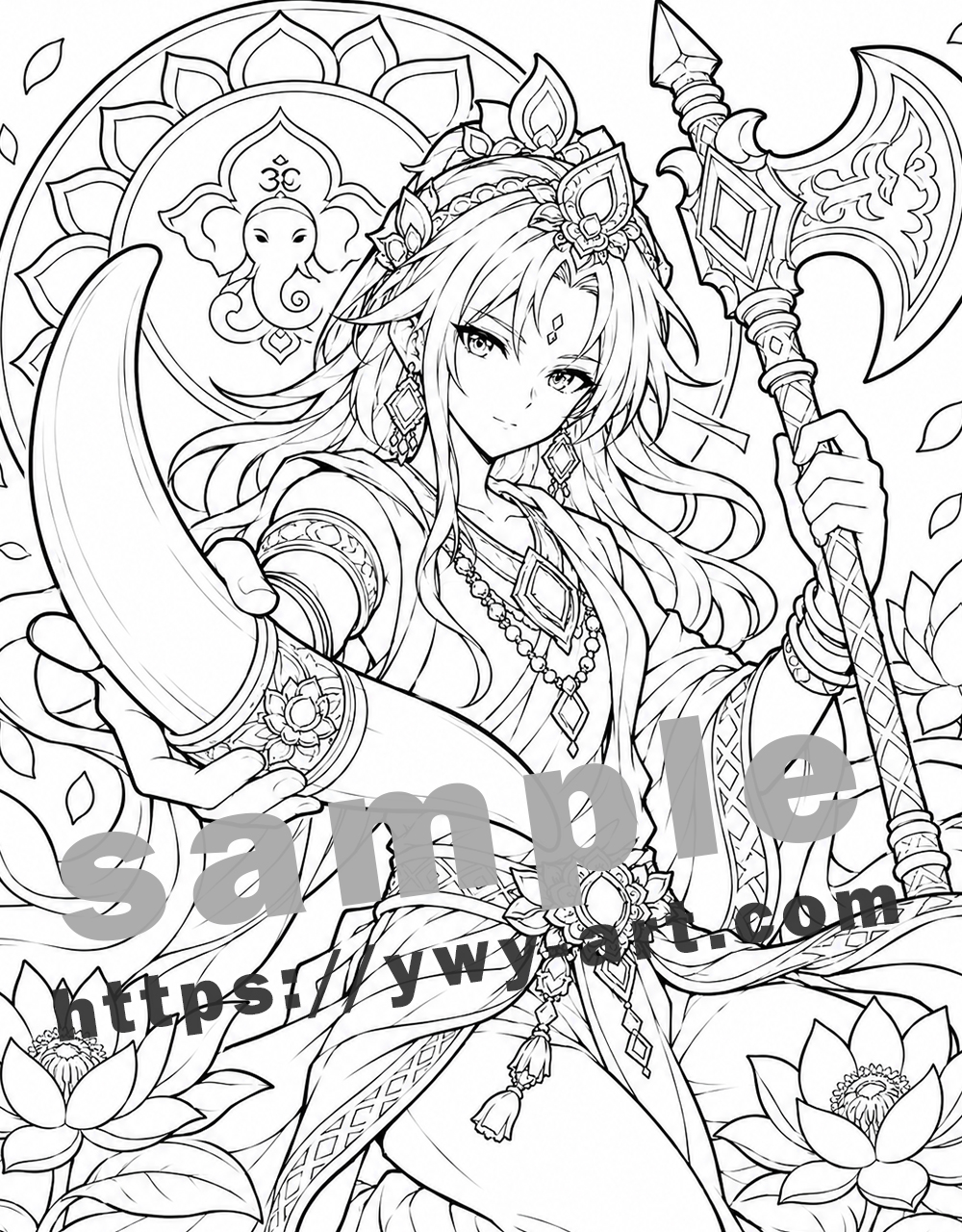
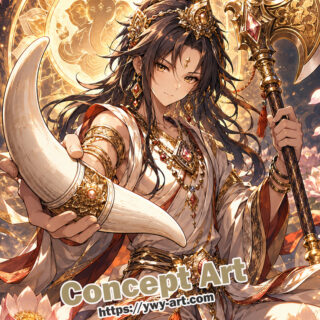
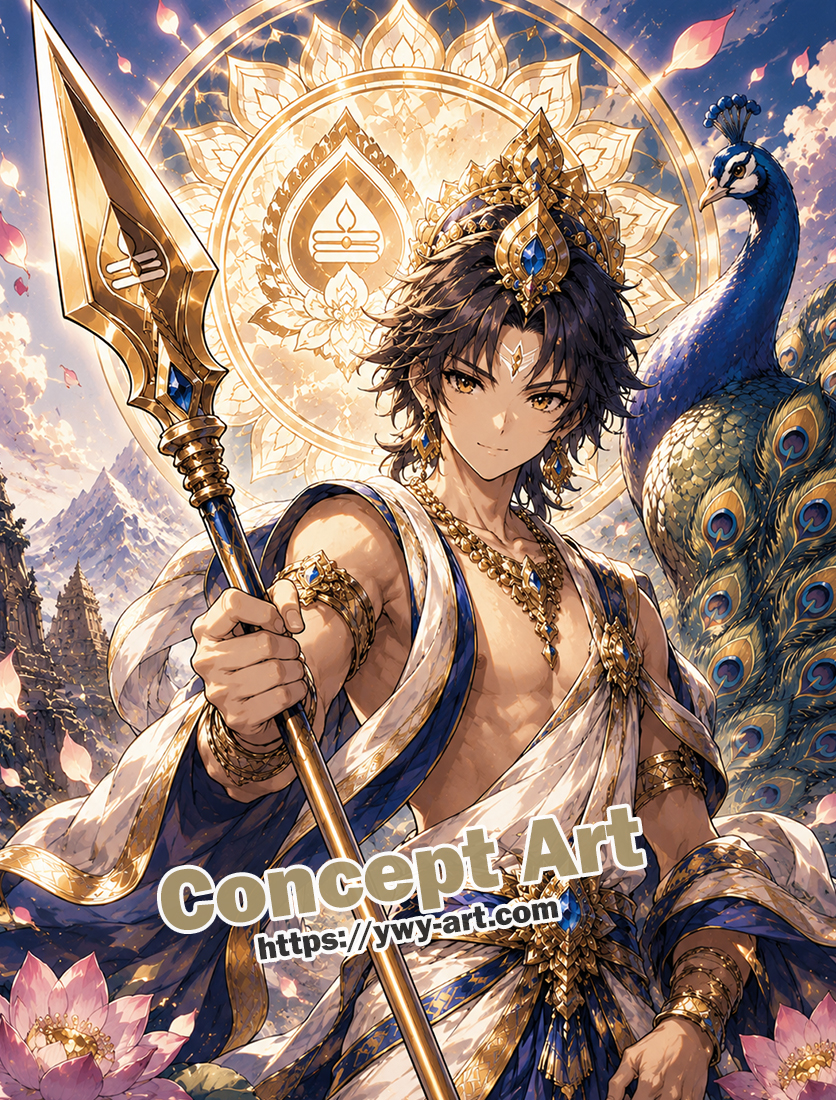
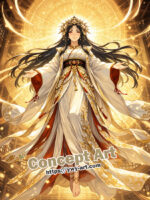
This page has a softer kind of power than the first two artworks. Vishnu’s discus felt circular and cosmic, Indra’s thunderbolt felt sharp and storm-lit, but this Ganesha-inspired fantasy coloring page feels warm, ceremonial, and close to the viewer. The broken tusk is held forward almost like an offering. It is large, pale, and curved, so it immediately becomes the emotional center of the page.
What I like most is that the artwork does not treat the tusk as a small symbol tucked into the background. It is placed right in the front, with the hand wrapped around it and a decorative band near its base. Behind the figure, the round halo contains a Ganesha motif and an Om symbol, while lotus flowers open at the bottom corners. The whole design has a devotional feeling, but the anime styling keeps it graceful and approachable.
Ganesha, the Tusk, and the Idea of Sacred Wisdom
Ganesha is widely known as the remover of obstacles, a guardian of beginnings, and a deity connected with wisdom, learning, and good fortune. In many traditional stories, his broken tusk carries symbolic weight. It can represent sacrifice, discipline, authorship, and the willingness to give up something beautiful in order to create or protect something meaningful.
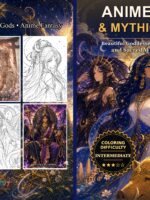
That is why the tusk works so well as a mythic relic for this page. It is not only a weapon-like object or an ornament. It feels personal. A thunderbolt or discus can suggest divine force from a distance, but a broken tusk feels close to the body, close to the story, and close to the mind. In the Anime Gods and Mythic Relics Coloring Book, this gives the third artwork a very different mood: less like a strike of power, more like a quiet vow.
The axe in the other hand adds balance. It gives the character a protective presence and keeps the composition from becoming too gentle. The page is full of curves, petals, hair strands, jewelry, and cloth, so the strong vertical handle and crescent blade help hold everything upright.
Looking at the Artwork Before Choosing Colors
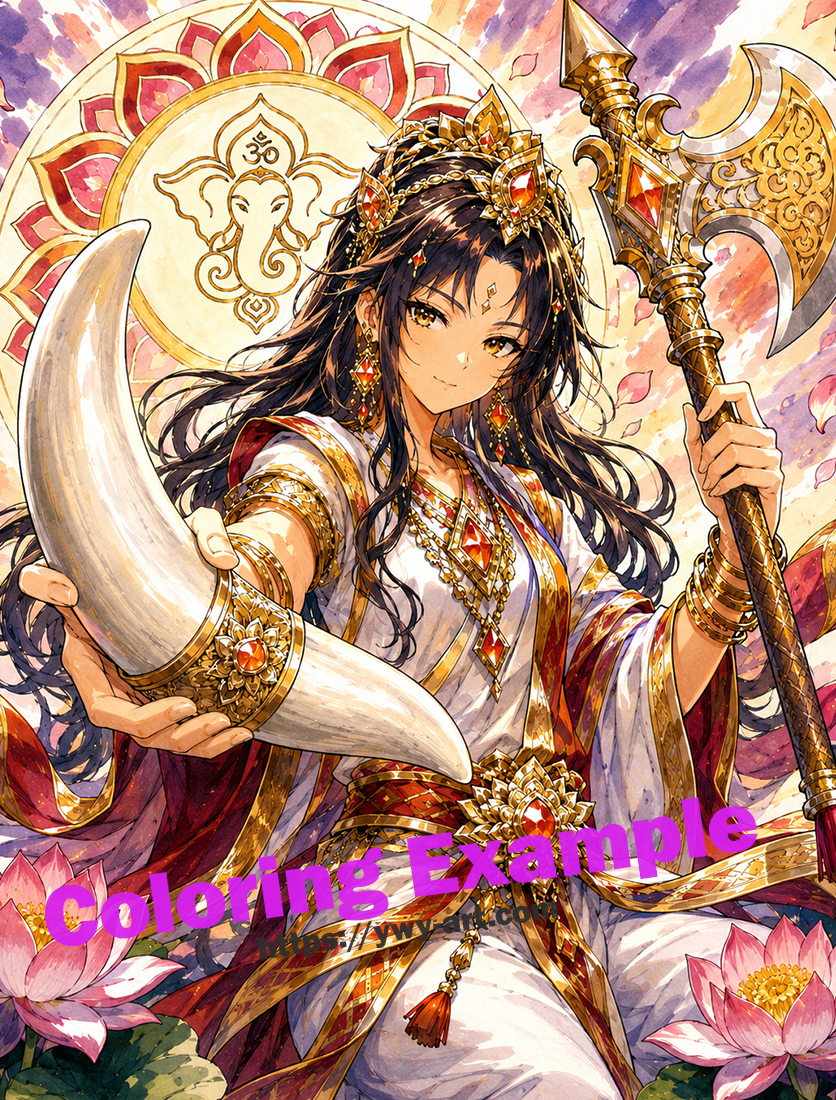
The line art has three main areas to plan before coloring: the foreground tusk, the central figure, and the halo with the Ganesha symbol. If you color everything with the same intensity, the page may become busy very quickly. There are many jewels, bands, tassels, petals, and decorative patterns competing for attention.
I would decide the tusk first. Because it is so large and close to the viewer, it should not be pure flat white. A warmer ivory, cream, pale beige, or very light gray will make it feel more solid. Leave a few white highlights along the upper curve, especially near the thickest part, so it keeps that polished sacred-object feeling.
The second important choice is the gold. This page has a lot of jewelry and metalwork: the crown, earrings, belt ornament, arm bands, axe details, and the band on the tusk. Try not to make every gold section equally bright. If every small ornament becomes the same strong yellow, the eye will have nowhere to rest.
A Palette I Would Try
For this page, I would use a warm ceremonial palette with a few deep accents:
- Ivory and soft cream for the broken tusk and white clothing
- Warm gold for jewelry, weapon details, and halo lines
- Deep red or ruby for jewels, sash accents, and tassels
- Dark brown, black, or blue-black for the hair
- Pink lotus petals with yellow centers
- Soft peach, pale gold, or muted lavender for the background glow
- Green leaves near the bottom to ground the lotus flowers
Coloring the Broken Tusk
The tusk is the part I would color most carefully. It has a smooth shape, so heavy outlines of shadow may look too harsh. Instead, build a gentle gradient. Start with a pale ivory base, then add soft beige or light warm gray along the underside and near the base. The inner curve can be slightly darker than the outer edge.
A small warning here: avoid making the tusk the same color as the white clothing. If both are left plain white, the foreground object may lose its importance. Even a little cream shading on the tusk and a cooler white-gray on the fabric will separate them beautifully.
The decorative band around the tusk can be one of the brightest gold areas on the page. Since it sits close to the viewer, it is a good place for strong contrast. Add ruby, orange, or amber to the central flower-like jewel if you want it to connect with the character’s other ornaments.
The Halo and Ganesha Motif
The circular halo behind the character is large, but it should not overpower the face. I would treat it as a glowing backdrop rather than a second main character. The Ganesha motif inside can be colored with thin gold lines, pale ochre, or a slightly darker shade than the halo base.
The lotus-petal ring around the halo gives you a chance to repeat the pinks from the flowers at the bottom. This repetition is useful because it ties the whole page together. You could color the outer petals in pink and red, then keep the inner circle pale gold. That creates a sacred mandala feeling without making the background too heavy.
If you use markers, be careful around the Om symbol and the fine facial lines of the Ganesha motif. Those small details can blur if the ink is too wet. Colored pencils may be easier for this section, especially if you want a soft, luminous effect.
Jewelry, Fabric, and the Axe
The jewelry is detailed enough to be fun, but it can also become tiring if you try to make every bead a masterpiece. Choose a hierarchy. The largest jewels on the chest, crown, earrings, belt, and axe can be ruby or amber. Smaller beads can be gold, bronze, or even left lighter so the big gems stand out.
For the fabric, white with red and gold borders works very well. The flowing sash gives the page movement, and red is a natural choice because it echoes the jewels and lotus accents. If you want a more unusual version, try turquoise or peacock blue for some of the cloth details. That would create a strong contrast against the warm gold and ivory.
The axe should feel important, but not steal attention from the tusk. I would color the blade with pale silver, warm gray, or moonlit ivory, then reserve gold for the inner decorations. A red gem in the center of the axe will connect it to the rest of the design.
Small Details That Make the Page Feel Finished
The lotus flowers at the bottom are a good place to slow down. Their petals can be pink at the tips and almost white near the base. This keeps them delicate and prevents the bottom of the page from becoming too dark. The leaves can be deep green, but I would not use a flat green. Add yellow-green highlights or blue-green shadows so they feel alive.
The floating petals in the background do not need much detail. They are there to create motion and atmosphere. A light pink or coral is enough. If you make them too saturated, they may compete with the face and jewelry.
For the hair, the reference suggests a dark, glossy look. Black, espresso brown, or blue-black all work. Leave thin highlight streaks uncolored or use dark brown over black to avoid a heavy block. The hair has many flowing strands, so highlights will help preserve the movement of the drawing.
Final Coloring Thought
This Ganesha and Broken Tusk page is a lovely example of how divine artifacts can feel both powerful and intimate. The tusk, the axe, the halo, and the lotus flowers all carry meaning, but the artwork still feels gentle because of the character’s expression and open-handed pose.
My main advice is to let the tusk breathe. Keep it luminous, give the gold several levels of brightness, and use red or pink accents with restraint. When finished, this page can feel warm, sacred, and quietly radiant: a beautiful third piece in the Anime Gods and Mythic Relics Coloring Book.
Step into the world of mythology..
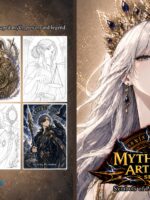
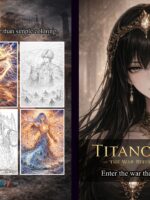
Available on Amazon Anime Gods and Mythic Relics Coloring Book Open in a new tab



コメント