The mortal-born hero whose suffering and strength supplied what even Olympus lacked.
- Atonement
- Lion Skin
- Mortality
- Strength
- Twelve Labors
- Primordial Age
- Titan Age
- Olympian Age
- Heroic Age
- Trojan Cycle
Heracles, son of Zeus and Alcmene, endured Hera’s hostility, madness, and service under Eurystheus through the Twelve Labors. His mortality made him indispensable in the Gigantomachy, where divine attacks required his finishing blows. After further suffering and death, the hero was received among the gods as Hercules in Roman tradition.
The gods possessed thunder, strategy, and immortality, yet one war could not be won without a mortal. Heracles entered the Gigantomachy carrying the marks of a life already shaped by divine conflict: Zeus’s blood, Hera’s anger, impossible labors, and a strength that mattered because it could suffer.
Primary Tradition: Son of Zeus and Alcmene
Heracles was born to Zeus and the mortal Alcmene, wife of Amphitryon. Zeus’s boast that a descendant of Perseus born that day would rule allowed Hera to intervene: she delayed Heracles’ birth and hastened that of Eurystheus. The stronger child entered the world under the authority of the weaker king.
Hera’s hostility reflects the injury of Zeus’s infidelity, but its violence falls upon the child rather than Zeus. Even the hero’s name, often understood as “glory of Hera,” creates a painful question: why is a man tormented by Hera remembered through her name? His fame cannot be separated from the trials her opposition produced.
Strength Before the Labors
Stories of the infant Heracles strangling snakes sent to his cradle announce extraordinary power before he can choose how to use it. As an adult he becomes a defender, warrior, husband, and father. Yet strength does not protect him from divine manipulation or from the consequences of his own actions.
His myths repeatedly test whether physical power can answer moral and psychological catastrophe. The answer is no. Strength opens paths, but purification, service, endurance, and help from others determine whether he can continue.
Madness and Atonement
Traditions differ in the order and victims, but a central account tells that Hera sends madness and Heracles kills members of his family. When clarity returns, the hero must confront a horror committed by his own hands without ordinary intention. An oracle directs him to serve Eurystheus and perform the labors.
The story requires careful language. The labors do not make the deaths good or erase them. They form a path of atonement, purification, and imposed service. Can action repair what cannot be undone? Heracles’ mythology does not offer an easy pardon; it makes greatness pass through sustained responsibility.
The Twelve Labors
The familiar cycle includes the Nemean Lion, Lernaean Hydra, Ceryneian Hind, Erymanthian Boar, Augean Stables, Stymphalian Birds, Cretan Bull, mares of Diomedes, belt of Hippolyta, cattle of Geryon, apples of the Hesperides, and Cerberus. Apollodorus explains twelve by saying Eurystheus rejected credit for two tasks and added two more.
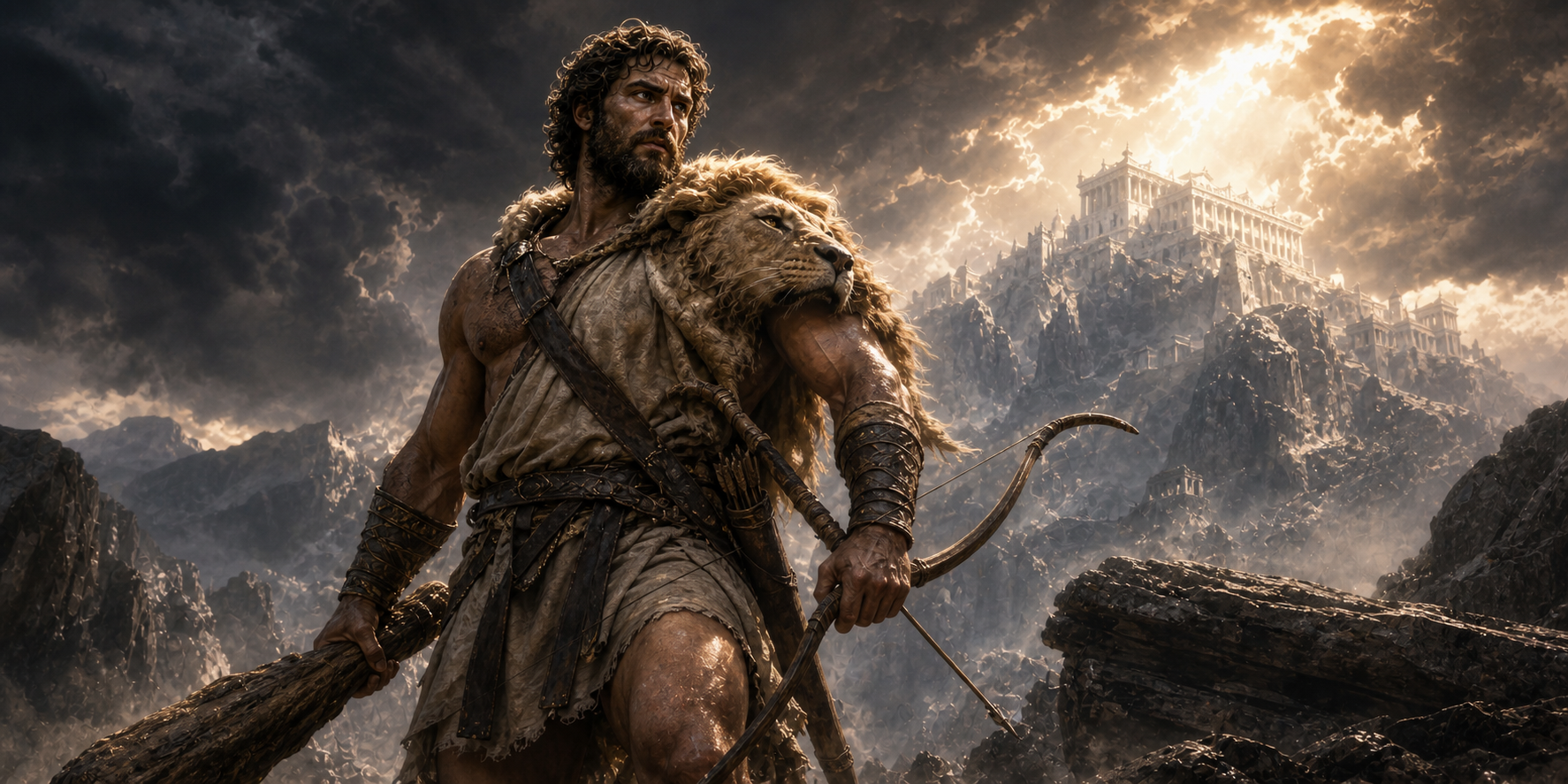
The labors move across the boundaries of the Greek world and beyond it. Heracles confronts beasts, kings, pollution, impossible distance, and the Underworld. His lion skin and club become visual shorthand, but bow, strategy, allies, and divine aid are equally important.
Athena and Other Helpers
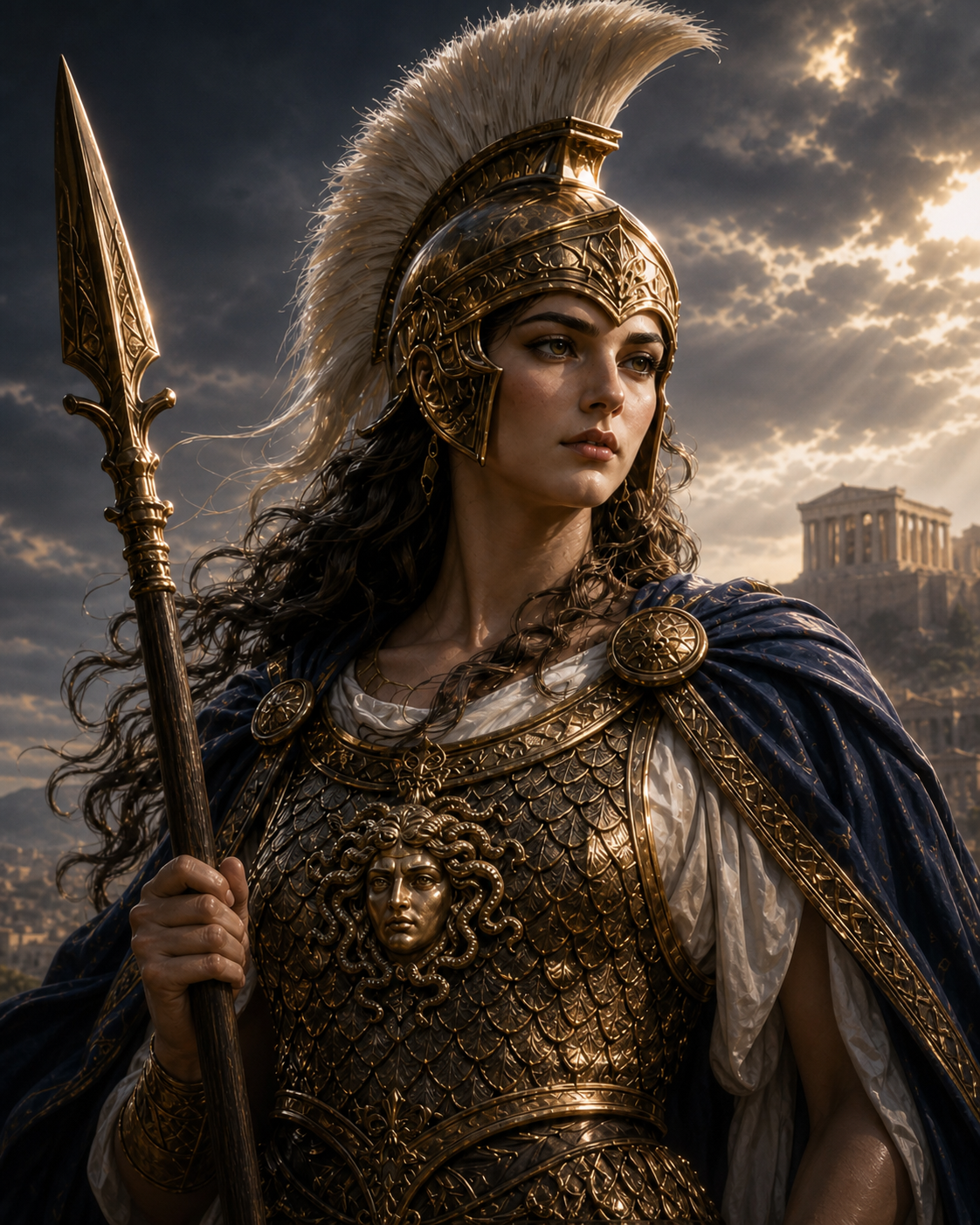
Athena repeatedly assists Heracles, making their relationship a bridge between divine intelligence and heroic effort. Iolaus helps against the Hydra; Atlas becomes part of the Hesperides story; Hermes and other gods aid particular journeys. The hero famous for strength is never truly solitary.
This matters to the Project Mythos network because helpers change the meaning of victory. Heracles succeeds not by proving he needs no one, but by learning which burden must be carried, which condition must be understood, and when counsel makes force effective.
The Mortal Required by the Gods
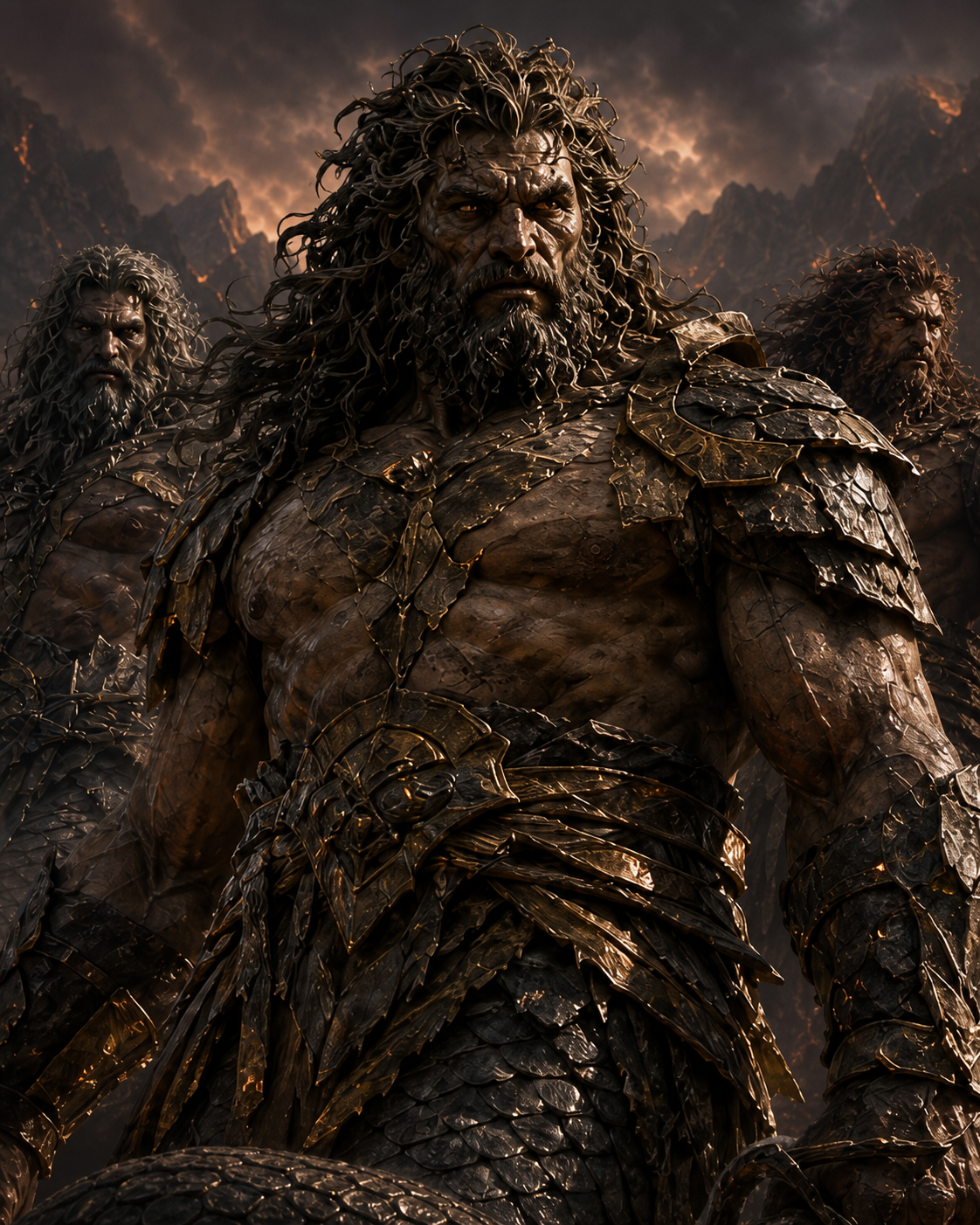
In the Gigantomachy, an oracle declares that the Giants cannot be destroyed by gods alone. Heracles is summoned as the necessary mortal ally. He drags Alcyoneus beyond the land that preserves him, shoots Porphyrion after Zeus strikes, and supplies arrows that complete attacks by the Olympians.
Why can immortals not finish their own war? The prophecy makes mortality a capability rather than a weakness. Heracles can cross the boundary the gods cannot. Zeus contributes sovereign force, Athena reveals the strategy, and the mortal hero turns divine attacks into final victories.
Hera, Opposition, and Reconciliation
Hera shapes Heracles’ suffering from birth, but the tradition does not end permanently in hostility. After his death and apotheosis, Heracles is welcomed among the gods and marries Hebe, Hera’s daughter. The reconciliation is more symbolic than psychologically narrated, yet it closes a cosmic conflict that began before his birth.
His ascent does not cancel the pain of mortal life. It gives that pain an afterlife within Olympus. The hero becomes divine only after completing the vulnerability that made him useful to the gods.
Alternative Traditions and Hercules
Greek stories vary widely in chronology, family tragedy, labors, travels, and death. Roman culture received him as Hercules and expanded his roles as protector, exemplar of strength, and conqueror of dangers. “Heracles” is the Greek name; “Hercules” is the familiar Roman form, not a separate hero.
Later retellings often soften the madness or simplify Hera into a single villain. A fuller profile preserves the uncomfortable family politics and the distinction between what Heracles suffers, what he does, and how he seeks purification.
Symbolism and Meaning
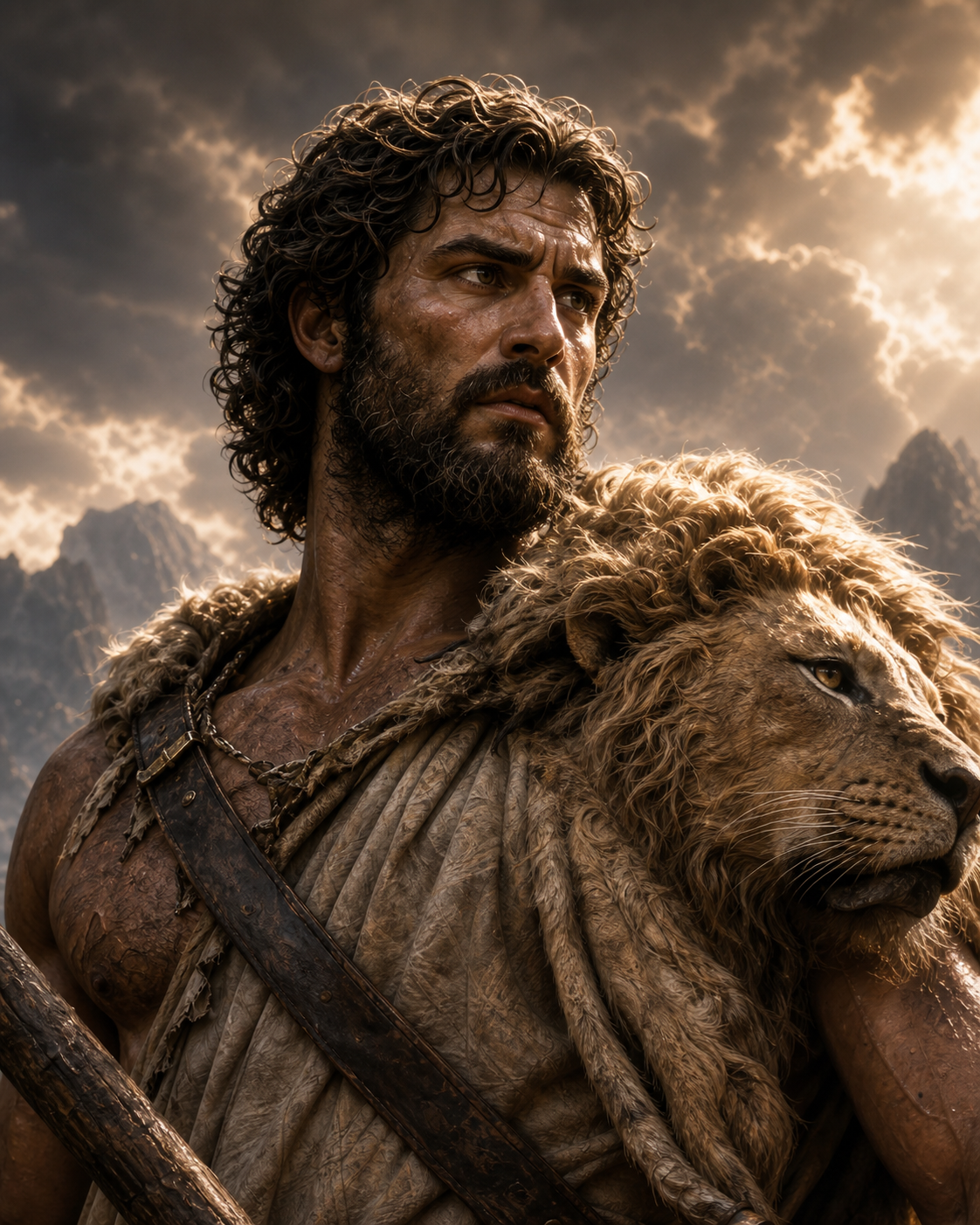
Heracles embodies endurance under burdens that change shape. The lion skin signifies conquered danger; the club expresses direct force; the bow recalls distance and precision; the labors map a movement from local threat to cosmic boundary. His deepest symbol, however, is effort itself.
He can protect mortals and immortals because he belongs partly to both worlds. That divided identity produces suffering, but it also creates the bridge Olympus needs.
Legacy and Paths Forward
Heracles became one of the most widely represented heroes in Greek and Roman art. Individual labors allowed viewers to recognize him instantly and to read his life as a sequence of trials. Philosophers and later writers also treated him as an image of chosen hardship and virtue.
Follow Eurystheus to the strange authority behind the labors, Hera to divine family conflict, Athena to strategic partnership, Alcmene to his mortal origin, and the Gigantomachy to the moment mortality saves Olympus. His life is not one adventure but a network built from consequences.
The network keeps his victories from becoming a simple catalog of monsters. Each enemy points toward a place, a ruler, a divine grievance, or a helper; each burden changes what strength means. Readers who begin with the lion can reach Hera’s politics, Athena’s strategy, Atlas at the world’s edge, Hades below, and finally Olympus. Heracles connects them because his road crosses nearly every boundary the Greek imagination could draw.
His apotheosis makes that crossing permanent. Olympus receives someone who knows hunger, grief, error, exhaustion, and death in ways the immortal gods do not. Heracles does not merely escape humanity; he carries mortal experience into the divine household that once depended upon it.
Trivia
- Ancient artists often identify Heracles through the Nemean Lion’s skin even when the scene shows a different adventure.
- The canonical twelve labors developed from traditions that did not always agree on number or order.
- Heracles’ final marriage to Hebe places the former target of Hera’s anger inside Hera’s own divine family.