The first divine ruler whose fear of succession created the first rebellion.
- Cronus
- Gaia
- Primordial
- Sky
- Succession
- Primordial Age
- Titan Age
- Olympian Age
- Heroic Age
- Trojan Cycle
Uranus is the primordial Sky born from Gaia and the first ruler in Hesiod's succession myth. He fathers the Titans, Cyclopes, and Hundred-Handers but hides his children within Earth. Gaia arms Cronus with the Adamantine Sickle, and Uranus's overthrow creates both the space for a new age and powers born from his wound.
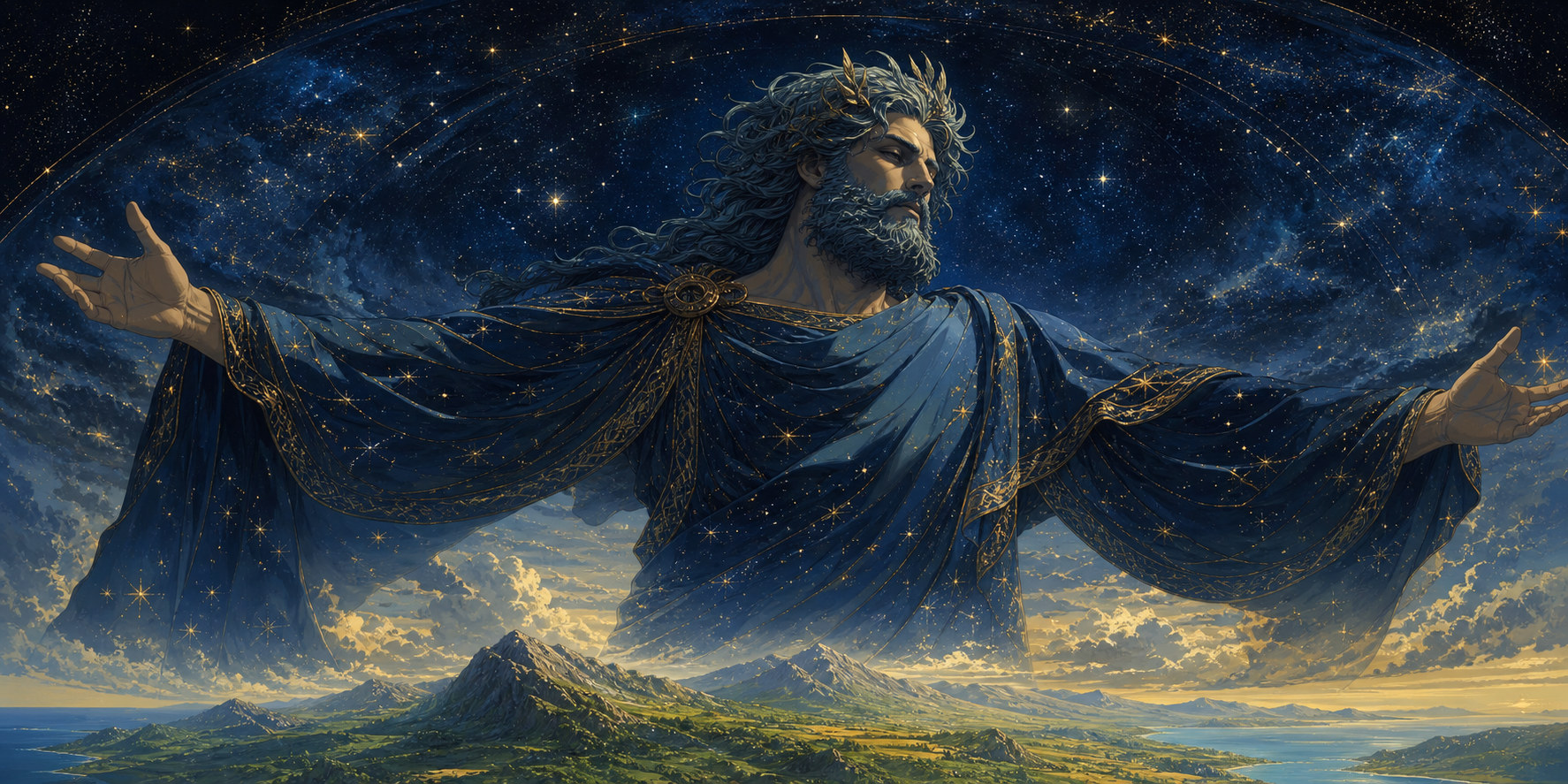
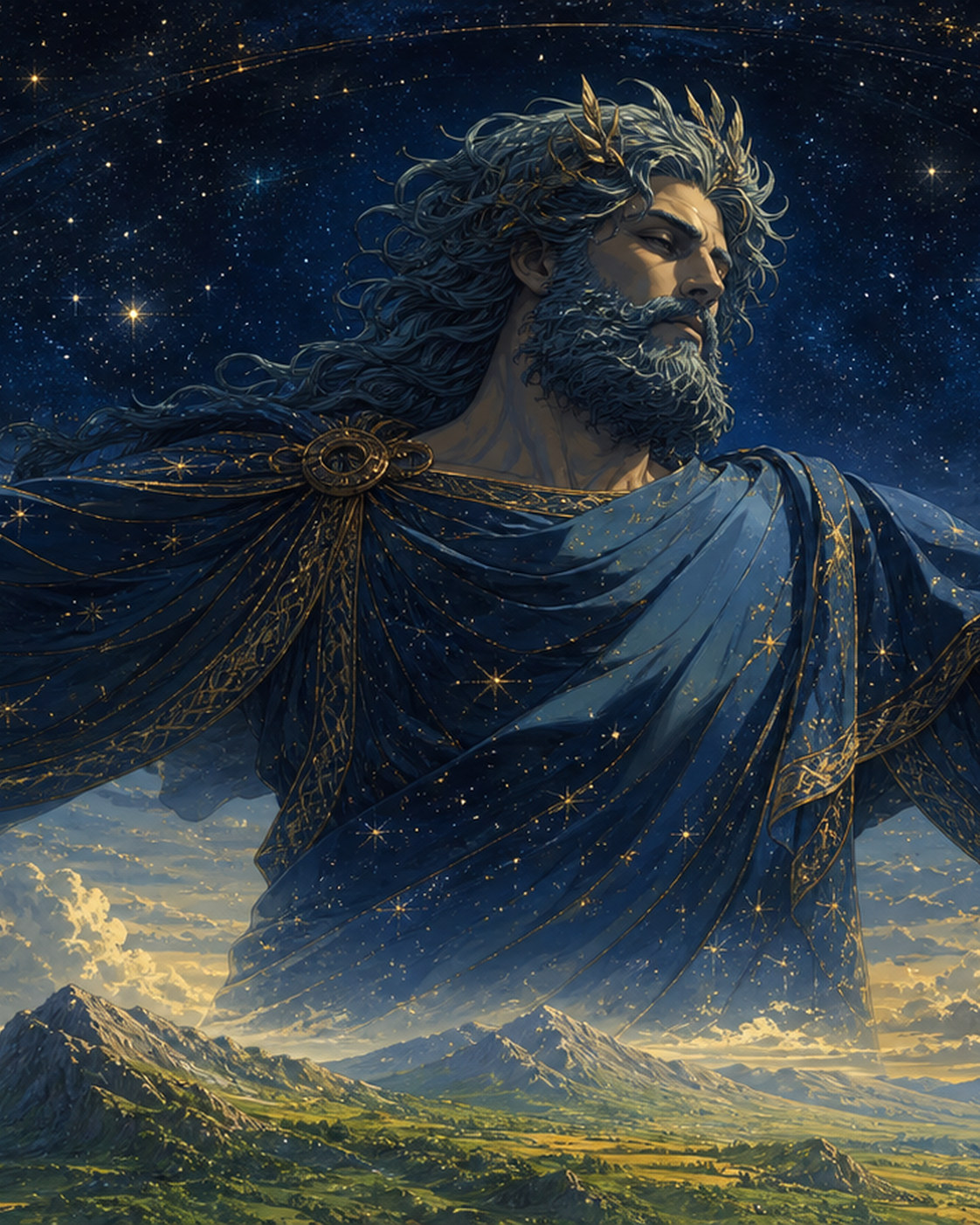
Before the Titans ruled and before Zeus raised a court on Olympus, the first throne was the sky itself. Uranus was not simply a god who lived above Gaia. He was the starry Heaven she brought forth to cover her on every side, a cosmic partner whose fear of his own children made the first divine household impossible to contain.
The Sky Born from Earth
In Hesiod’s Theogony, Gaia produces starry Uranus, the Mountains, and Pontus without a partner. Earth therefore comes before the Sky in this genealogy. Uranus then joins with Gaia, and together they generate the twelve Titans, the Cyclopes, and the Hundred-Handers.
This origin makes their union more than a marriage between two human-shaped gods. Earth and Sky form the first enclosed world. Their children occupy the pressure between them, and the crisis begins when Uranus refuses to allow that new generation a place.
The Children He Would Not See
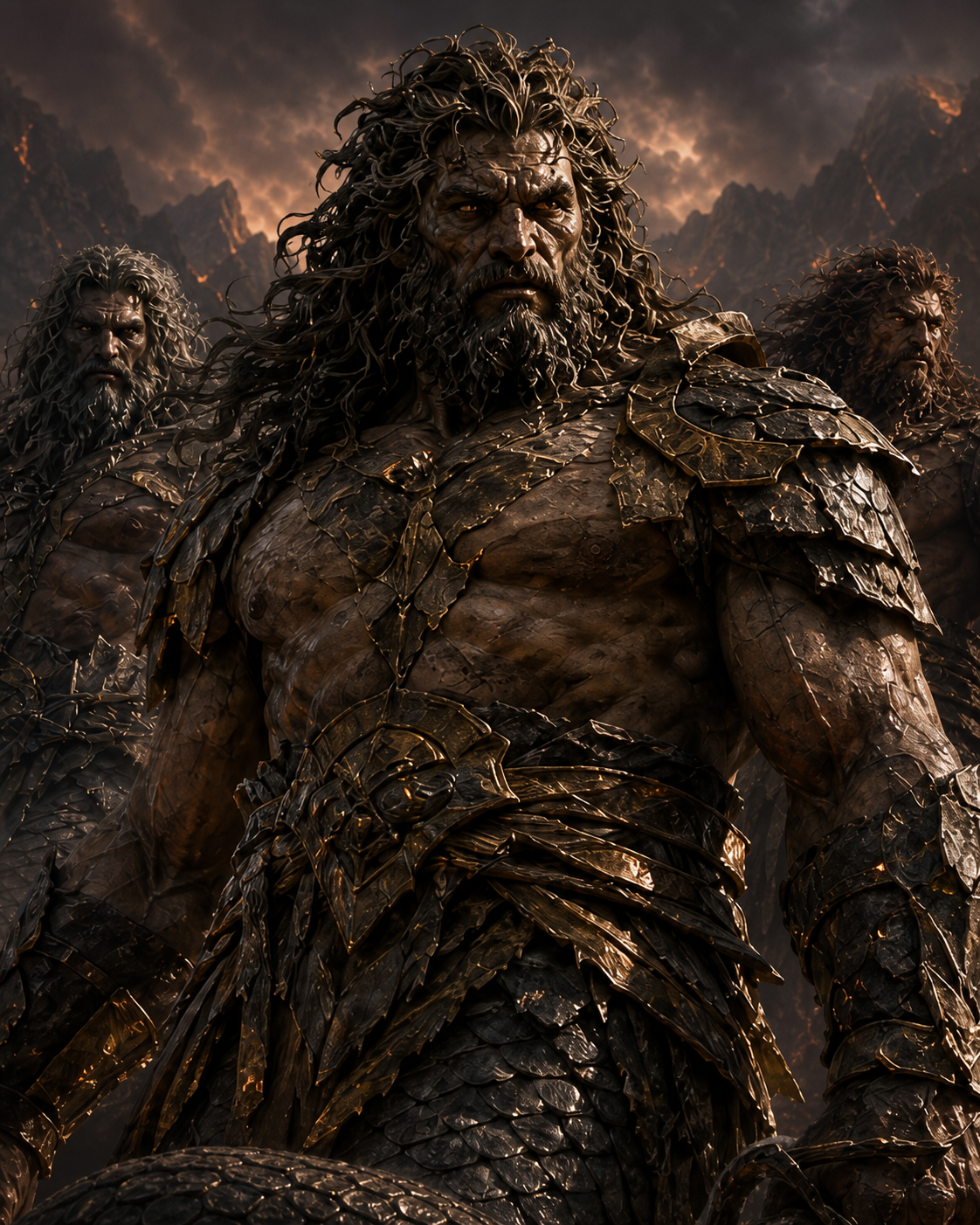
Hesiod says that Uranus hated the children born to him and hid them within Gaia as soon as each came forth. The poem does not present a separate trial proving that the Cyclopes or Hundred-Handers had committed a crime. Their extraordinary bodies and strength are enough to make their father treat birth as a threat.
Gaia groans under the burden. The image is cosmic and bodily at once: Earth is packed with children whom Heaven presses back inside her. Was Uranus protecting his reign, or did his attempt to prevent succession create the rebellion he feared?
Gaia Makes the Sickle
Gaia fashions gray adamant and forms a great sickle. She explains the father’s cruelty to her children and asks who will act. The Titans are afraid, but Cronus answers. His willingness earns him the weapon and a hiding place within Gaia’s plan.
The Adamantine Sickle is therefore not an isolated magical object. It is the material expression of an alliance between an injured mother and an ambitious son. Follow the blade and the story immediately opens into Gaia, Cronus, and the wider question of whether violent succession can produce a better ruler.
The Separation of Earth and Sky
When Uranus approaches Gaia, Cronus reaches from hiding and strikes with the sickle. The act ends Uranus’s active kingship and creates space for the next generation. Later interpreters often describe this as the permanent separation of Earth and Sky, a useful cosmic image even though Hesiod concentrates on the attack and its consequences.
Uranus curses or names the sons Titans in connection with their reckless deed and predicts punishment. His warning matters because Cronus has won power without escaping the pattern of fear. The new ruler will also imprison dangerous relatives and try to prevent his own children from replacing him.
What Fell from the Wounded Sky
The blood of Uranus falls upon Gaia and eventually produces the Erinyes, the Giants, and the Meliae. The severed divine substance cast into the sea generates foam from which Aphrodite emerges in Hesiod’s account. Defeat therefore does not remove Uranus from the mythic world. His wounded body creates new powers, future conflicts, and a goddess of desire.
This aftermath connects the first succession directly to the Gigantomachy. The Giants are not merely large enemies who appear without history; one major genealogy makes them a delayed consequence of the violence between Uranus, Gaia, and Cronus.
Uranus After His Fall
Uranus rarely acts as a reigning character after the attack, but Earth and Sky continue to possess prophetic knowledge. Later in Hesiod, Gaia and starry Uranus warn Cronus that one of his children is destined to overthrow him. They also help reveal the danger surrounding the child of Metis in the reign of Zeus.
The fallen Sky thus remains part of the intelligence of the cosmos. His authority as king ends, but his position in genealogy, prophecy, and the visible structure of the world does not.
Primary and Alternative Traditions
Hesiod supplies the most influential continuous account of Uranus’s birth, children, overthrow, and creative aftermath. Other ancient genealogies reorganize early cosmic beings or use different divine names, and Roman writers call the sky god Caelus. These variations should not be forced into one fixed family tree.
Even the motive for confining the children can be expanded in later summaries beyond what the early poem states. Project Mythos keeps the central Hesiodic sequence clear while treating psychological explanations as interpretation rather than quoted divine intention.
Meaning and the First Succession
Uranus represents a form of rule that tries to prevent history. By refusing space to his descendants, he attempts to make the first arrangement of the cosmos permanent. Gaia and Cronus answer by creating separation, time, and generational change through violence.
The result is not simple progress. Cronus repeats confinement, and Zeus must learn to build a broader alliance with powers his predecessors excluded. The first king’s failure becomes the question every later reign must answer: can power make room for what comes after it?
Where the Story Leads
From Uranus, follow Gaia to the pain beneath the first rebellion, Cronus to the ruler who inherited the same fear, and the Cyclopes and Hundred-Handers to the children whose repeated imprisonment later changed the Titanomachy. The Adamantine Sickle reveals how an artifact can carry a family strategy, while the Giants show how the first wound returns in a later war.
Trivia
- Uranus is the Latinized form of Greek Ouranos, meaning the sky or heaven.
- In Hesiod’s genealogy, Gaia bears Uranus before becoming his partner.
- The Roman equivalent commonly used for Uranus is Caelus, the personified Sky.