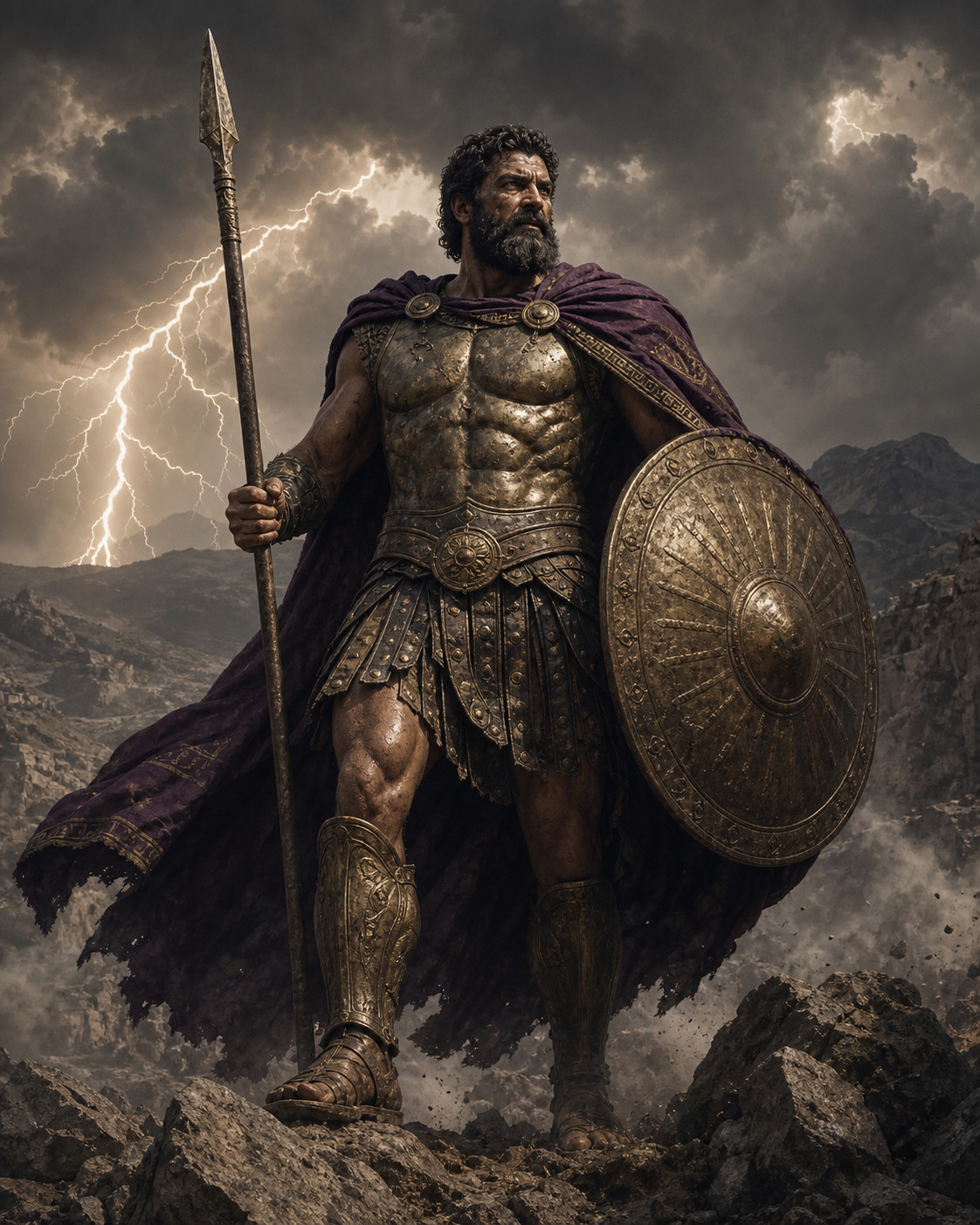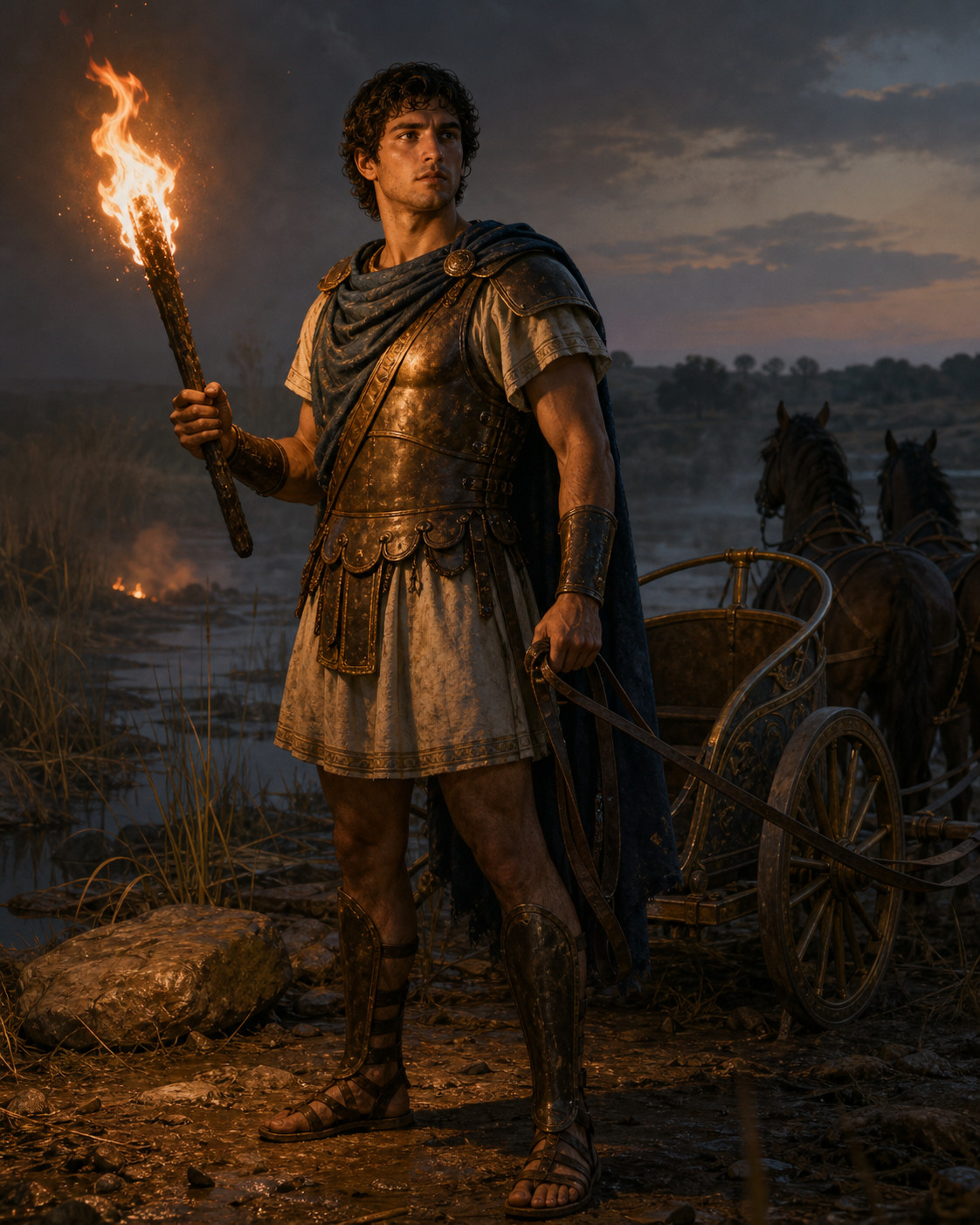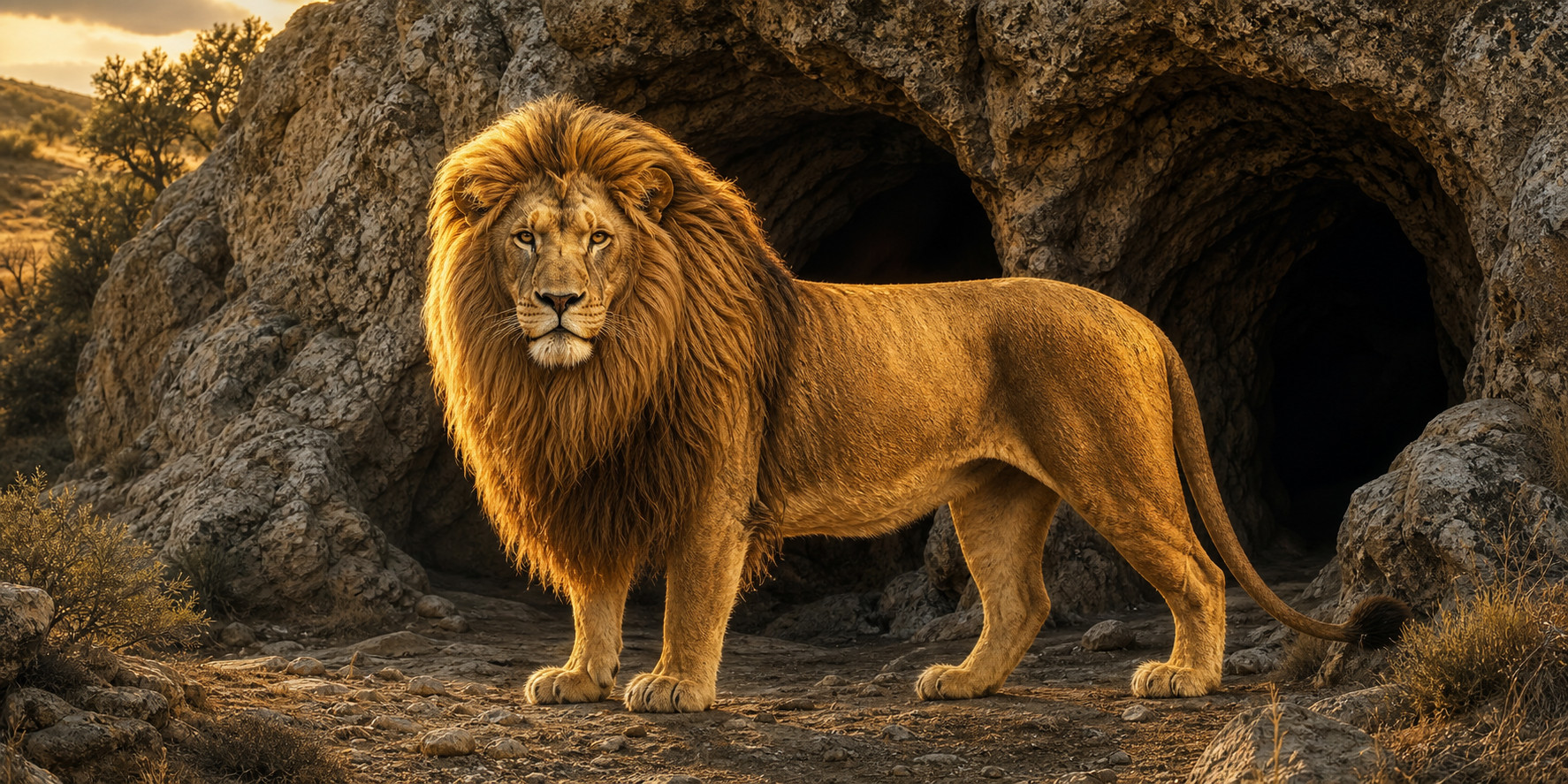
The impervious predator whose hide forces Heracles to abandon weapons and enter the cave.
- Double-Mouthed Cave
- Eurystheus
- Heracles
- Lion Skin
- Nemea
- Typhon
- Primordial Age
- Titan Age
- Olympian Age
- Heroic Age
- Trojan Cycle
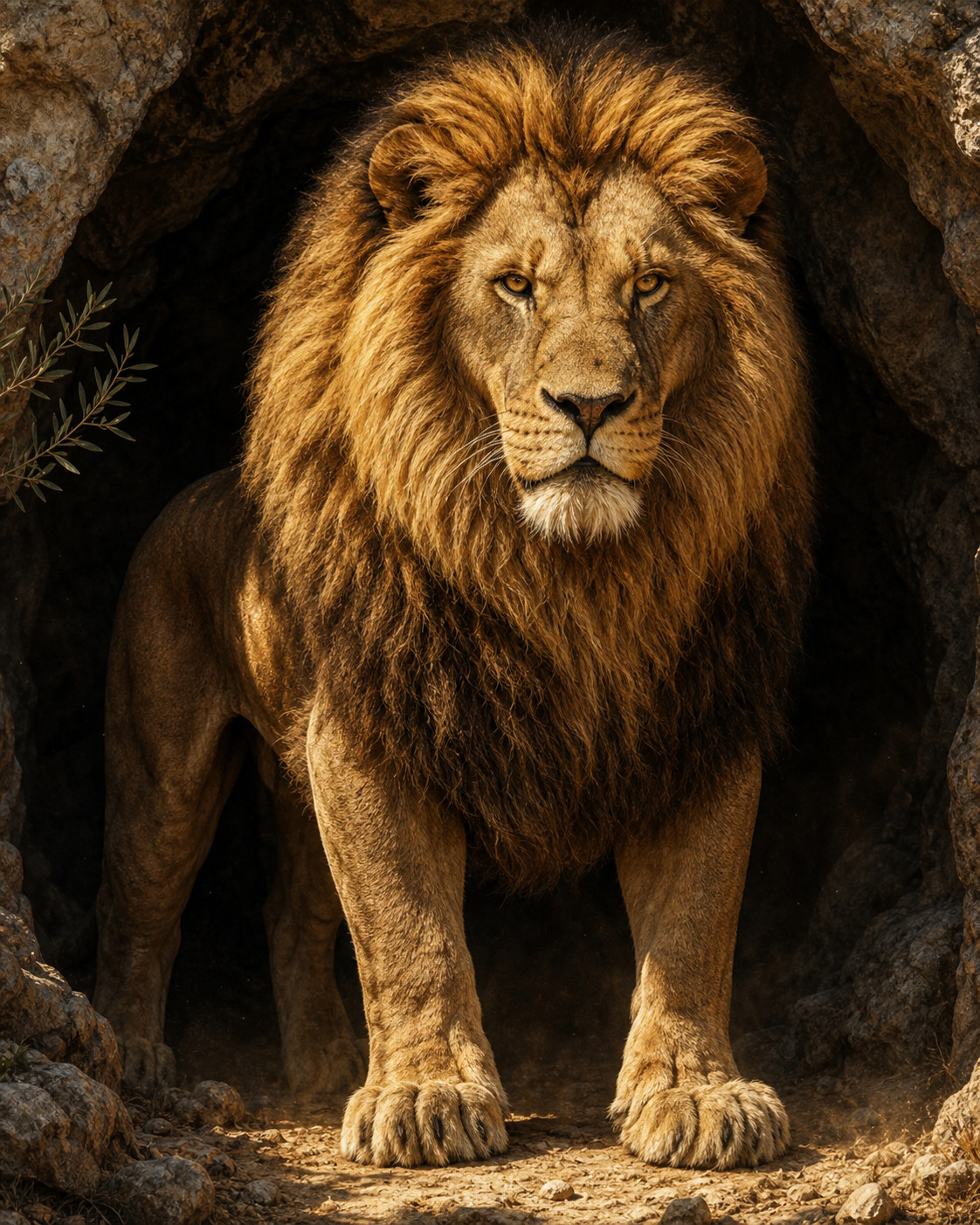
The Nemean Lion is the invulnerable beast of Heracles' first labor. Weapons fail against its hide, so the hero traps it in a double-mouthed cave, strangles it, and turns its pelt into protective armor.
The Nemean Lion begins the Labors of Heracles by making ordinary heroic equipment useless. Its hide cannot be pierced, its cave has two entrances, and its defeat requires the hero to close distance and wrestle the animal with his own body. When Heracles wears the hide afterward, the monster’s invulnerability becomes protection, identity, and one of the most recognizable silhouettes in ancient art.
A Plague in Nemea
Hesiod places the lion among the hills of Nemea, Tretus, and Apesas, preying upon local people. Hera nourishes or settles it there as a danger to Heracles and humankind. The landscape belongs to the northeastern Peloponnese, where ravines, caves, and dry limestone can turn a powerful predator into a threat difficult to approach or contain.
Myth does not need the lion to command an army or speak. It rules through presence. Herds, travelers, and settlements must adjust to a creature immune to the tools that normally establish human control. The first labor therefore begins with a local emergency before it becomes a universal emblem of the hero.
The Problem of Parentage
Apollodorus calls the lion an invulnerable offspring of Typhon. Hesiod’s monster genealogy can be read as connecting it with Orthrus and a female figure identified in different ways, often Echidna or the Chimera. Later summaries simplify these lines, but the surviving traditions do not produce one uncontested family tree.
What remains stable is membership in the wider monster network surrounding Typhon and Echidna. The lion stands beside Cerberus, the Hydra, and the Chimera as a creature that requires a distinct method. Genealogy links the Labors to cosmic disorder without making every monster identical.
Eurystheus Sets the First Labor
After Heracles enters service under Eurystheus, the king orders him to bring back the lion’s skin. The task appears straightforward only until its conditions are known. The animal cannot be cut by ordinary weapons, and the requested proof is the very surface no blade can penetrate. Assignment and solution are locked inside the same hide.
The standard sequence calls this the first labor, though the larger cycle grew from ten counted tasks to twelve after Eurystheus rejected two. Beginning with the lion gives Heracles the equipment and visual identity he will carry into later adventures. The opening task supplies the costume by which the whole cycle is remembered.
Molorchus and the Thirty Days
On the way, Heracles stays with Molorchus, a poor laborer near Cleonae. When the host prepares a sacrifice, Heracles asks him to wait thirty days. If the hero returns, they will honor Zeus the Savior; if he dies, Molorchus may honor Heracles as a hero. The episode places hospitality and uncertainty before the famous victory.
Molorchus matters because Heracles does not leave from a royal court alone. A modest household measures the danger and waits for news. Later traditions connect this encounter with ritual explanations and local commemoration. The labor’s fame grows from relationships between road, village, sanctuary, and monster-haunted land.
Weapons Fail
Heracles first shoots the lion with arrows. They fail to penetrate. He may strike with sword or club in other accounts, but the central discovery is the same: distance and bronze do not solve the problem. The hero must recognize failure before he can change methods. Repeating the shot would only confirm the hide’s advantage.
This moment establishes a pattern continued by the Hydra. Heracles is strongest when he adapts rather than treating strength as one technique. Against the lion, adaptation means entering the cave and accepting physical proximity. Against later monsters, it will mean helpers, fire, containment, negotiation, or specialized divine equipment.
The Double-Mouthed Cave
The lion retreats into a cave with two openings. Heracles blocks one entrance and goes through the other, preventing escape. The setting turns hunting into enclosed combat. The animal’s lair initially offers routes and darkness; the hero changes its geometry until the same cave becomes a controlled boundary.
Inside, Heracles grips the lion around the neck and strangles it. Ancient art repeatedly favors the wrestling pose because it makes human and animal force immediately visible. The victory is bodily but not effortless. The impervious hide protects the lion from weapons, not from breath being cut off by an opponent willing to enter its space.
Opening the Invulnerable Hide
After the kill, Heracles still must remove the skin. Later tradition gives Athena the insight that the lion’s own claw can cut what human metal cannot. Whether or not every source includes that detail, it expresses a powerful mythic logic: the monster contains the tool required to transform its defense.
Heracles wears the pelt with the head as a hood and carries it back to Eurystheus. The king’s reactions vary across the labor cycle, but fear of the hero’s growing power becomes a recurring comic and political note. The servant sent on impossible errands returns increasingly difficult to control.
From Monster to Heroic Armor
The pelt protects Heracles and identifies him in vase painting, sculpture, coins, and later art. Club and lion skin can distinguish him even without an inscription. The monster therefore continues to act after death: its body becomes the hero’s armor, and its face frames the human face that defeated it.
This transformation is not simple erasure. Every image of Heracles in the skin recalls the first opponent and the violence required to obtain protection. Heroic identity is built from conquered danger. The armor announces victory while carrying the animal permanently into the hero’s public appearance.
What the Nemean Lion Means
The lion tests whether Heracles can abandon the method that first defines a warrior. Arrows, sword, and club create distance or impact; the cave removes those advantages. Success comes from observation, control of exits, and a form of wrestling in which the hero risks the same bodily vulnerability as the beast.
The hide then reverses the relationship between threat and safety. What protected the monster protects the hero. Greek myth often lets dangerous substances and bodies change function after conquest: Hydra venom arms arrows, Medusa’s head guards the Aegis, and the lion’s skin becomes armor. Mastery includes reuse, though the reused power continues to carry consequences.
Where the Story Leads
Follow Heracles and the Twelve Labors to the service imposed by Eurystheus, and Echidna, Typhon, Chimera, and the Hydra to the disputed monster family. The second labor immediately complicates the solitary triumph of the first by requiring Iolaus’s help and producing poison that cannot be safely contained forever.
Nemea and Cleonae invite future place pages about cave, road, sanctuary, and local memory. Molorchus offers a human-scale entry into hospitality and ritual waiting. The lion skin leads beyond the numbered labors into nearly every later image of Heracles, making one defeated creature the permanent threshold to his story.
Trivia
- The Nemean Lion’s hide cannot be pierced by ordinary weapons.
- Apollodorus describes a double-mouthed cave and death by strangling.
- The lion skin becomes Heracles’s most recognizable form of armor.