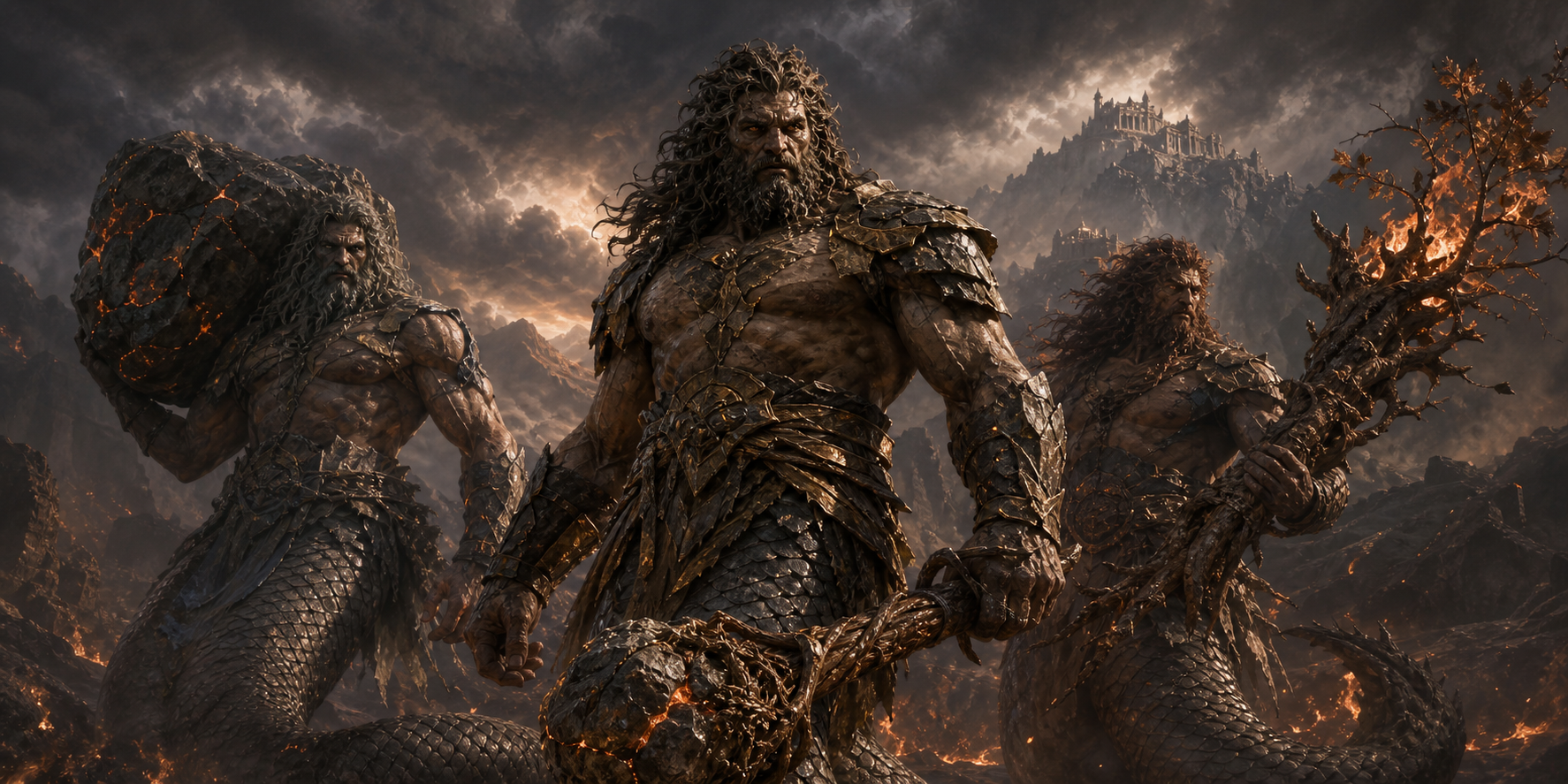
The earth-born challengers whose defeat required gods and a mortal to fight together.
- Alcyoneus
- Earth-Born
- Gaia
- Porphyrion
- Serpent Legs
- Primordial Age
- Titan Age
- Olympian Age
- Heroic Age
- Trojan Cycle
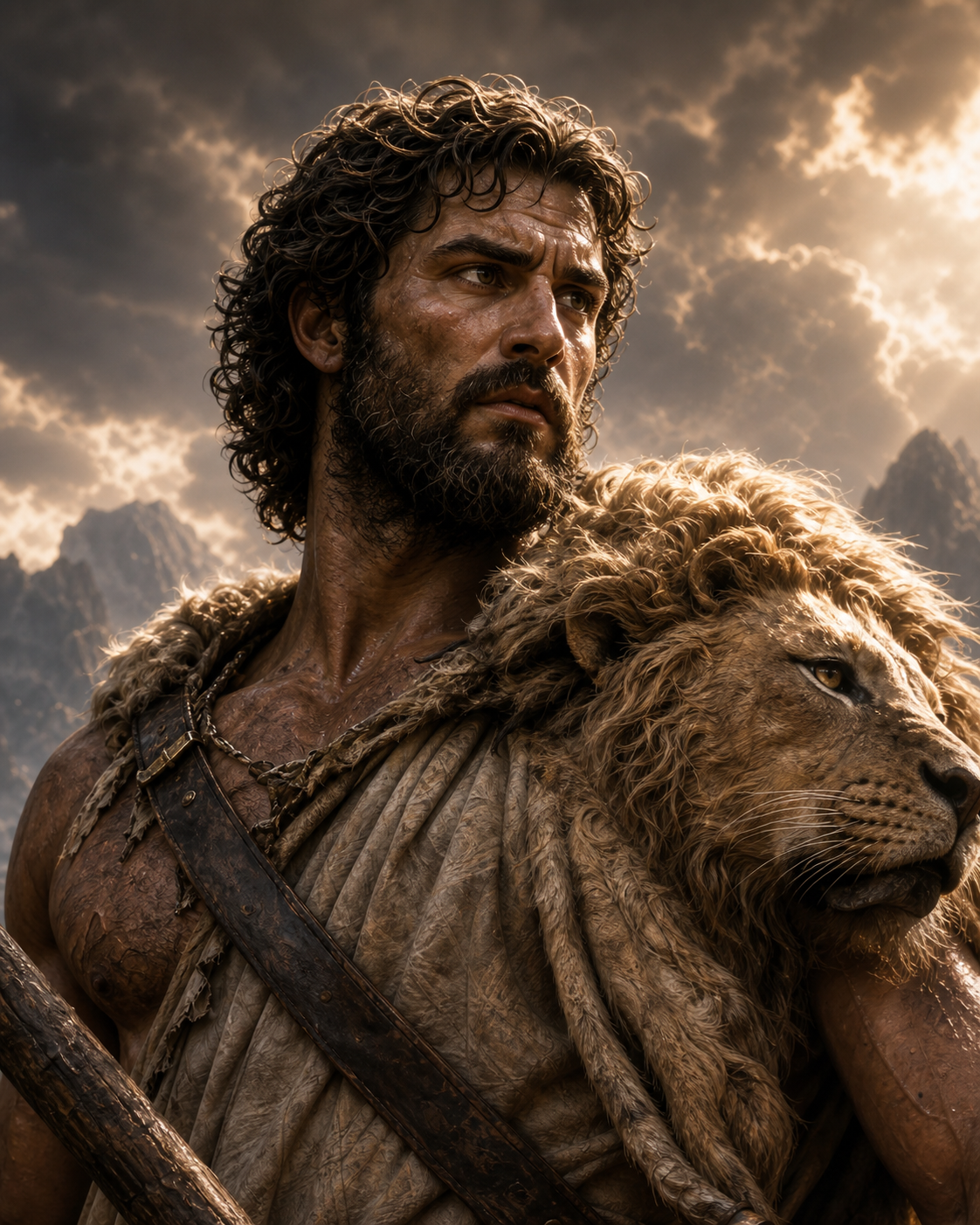
The Giants were earth-born opponents of Olympus who fought the later Gigantomachy, not the Titans of the earlier succession war. Alcyoneus and Porphyrion were leading figures. An oracle required mortal aid, making Heracles essential, while later art increasingly gave the Giants serpent legs to emphasize their bond with Gaia.
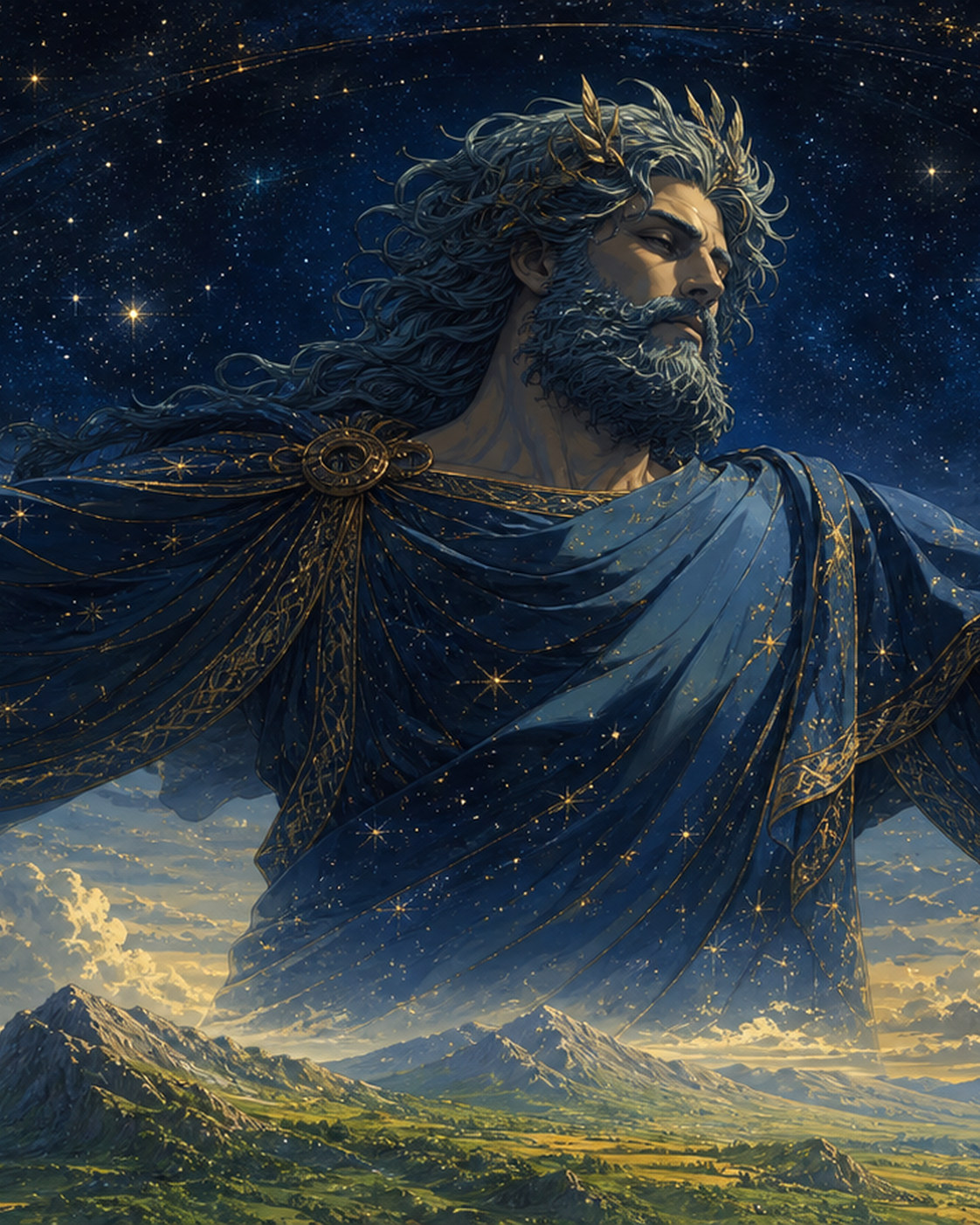
Olympus had defeated the Titans, but the Earth had not accepted the cost of victory. From Gaia came new warriors who were neither the old Titan rulers nor merely enormous humans. The Giants rose as a challenge born from unresolved punishment, and the gods discovered that immortality alone could not defeat them.
Primary Tradition: Earth-Born Challengers
Hesiod connects the Giants with the blood of the wounded Uranus falling upon Gaia. Apollodorus presents them as born from Earth and Sky when Gaia is angered over the Titans. Both traditions make them earth-born, but their narrative details should remain distinct.
Are the Giants children of a battle, children of Gaia’s anger, or both? Different sources answer differently. What holds them together is their emergence from Earth as a new danger to the ruling order.
Giants Are Not Titans
The Giants and Titans are frequently confused because both oppose Olympian gods. Titans belong to the older divine generation of Cronus and fight the ten-year Titanomachy. Giants rise in the later Gigantomachy, after Zeus has established rule. They do not form one interchangeable race.
The distinction also changes the wars. The Titanomachy is a succession struggle between generations. The Gigantomachy is a challenge to an established Olympian settlement, linked to Gaia’s response to what happened after the earlier victory.
How Ancient Sources Describe Them
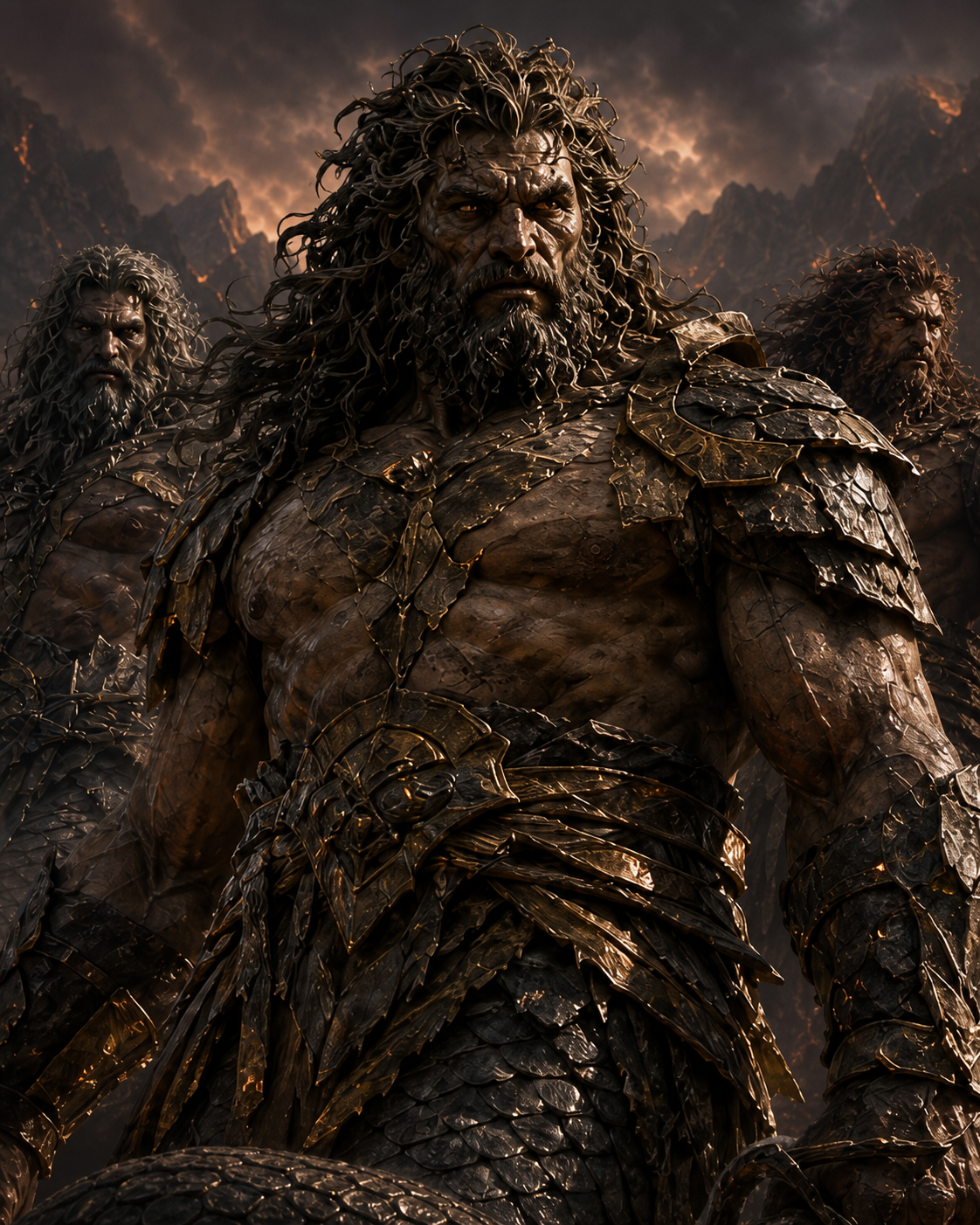
Apollodorus describes enormous, invincible warriors with long hair and dragon-like scales for feet, hurling rocks and burning oaks toward heaven. Hesiod’s brief description emphasizes shining armor and long spears. The sources do not give one complete anatomy or fixed roster.
“Giant” should therefore not be treated as a modern biological category. Size, earth-born strength, martial equipment, and cosmic opposition combine differently across texts and images.
Alcyoneus and Porphyrion
Alcyoneus and Porphyrion stand above the others in Apollodorus. Alcyoneus cannot die while he remains in his native land. Heracles shoots him, but the Giant revives until Athena advises the hero to drag him beyond the sustaining boundary.
Porphyrion attacks Heracles and Hera. Zeus strikes him with the Thunderbolt, and Heracles finishes him with an arrow. Both stories show that individual Giants have conditions and identities; they are not a faceless crowd.
Why the Gods Need Heracles
An oracle declares that no Giant can perish by the hand of a god alone. Zeus summons Heracles and prevents Gaia from obtaining a plant that would protect her children from mortal attack. The gods wound and overpower their enemies, while the hero’s mortal arrows fulfill the condition of final defeat.
Why make mortality the deciding force in an immortal war? The myth turns a limitation into access. Heracles can do what divine nature cannot, and Olympus survives through cooperation across the boundary it usually places above humanity.
Athena and the Ordered Defense
Athena advises Heracles against Alcyoneus and fights prominently herself. Apollodorus associates her with the defeat of Enceladus and Pallas, while ancient monuments repeatedly position her as a controlled, advancing defender against collapsing earth-born force.
Her Aegis and Gorgoneion give the defense a recognizable face. Zeus’s Thunderbolt supplies sovereign power; Athena supplies strategy and protective authority; Heracles supplies the required mortality.
Alternative Pairings
Apollodorus matches Olympians with particular Giants: Apollo and Heracles strike Ephialtes, Dionysus kills Eurytus, Hecate confronts Clytius, Hephaestus attacks Mimas, Poseidon pursues Polybotes, and the Fates fight Agrius and Thoas. Other sources and artworks rearrange or omit names.
A responsible account treats the roster as a rich set of traditions rather than a fixed tournament bracket. The repeated idea is collective mobilization: the entire divine order must answer the challenge.
Human Legs and Serpent Legs
Later art often gives Giants serpent legs, making their bond with Earth visually immediate. Earlier Greek images commonly show them as fully human-shaped armed warriors. The serpent-legged body is therefore not a universal feature from the beginning.
Why did the image change? Serpentine lower bodies intensify the contrast between Olympian form and chthonic origin. Art developed a visual solution that made the cosmic sides legible even without written labels.
Symbolism and Ancient Art
The Gigantomachy became a major image of threatened order restored. Temples, painted vessels, and the Great Altar at Pergamon used the battle to organize many divine bodies into a single dramatic world. The theme could support civic or royal claims, but its mythology never becomes only propaganda.
Gaia’s grief remains visible in famous art, especially where she rises from the ground as Athena defeats Alcyoneus. That detail complicates a simple order-versus-chaos reading. The defeated side has a mother, a grievance, and a place in the divine family.
Legacy and Paths Forward
Later language blurred Giants, Titans, and other enormous beings, helping create modern confusion. Project Mythos preserves the differences so each click deepens the story instead of repeating the same vague category.
The difference is especially important when reading images. A helmeted warrior confronting Athena may be a Giant even if he is not physically larger than she is, while a Titan may appear in an entirely different succession story. Attributes such as serpent legs, rocky weapons, and Gaia rising from the ground can help, but date and context matter more than one visual trait.
Follow Gaia to the grievance beneath the war, Gigantomachy to the full battle, Athena to strategic defense, Heracles to required mortality, and Alcyoneus or Porphyrion to individual conditions of defeat. The Giants become most interesting when the crowd separates into relationships.
That separation changes the emotional scale. Alcyoneus is bound to his native ground; Porphyrion becomes the focus of a coordinated divine and mortal strike; Enceladus is remembered beneath a landscape. Their defeats transform named places into mythic evidence. The collective war becomes a set of local stories in which mountains, islands, and volcanic force continue to bear the memory of fallen challengers.
It also reveals how the Olympian coalition works. Hephaestus attacks with heated metal, Hecate with torches, Poseidon with an island, and Athena with strategy as well as force. The gods do not win by becoming identical. Each domain contributes a different answer, while Heracles supplies the mortal condition shared by the final blows. The battle is a network of specialized powers.
The Giants therefore illuminate the gods as much as themselves. An opponent reveals what a defender values and which limits divine power cannot cross alone. By tracing each pairing, readers learn Olympus through the particular challenge that forces every deity to act.
Trivia
- Early Greek Gigantomachy art often presents Giants as human-shaped warriors rather than serpent-legged monsters.
- Apollodorus says the Giants hurled both rocks and burning oak trees toward heaven.
- The Great Altar at Pergamon surrounds the viewer with one of antiquity’s most celebrated Gigantomachy compositions.