The first great voyage of heroes, where no single strength could carry the Argo to Colchis and home.
- Argo
- Colchis
- Golden Fleece
- Jason
- Medea
- Orpheus
- Pelias's CommandJason is sent from Iolcus for the guarded fleece.
- The Crew GathersHeroes board the divinely aided ship Argo.
- The Outward TrialsLocal encounters and the Clashing Rocks test specialized skills.
- ColchisMedea enables Jason to survive Aeetes's tasks and take the fleece.
- Costly ReturnThe homeward routes carry pollution, loss, and future exile.
The Argonautic Voyage carries Jason and a changing company of heroes aboard the Argo to Colchis for the Golden Fleece. Its trials depend on many specialized helpers, especially Medea, and its return carries debts that reshape Iolcus and Corinth.
Greek Mythology Timeline
Move through broad mythic ages and open the events that connect one story to the next. The sequence is a reading path, not an exact historical calendar.
The Argonautic Voyage gathers a generation of heroes onto one ship before the Trojan War. Jason sails for the Golden Fleece because Pelias expects distance and danger to remove a rival claimant. The expedition instead creates a moving network of tests, local encounters, divine interventions, and moral debts whose consequences continue long after the Argo returns.
Why Jason Must Sail
Jason comes to Iolcus to claim the kingship held by Pelias. An oracle has warned Pelias about a man wearing one sandal, and Jason arrives after losing a sandal while crossing a river. The king answers the threat indirectly by ordering him to retrieve the Golden Fleece from Colchis.
The command resembles other lethal assignments disguised as honorable service. Jason can win legitimacy only by leaving the land he hopes to rule. The voyage begins as a political trap, not spontaneous exploration.
Building the Argo
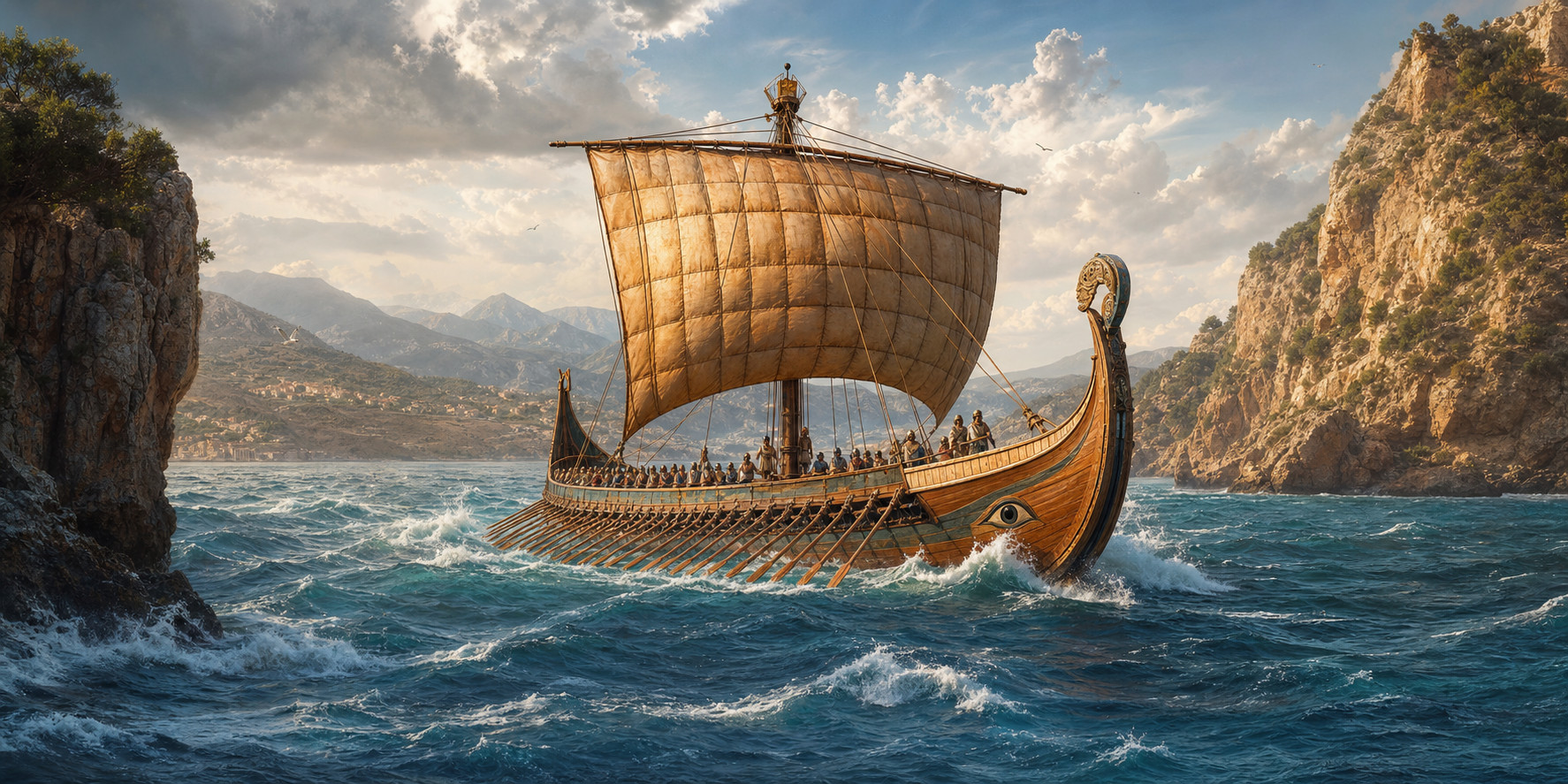
The ship Argo is built under divine guidance, commonly by Argus with Athena’s help. A speaking timber from Dodona may be set into its prow. The vessel is therefore crafted technology, sacred object, and participant in the story rather than neutral transport.
Its crew are the Argonauts, named from the ship. Lists vary widely and often include Heracles, Orpheus, the Dioscuri, Peleus, Telamon, Zetes and Calais, Atalanta in some accounts, and many other heroes. Variation lets communities and poets connect favored figures to the great expedition.
Lemnos and Early Encounters
On Lemnos the crew meets women who have killed the island’s men after divine punishment and marital rejection. Jason’s stay with Queen Hypsipyle creates descendants in some traditions. The episode pauses martial momentum and raises questions about settlement, desire, and forgotten purpose.
Other early encounters include the Doliones, where tragic confusion leads the Argonauts to kill their former host Cyzicus at night, and Mysia, where Hylas disappears and Heracles falls behind while searching. The roster changes as the journey advances.
Phineus and the Clashing Rocks
The blind seer Phineus is tormented by Harpies that foul or steal his food. Zetes and Calais drive them away, and Phineus repays the crew with navigation advice. Aid produces knowledge: the voyage moves because local suffering is answered.
To pass the Symplegades, the Clashing Rocks, the Argonauts release a dove and then row through as the rocks rebound. Athena may push the ship to safety. After the successful passage, the rocks become fixed. A unique crossing changes the geography for those who follow.
Arrival in Colchis
In Colchis, King Aeetes demands that Jason yoke fire-breathing bulls, sow dragon’s teeth, and overcome the earthborn warriors. The heroic crew cannot solve the central trial collectively. Success depends on Medea’s knowledge and the gods’ decision to make her desire Jason.
The Golden Fleece hangs in a sacred grove under a sleepless serpent’s guard. Medea subdues it through drugs, ritual, or song, and the pair flee with the fleece. The prize is obtained through alliance, betrayal, and departure rather than open conquest.
The Return Routes
No single return itinerary governs all sources. Apollonius sends the Argo through the Danube, Adriatic, rivers imagined across Europe, Circe’s island, the Sirens, Scylla and Charybdis, Phaeacia, and the Libyan desert. Other traditions know different paths.
The extravagant geography turns homecoming into a second epic. Orpheus counters the Sirens with music; divine or local helpers solve hazards; the ship may be carried over land. The voyage maps Greek curiosity through mythical connections rather than accurate nautical sequence.
Apsyrtus and Purification
Medea’s brother Apsyrtus dies during the escape, but sources differ about his age, the site, and whether Medea or Jason engineers the killing. The death brings kin-murder and pollution into the expedition’s triumph.
Circe purifies Jason and Medea in Apollonius, even while condemning the deed. Ritual cleansing permits movement without declaring the action morally right. The distinction between purification and forgiveness is important throughout Greek myth.
Return to Iolcus
Jason returns with the fleece, but the political promise does not resolve cleanly. Medea engineers Pelias’s death by convincing his daughters that a cauldron can rejuvenate him. The couple are driven from Iolcus and eventually reach Corinth.
Thus the object recovered for a throne does not establish a stable reign. The voyage produces fame, marriages, deaths, and future conflicts, but Jason’s original goal remains compromised. Adventure succeeds more clearly than governance.
What the Voyage Means
The Argonautic Voyage is a myth of collective capability. No hero commands every necessary skill. Orpheus sings, the Boreads fly, Polydeuces boxes, seers advise, builders and helmsmen guide, Medea solves the Colchian tasks, and gods intervene.
At the same time, the expedition’s celebrated unity depends on people left behind, displaced, or betrayed. The moving ship makes connections quickly and then departs. Later consequences reveal the cost hidden by the image of a brilliant heroic crew.
Where the Story Leads
Follow Jason and Medea to Colchis and the Golden Fleece, Orpheus to the song that defeats the Sirens, and Heracles to the moment he leaves the expedition. The Argo itself opens a path through Athena, Argus, Dodona, and heroic shipbuilding.
Pelias explains the political trap; Aeetes and Colchis explain the guarded prize; Circe explains purification; Corinth explains the marriage’s destruction. Each stop turns one voyage into a network spanning royal succession, divine planning, navigation, kinship, and exile.
Trivia
- Ancient authors provide different Argonaut rosters and return routes.
- The Argo may contain a speaking timber from Zeus’s oracle at Dodona.
- The voyage belongs to the mythic generation before the Trojan War.