The mortal voice at the center of Heracles's household tragedy and its conflicting chronologies.
- Children
- Creon
- Heracles
- Iolaus
- Madness
- Thebes
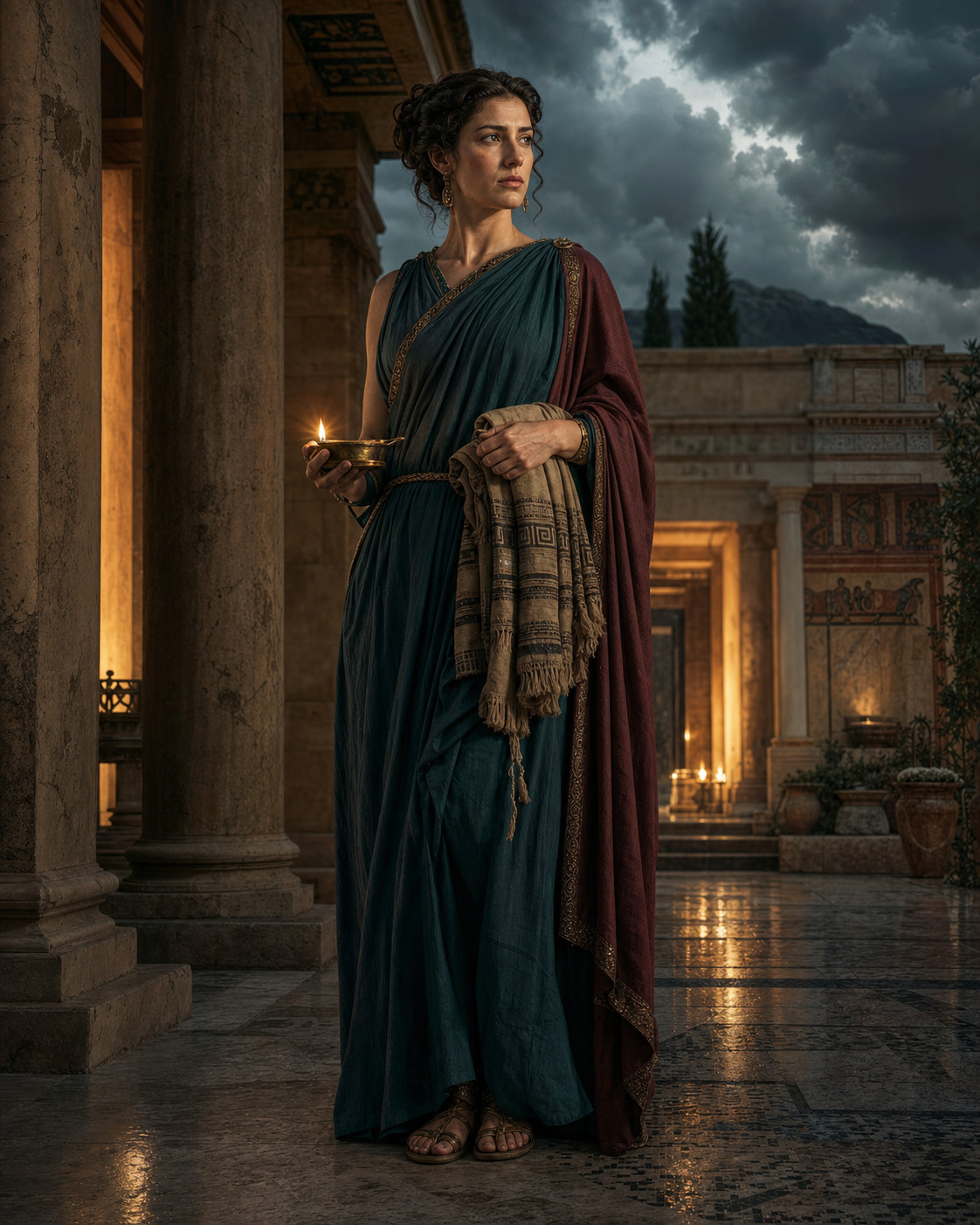
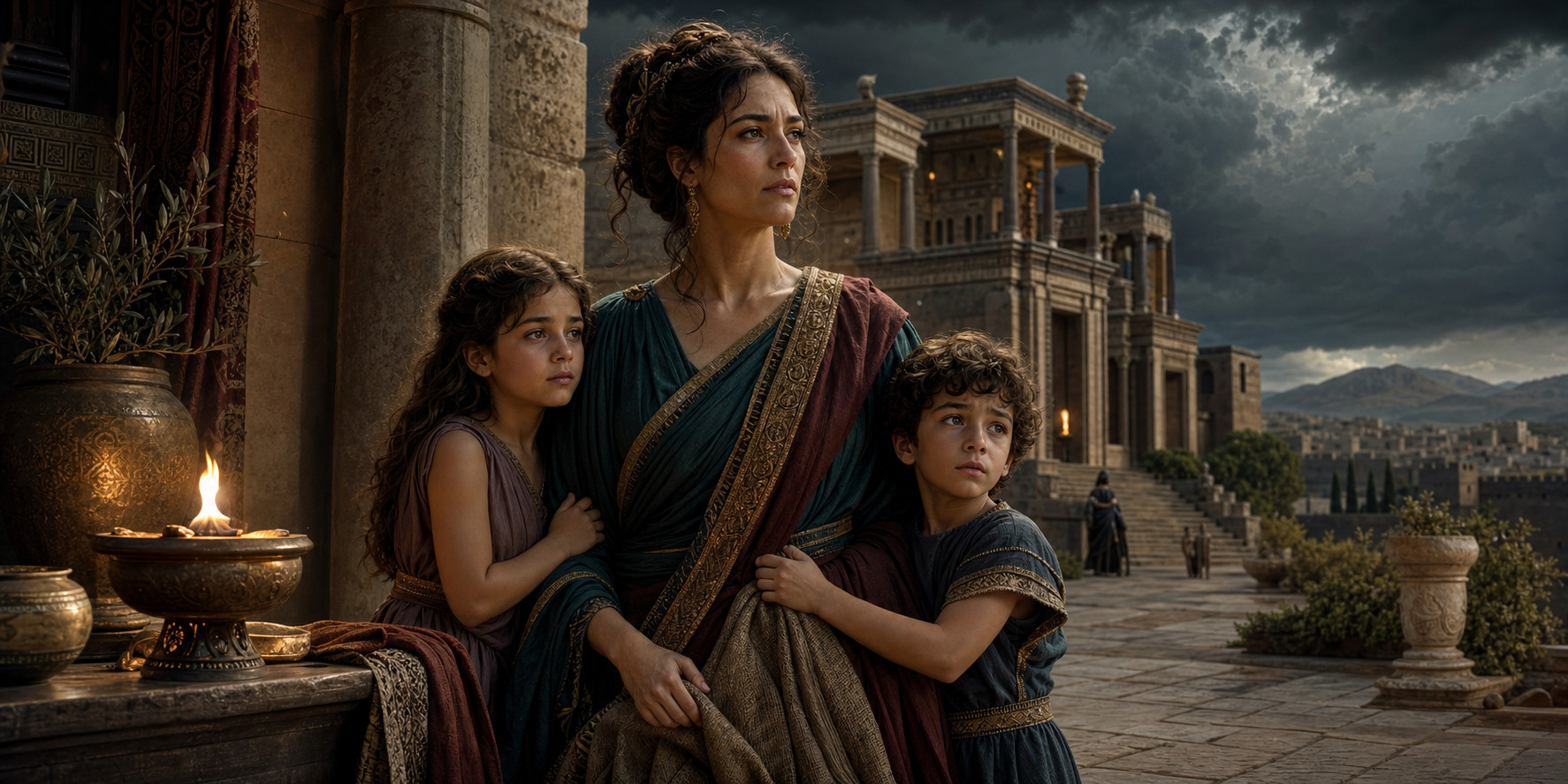
Megara is the daughter of Creon and first wife of Heracles. Ancient accounts disagree about the number of their children, the timing of Heracles's madness, Megara's death or survival, and her later marriage to Iolaus in one mythographic tradition.
Greek Mythology Timeline
Move through broad mythic ages and open the events that connect one story to the next. The sequence is a reading path, not an exact historical calendar.
Megara is the Theban princess whose marriage to Heracles places a household at the center of heroic catastrophe. Daughter of King Creon, she becomes Heracles’s wife after he defends Thebes, bears children whose number and names vary, and then suffers the violence created when divine hostility enters family life. Ancient sources disagree sharply about whether Heracles kills the children before or after the Labors and about Megara’s own fate. Those differences should be preserved, because they change the meaning of the entire heroic cycle.
Princess of Thebes
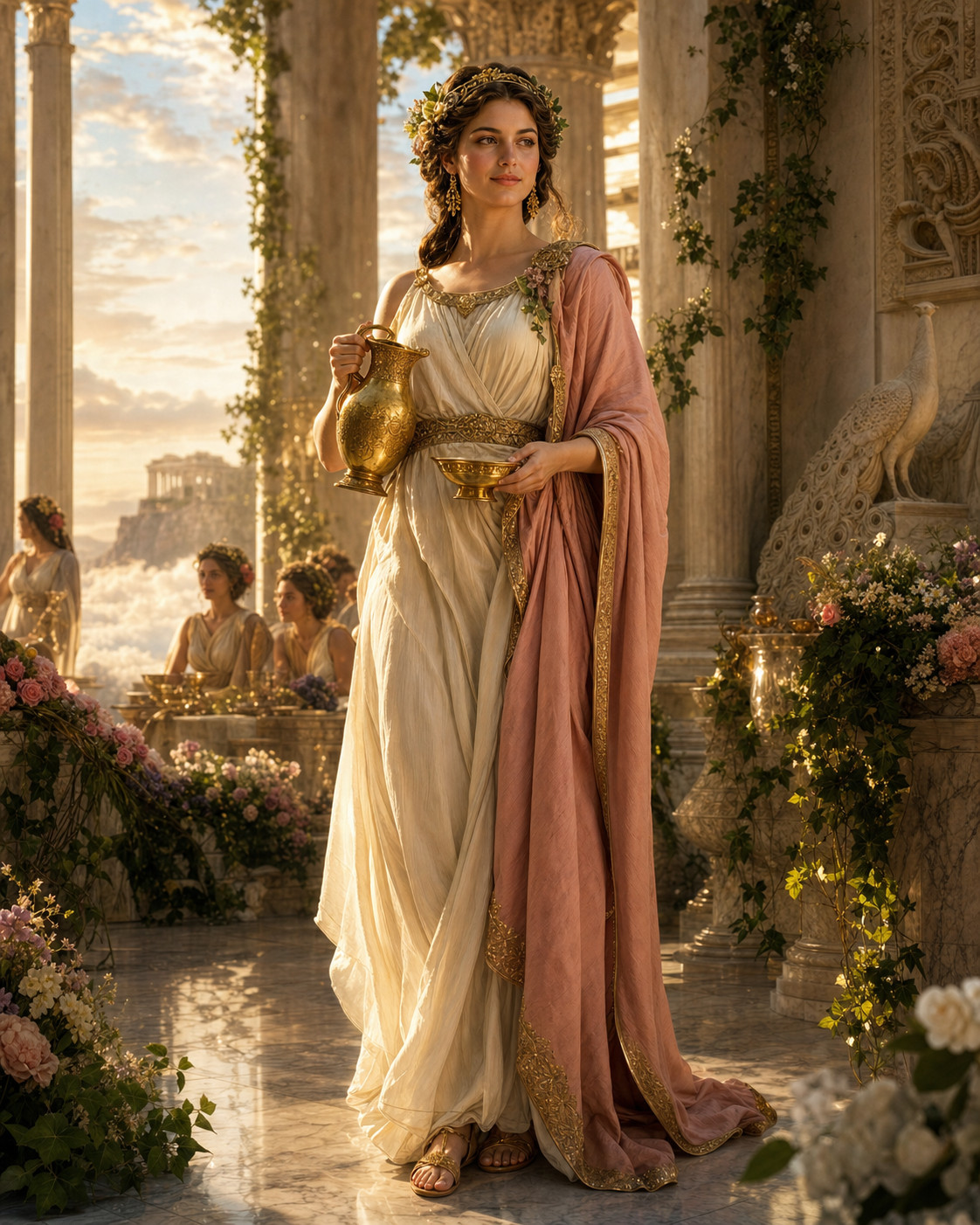
Megara is commonly named as a daughter of Creon, ruler of Thebes. Her identity begins in a city and dynasty, not only in her husband’s biography. When Heracles helps free Thebes from tribute or defeats its enemies, Creon rewards him with Megara’s hand, joining military service to royal marriage.
Ancient marriage stories often present women as prizes in a hero’s rise, but drama gives Megara speech, fear, judgment, and memory. She knows what Heracles’s absence costs and what political enemies can do to an unprotected household. Her position exposes the fragile domestic structure behind public heroic fame.
Marriage and Children
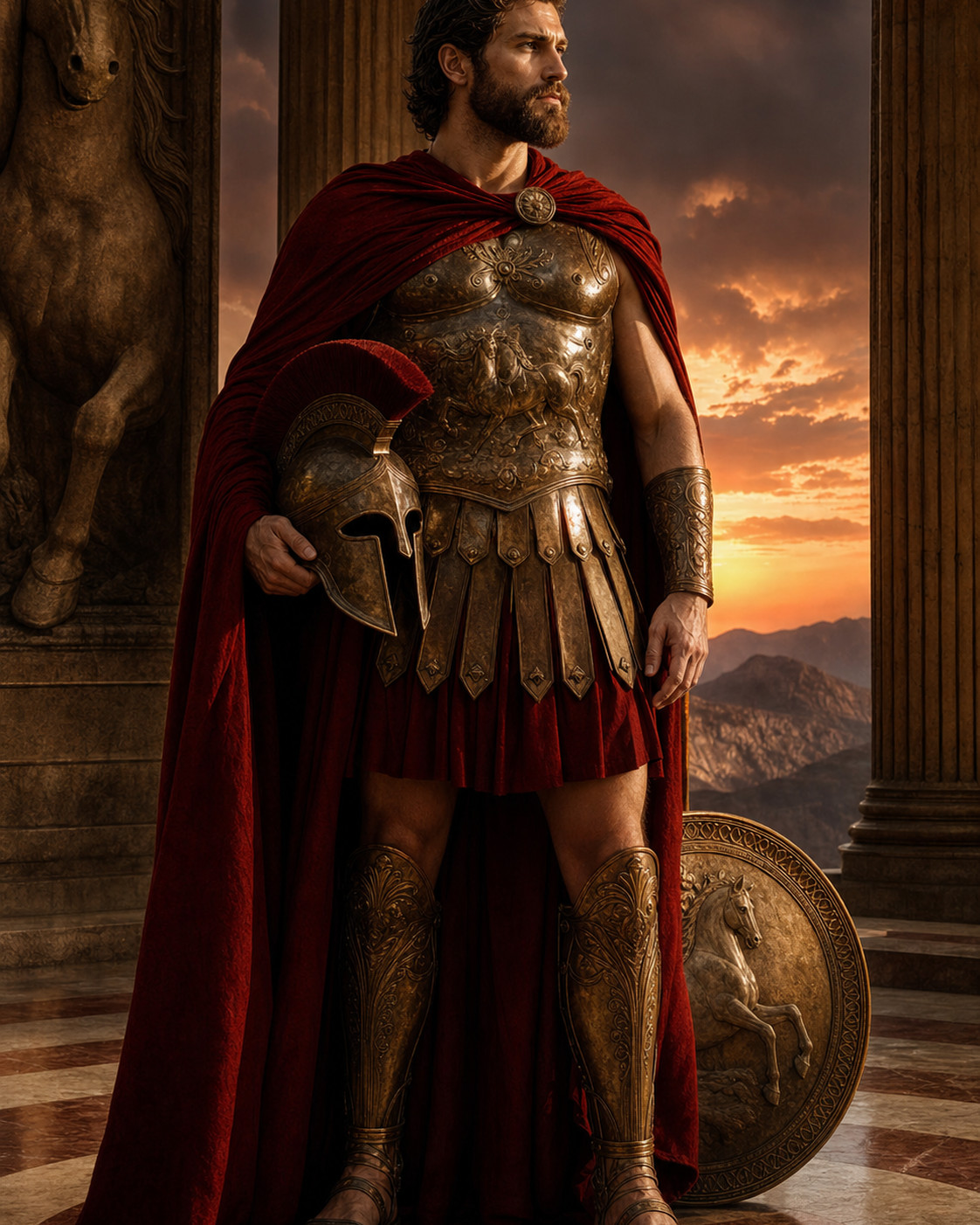
Sources give Heracles and Megara different numbers of sons, from a small group to a larger family, and the children’s names also change. This variation warns against treating a single modern family tree as universal. What remains constant is that children make the marriage a continuing household rather than a brief reward.
Their vulnerability transforms the story. Heracles is famous for protecting communities from monsters, yet his own home cannot be protected from the madness sent against him. The contrast between external strength and internal danger is one of the most painful structures in Greek heroic myth.
The Order of Madness and Labors
Apollodorus places Heracles’s madness and the killing of the children before the Labors. Purification and an oracle then lead him to Eurystheus, so the tasks become part of the response to domestic bloodshed. In this arrangement, every labor carries the weight of a family already destroyed.
Euripides reverses the chronology. Heracles returns from his Labors just in time to rescue Megara and the children from the usurper Lycus, only for Hera’s agents to drive him mad after the apparent happy ending. The later disaster denies the audience a simple reward for completed heroism.
Megara under Lycus
In Euripides’s Heracles, Lycus seizes power in Thebes and plans to kill Megara, her children, and the aged Amphitryon. Megara prepares the family to face death with dignity while refusing false hope. Her speeches make courage visible as clear judgment under political terror.
Heracles’s return briefly restores protection. He kills the usurper and saves the household, but the rescue becomes the threshold of a worse calamity. The structure makes Megara’s earlier fear tragically accurate without making it complete: danger comes not only from the tyrant outside but from divine violence entering the rescuer himself.
The Family Catastrophe
Under madness, Heracles mistakes his own children for enemies. Sources differ over Megara’s fate. Euripides includes her among those killed, while Apollodorus’s account leaves her alive and later has Heracles give her to Iolaus in marriage. These outcomes cannot be merged into one biography.
The differences reshape Megara’s role. In tragedy she dies within the household she fought to preserve, making the reversal total. In mythography she survives into an uneasy social settlement after irreversible loss. Both versions insist that heroic violence has consequences borne by people who did not choose the quest.
Marriage to Iolaus in One Tradition
Apollodorus reports that Heracles, unwilling to resume marriage with Megara after the children’s deaths, gives her to his nephew Iolaus. The language reflects ancient patriarchal arrangements and can feel stark to modern readers. It should be presented as a particular source’s settlement, not as a universal romantic continuation.
The tradition links Megara to the companion who helped Heracles at Lerna and later defended the Heraclids. It also reveals how myth tries to reorganize a shattered household through kinship. Survival does not erase the dead or restore the first marriage; it creates a different and morally complicated future.
Voice beyond the Major Tragedy
A Hellenistic poem known as the Megara imagines her speaking with Alcmena while Heracles is away. Anxiety, dreams, and the repeated absence of the laboring hero shape domestic time. The quest celebrated elsewhere becomes waiting for those at home.
This perspective matters because heroic chronology usually advances from exploit to exploit. Megara experiences the intervals: uncertainty, childcare, rumor, and the possibility that Heracles will not return. Her voice turns absence into an event and gives emotional scale to journeys that can otherwise resemble a list.
Not the City of Megara
The princess Megara should not be confused with Megara, the city west of Athens. Ancient names frequently overlap, and modern searches can easily mix the woman with the place. Her strongest geographic association is Thebes through Creon and Heracles’s household.
Keeping the distinction clear also protects her from disappearing into a label. She is a character with variant traditions, not a geographic footnote. Her page belongs among Mortals because the story’s force comes from human vulnerability inside a world of gods and heroes.
What Megara Means
Megara reveals the cost hidden behind heroic achievement. Heracles can master lions, serpents, and impossible commands, but strength does not create safety when madness, divine hostility, and political seizure reach the home. Her courage is endurance without the illusion of control.
Follow her routes toward Creon and Thebes, Heracles and the chronology of the Labors, Iolaus and the surviving household tradition, and Hera’s long conflict with Zeus’s son. Reading Megara keeps the heroic cycle accountable to the people who wait, suffer, speak, and sometimes survive beyond its most famous scenes.
Trivia
- Ancient sources disagree about the number and names of Megara’s children.
- Euripides places the family catastrophe after the Labors; Apollodorus places it before them.
- In one surviving mythographic tradition, Megara later marries Iolaus.