A queen who saves her father, loses her throne, and connects the Argonauts to Opheltes and the Seven.
- Argonautic Voyage
- Jason
- Lemnos
- Nemea
- Opheltes
- Seven against Thebes
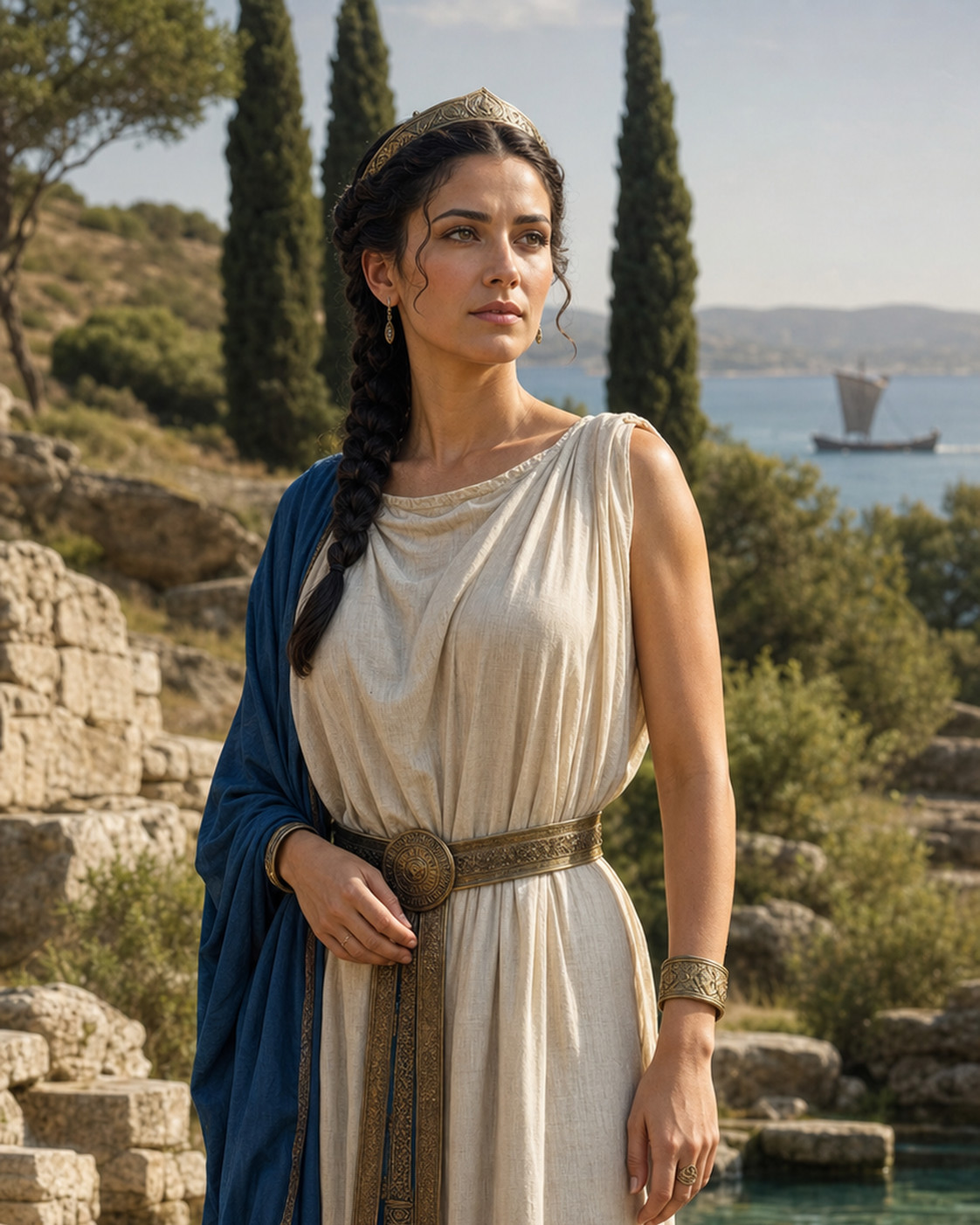
Hypsipyle is the Lemnian queen who saves her father Thoas, receives Jason and the Argonauts, and later appears in Nemea as the enslaved nurse of Opheltes. By guiding the thirsty Seven to water, she unintentionally connects the child's death with the Nemean Games.
Greek Mythology Timeline
Move through broad mythic ages and open the events that connect one story to the next. The sequence is a reading path, not an exact historical calendar.
Hypsipyle moves through Greek myth under several identities: princess and queen of Lemnos, daughter who saves her father, partner of Jason, mother separated from her sons, enslaved nurse in Nemea, and guide whose act of hospitality leads unintentionally to the death of Opheltes. No single episode contains her whole story. The Argonautic tradition emphasizes rule, secrecy, and Jason’s departure, while the Theban cycle finds her displaced far from Lemnos and responsible for another family’s child. Read together, the traditions make her a figure of survival whose choices preserve lives even when institutions repeatedly deny her control over what follows.
Daughter of Thoas
Hypsipyle is the daughter of Thoas, king of Lemnos. In the best-known account, the women of Lemnos kill the island’s men after conflict within their households, but Hypsipyle secretly spares her father. Apollodorus says she hides him, while other versions describe an escape by sea. Her first defining action is therefore a refusal to make kinship murder complete.
Saving Thoas also creates danger for her. The community depends on a shared account of what happened, and her private mercy breaks that agreement. Later traditions explain her loss of power, capture, or sale through discovery of the deception. The precise route from queen to slave varies, but loyalty to her father becomes both rescue and the source of her exile.
Queen of Lemnos
When the Argonauts arrive, Lemnos is governed by women and Hypsipyle speaks for the island. Apollonius presents her convening an assembly, receiving Jason, and negotiating how the strangers may enter. She is not simply waiting for a hero; she manages a political crisis in which food, labor, reputation, and the island’s future are all at stake.
The Lemnian episode has many tones across ancient literature, from civic negotiation to erotic delay. Hypsipyle’s authority is real but precarious. She can welcome the expedition and offer Jason a kingdom, yet she cannot make the Argo’s mission end on Lemnos. The heroes eventually depart, leaving promises and children behind.
Jason and the Argonauts
Hypsipyle and Jason become partners during the Argonauts’ stay. Sources differ over the names and number of their children; Euneus is the most persistent son, while a second is called Thoas, Nebrophonus, or Deipylus in different traditions. These variants should not be forced into one fixed family tree.
Before Jason leaves, Hypsipyle asks to be remembered and imagines sending a grown son to his family if he never returns. The scene makes departure more than a pause in romance. It creates a future obligation that the voyage cannot fulfill immediately, linking Lemnos to later stories through children who must search across distance.
From Palace to Servitude
Euripides’ fragmentary Hypsipyle and Statius’ later Thebaid place the former queen in Nemea as a captive servant. The transition is incompletely preserved and told in several ways, including capture by pirates after the Lemnian women discover that Thoas survived. What remains stable is the reversal from ruling a city to serving in another household.
This change sharpens the Nemean episode. Hypsipyle possesses royal experience and local knowledge, but Lycurgus’s household controls her status. She is entrusted with Opheltes without having the authority to define the conditions of care. Her past rank cannot protect her from blame when tragedy enters the royal family.
Nurse of Opheltes
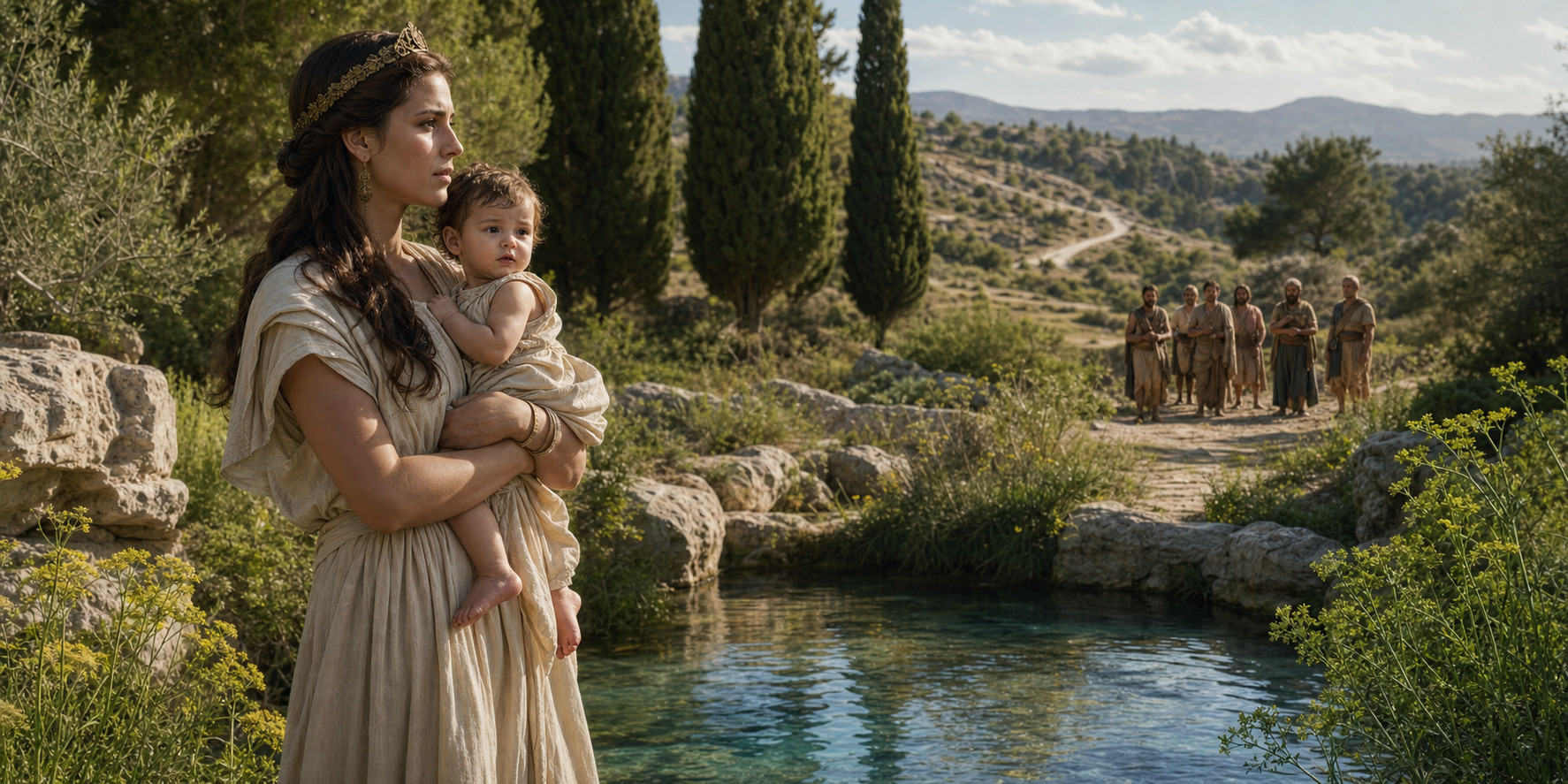
At Nemea, Hypsipyle nurses Opheltes, the infant son of Lycurgus and Eurydice or Amphithea. A warning says the child must not touch the earth before he can walk. When the thirsty Seven against Thebes ask for help, she places him among vegetation and leads the army to a spring.
The choice joins two valid obligations: protect a child and give water to travelers in danger. Later retellings can make the moment look careless, but the narrative works because the duties collide. Hypsipyle knows the landscape and responds to urgent need; the serpent’s attack turns useful knowledge into the path toward catastrophe.
The Death of Opheltes
A serpent kills Opheltes while Hypsipyle is away. The Seven return, destroy the serpent, bury the child, and interpret his death as an omen for their expedition. He is renamed Archemorus, Beginning of Doom, and funeral contests become a foundation story for the Nemean Games.
For Hypsipyle, the event is not an abstract omen. She faces the anger of a bereaved household while the famous warriors convert the death into public ritual. Statius expands the confrontation into threatened violence and civic unrest, reminding readers that the person who guided the army may still be treated as a disposable servant.
Recognition by Her Sons
The lost Euripidean play culminated in recognition between Hypsipyle and her sons, and Statius also brings her sons to Nemea. The reunion reverses the pattern of separation that began with Jason’s departure. Tokens, memories, names, and divine guidance restore a family relation that political displacement had obscured.
Recognition does not undo Opheltes’s death or erase Hypsipyle’s years of servitude. It gives her a future beyond accusation. The story allows a caregiver blamed for one lost child to be recovered by the children from whom she herself was taken, creating a difficult symmetry rather than a simple happy ending.
A Woman between Cycles
Hypsipyle connects the Argonautic Voyage with the Seven against Thebes and the Nemean Games. Her biography carries readers from Lemnos and Jason to Nemea, Opheltes, and the road toward Thebes. Few figures demonstrate more clearly how Greek mythic cycles overlap through people rather than through chronology alone.
Follow her toward the Argonautic Voyage for queenship and Jason, toward Opheltes and Lycurgus for the Nemean household, and toward the Seven and the Nemean Games for the transformation of private grief into public memory. Her route is one of the strongest bridges in Project Mythos.
Trivia
- Hypsipyle alone saves her father Thoas in the best-known Lemnian account.
- Ancient sources give different names to her sons by Jason.
- Her story joins the Argonautic and Theban cycles through Lemnos and Nemea.