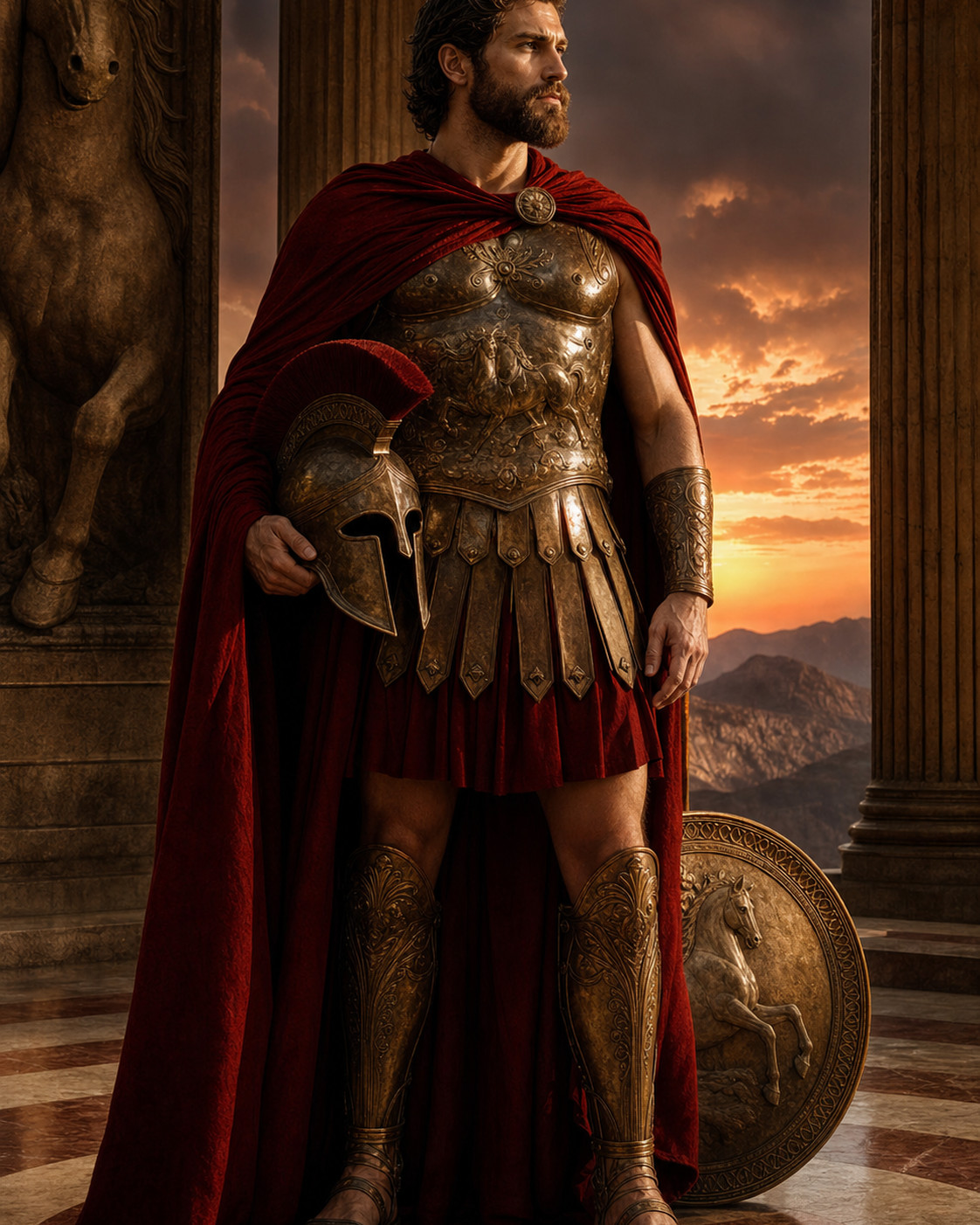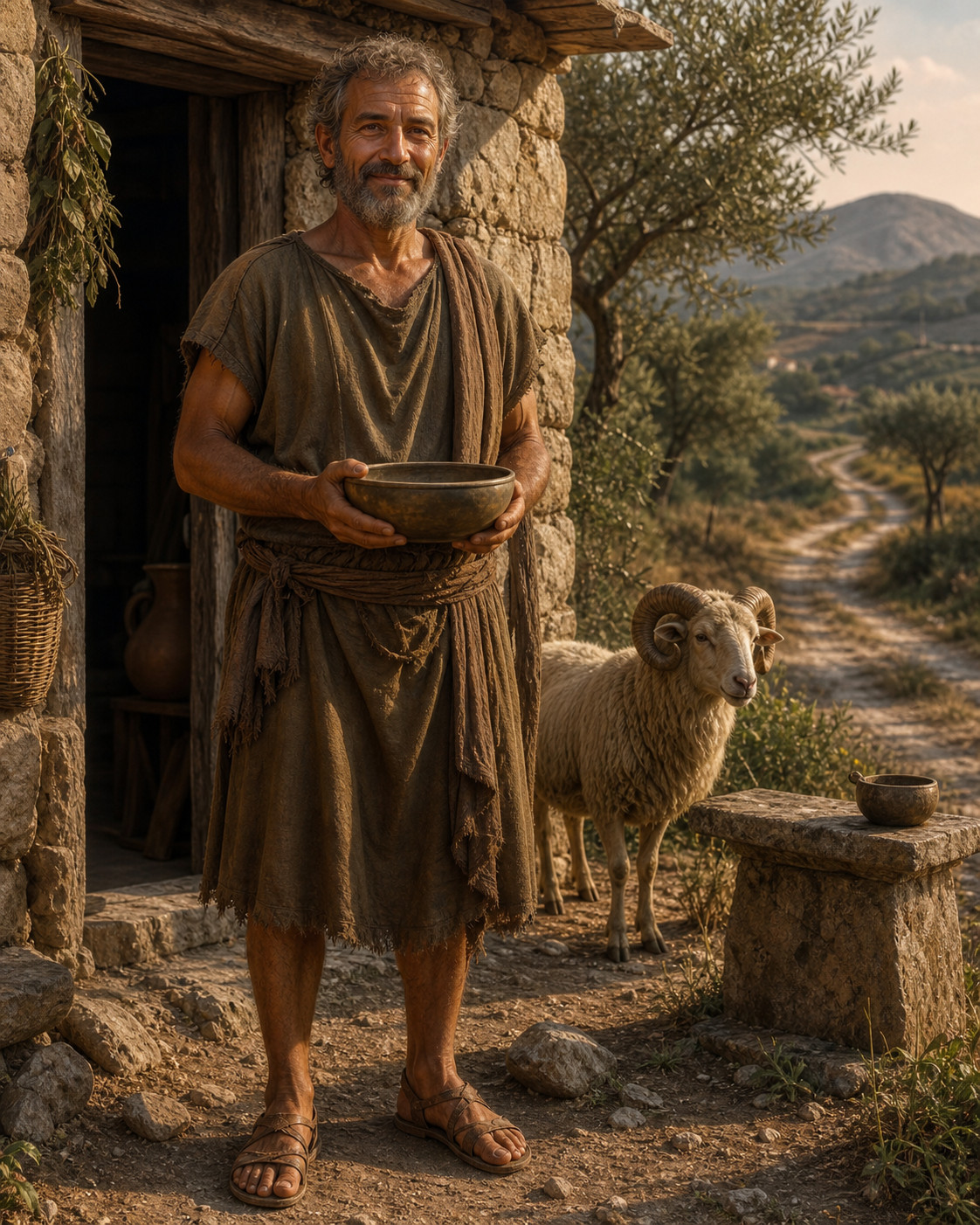
The child whose death becomes the Beginning of Doom and the funerary memory of the Nemean Games.
- Archemorus
- Hypsipyle
- Nemea
- Nemean Games
- Seven against Thebes
- Wild Celery
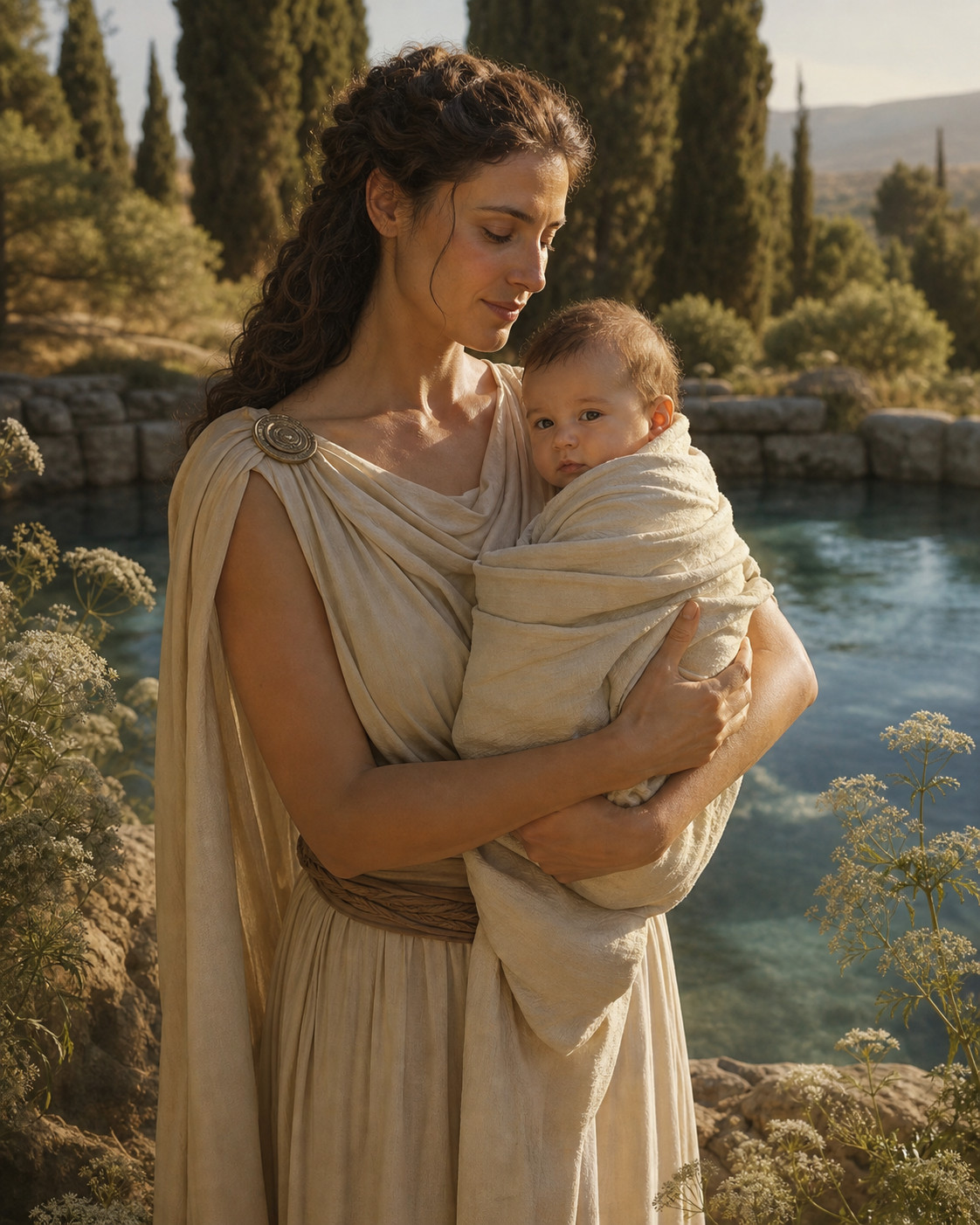
Opheltes is the infant prince of Nemea, also called Archemorus, whose death while Hypsipyle guides the Seven against Thebes to water becomes an omen for their expedition and a foundation story for the Nemean Games.
Greek Mythology Timeline
Move through broad mythic ages and open the events that connect one story to the next. The sequence is a reading path, not an exact historical calendar.
Opheltes is the infant prince whose brief life gives the Nemean Games their most solemn foundation story. Son of Lycurgus and Eurydice of Nemea, he is placed in the care of Hypsipyle under an oracle that warns he must not touch the earth before he can walk. When the Seven against Thebes arrive thirsty, Hypsipyle sets him down while guiding them to water. A serpent kills the child, and the leaders rename him Archemorus, Beginning of Doom, before holding funeral games in his memory.
Prince of Nemea
Opheltes belongs to Nemea before he belongs to the expedition of the Seven. His father is usually Lycurgus, a ruler or priestly figure, and his mother Eurydice. The household receives a prophecy intended to protect the child, making his safety a matter of ritual attention as well as parental care.
Ancient sources vary details of the family and warning. The stable core is vulnerability surrounded by knowledge that cannot prevent loss. The child has a royal identity, but rank offers no shield against a condition as ordinary as being placed on the ground.
Hypsipyle as Caregiver
Hypsipyle is a displaced queen of Lemnos living in servitude when she becomes Opheltes’s nurse. Her past is therefore already marked by family separation and political reversal. Caring for another household’s child gives her responsibility without the authority of a mother or ruler.
Later literature, especially Euripides and Statius, develops her grief and the consequences she faces. The story should not reduce her to negligence. She responds to armed travelers in a landscape without water, and the tragedy emerges from competing obligations that cannot all be satisfied.
The Seven Ask for Water
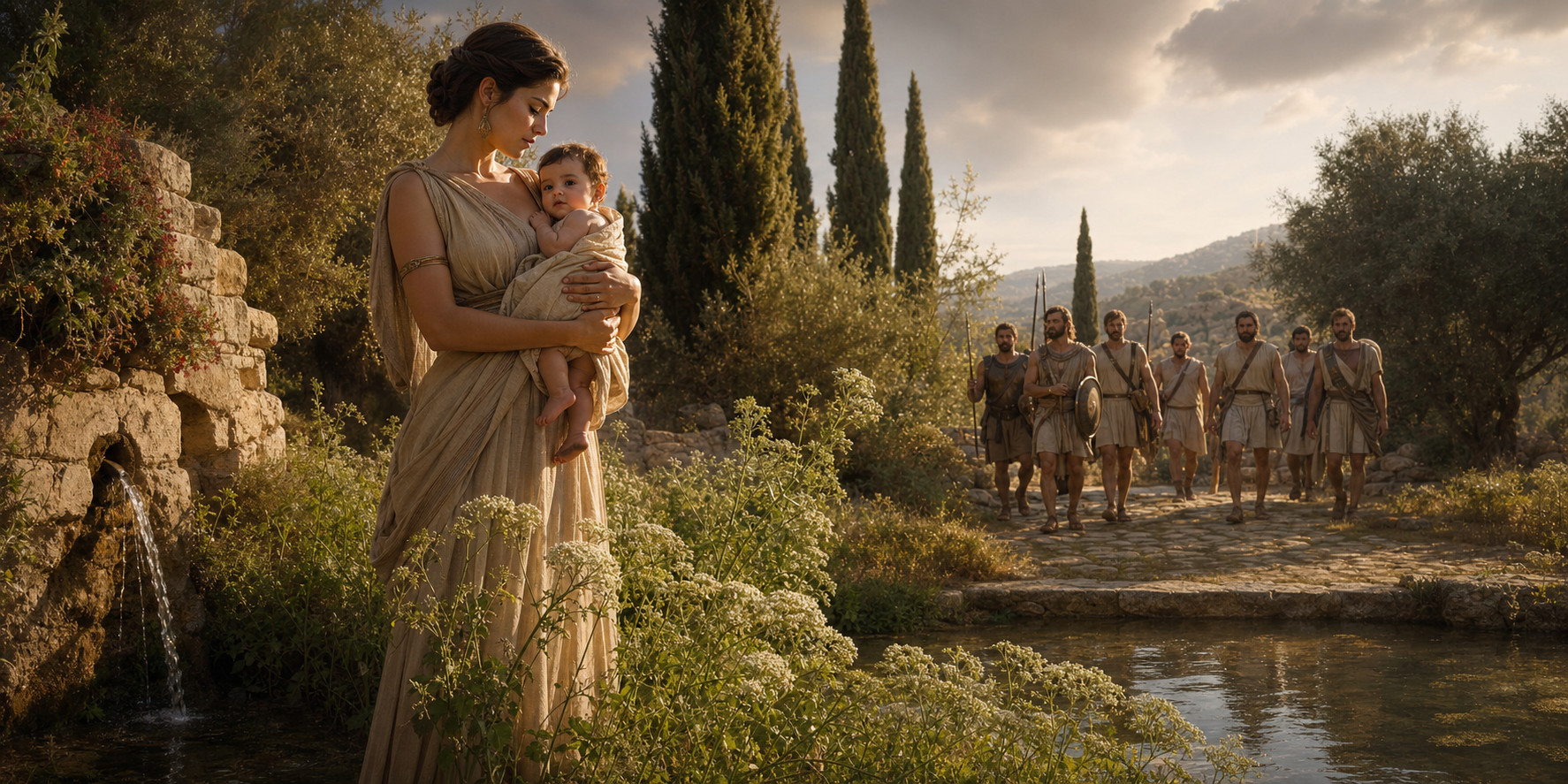
The army traveling from Argos toward Thebes reaches Nemea in desperate thirst. Hypsipyle knows the local spring and agrees to guide the leaders. To do so, she puts Opheltes down on a bed of wild celery or other vegetation, a detail later linked with the festival wreath.
The request for water briefly interrupts a military expedition with the needs of bodies and hospitality. A great campaign depends on local knowledge supplied by a marginalized caregiver. The pause becomes more important than the planned war because it produces the omen that will name the expedition’s fate.
The Serpent and the Oracle
While Hypsipyle is away, a serpent kills Opheltes. Some versions treat it as guardian of a sacred place; others emphasize the fulfillment of the warning about touching earth. The child does not act, choose, or challenge a monster. His death is tragic precisely because heroic agency is absent.
Ancient art can show the serpent, the child, Hypsipyle, and the approaching warriors in compressed scenes. Project Mythos keeps the event in text but avoids turning infant death into spectacle. The focus remains on memory, responsibility, and the ritual response created afterward.
Archemorus: Beginning of Doom
The Seven rename Opheltes Archemorus, commonly understood as Beginning of Doom. Amphiaraus, the expedition’s reluctant seer, interprets the death as an omen. The name transforms one child’s fate into a warning about the army’s future.
Most of the Seven will die at Thebes, so the interpretation appears correct within the mythic sequence. Yet the child’s identity should not disappear inside the omen. Opheltes is remembered not only because he predicts warriors’ deaths but because a community repeatedly returns to his own.
Funeral Games
The leaders hold contests in honor of the child, creating one foundation for the Nemean Games. Athletic competition becomes a structured response to death. Strength, speed, and skill do not reverse loss; they give mourners a recurring form through which to name and remember it.
The alternate Heraclean foundation connects the games with the Nemean Lion. These traditions can coexist without being fused. Opheltes explains the festival’s funerary color, while Heracles connects it with heroic victory and Zeus.
Wild Celery, Dark Robes, Cypress
The wreath of wild celery awarded at Nemea is explained through the plant bed on which Opheltes was placed and through funeral symbolism. Judges wear dark clothing, and cypress trees surround the child’s sacred memory. The landscape carries mourning into each celebration.
Such explanations are ritual origin stories rather than modern botanical reports. Their importance lies in how visible customs make the dead present. Every fresh wreath is perishable, linking victory with a life that ended before it could mature.
Shrine and Archaeological Memory
Pausanias describes a tomb or sacred enclosure for Opheltes at Nemea, and archaeology has identified a shrine area associated with his cult. A small bronze figure of a child found there gives material form to the sanctuary’s concern with infancy and remembrance.
Text and excavation do not prove every narrative detail in the same way. Together they show that Opheltes was more than a literary explanation added from afar. His memory was embedded in the place where festivals, graves, groves, and public movement met.
What Opheltes Means
Opheltes exposes the cost hidden at the edge of heroic campaigns. The Seven are remembered as leaders and fighters, but their route depends on a caregiver and passes through a child’s death. The omen is produced by someone with no voice in the war.
Follow Opheltes toward Hypsipyle for the caregiver’s story, the Seven against Thebes for the doomed expedition, Nemea for the sacred landscape, and the Nemean Games for the rituals that keep his two names alive.
Trivia
- Opheltes is also known as Archemorus, Beginning of Doom.
- His death becomes an omen for the Seven against Thebes.
- Wild celery and dark judges’ robes connect the Nemean Games with funeral memory.