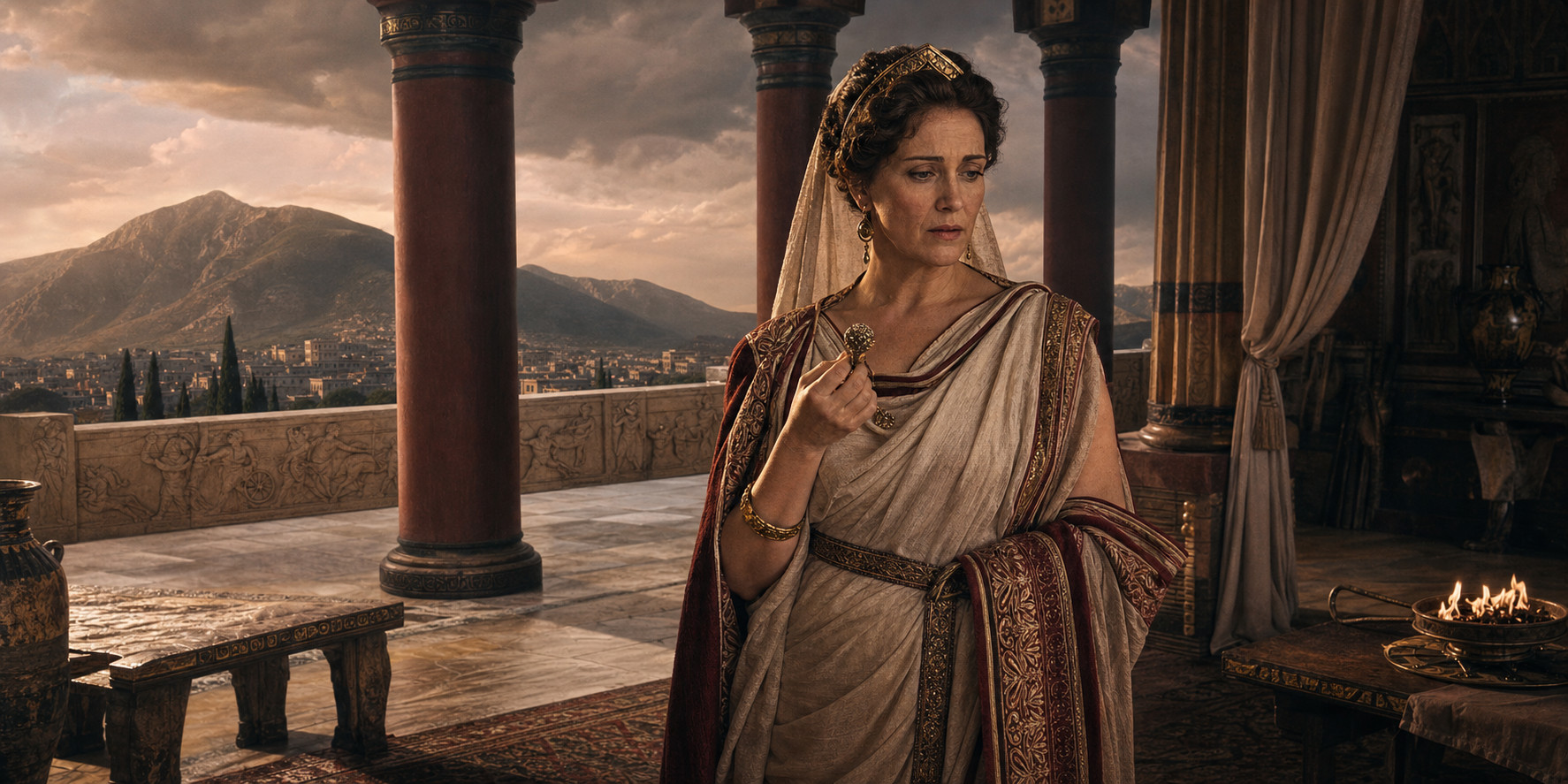
The queen who recognizes too late that the abandoned child, city's savior, husband, and dynastic crisis are one story.
- Eteocles
- Laius
- Oedipus
- Polynices
- Recognition
- Thebes
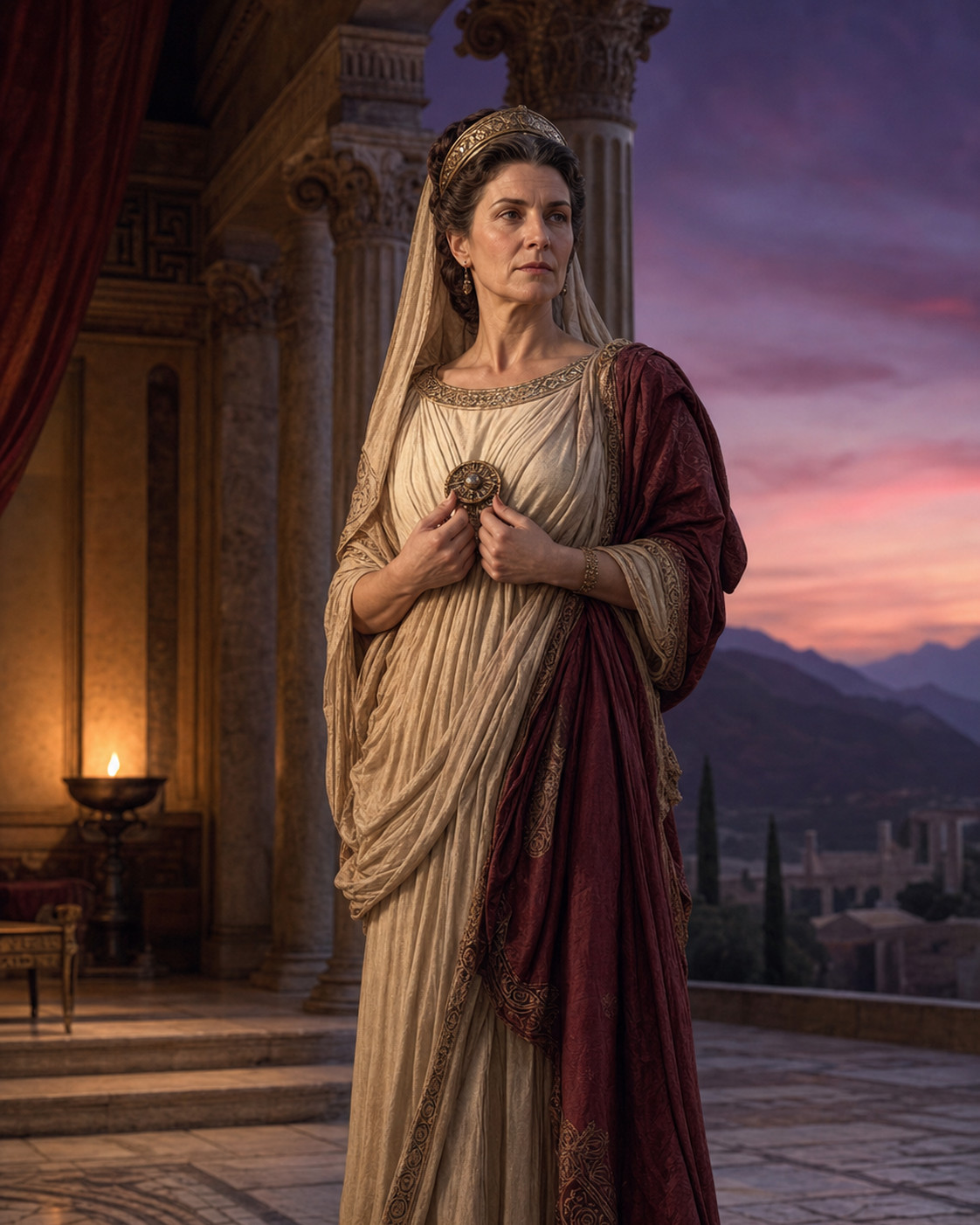
Jocasta is the Theban queen who loses an exposed infant, marries the solver of the Sphinx after Laius's death, and discovers that her new husband is Oedipus. Sources vary over her name, her children's maternity, her death, and whether she survives to mediate between Eteocles and Polynices.
Greek Mythology Timeline
Move through broad mythic ages and open the events that connect one story to the next. The sequence is a reading path, not an exact historical calendar.
Jocasta is the Theban queen placed at the center of a prophecy she tries to prevent and later fails to recognize. Wife of Laius, mother of Oedipus, and in the dominant tragic tradition wife of her own returning son, she connects the exposed infant, the vacant throne, the Sphinx, and the civil war of Eteocles and Polynices. Ancient sources do not give her one fixed biography. Homer calls Oedipus’s mother Epicasta and has her die after divine disclosure while Oedipus continues to rule. Sophocles makes Jocasta’s recognition and suicide part of the same investigation that blinds Oedipus. Euripides allows her to survive long enough to stand between her warring sons. These differences make her a major witness to how the Theban cycle changed across genres.
Queen beside Laius
Jocasta belongs to the ruling house of Thebes, commonly as a daughter of Menoeceus and sister of Creon. She marries Laius after the line of Cadmus has passed through Polydorus and Labdacus. Her position therefore joins marriage, royal succession, and the city’s need for an heir. The family inherits both political authority and unresolved divine warnings.
Sources sometimes call her Epicasta, and some genealogies differ about her father. The names should not simply be treated as spelling variants without explanation, because Homeric Epicasta belongs to an earlier and shorter form of the tale. Later tragedy builds a more extensive dramatic personality under the name Jocasta.
The Child under Prophecy
Laius receives an oracle that a son will kill him. When the child is born, his ankles are pierced or bound and he is given away for exposure on Cithaeron. Accounts distribute responsibility differently between Laius, Jocasta, servants, and shepherds. The stable action is that the royal parents try to remove the infant from the line of succession and from ordinary human care.
The attempt fails because a chain of caregivers preserves him. Raised in Corinth, Oedipus does not know the identities of his biological parents. Jocasta likewise has no reason to recognize the adult stranger who later reaches Thebes. The act designed to prevent the prophecy creates the separation that allows both parties to fulfill it without knowledge.
Widow and Prize of Thebes
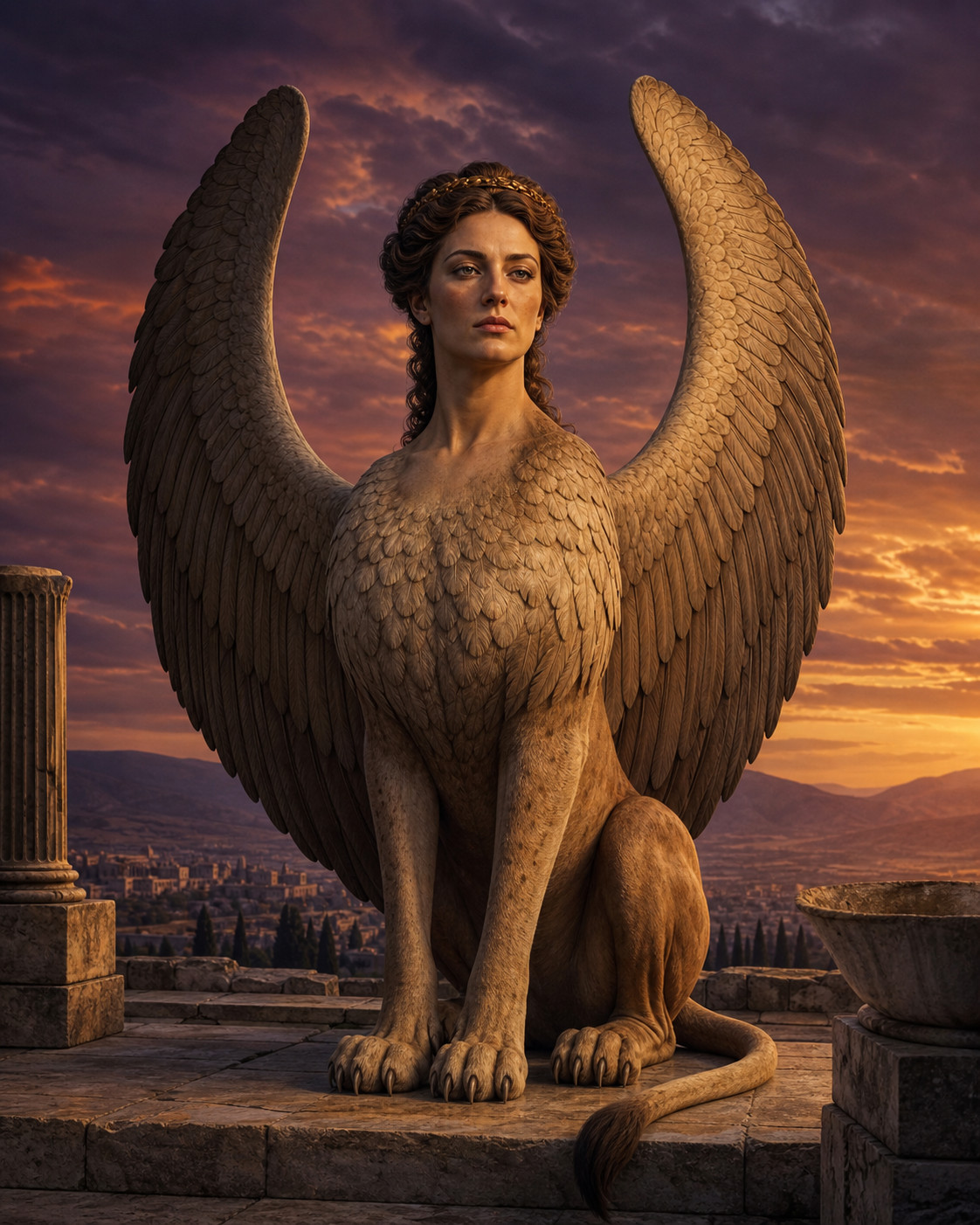
Laius is killed on the road, and the Sphinx holds Thebes in terror. The city offers the throne and marriage to the widowed queen as the reward for solving the monster’s riddle. Oedipus succeeds and becomes Jocasta’s husband. The arrangement restores public order while hiding the fact that the new king has already killed the old one.
Describing Jocasta only as a prize misses her political function. Marriage to the queen legitimizes a stranger’s rule and reconnects kingship to the existing dynasty. Yet that same function prevents the city from pausing to investigate who the successful outsider is. Civic recovery depends on continuity, and continuity becomes the mechanism of catastrophe.
Mother of the Theban Children
The dominant tragic genealogy makes Jocasta mother of Eteocles, Polynices, Antigone, and Ismene by Oedipus. Apollodorus records an alternative in which Eurygania bears the children. Pausanias also preserves this different maternal line. Project Mythos therefore identifies Jocasta’s motherhood of the four siblings as the major dramatic tradition, not an uncontested fact in every source.
The variation changes more than a family chart. If Jocasta is their mother, the children embody the incestuous marriage and inherit its public shame. If another wife bears them, the chronology and emotional structure differ. Later drama often chooses the first version because it concentrates the city’s dynastic crisis within one household.
Skepticism toward Oracles
In Sophocles’ Oedipus Tyrannus, Jocasta tries to calm Oedipus by arguing that prophecy has failed: Laius was said to die by his son, but reports claimed robbers killed him, while the child had been exposed. Her reassurance supplies the crossroads detail that alarms Oedipus. The argument against meaningful signs becomes the clue that advances recognition.
Jocasta is not foolish to reason from the evidence available to her. She believes the infant died and hears that Laius fell to several attackers. Her error is confidence in a story assembled to protect the household. As the Corinthian messenger and Theban shepherd connect their memories, she recognizes the pattern before Oedipus fully accepts it.
Recognition and Death
Sophocles has Jocasta beg Oedipus to stop the investigation once she understands. She leaves the stage and hangs herself in the marriage chamber; Oedipus later uses pins from her clothing to blind himself. Apollodorus follows the familiar sequence of revelation, suicide, blindness, curse, and exile in compressed form.
Homer’s Epicasta also hangs herself after the gods make the truth known, but Oedipus remains king under suffering. Seneca gives Jocasta a different death by the sword. These deaths agree on unbearable recognition while varying the political aftermath and the degree to which Oedipus’s later exile belongs to the earliest tradition.
The Mother Who Survives the Revelation
Euripides’ Phoenician Women offers the most striking alternative. Jocasta is alive after Oedipus’s fall and attempts to negotiate between Eteocles and Polynices. She explains the family’s history, calls Polynices back under truce, and tries to prevent the brothers from converting a dispute over rule into the destruction of Thebes.
When the brothers kill one another, this Jocasta dies over their bodies. The version transfers her final recognition from the identity of her husband-son to the failure of her sons to share power. It gives her political agency and a second impossible mediation: she could not prevent the oracle around Oedipus, and she cannot stop the curse from becoming civil war.
A Queen between Versions
Jocasta opens several reading paths. Oedipus reveals the investigation and marriage; Sphinx explains the crisis that places them together; Eteocles and Polynices show the succession struggle; Antigone and Ismene carry the family’s consequences beyond their parents. Creon links her birth family with the government that follows.
Across the versions, Jocasta repeatedly tries to preserve the household through decisions made under incomplete knowledge. Exposure, remarriage, reassurance, silence, negotiation, and suicide are not one continuous canonical biography, but different traditions asking whether a royal family can survive knowledge that arrives too late. Her importance lies precisely in those changing answers.
Trivia
- Homer calls Oedipus’s mother Epicasta rather than Jocasta.
- Some traditions make Eurygania the mother of Oedipus’s four children.
- Euripides lets Jocasta survive long enough to mediate between Eteocles and Polynices.