The poisonous many-headed creature that forces Heracles to replace repeated strength with method and cooperation.
- Echidna
- Eurystheus
- Heracles
- Iolaus
- Lerna
- Typhon
- Primordial Age
- Titan Age
- Olympian Age
- Heroic Age
- Trojan Cycle
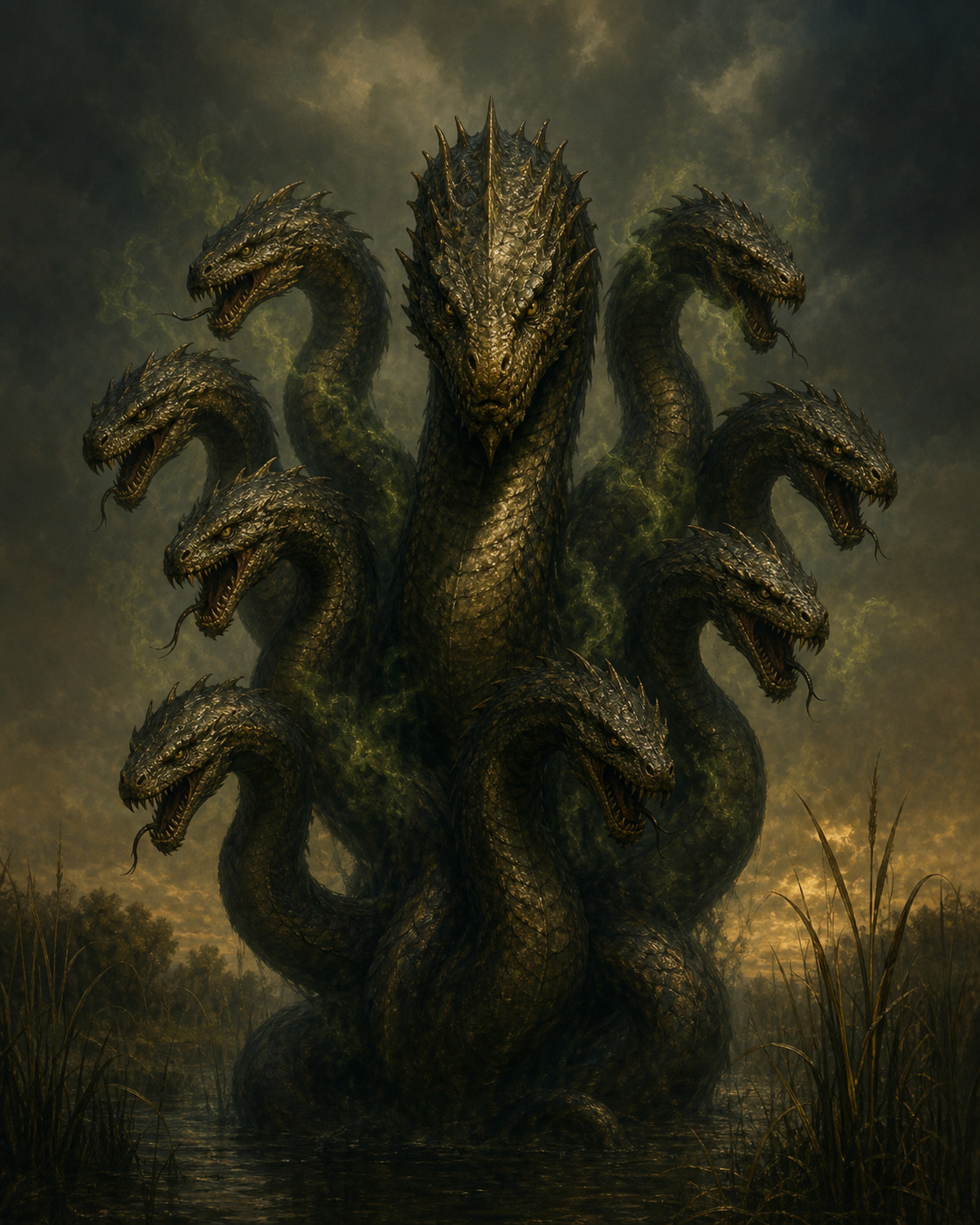
The Lernaean Hydra is the regenerating serpent of Heracles' second labor. Iolaus cauterizes its necks while Heracles contains the immortal head, but its venom continues through later stories and contributes to the hero's death.
The Lernaean Hydra is not dangerous only because it has many heads. It occupies a sacred, marshy boundary, exhales poison, renews what is cut away, and possesses one head that cannot die. Heracles’ second labor becomes a lesson in revising a failed method: strength alone multiplies the problem, while cooperation, fire, burial, and careful use of the monster’s own venom finally contain it.
The Marsh at Lerna
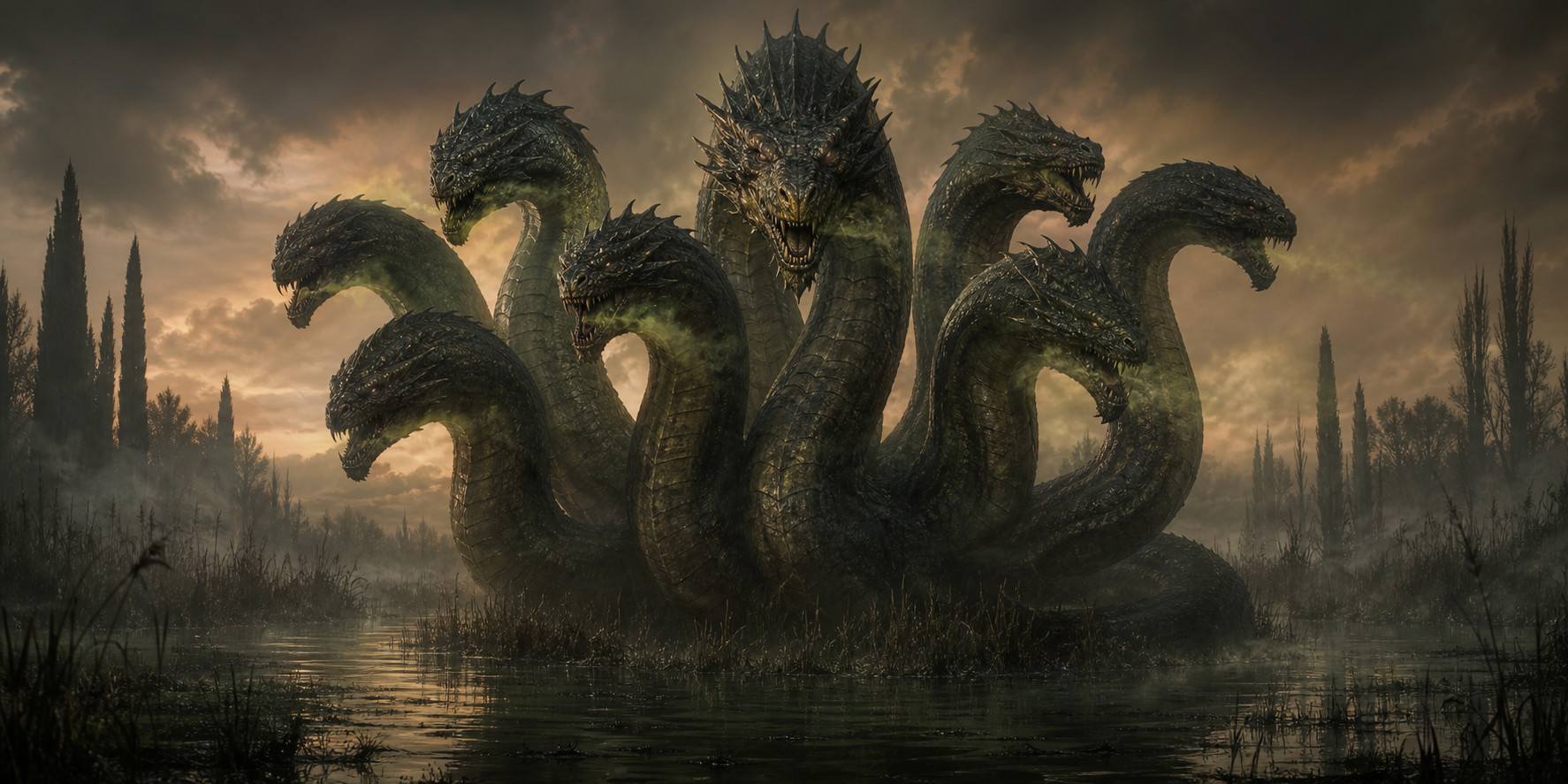
Lerna lay in the Argolid, a region of springs, marsh ground, and ancient ritual importance. Myth places the Hydra near a spring or cave beneath a plane tree. The landscape is not a random monster lair; wet ground, hidden water, and entrances associated with the underworld make it a charged boundary between settlement and forces below.
Later writers and artists imagine the exact terrain differently. Reeds, stagnant pools, cave mouths, and low mist all express the same narrative difficulty: Heracles must enter an environment where footing, breath, and visibility favor a serpentine inhabitant.
Lineage and Purpose
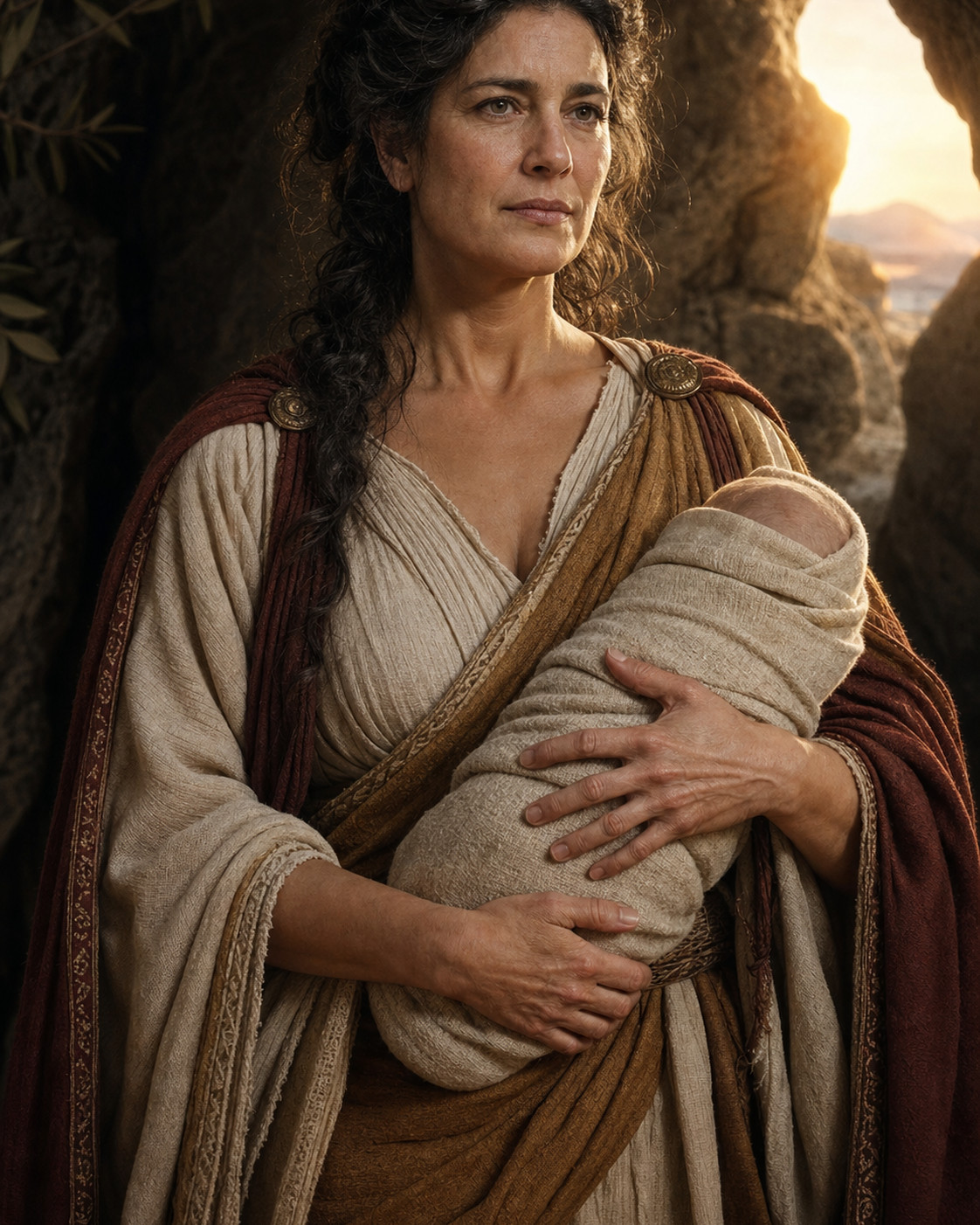
Hesiod names the Hydra among the offspring of Typhon and Echidna and says Hera nourished it to harm Heracles. The creature is therefore both a member of the great monstrous family and a weapon in Hera’s long conflict with Zeus’s son. Cosmic genealogy enters a very local marsh.
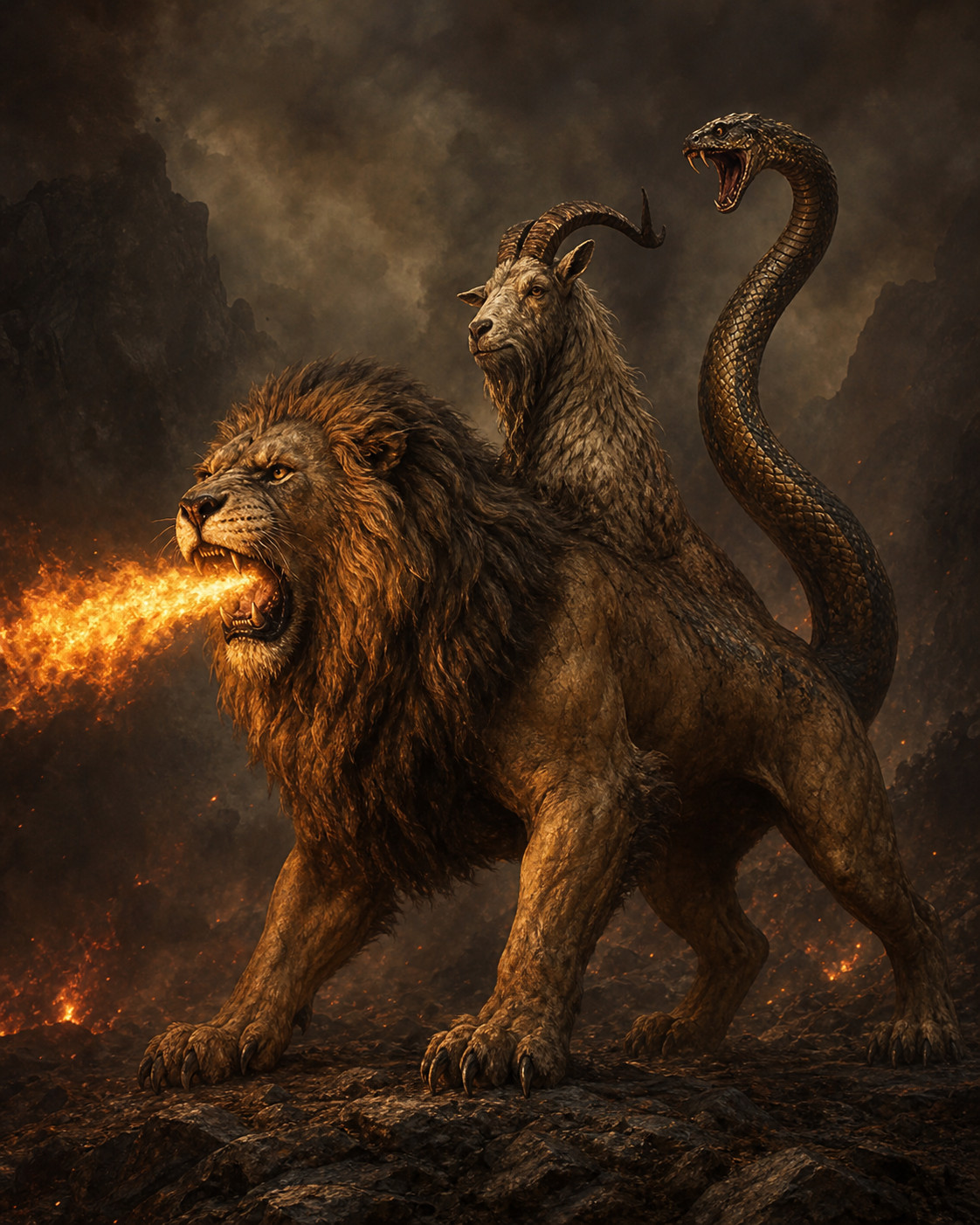
Its sibling network connects the labor to Cerberus, Orthrus, the Nemean Lion, and the Chimera. As with those monsters, family resemblance does not erase individuality. Poison, regeneration, and the immortal head make the Hydra a problem unlike brute force or guarded passage.
How Many Heads
Ancient sources disagree about the number of heads. Visual art may show fewer heads than literary accounts, while mythographers give numbers such as nine and later retellings multiply them dramatically. One head is immortal in the familiar account, establishing that complete destruction is impossible.
A responsible image may choose nine because it is traditional and readable, but the number should not be mistaken for universal canon. The essential feature is functional multiplication: when Heracles cuts a mortal head, more grow from the wound.
The Second Labor
Eurystheus orders Heracles to destroy the Hydra after the Nemean Lion. The hero covers his mouth and nose against poisonous breath or fumes and attacks with sword, club, or sickle depending on the source. Cutting proves disastrous because each apparent success expands the threat.
The sequence distinguishes labor from a single heroic blow. Heracles must observe the failure, change procedure, and accept help. That adaptability is part of heroic intelligence even when later celebration focuses on muscle.
Iolaus and the Burning Brands
Heracles calls on his nephew and charioteer Iolaus. As each head is cut, Iolaus sears the neck with burning wood, preventing regeneration. Fire closes what the blade opens. The two-person rhythm turns the labor into coordinated work rather than solitary conquest.
Eurystheus later refuses to count the labor because Heracles received assistance. That ruling helps explain why ten assigned labors become twelve. It also exposes the artificial standards imposed by a king determined to diminish every achievement.
The Immortal Head
After the mortal heads are controlled, Heracles removes the immortal central head and buries it beneath a heavy rock beside the road. The detail is crucial: immortality is not killed but contained. Landscape becomes part of the solution, holding a surviving danger under visible weight.
The buried head resembles other Greek myths in which defeated powers remain active below mountains or stones. Victory establishes boundaries; it does not erase every older force from existence.
Venom After Victory
Heracles dips his arrows in the Hydra’s venom, carrying the labor’s danger into later stories. The arrows kill the centaur Nessus and contribute indirectly to Heracles’ own death when Deianira uses blood contaminated by the poison. A weapon gained through victory becomes a delayed route back to the hero.
This aftermath prevents the labor from ending neatly. Poison can be stored and directed, but not made harmless. Heracles converts monstrous power into heroic equipment and inherits its consequences.
What the Hydra Means
The Hydra represents a problem that grows when attacked without understanding. Repetition is not enough; method must change. Fire, partnership, and containment succeed where cutting alone fails. The myth therefore supports modern metaphors for multiplying problems, though those uses should not replace the ancient labor.
It also complicates solitary heroism. Iolaus is essential, yet Eurystheus uses that fact to invalidate the result. The labor asks whether achievement belongs only to the strongest hand or to the cooperation that makes success possible.
Where the Story Leads
Follow Heracles and Iolaus through the labor, Eurystheus through the disputed count, and Typhon and Echidna into the monster’s lineage. Lerna supplies the sacred landscape, while the poisoned arrows connect the Hydra to Nessus, Deianira, Philoctetes, and the death of Heracles.
The Nemean Lion precedes this task; Cerberus waits near the labor cycle’s end. Together the monsters trace a movement from surface strength through regenerative danger to a negotiated descent among the dead.
Trivia
- Ancient traditions do not agree on the exact number of heads.
- Iolaus cauterizes the necks so that new heads cannot grow.
- The Hydra’s venom remains active in later stories and contributes to Heracles’ death.