The daughter of love and war whose wedding founds a dynasty and whose gifts carry concord into later conflict.
- Aphrodite
- Ares
- Cadmus
- Necklace
- Pentheus
- Semele
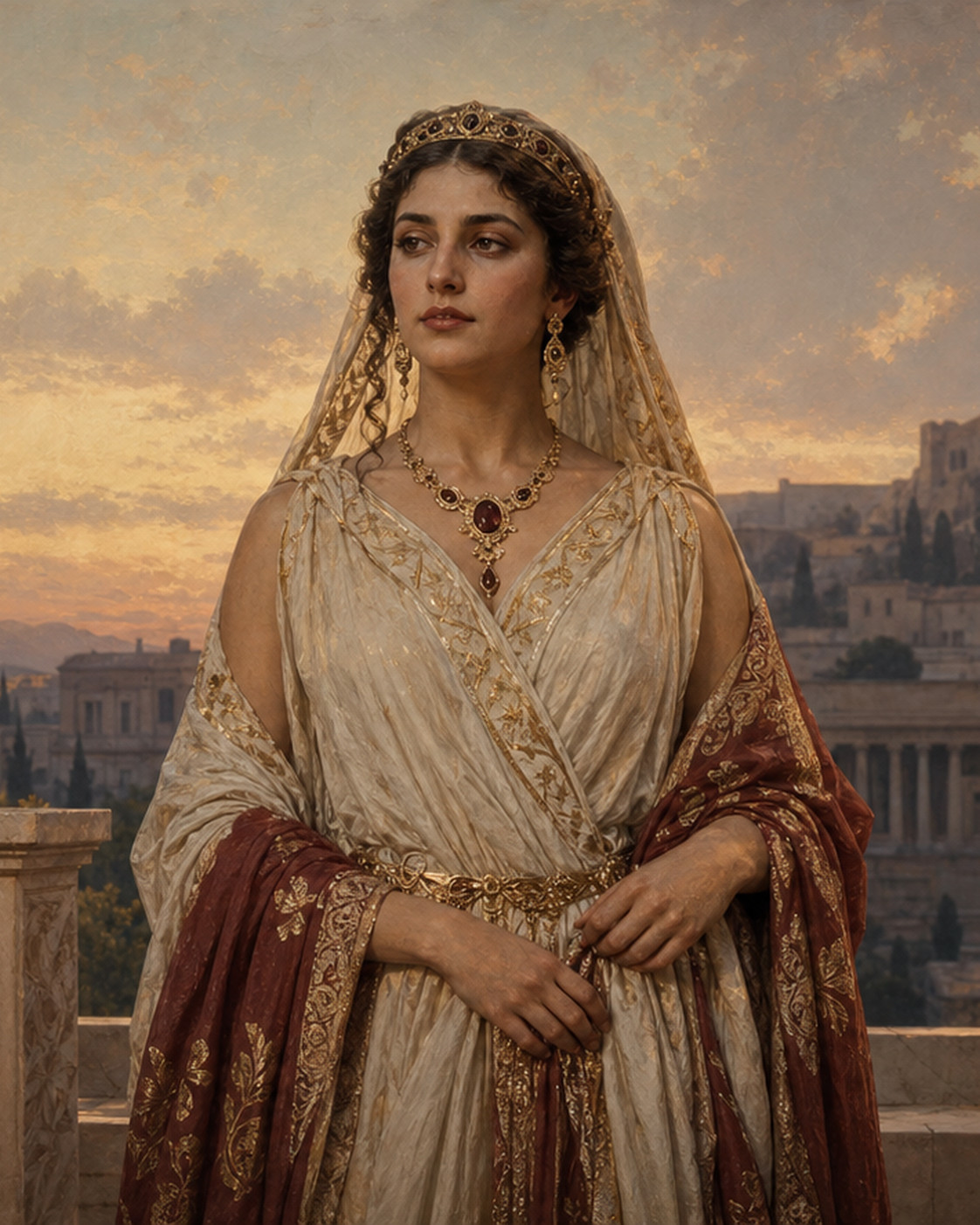
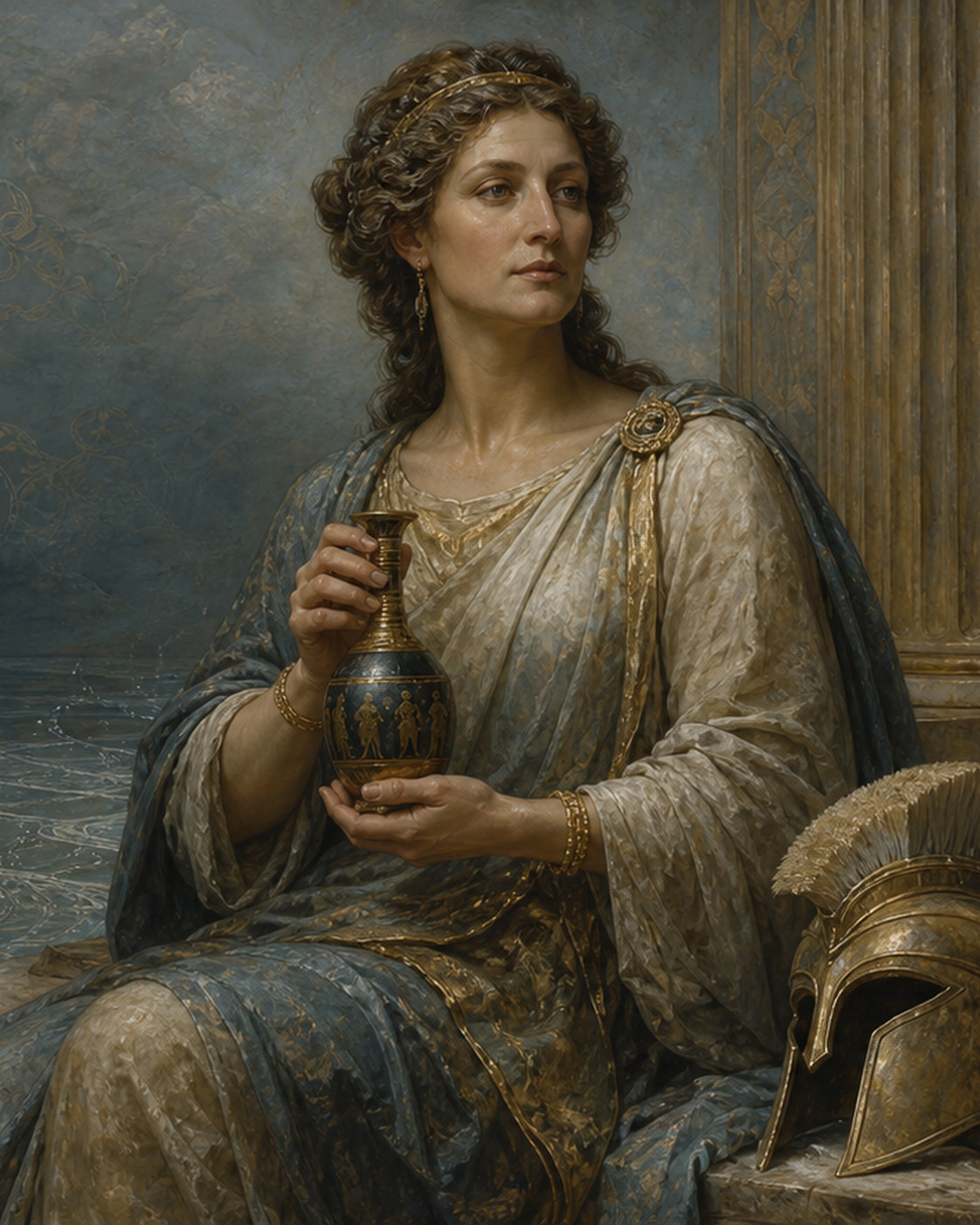
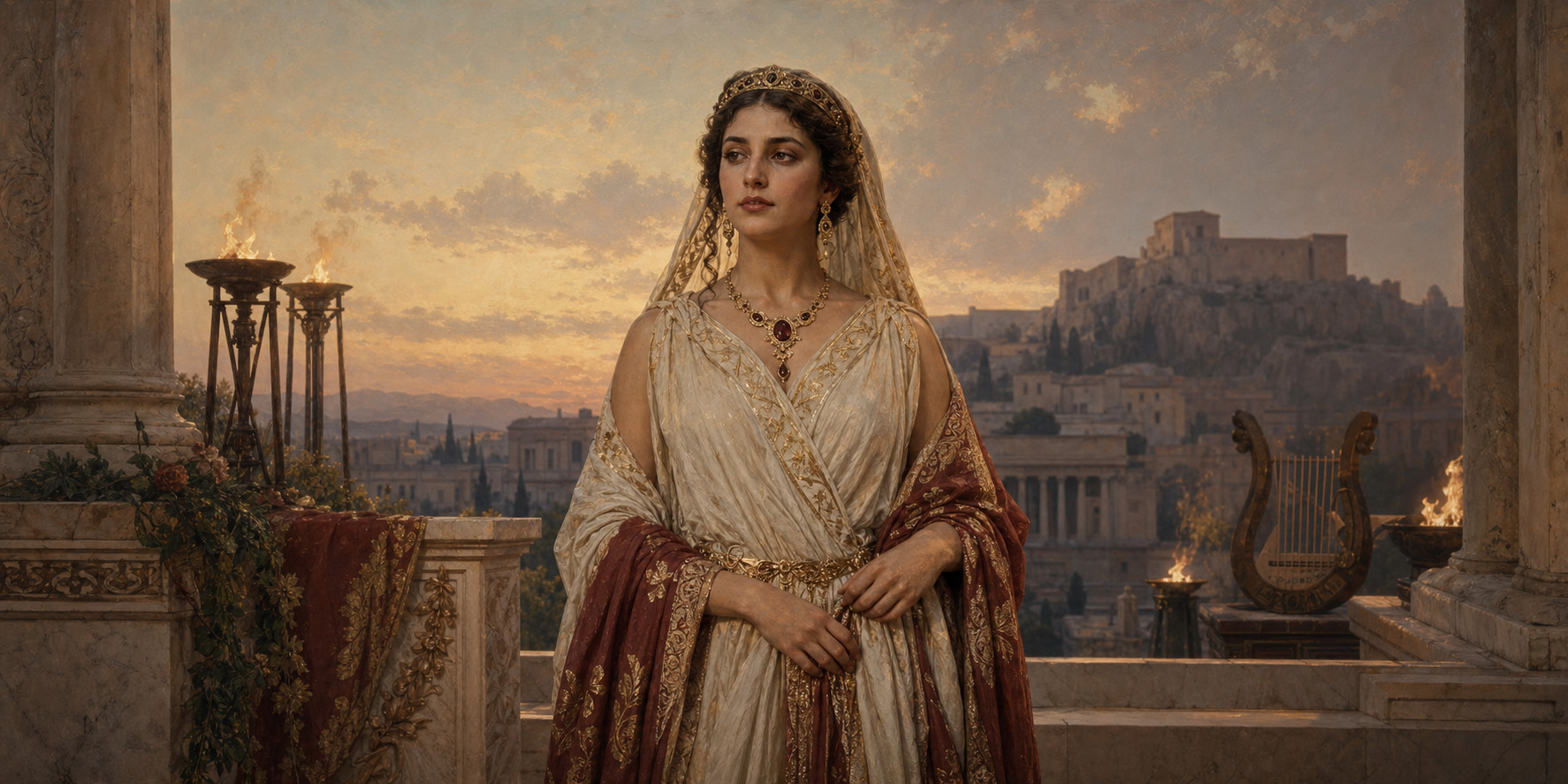
Harmonia is the divine daughter of Ares and Aphrodite who marries Cadmus at a god-attended wedding. Her necklace and robe later pass through destructive Theban stories, while her descendants connect the city's foundation to Dionysus, Pentheus, and other crises.
Greek Mythology Timeline
Move through broad mythic ages and open the events that connect one story to the next. The sequence is a reading path, not an exact historical calendar.
Harmonia is the divine bride of Cadmus whose name means concord, joining the houses of Ares and Aphrodite to the new city of Thebes. Her wedding is one of Greek myth’s great assemblies: gods attend, sing, and give gifts. Yet the famous necklace and robe associated with the marriage become instruments of later destruction. Harmonia therefore embodies neither easy peace nor a curse disguised as a woman. She is the difficult binding of unlike powers, and her descendants inherit both the stability and strain created by that union.
Daughter of Ares and Aphrodite
Hesiod makes Harmonia the daughter of Aphrodite and Ares. Desire and battle produce concord, a genealogy that treats harmony not as the absence of conflict but as an arrangement made from opposing forces. Her brothers include Fear and Terror in the same divine family.
Other genealogies exist, including a Samothracian tradition that can connect her with Zeus and Electra. These should remain distinct. The Theban account is dominant for her marriage to Cadmus, while Samothrace preserves another sacred geography around initiation and family.
Cadmus Serves Ares
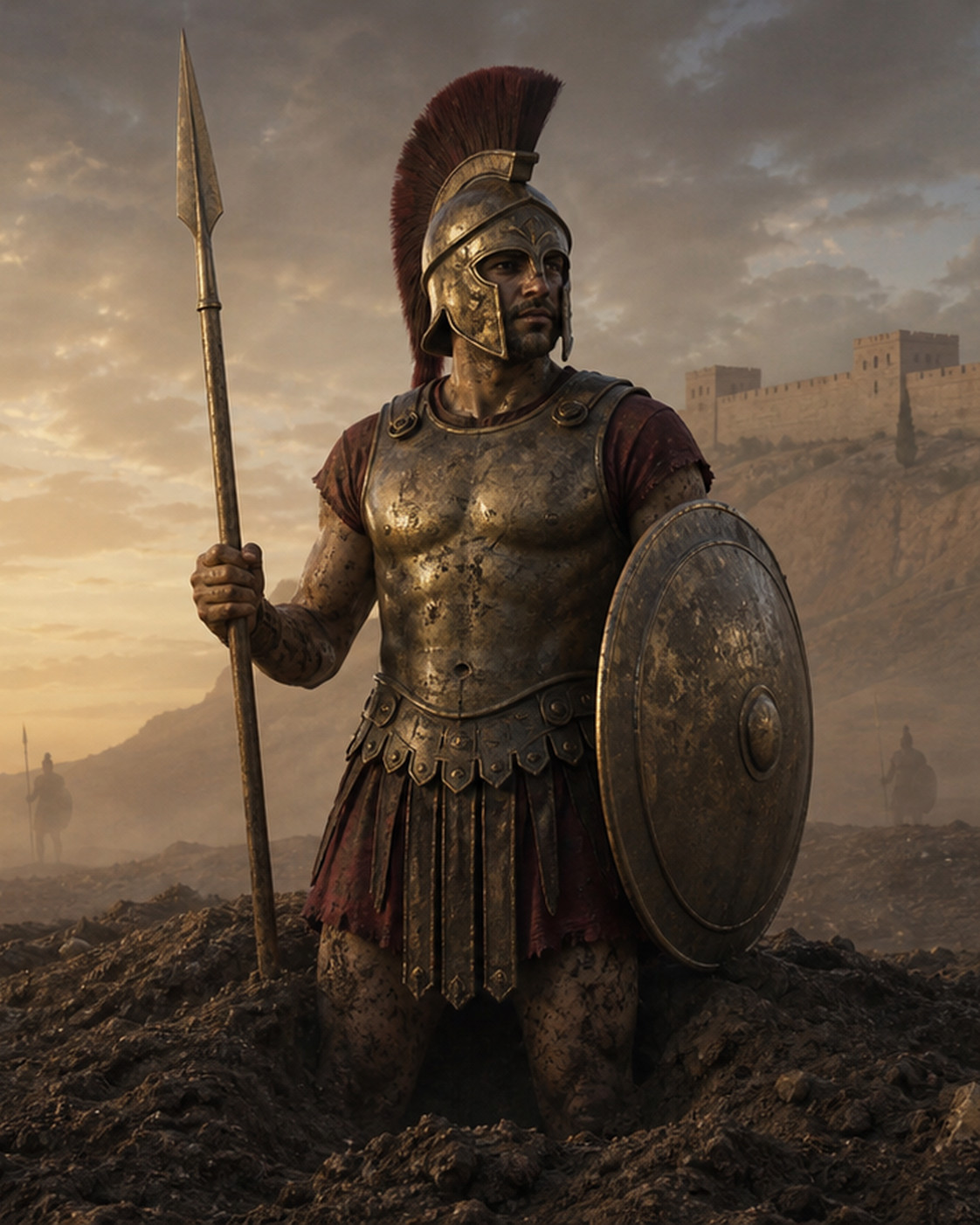
Cadmus kills the dragon guarding Ares’s spring and must serve the war god for a period often given as eight years. At the end, Athena or the gods establish him as ruler and Harmonia is given as his wife. Marriage settles a debt created by foundational violence.
The union does not erase the dragon’s death. It incorporates Ares’s line into the city Cadmus builds. Harmonia becomes the relation through which enemy, debtor, ruler, and divine family are bound together without pretending the earlier bloodshed never happened.
Wedding at Thebes
Gods attend the wedding and offer gifts, making it a model of divine-human celebration. The Muses sing, and the event is remembered as one of the rare mortal weddings honored by the Olympian company. Cadmus’s new house appears fully accepted.
That splendor is retrospective irony because the descendants include Semele, Agave, Pentheus, Ino, Actaeon, Oedipus’s wider city, and later Theban crises. The wedding is not false happiness; it is a genuine founding moment whose consequences exceed what celebration can foresee.
The Necklace
A necklace, commonly made by Hephaestus, is given to Harmonia. Accounts vary over who presents it and whether hostility is built into it. Later it passes through the Theban house and becomes a bribe when Polynices persuades Eriphyle to send Amphiaraus to war.
The object turns concord into transaction. A wedding gift meant to mark union helps separate wife from husband and prophecy from survival. Its beauty does not merely conceal poison; it preserves the authority of the original marriage while entering situations that exploit prestige and desire.
The Robe and Variant Makers
A robe accompanies the necklace in major accounts and also travels through the descendants. Athena, Aphrodite, or other divine makers and givers appear in different sources. Project Mythos does not assign a single uncontested manufacture to both objects.
The shifting attributions reflect how famous artifacts attract divine craftsmen. Hephaestus explains technical perfection, Athena woven skill, and Aphrodite bridal inheritance. The important continuity is that objects from a divine wedding become portable claims on memory and status.
Children and Theban Dynasties
Hesiod names Ino, Semele, Agave, Autonoe, and Polydorus as children of Cadmus and Harmonia. Through them, Dionysus, Pentheus, Actaeon, and the later royal succession enter the family. Each branch carries divine nearness into mortal vulnerability.
Harmonia often recedes while daughters and grandchildren take the narrative foreground. Her apparent quiet should not be mistaken for insignificance. She is the genealogical hinge through which the city’s founding marriage distributes its powers and dangers.
Exile and Transformation
Later tradition sends Cadmus and Harmonia away from Thebes after repeated disasters. In Illyria they are transformed into serpents, sometimes before being carried to the blessed realm. The ending joins them to the dragon and earth-born imagery at the city’s beginning.
Transformation can look like punishment, release, or completion depending on the source. Cadmus once killed a serpent of Ares; he and Harmonia finally share serpentine form. The founder’s story closes by becoming physically like the sacred power his city displaced.
The Question She Opens
Follow Harmonia toward Cadmus for founding and exile, Ares and Aphrodite for her parentage, Semele and Pentheus for descendants, Hephaestus for the necklace, and Seven against Thebes for its later use through Eriphyle.
Harmonia asks whether concord is a stable condition or the continuing labor of holding difference together. Her marriage resolves one conflict and creates a dynasty capable of many more. Thebes is not peaceful because she enters it; it becomes a city whose contradictions can remain joined long enough to become history.
Trivia
- Her name means concord or fitting together.
- The necklace later becomes central to Eriphyle and the Seven.
- Cadmus and Harmonia are transformed into serpents in later tradition.
Reading the Traditions
Harmonia is frequently reduced to the cursed necklace, but the curse is not equally explicit in every early account and should not replace the goddess herself. Genealogy, wedding poetry, artifact traditions, tragic descendants, and the Illyrian ending belong to different narrative layers. Reading them together requires care: the marriage truly creates alliance, the gifts truly signify honor, and later disaster truly reuses those signs. The power of the story lies in that coexistence. A thing made for concord can enter coercion because inheritance carries objects into new choices; a divine marriage can found a dynasty without protecting every descendant from violence.