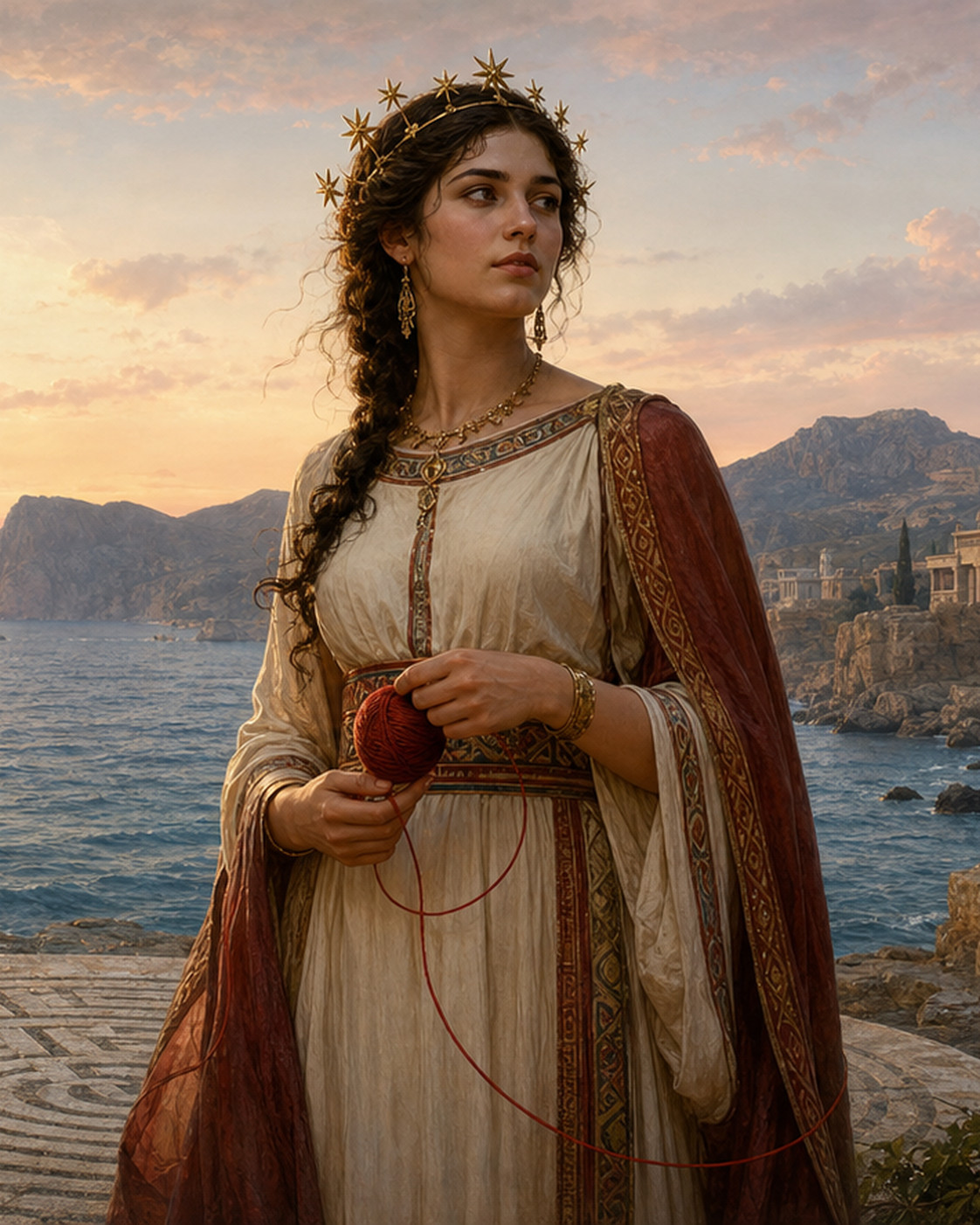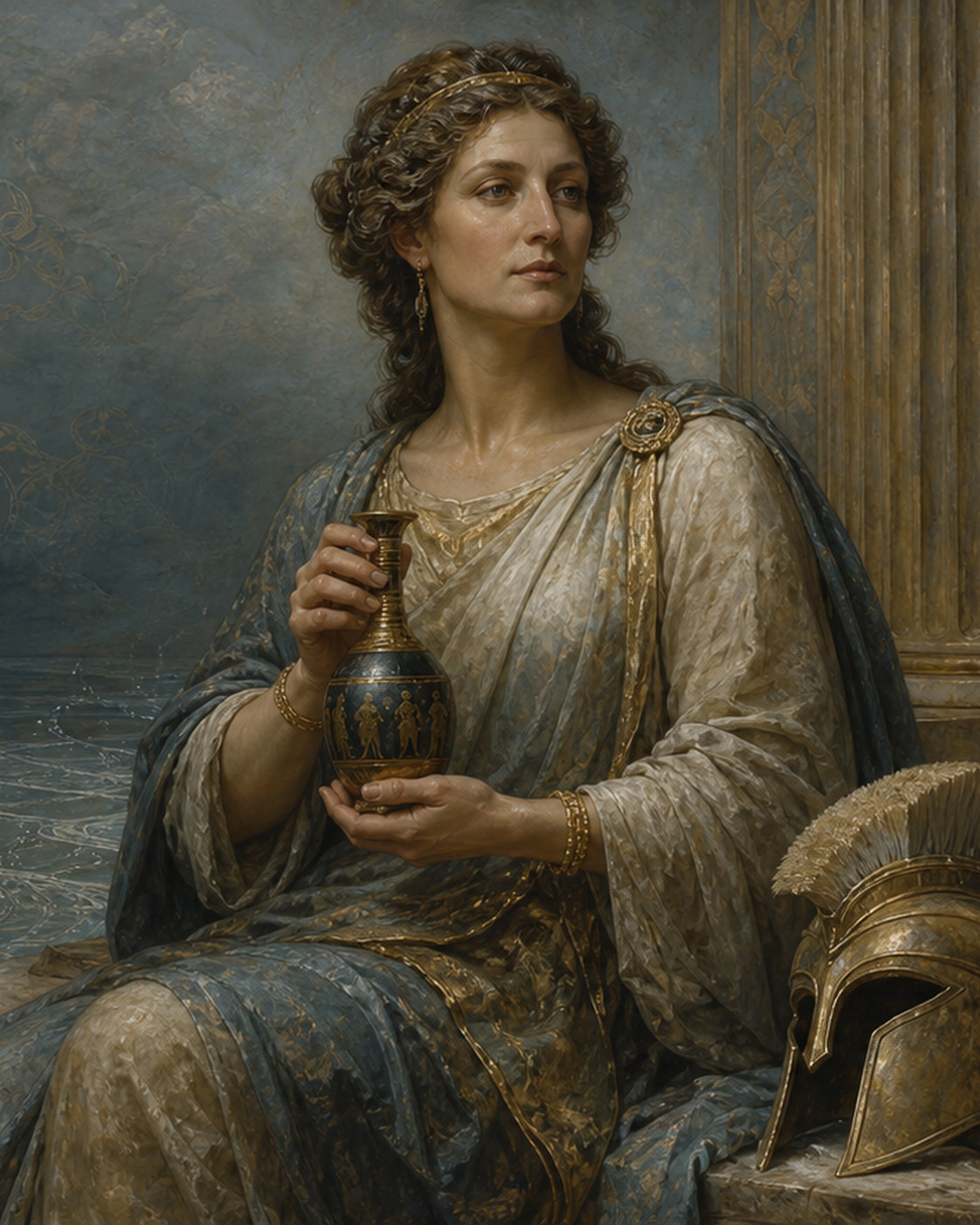
The far-shooting guardian of wild places, young life, and transitions where protection and danger meet.
- Apollo
- Bow
- Deer
- Leto
- Wild Places
- Zeus

Artemis is the daughter of Zeus and Leto and twin of Apollo, governing the hunt, wild landscapes, young life, childbirth, maidenhood, and sudden death. Her cults differ strongly by place, and early Artemis should not simply be equated with Selene.
Greek Mythology Timeline
Move through broad mythic ages and open the events that connect one story to the next. The sequence is a reading path, not an exact historical calendar.
Artemis is the Greek goddess of the hunt, wild landscapes, young life, childbirth, maidenhood, and sudden death. Daughter of Zeus and Leto and twin of Apollo, she moves between mountain ranges and city sanctuaries without becoming a simple goddess of nature. Her arrows can protect, punish, or bring swift death; her choruses create ordered community at the edge of the wild. Ancient cults gave her sharply local identities, so the familiar moonlit huntress is only one part of a much older and more varied divine presence.
Daughter of Leto
Hesiod names Artemis and Apollo as children of Zeus and Leto. The Homeric Hymn to Apollo centers Apollo’s Delian birth, while later accounts often let Artemis be born first and assist Leto. That childbirth role is influential but should not be projected into every early source.
The twins share the bow and distant action, yet their cults are not mirror images. Apollo’s Delos and Delphi organize prophecy and song; Artemis appears across mountains, borders, sanctuaries, dances, and transitions affecting girls, mothers, hunters, and communities.
The Mountain Huntress
Homer calls her mistress of animals and imagines her moving over wooded peaks with nymphs. Callimachus expands the divine childhood into requests for a bow, short tunic, hounds, mountain cities, and a chorus. This later hymn gives a vivid program rather than one universal origin.
Hunting is both pursuit and management of wild life. Artemis protects young animals and can demand restraint from hunters, while also killing game. The apparent contradiction reflects a divine domain concerned with boundaries between taking life, preserving populations, and entering spaces beyond cultivation.
Maidenhood and Companions
Artemis’s virginity marks autonomy from marriage and the Olympian exchange of brides. Stories of Callisto, Aura, and other companions vary greatly, but repeatedly test the rules of an all-female circle, secrecy, pregnancy, divine deception, and expulsion.
These narratives must be handled without collapsing every companion into one moral pattern. Some preserve local star myths, some emphasize Zeus’s disguises, and some are late and violent. Artemis’s circle remains a place where bodily transition becomes visible and dangerous.
Actaeon
Actaeon is destroyed after encountering Artemis while she bathes, though sources disagree whether the offense is accidental sight, boast, attempted assault, or rivalry in hunting. She transforms him into a deer, and his own hounds kill him without recognizing their master.
The story makes vision a boundary. A hunter who reads tracks and bodies becomes the animal his trained pack reads as prey. The variation in guilt matters: the myth can warn against arrogance, forbidden sight, or simply the lethal risk of crossing divine privacy.
Niobe and Sudden Death
Niobe boasts of her many children against Leto’s two. Apollo and Artemis kill the sons and daughters, with numbers and assignments varying. The twins defend their mother’s honor through arrows that strike a human family from a distance.
This is not a gentle nature episode. Artemis embodies sudden death for girls and women just as Apollo can for men. Greek prayer can seek protection from the same divine power believed capable of sending the danger, making reverence a relationship with uncertainty rather than sentimental admiration.
Iphigenia at Aulis
At Aulis the Greek fleet is held because Artemis is angered, though the cause varies: Agamemnon kills a sacred deer, boasts over the goddess, or inherits another offense. The seer demands Iphigenia, and the sacrifice becomes the price of sailing to Troy.
Versions differ over whether Iphigenia dies, is replaced by a deer, or is transported to serve Artemis elsewhere. Tragedy turns the event into a dispute about command, family, consent, and war. No single ending should erase the others.
Cult and Transition
Sanctuaries at Brauron, Sparta, Ephesus, and elsewhere reveal Artemis in forms not reducible to one icon. Girls performed dances or service connected with transition; communities honored protection, fertility, boundaries, and local history under distinct titles.
The Ephesian Artemis, with a distinctive image and Anatolian civic setting, should not be treated as merely the Greek huntress wearing unusual decoration. Shared naming connects traditions, but local material, ritual, and political histories remain essential.
Moon and Later Identity
Modern summaries routinely call Artemis the moon goddess. Greek tradition can associate her with Selene, light, night, and later identifications, but early Artemis and Selene are distinguishable figures. The crescent becomes especially dominant through later art and reception.
Follow Artemis toward Apollo for twin divinity, Leto and future Delos routes for birth, Athena and Hestia for the goddesses resistant to Aphrodite, and the future stories of Actaeon and Iphigenia. Her central question is how civilization approaches the wild without pretending to own it.
Trivia
- Artemis and Selene are distinct in much early Greek tradition.
- Ancient sources give several different offenses for Actaeon.
- Her Roman counterpart is Diana.
Reading the Traditions
Artemis demands attention to local cult and literary date. Epic archery, Callimachus’s divine childhood, Attic transition rites, Ephesian civic worship, and Roman lunar imagery cannot be compressed into one timeless personality. The goddess may protect childbirth while remaining unmarried, preserve young animals while accepting the hunt, and guard girls while bringing sudden death. Those tensions are not errors. They show a power governing thresholds where life changes status and ordinary guarantees fail. Project Mythos therefore treats each story as a situated encounter with Artemis rather than evidence for one fixed biography.
YWY Artwork Connection
Explore coloring pages and studio articles connected to this mythology entry.
 Coloring & ArtCyber Artemis Coloring Page | Cyber Myth Goddesses Coloring BookView artwork
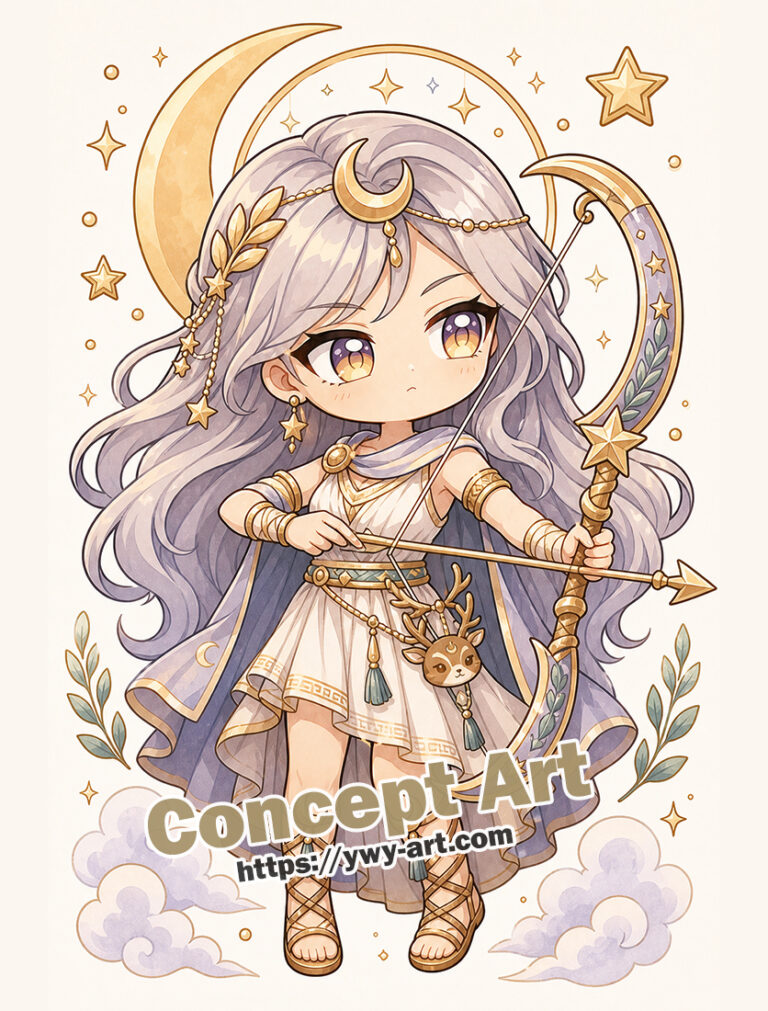 Coloring & ArtArtemis – Crescent Moon Bow, Deer Charm, and Stars | Chibi Kawaii Goddesses Coloring BookView artwork
 Coloring & ArtArtemis – Lunar Bow | Mythology Artifacts Series: Symbols of Power Coloring BookView artwork
 Coloring & ArtArtemis — The Silent Archer Before War | Titanomachia: The War Before the OlympiansView artwork
 Coloring & ArtRite of Blood Moon Hunt – Artemis | Dark Ritual Goddesses of Mythology Coloring BookView artwork