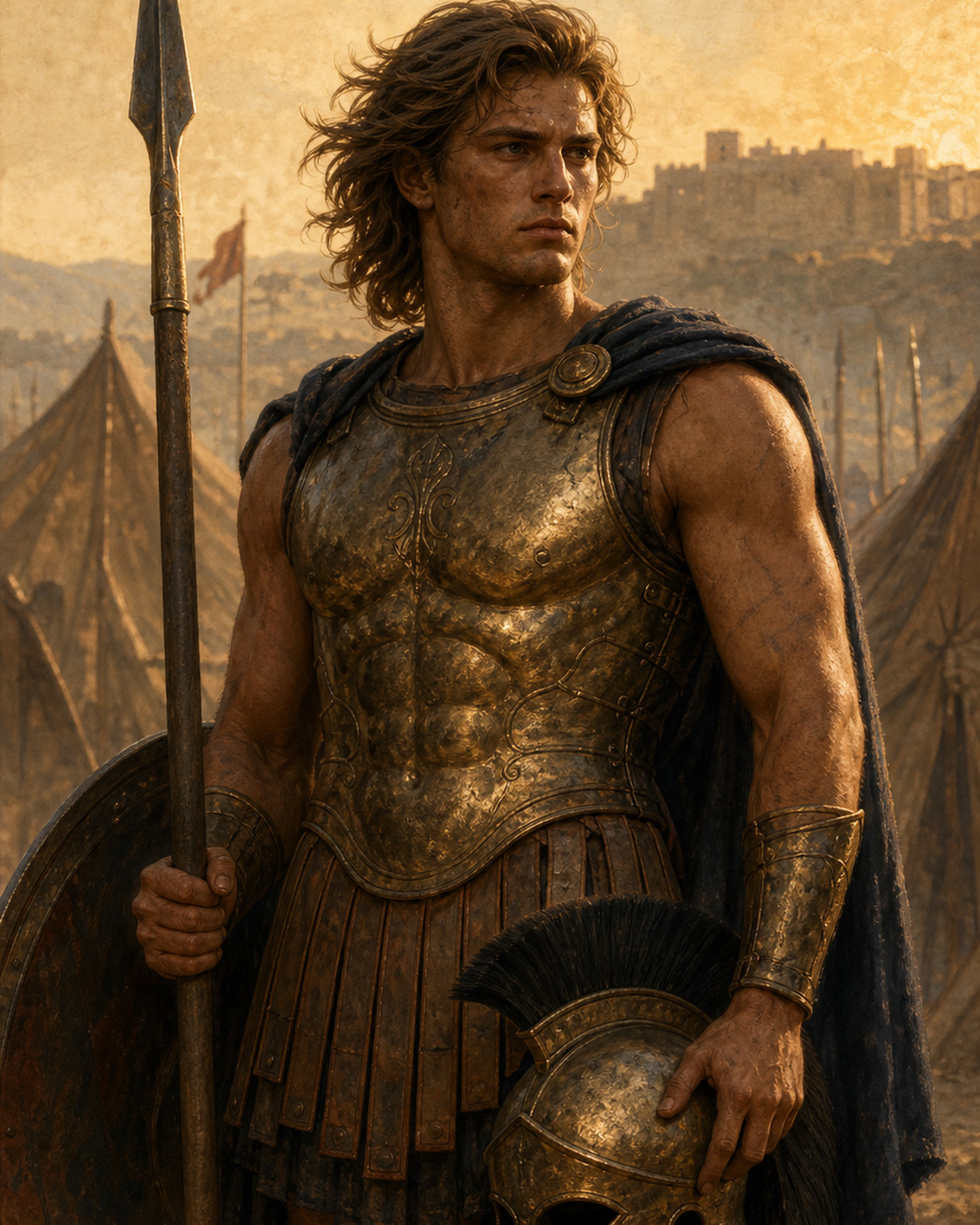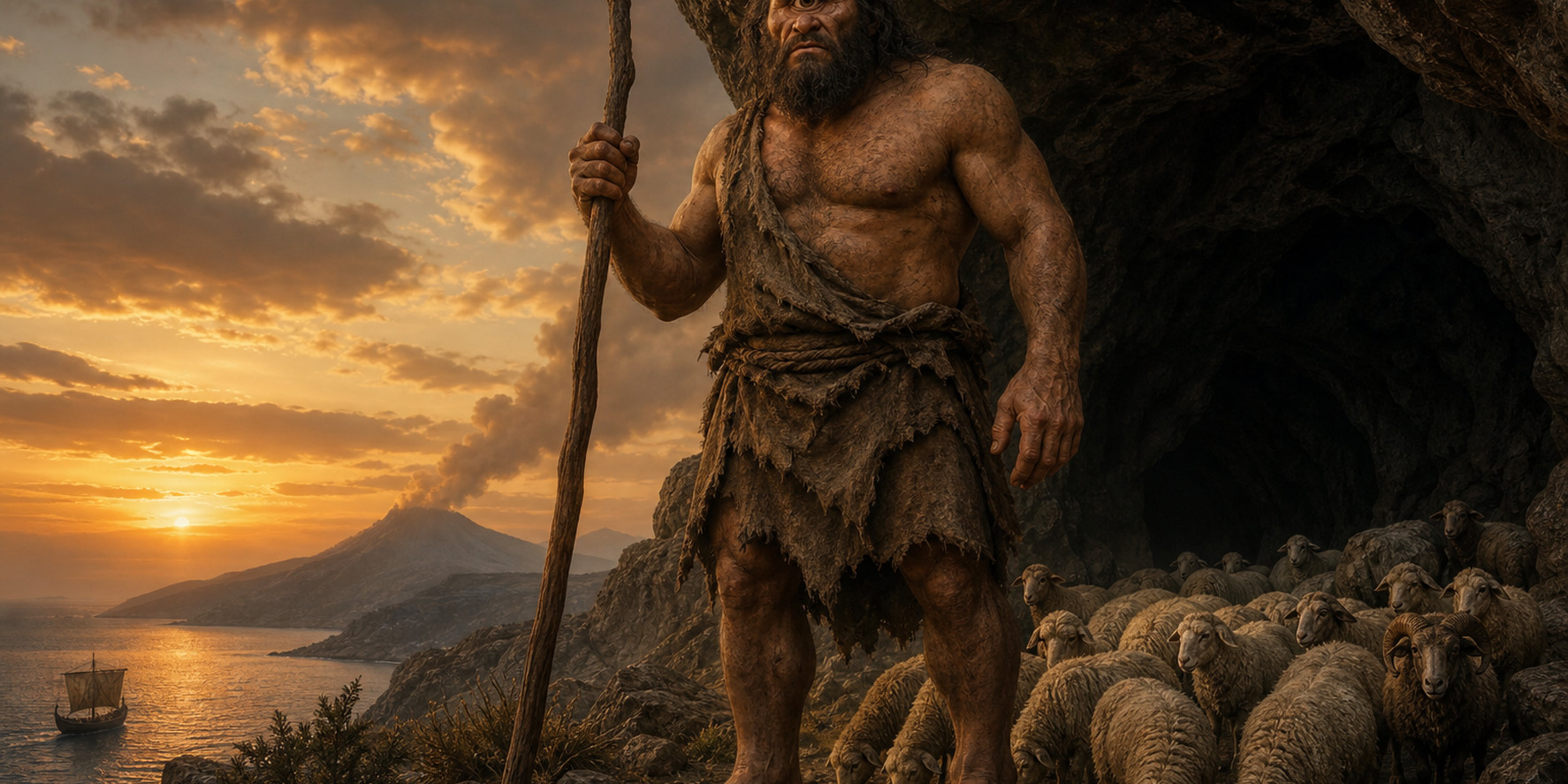
The one-eyed giant defeated by Nobody whose prayer turns a clever escape into a long divine punishment.
- Cave
- Cyclopes
- Nobody
- Odysseus
- Poseidon
- Sheep

Polyphemus traps Odysseus and his crew, rejects the laws of hospitality, and is blinded through the Nobody trick. After Odysseus reveals his name, the Cyclops calls on Poseidon to delay and devastate his return.
Greek Mythology Timeline
Move through broad mythic ages and open the events that connect one story to the next. The sequence is a reading path, not an exact historical calendar.
Polyphemus is the one-eyed Cyclops shepherd whose cave traps Odysseus and his crew. Son of Poseidon and the sea nymph Thoosa, he is physically overwhelming, socially isolated, and central to the mistake that prolongs the voyage home. Odysseus escapes through wine, the false name Nobody, a sharpened olive stake, and sheep—but then reveals his true name, allowing Polyphemus to call upon Poseidon for revenge.
The Cyclopes of the Odyssey
Homer’s Cyclopes are not identical to Hesiod’s divine smiths Brontes, Steropes, and Arges. They live without assemblies or shared laws, cultivate no fields, and occupy separate households in caves. Polyphemus is one member of this pastoral people and the son of Poseidon, whereas the earlier smith brothers forge Zeus’ thunderbolt.
Later art and myth often combine the traditions into a general species of one-eyed giants. Project Mythos keeps the connection visible while preserving the distinction. A reader moving from the forge Cyclopes to Polyphemus crosses from divine technology to an isolated herding world.
Entering the Cave
Odysseus leaves most of his crew at the ship and enters the cave with twelve men. They find cheeses, pens, milk vessels, and lambs. His companions urge taking supplies and leaving, but he waits to meet the owner and receive a guest gift. Curiosity and expectation of hospitality create the trap.
Polyphemus returns, seals the entrance with a stone the men cannot move, and demands their identity. Odysseus appeals to Zeus as protector of strangers. The Cyclops rejects fear of Zeus and claims that his people are stronger than the gods’ concern. He then eats members of the crew, turning the household meal into predation upon guests.
Why Not Kill Him?
Odysseus considers killing the sleeping giant but realizes no one could move the door stone. Strength alone would leave the survivors imprisoned. The problem must be solved in stages: disable the shepherd without removing the only body capable of opening the cave.
The plan uses an olive-wood club found in the cave. The men cut, sharpen, harden, and hide it. This preparation matters as much as the final attack. Odyssean cunning transforms an ordinary object through collective craft before it transforms the balance of power.
Wine and Nobody
Odysseus offers powerful wine received from Maron, priest of Apollo. Polyphemus drinks repeatedly and asks the stranger’s name. Odysseus answers Outis, Nobody or No man, and the Cyclops promises the grim guest gift of eating Nobody last. The false identity turns language into the escape mechanism.
After the crew blinds him with the heated stake, Polyphemus calls to neighboring Cyclopes. He says Nobody is killing him by deceit, so they conclude that no person attacks him and leave. The pun works inside Greek grammar more precisely than every translation can reproduce, but its narrative logic remains clear.
Escape Beneath the Sheep
Blind Polyphemus sits at the entrance and feels the backs of his animals as they leave. Odysseus ties men beneath groups of sheep and clings under the great ram himself. The shepherd speaks tenderly to the animal, wondering why it moves last and imagining that it grieves for its master’s eye.
The speech gives the violent figure a moment of affection and vulnerability without excusing his killings. It also heightens the disguise: the ram carries the enemy whose identity remains physically and linguistically concealed. Pastoral routine becomes the path out of the sealed cave.
The Name Revealed
Once the ship has pulled away, Odysseus taunts Polyphemus. His companions urge silence, but he finally declares his true name, father, and homeland so that fame for the exploit will be correctly assigned. The desire for kleos, remembered glory, undoes the protection created by Nobody.
Polyphemus throws rocks toward the voice and prays to Poseidon that Odysseus either never reach home or return late, alone, after losing his companions, and find trouble in his house. The Odyssey’s entire shape is compressed into this curse. A successful escape becomes the origin of prolonged suffering.
Polyphemus in Other Traditions
Later lyric and pastoral poetry gives Polyphemus a very different story as the lover of the sea nymph Galatea. He sings, plays music, and suffers unreturned desire; some versions add the rival Acis and violent jealousy. This romantic-pastoral Cyclops develops after Homer and should not be inserted into the cave as motivation for his treatment of strangers.
Ancient artists repeatedly depicted the blinding, often showing several men coordinating the stake. The image makes collective labor visible even though Odysseus commands the plan. Roman and later European art further emphasized scale, landscape, and the dramatic single eye.
Hospitality at the Edge
The episode tests xenia, the reciprocal customs of host and guest. Odysseus enters without permission and expects a gift; Polyphemus violates the most basic protection by consuming visitors. Neither action is identical, but the giant’s rejection of divine and communal obligation makes the cave an anti-household.
At the same time, the Cyclops successfully tends animals, stores food, and shows attachment to his ram. Civilization in the poem is not measured by technology alone. It depends on assembly, law, exchange, and recognition of strangers as people rather than available bodies.
How to Read Polyphemus
Polyphemus is both an immediate monster and a narrative hinge. His strength produces the need for cunning; his isolation makes the Nobody trick possible; his divine parentage gives the defeated figure power after physical defeat. Odysseus escapes the son but cannot escape the father invoked through the sea.
Follow Polyphemus toward Odysseus for the plan, Poseidon and the Trident for the curse, and the Cyclopes for the contrasting smith tradition. Cetus offers another sea-linked threat, while future pages for Aeolus, the Laestrygonians, and Scylla can compare the different ways a voyage turns hosts, landscapes, and hunger into danger.
Trivia
- Polyphemus’ name is commonly interpreted as ‘much-spoken-of’ or ‘abounding in songs or reports.’
- The olive stake succeeds only because the crew must leave the giant alive long enough to move the door stone.
- The romantic story of Polyphemus and Galatea belongs to a later poetic tradition distinct from Odyssey Book 9.