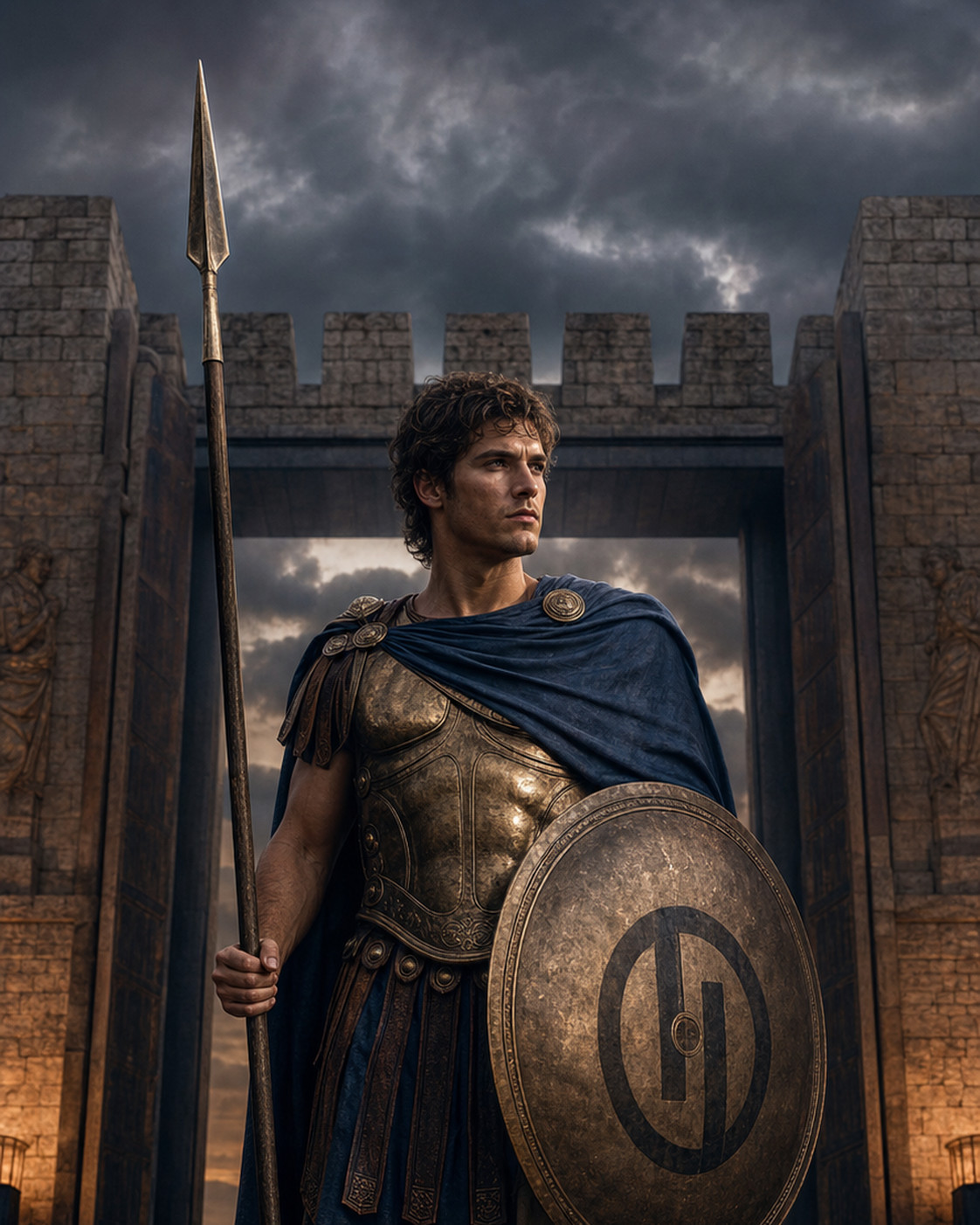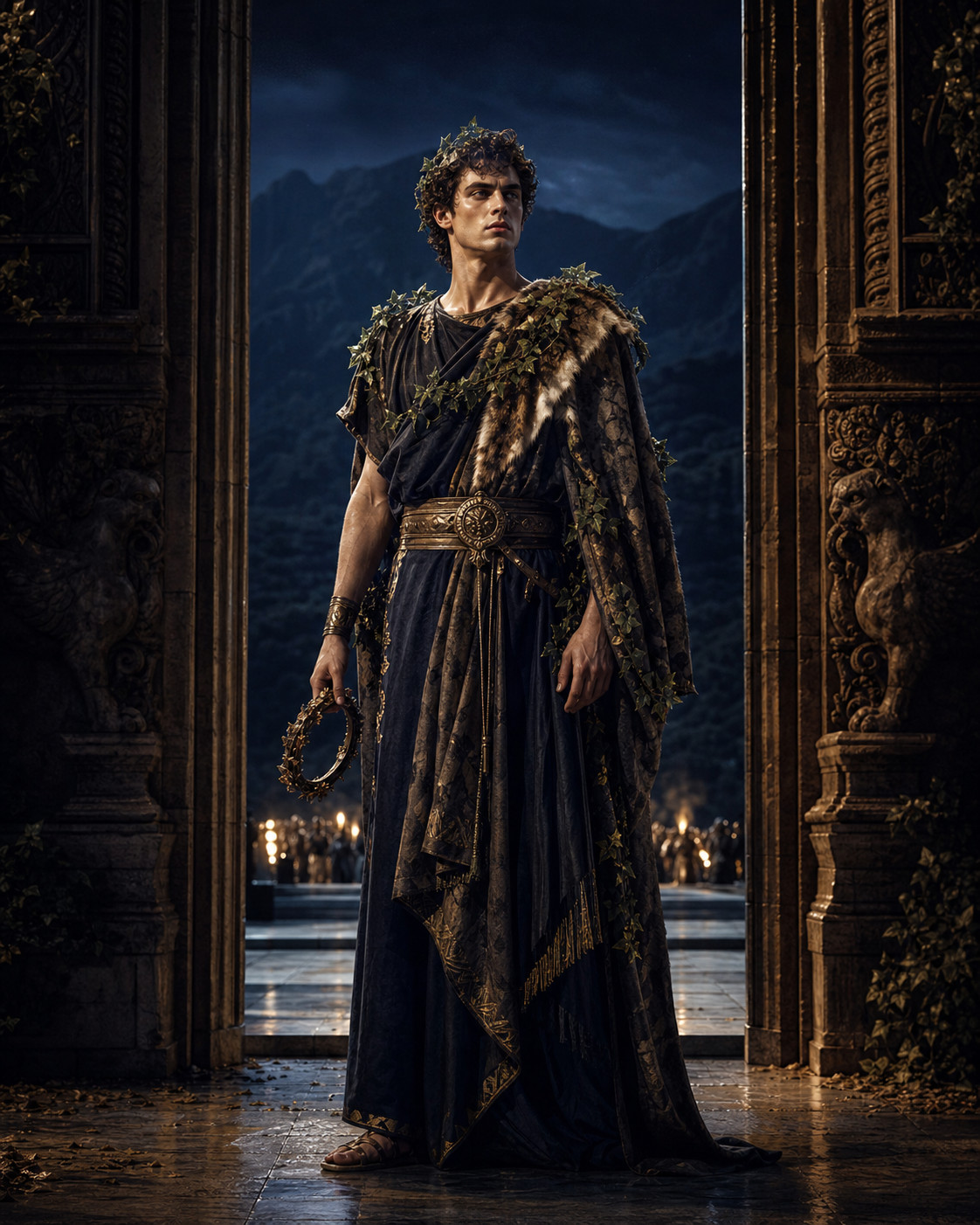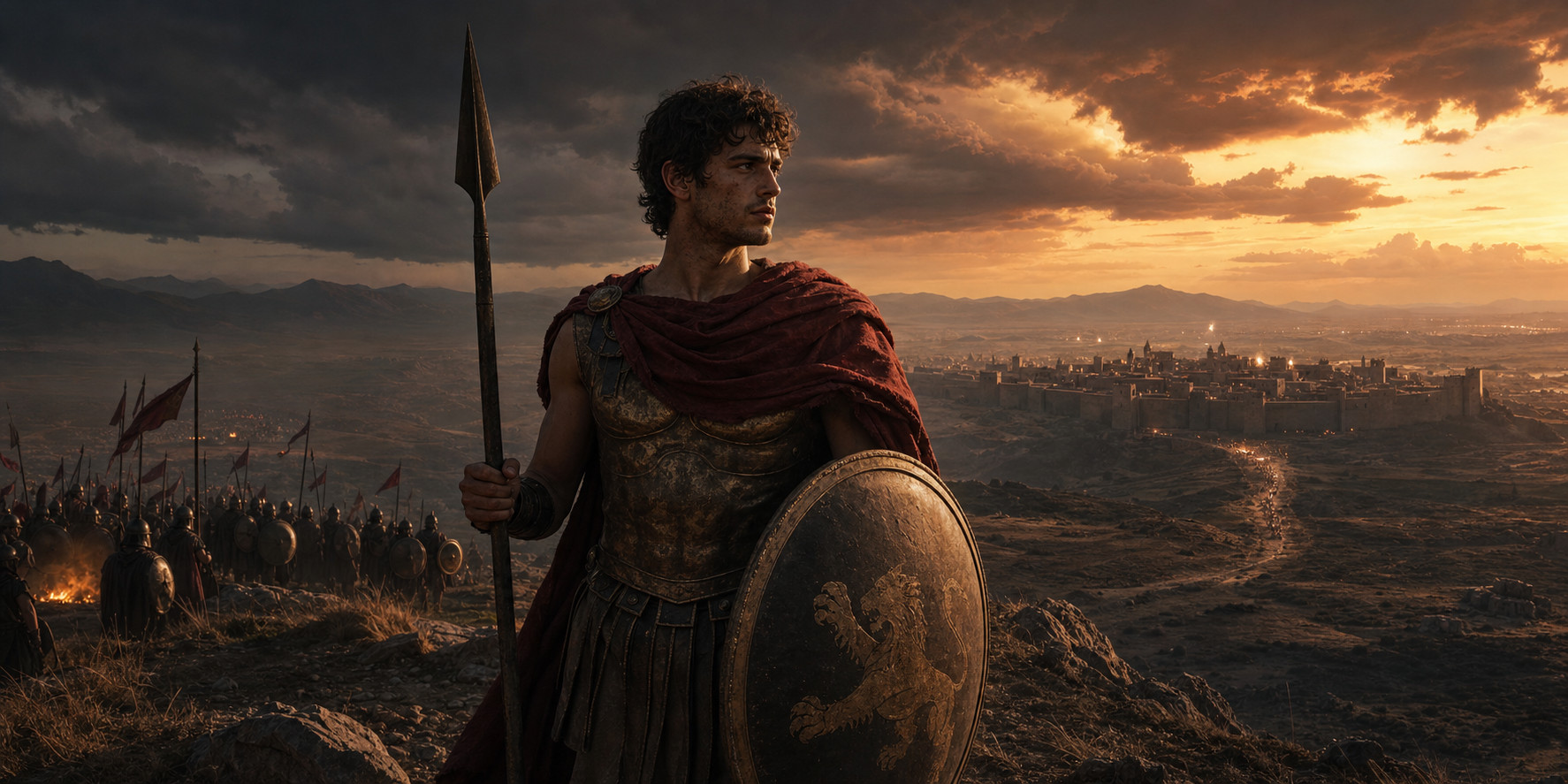
The dispossessed prince who gathers the Seven to recover Thebes and becomes the unburied brother of Antigone's defiance.
- Adrastus
- Antigone
- Argos
- Eteocles
- Seven against Thebes
- Thebes
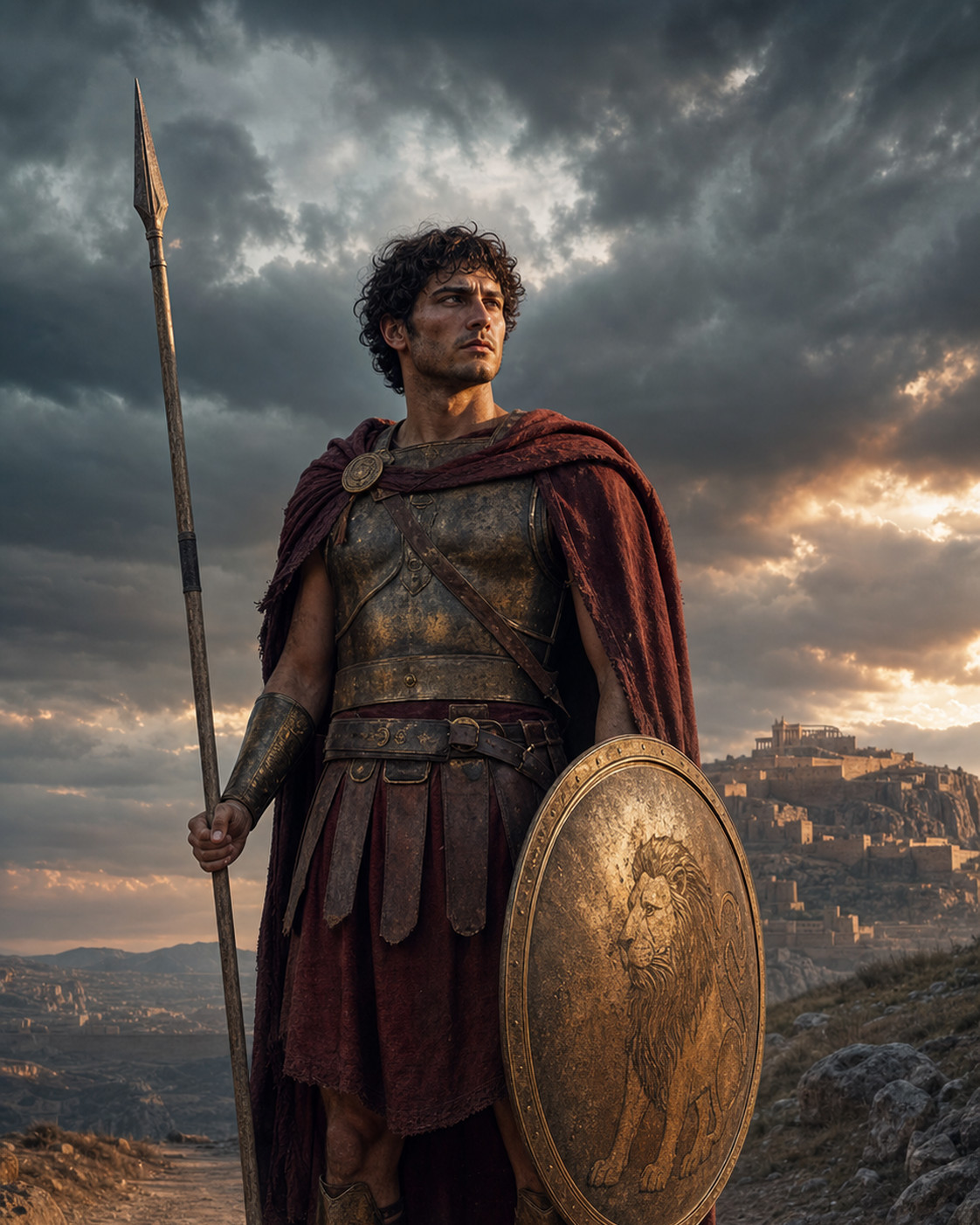
Polynices is the exiled son of Oedipus who gains Adrastus's support and leads the claim behind the Seven against Thebes. He and Eteocles kill one another; the decree denying his burial creates Antigone's later conflict with Creon.
Greek Mythology Timeline
Move through broad mythic ages and open the events that connect one story to the next. The sequence is a reading path, not an exact historical calendar.
Polynices is the exiled son of Oedipus who turns a disputed share of Theban kingship into the expedition of the Seven against Thebes. His name is traditionally heard as suggesting much strife, and his story repeatedly asks whether he is a dispossessed heir seeking justice or a prince who brings a foreign army against his own city. He reaches Argos, fights Tydeus at Adrastus’s palace, marries the king’s daughter Argia, and joins a coalition promised restoration. At Nemea he competes in the funeral games for Opheltes; at Thebes he stands before one of the seven gates; in the final combat he and Eteocles kill one another. His denied burial then becomes the moral center of Antigone’s story.
Inheritance after Oedipus
Polynices belongs to the same uncertain family traditions as Eteocles. Jocasta is the mother in the dominant plays, while Eurygania appears in another account. Oedipus’s curse also has several causes: neglect during exile, disrespect involving a table or cup, or conflict over the inheritance. These variants agree that the brothers receive power already damaged by family violence.
The brothers’ compact is most often described as alternate years of rule. Sources disagree over who begins. If Polynices rules first and transfers power, Eteocles’s refusal is a clear breach; if Eteocles begins, Polynices becomes the claimant waiting for a promised turn. The uncertainty helps explain why ancient drama could emphasize different kinds of responsibility.
Exile and the Night at Argos
Driven from Thebes, Polynices arrives in Argos at night and quarrels with another exile, Tydeus of Calydon. Adrastus separates them and interprets their shield devices or conduct through an oracle that told him to marry his daughters to a lion and a boar. Polynices marries Argia, while Tydeus marries Deipyle.
The scene turns two displaced men into royal sons-in-law. Marriage provides shelter, status, and military support, but it also draws Argos into distant conflicts. Adrastus promises to restore both men to their homelands. Polynices therefore converts private exile into a public obligation held by another king.
The Necklace and Amphiaraus
The seer Amphiaraus knows the expedition will be disastrous and resists joining. Polynices uses the necklace of Harmonia to persuade Eriphyle, who has authority to decide disputes between her husband and Adrastus. She awards the judgment that sends Amphiaraus to war despite his knowledge of death.
This episode makes Polynices an active organizer rather than a passive beneficiary of Adrastus’s promise. It also connects the war to Cadmus and Harmonia through an heirloom already associated with Theban dynastic misfortune. The attempt to recover Thebes uses a Theban treasure to compel the very seer who understands the campaign’s doom.
A Champion among the Seven
Lists of the seven leaders vary, and some accounts do not count Polynices among the formal seven even though he causes and joins the expedition. His position is structurally unusual: he is both the claimant whose restoration justifies the war and one fighter among champions with their own ambitions, oaths, families, and divine relationships.
At Nemea, the army’s search for water leads to the death of Opheltes. Funeral games are established, and Apollodorus says Polynices wins the wrestling contest. The pause gives him a moment of ritual honor before the failed siege, linking his route with Hypsipyle, Lycurgus, and the child renamed Archemorus.
Parley before the Battle
Euripides’ Phoenician Women brings Polynices into Thebes under truce for a meeting arranged by Jocasta. He describes exile as a loss of speech, status, and home and argues that equality should govern the brothers’ agreement. Eteocles openly values power above fairness, and their mother cannot reconcile them.
The scene gives Polynices a persuasive grievance without erasing the army outside the walls. He claims a lawful share while threatening the city that constitutes the inheritance. His wish to return home and his willingness to attack it are not separate phases; they are the central contradiction of his position.
Brother against Brother
At the siege, Polynices is assigned to a gate opposite a Theban defender, and in Aeschylus he ultimately faces Eteocles at the seventh gate. Other accounts arrange a single combat by agreement after the armies have fought. Each brother wounds the other mortally, leaving no surviving claimant to resolve the succession.
Mutual death gives the conflict the equality that peaceful rule could not achieve. Neither brother yields, and neither wins. Thebes remains unconquered, so civic history can call Eteocles defender and Polynices enemy, but the shared blood and simultaneous end prevent the family story from accepting that division completely.
The Unburied Body
Creon’s prohibition against burying Polynices becomes the premise of Sophocles’ Antigone. The exposed body is meant to demonstrate that attacking the city cancels normal honor. Antigone answers that divine obligations to the dead and duties to a brother exceed a ruler’s decree. Her small burial act reopens the question the battlefield seemed to settle.
Other traditions involve Argia or the later expedition of the Epigoni in the aftermath. The burial story transforms Polynices from military claimant into a test of law. Readers need not approve his campaign to understand why refusing all rites threatens the religious order the city claims to defend.
Follow the Exile
Follow Polynices toward Eteocles for the broken compact, Adrastus and Amphiaraus for the Argive coalition, Seven against Thebes for the campaign, and Nemean Games for the ominous pause. Oedipus and Jocasta explain the family before the war; Antigone reveals why his story continues after defeat.
Polynices remains compelling because justice and destruction travel together in him. A promised share may have been denied, but recovering it through siege places citizens, allies, and sacred places at risk. His path shows how an unresolved succession dispute can recruit marriages, treasures, prophecies, and entire cities until no private settlement remains possible.
Trivia
- Some ancient lists do not count Polynices among the formal Seven.
- He wins wrestling at the funeral games for Opheltes in Apollodorus.
- The refusal to bury him becomes the central conflict of Sophocles’ Antigone.