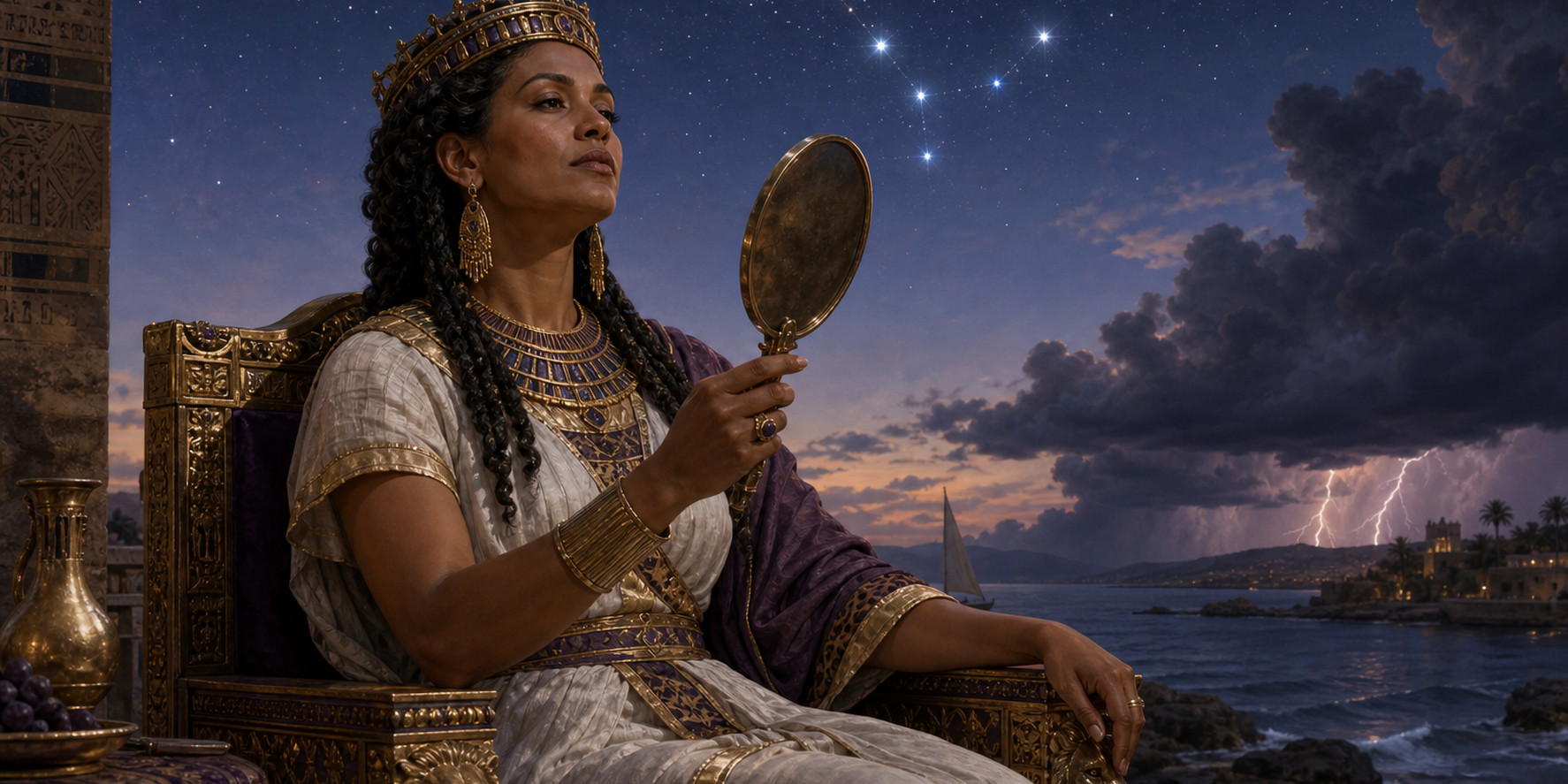
A royal claim of beauty that brings the anger of the sea against a kingdom and fixes a family in the stars.
- Andromeda
- Cepheus
- Cetus
- Nereids
- Perseus
- Poseidon
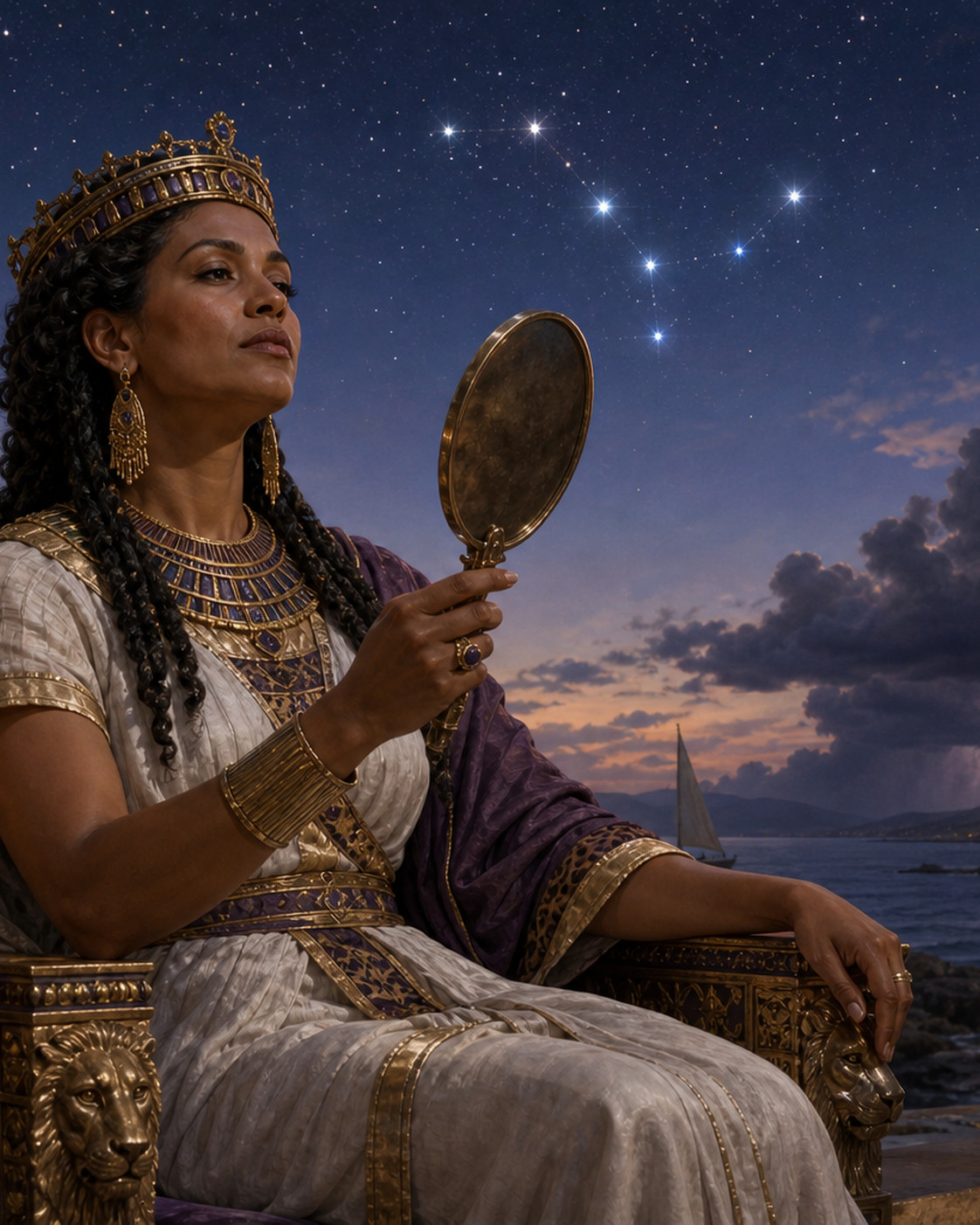
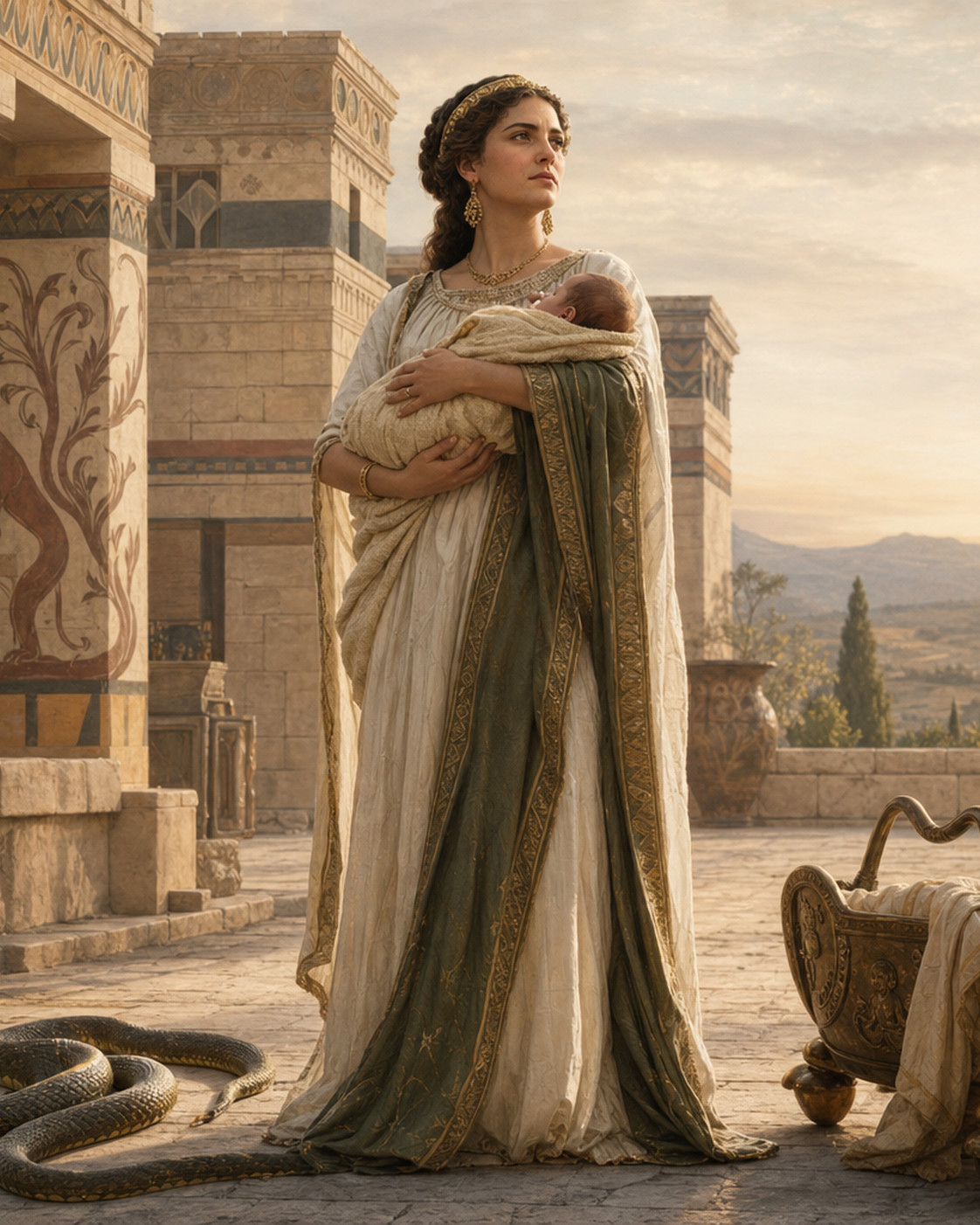
Cassiopeia is the queen who boasts that she or, in later retellings, Andromeda surpasses the Nereids. Poseidon sends flood and sea monster, and Andromeda is exposed as the demanded victim before Perseus intervenes.
Greek Mythology Timeline
Move through broad mythic ages and open the events that connect one story to the next. The sequence is a reading path, not an exact historical calendar.
Cassiopeia is the queen whose boast sets the Andromeda crisis in motion. Wife of Cepheus and mother of Andromeda, she challenges the beauty of the Nereids in the most influential mythographic account. Poseidon answers with flood and sea monster, and the community makes her daughter the required victim. Later astronomy fixes the royal family, rescuer, and monster in the sky, but the constellation does not erase the uncomfortable structure of the tale: a ruler speaks, a land suffers, and another woman is selected to pay.
Queen of a Distant Ethiopia
Greek authors place Cassiopeia and Cepheus among the Aithiopians, a broad and shifting term for peoples imagined at the far edges of the known world. Mythic geography is not a reliable map of a single historical kingdom. Ancient artists and later European painters repeatedly reinvented the family, so no one modern costume or appearance should be treated as the authentic ancient portrait.
Within the story, royal status gives Cassiopeia’s words public consequences. She is not an isolated individual making a private comparison. Her speech disturbs relations among palace, coastline, divine powers, and population. The threatened community can pressure Cepheus to accept the oracle, demonstrating that kingship in myth may be constrained by collective fear.
What Did She Boast?
Apollodorus says Cassiopeia competed with the Nereids in beauty and claimed to surpass them all. Other retellings make the claim about Andromeda, or say mother and daughter together exceed the sea nymphs. These versions are often combined casually, but the distinction changes whose beauty becomes the object of rivalry and how directly Cassiopeia exposes her daughter.
The boast belongs to the family of myths about speech that crosses a divine boundary. Its conventional label is hubris, yet that term should not become a shortcut that makes every punishment proportionate. The destruction sent against an entire land and the proposed death of Andromeda greatly exceed an ordinary social correction. The myth asks how divine honor operates, not whether its violence is fair by modern standards.
The Anger of the Nereids
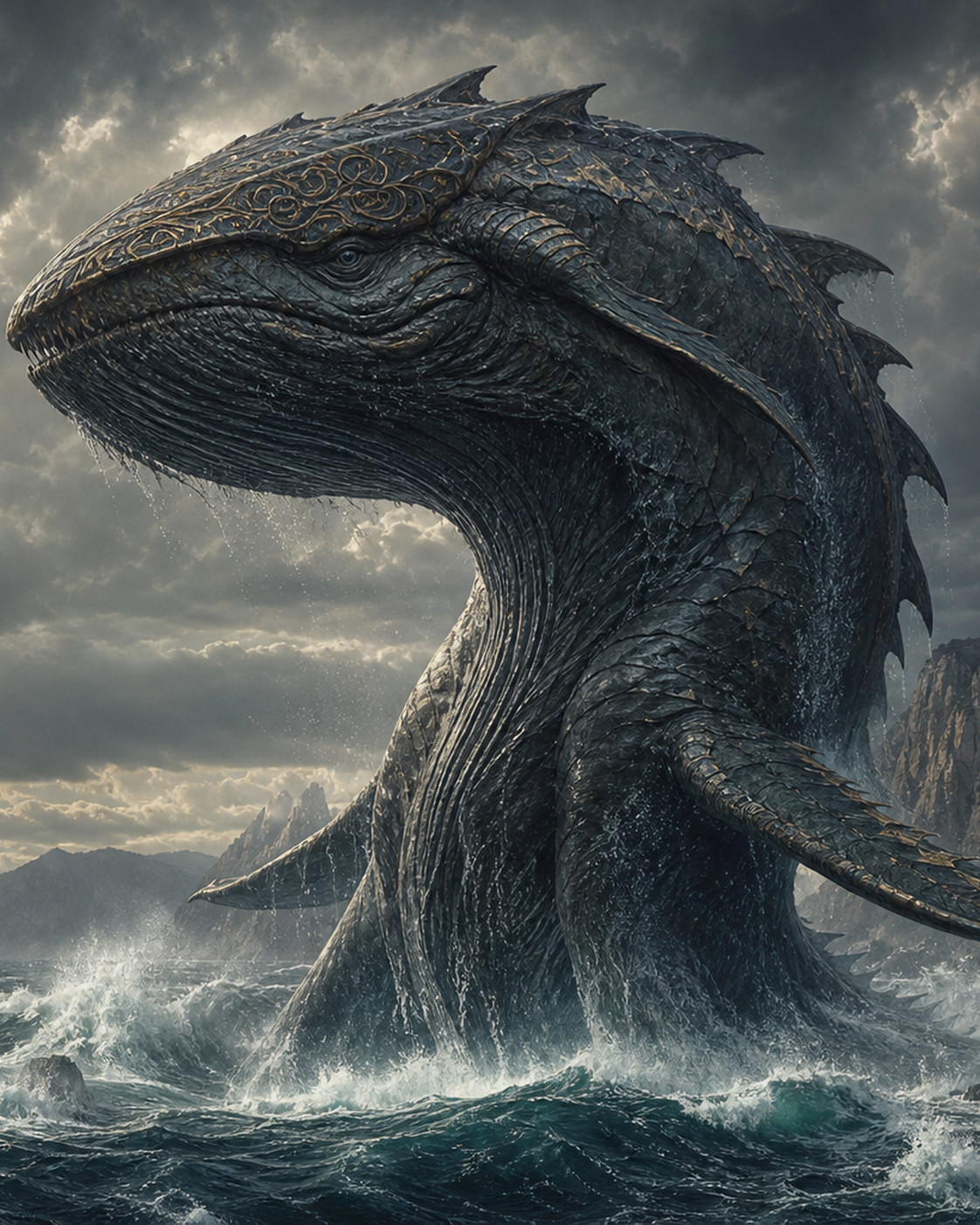
The Nereids are daughters of Nereus associated with the sea and with marine beauty, movement, and divine assistance. Cassiopeia’s comparison attacks a collective rather than one rival. Their anger reaches Poseidon, who shares or champions their grievance. A flood and a ketos, a sea monster, then ravage the realm.
This chain makes the coastline a political body. A queen’s words are answered through water, territory, and hunger. Poseidon does not confront Cassiopeia alone; he transforms the sea that sustains and borders the kingdom into an invading power. Cetus becomes the visible endpoint of a dispute that began with reputation.
Andromeda Pays the Price
An oracle of Ammon declares that relief will come if Andromeda is exposed to the monster. Cepheus yields under pressure from his people and binds his daughter to a rock. Cassiopeia’s role after the boast is often strangely quiet in surviving summaries. That silence is part of the myth’s severity: the narrative shifts attention from the speaker to the innocent body made available as payment.
Andromeda’s rescue by Perseus can create a triumphant ending, but it should not hide the coercive bargain. Perseus asks for marriage as the condition of saving her in Apollodorus. The story therefore moves Andromeda from sacrifice into another agreement negotiated by men. Cassiopeia’s initial comparison has consequences that others continue to arrange.
Perseus and the Broken Sacrifice
Perseus arrives after killing Medusa and agrees with Cepheus to defeat the monster. Sources and artworks vary in the method: sword, curved weapon, aerial attack, or the petrifying Gorgon head. The familiar claim that he always turns Cetus to stone should therefore be treated as one strand of reception rather than the only ancient account.
The wedding then faces a second danger from Phineus, to whom Andromeda had previously been promised in some versions. Cassiopeia may be implicated in the renewed conflict in later tellings, while other sources leave her in the background. Once again, the family does not pass cleanly from disaster to celebration; old arrangements return as violence.
The Queen in the Stars
Cassiopeia becomes a northern constellation distinguished by a recognizable zigzag of bright stars. Greek and Roman astronomical myth links her to the neighboring figures Cepheus, Andromeda, Perseus, and Cetus. The sky turns a narrative sequence into a field that can be viewed at once, letting audiences trace family, threat, and rescue across adjacent constellations.
Later explanations say Cassiopeia is placed on a chair and periodically hangs upside down as continuing punishment. Details about a basket, throne, or humiliating rotation vary with astronomical and artistic traditions. The important distinction is between the ancient queen and the observed constellation: the star pattern encourages new stories rather than preserving one unaltered biography.
Beauty, Blame, and Representation
Cassiopeia is easy to flatten into a vain mother. That reading identifies the narrative trigger but can obscure how responsibility spreads. Poseidon chooses collective devastation, an oracle directs sacrifice, Cepheus accepts it, and Perseus negotiates a marriage. The crisis is a network of decisions, not a simple machine in which one boast naturally produces one deserved result.
Her Ethiopian setting has also been repeatedly distorted by later art and racial assumptions. Greek Aithiopia belongs to ancient imaginative geography, and its people are treated in different texts as remote, favored by gods, eastern, western, or divided between both horizons. Responsible depiction should acknowledge that complexity rather than using the myth as proof of one fixed modern identity.
How to Read Cassiopeia
Cassiopeia connects spoken comparison to environmental catastrophe and dynastic vulnerability. She is valuable not because the evidence supplies a detailed inner life, but because her single public claim reorganizes an entire story-world. Through her, beauty becomes political, divine offense becomes geographic, and the night sky becomes an archive of consequence.
Follow her toward Andromeda for the intended sacrifice, Cetus for Poseidon’s embodied punishment, Medusa and Perseus for the rescue route, and Poseidon for the divine response. These links reveal how little of the story is actually contained within the familiar image of a queen admiring herself.
Trivia
- Cassiopeia’s name appears in several ancient spellings, including Cassiepeia and Kassiepeia.
- The W-shaped constellation is circumpolar from many northern locations and therefore remains visible through much of the year.
- Ancient accounts do not consistently say that Cassiopeia boasted specifically about Andromeda’s beauty.