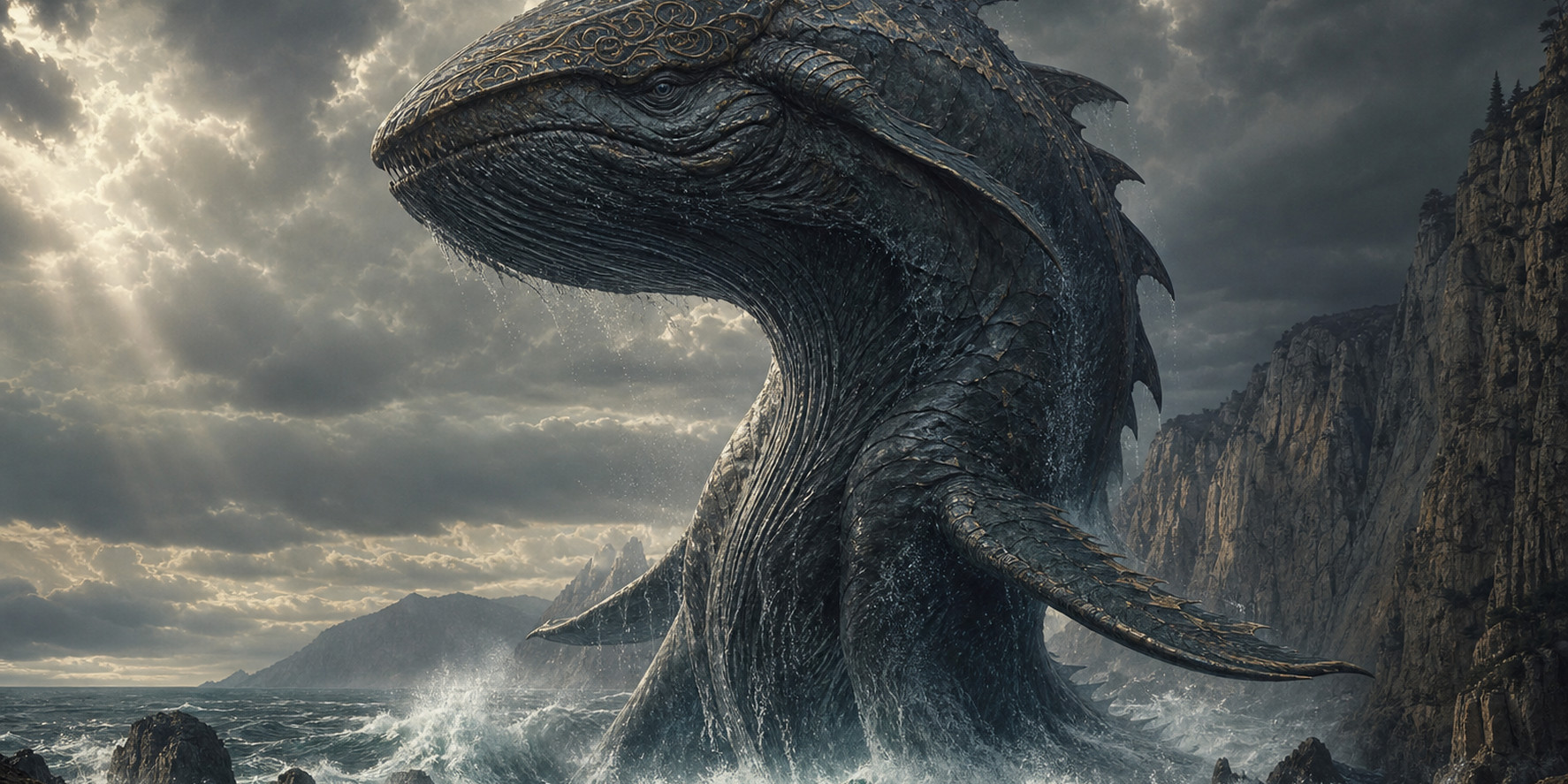
The immense marine threat through which Poseidon's anger reaches Andromeda and the kingdom of Cepheus.
- Andromeda
- Cassiopeia
- Flood
- Perseus
- Poseidon
- Sea
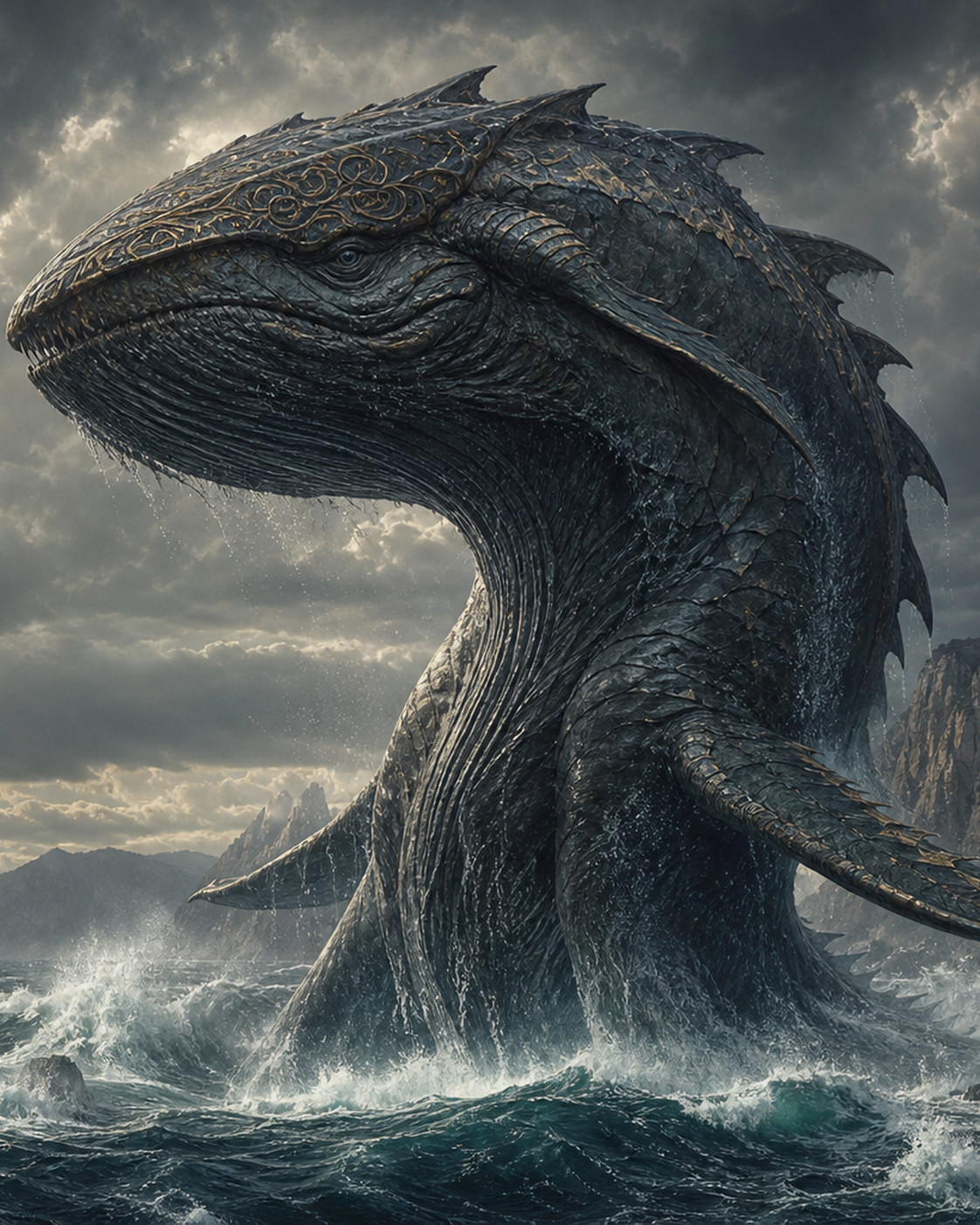
Cetus is the sea monster sent with a flood after Cassiopeia offends the Nereids. Andromeda is exposed as its prey until Perseus kills it. The name derives from a general ancient word for a great sea creature rather than one fixed species.
Greek Mythology Timeline
Move through broad mythic ages and open the events that connect one story to the next. The sequence is a reading path, not an exact historical calendar.
Cetus is the sea monster sent by Poseidon to devastate the kingdom of Cepheus after Cassiopeia offends the Nereids. Andromeda is exposed as its prey until Perseus intervenes. The Latinized name can make Cetus sound like one uniquely identified creature, but Greek ketos is also a broad word for a great sea animal or monster. The Andromeda monster is therefore best understood as a particular ketos whose later name, shape, and constellation grew more definite through art and reception.
A Monster and a Category
Ancient Greek ketos could refer to whales, enormous fish, seals, sharks, or fabulous marine beasts depending on context. Mythic art often gives such creatures long bodies, curling tails, canine or leonine heads, fins, and scales. There is no zoological blueprint that every depiction follows. Calling the Andromeda monster Cetus is useful, but it should not imply that ancient sources preserve one stable species description.
The creature belongs to a wider Mediterranean visual language in which the sea produces forms that cross familiar animal boundaries. Its mixed body communicates the uncertainty of deep water. Unlike a land monster occupying a cave or road, a ketos can appear from an environment whose depth and extent already resist human control.
Poseidon’s Weapon
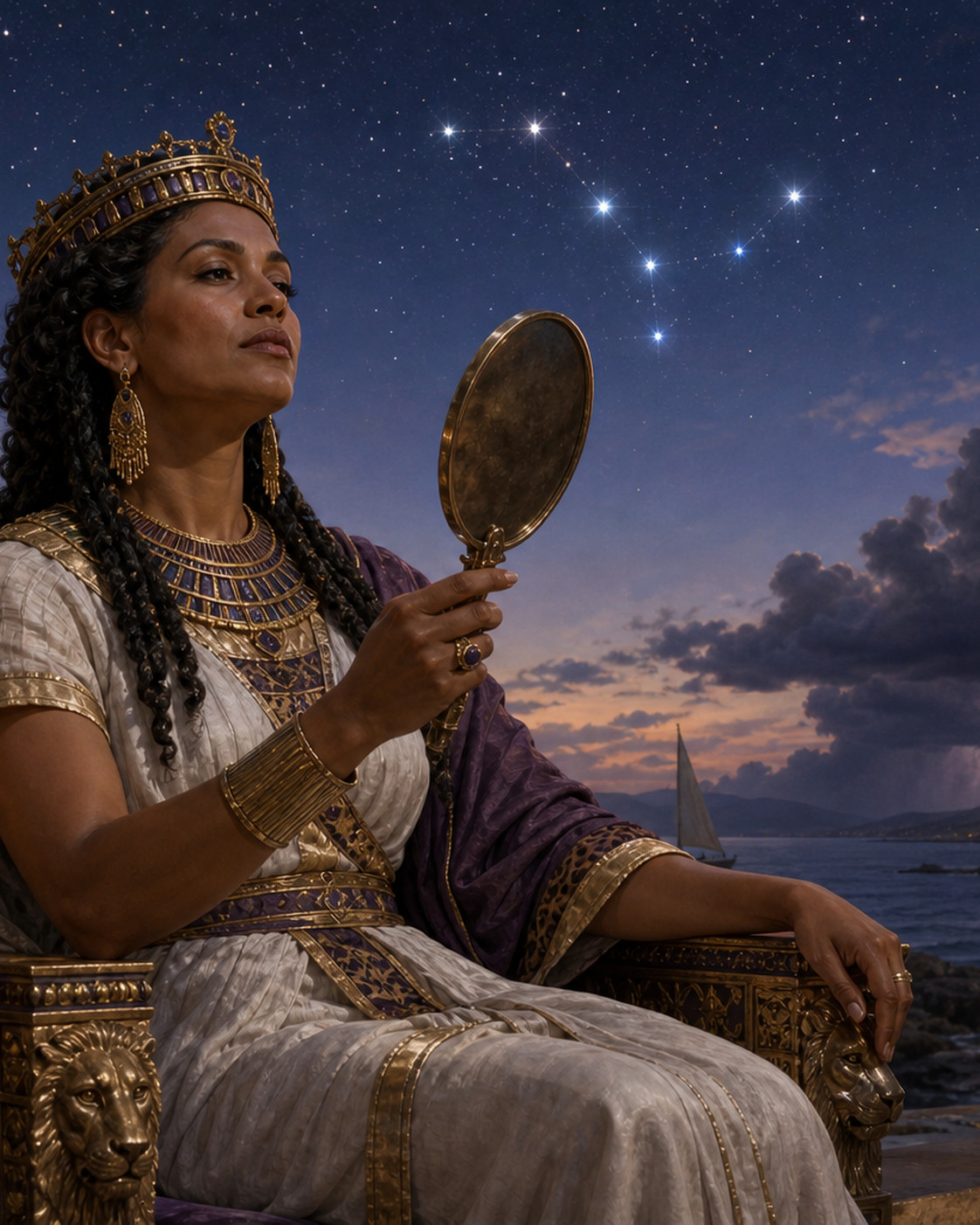
Cassiopeia claims superiority over the Nereids, and Poseidon sends both flood and monster. Cetus is not an independent villain with a developed motive. It operates as an extension of divine anger, turning offense against sea nymphs into physical pressure on coast, city, and royal household. The monster’s hunger enforces a judgment made elsewhere.
This role resembles other myths in which a god releases an animal against a community, such as the Cretan Bull or Calydonian Boar. Yet the Andromeda story pairs the creature with inundation. Cetus emerges within a larger collapse of boundaries as sea enters land and divine grievance enters civic life.
The Oracle and the Offered Princess
The oracle of Ammon declares that the catastrophe will end if Andromeda is given to the monster. Apollodorus adds that Cepheus is compelled by the Aithiopians to expose her. Cetus thereby creates a crisis of rule: the king’s daughter becomes a sacrificial resource through which the population hopes to restore safety.
The creature never speaks, bargains, or explains the terms. Its silence makes the oracle more powerful, because human institutions interpret what the monster requires. Readers should distinguish the physical threat from the political choice to bind Andromeda. Myth often distributes agency across god, oracle, ruler, crowd, victim, and rescuer rather than placing it all in the beast.
Perseus Arrives
Perseus encounters Andromeda while returning from the Gorgon expedition. He reaches an agreement with Cepheus and attacks Cetus. In Apollodorus the action is stated simply: he confronts and kills the monster. Other texts and images expand the combat, placing the hero above the waves, on winged sandals, or striking from a rock or sky.
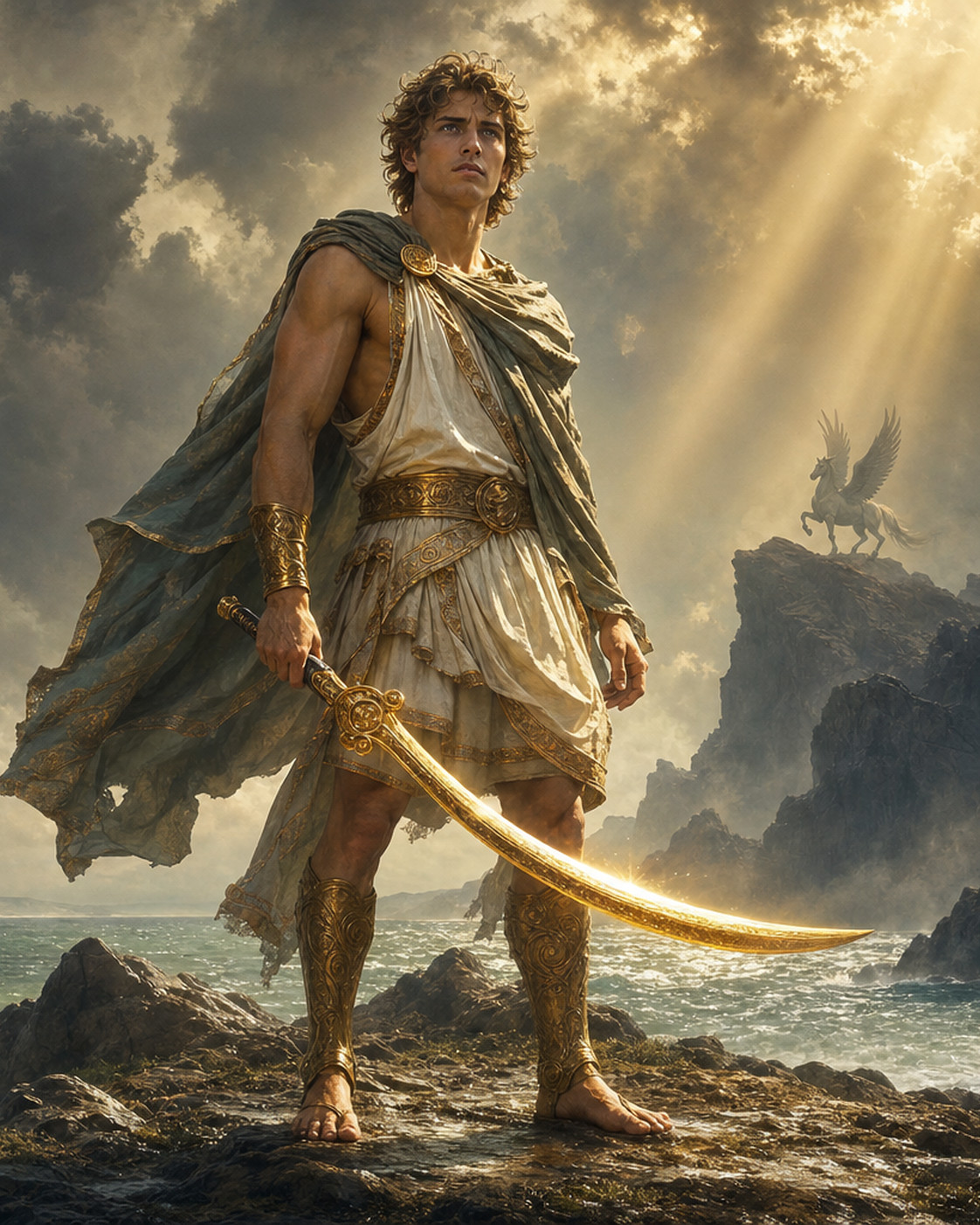
Ovid’s Roman narrative gives a long, vivid battle in which Perseus uses aerial movement and a curved sword. Later art often adds Pegasus, although the earliest literary sequence separates Perseus from the winged horse born at Medusa’s death. These additions make excellent images, but they should not be retroactively treated as mandatory parts of every Greek version.
Was Cetus Turned to Stone?
Modern summaries frequently say Perseus shows Medusa’s head and petrifies Cetus. The Gorgon head is certainly central to his power and is used against later enemies, but surviving accounts do not all use it in the sea fight. Vase paintings often emphasize a physical attack, and Ovid describes Perseus repeatedly striking the monster before victory.
The variation is meaningful. A sword fight makes the rescue a test of endurance after the Gorgon quest; petrification makes the previous monster’s power defeat the next. Project Mythos preserves both discovery paths without forcing them into one event. Cetus connects to Medusa through Perseus even when her head is not the weapon used in a particular telling.
Cetus in Ancient Art
Greek vase painters represented the Andromeda episode in several ways. Some focus on preparations, attendants, exotic clothing, or Perseus approaching; others make the marine threat more visible. The creature’s body can be serpentine, fishlike, boar-headed, or assembled from several animal cues. Its instability is traditional rather than an error.
The name also appears in other myths and artworks for sea monsters not connected with Andromeda. Hesione, daughter of Laomedon, is exposed to another marine creature before Heracles rescues her. Comparing the two episodes reveals a recurring structure of divine punishment, endangered princess, and heroic intervention without requiring the monsters to be the same individual.
The Constellation Cetus
Cetus is also a large constellation near the celestial figures associated with the Andromeda cycle. Astronomical tradition turns the monster into a permanent neighbor of Andromeda, Pisces, Aquarius, and other watery signs. Its stars do not outline one obvious anatomy, leaving image-makers freedom to imagine whale, fish, dragon, or hybrid.
The constellation later acquired the informal association with a whale, and the modern biological order Cetacea uses the same ancient word family. That scientific afterlife should not be used to declare the mythic creature literally a whale. Language preserves a sense of great sea animal while images continue to vary.
How to Read Cetus
Cetus is the point where several invisible forces become visible: the Nereids’ anger, Poseidon’s authority, the oracle’s command, and the kingdom’s fear. It has little biography because its narrative purpose is concentrated. The moment it is defeated, the flood-and-sacrifice mechanism loses its enforcer and the story shifts to marriage and dynastic conflict.
Follow Cetus toward Cassiopeia for the boast, Poseidon for the punishment, Andromeda for the intended victim, and Medusa for the power Perseus carries from his earlier quest. A further route to Heracles and Hesione shows how Greek myth reuses the threatened-coast pattern while changing its families and divine causes.
Trivia
- Ketos is a general ancient term for a great sea creature, not a precise biological classification.
- The constellation Cetus later became strongly associated with a whale, though mythic images remain hybrid.
- Pegasus is common in later rescue imagery but is not required by the earliest surviving accounts of Perseus fighting the monster.