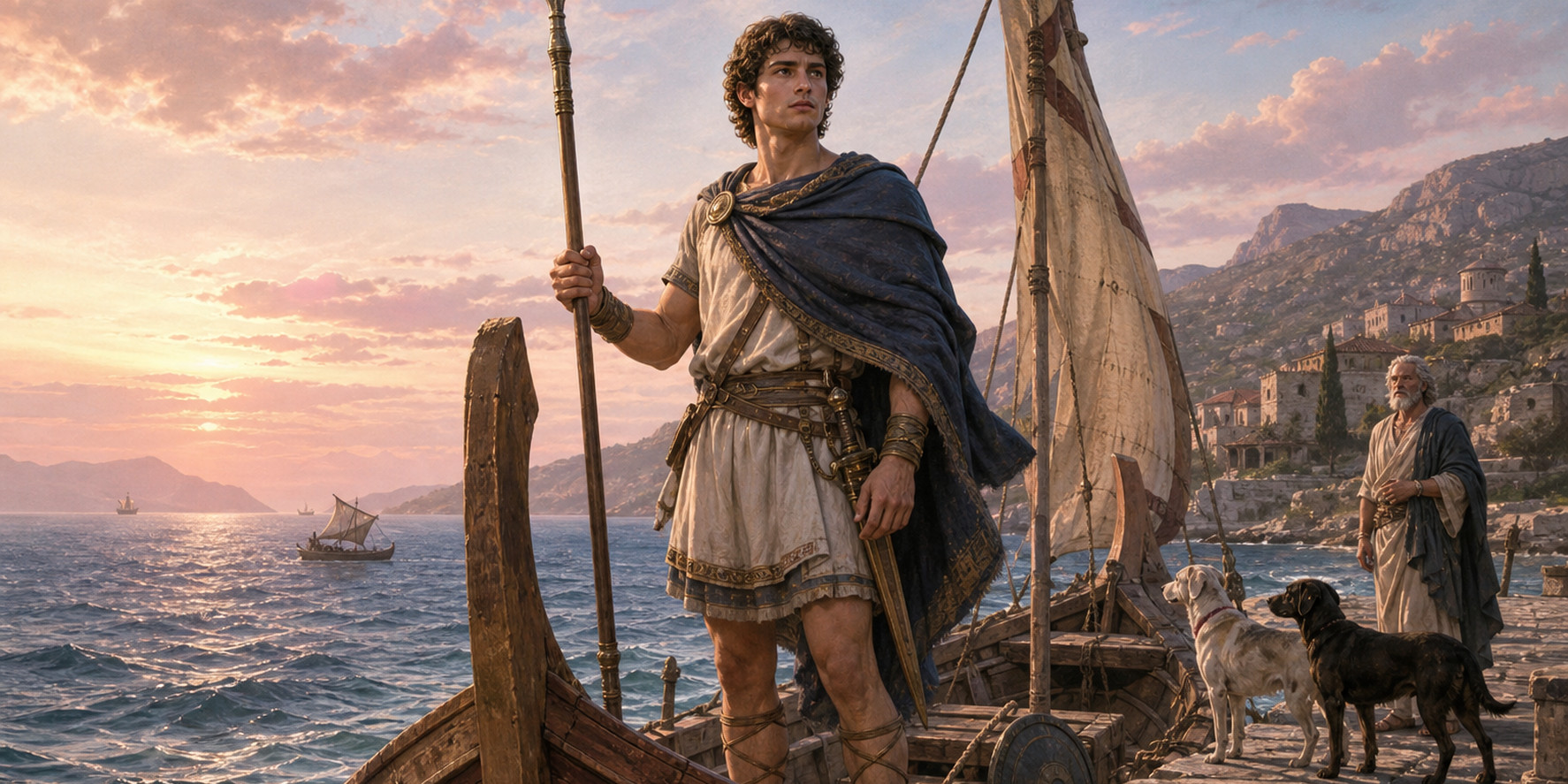
The son who leaves an occupied household to gather memory, confidence, and the voice needed to stand beside Odysseus.
- Athena
- Ithaca
- Odysseus
- Penelope
- Pylos
- Sparta
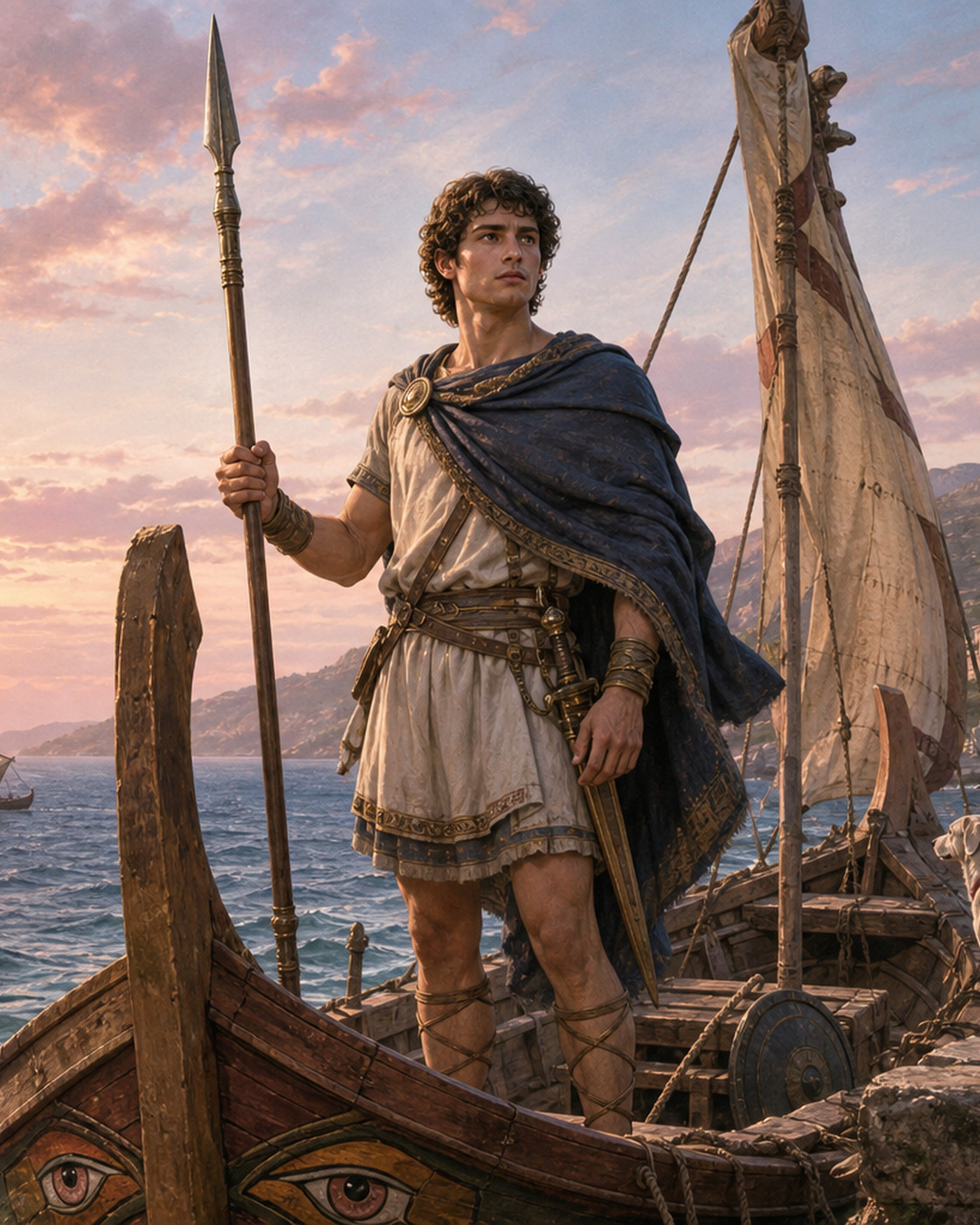
Telemachus begins the Odyssey unable to remember his father and politically overshadowed by the suitors. Guided by Athena, he calls an assembly, seeks news abroad, evades ambush, and joins Odysseus in restoring the household.
Greek Mythology Timeline
Move through broad mythic ages and open the events that connect one story to the next. The sequence is a reading path, not an exact historical calendar.
Telemachus is the son of Odysseus and Penelope who grows up inside an occupied household and begins the Odyssey without reliable knowledge of his father. Athena’s visit prompts him to call an assembly and sail in search of news. The journey to Pylos and Sparta does not rescue Odysseus; it teaches Telemachus how heroic households remember the war, how rulers speak, and what kind of danger awaits him when he returns to Ithaca.
A Son Who Cannot Remember His Father
Odysseus leaves when Telemachus is an infant. By the opening of the Odyssey, the son knows his father through Penelope, household stories, inherited appearance, and public expectation. He even tells Athena that his mother says he is Odysseus’ child, while no man can know his own paternity by direct witness. Identity begins as a question rather than a secure possession.
The suitors exploit that uncertainty. They consume the estate and treat Telemachus as too young to stop them, yet fear the authority he might claim. His coming of age is therefore dangerous. To become recognizably Odysseus’ son is to become a political target.
Athena as Mentes and Mentor
Athena enters Ithaca disguised as Mentes and later takes the form of Mentor. She encourages Telemachus to seek news and to imagine action where he has accepted paralysis. Divine support does not simply give him answers. It creates circumstances in which he must speak, plan, recruit companions, and encounter strangers.
The goddess often supplies confidence or appearance, but Telemachus must still learn conduct. At Pylos he worries that he is too young to question Nestor. Athena tells him that part of the speech will come from his own mind and part through divine prompting. Growth is cooperation between guidance and practice.
The First Assembly
Telemachus calls the first Ithacan assembly since Odysseus departed. Carrying a bronze spear and accompanied by hounds, he sits in his father’s seat and publicly names the suitors’ abuse. The meeting does not remove them, but it changes his position from silent observer to political speaker.
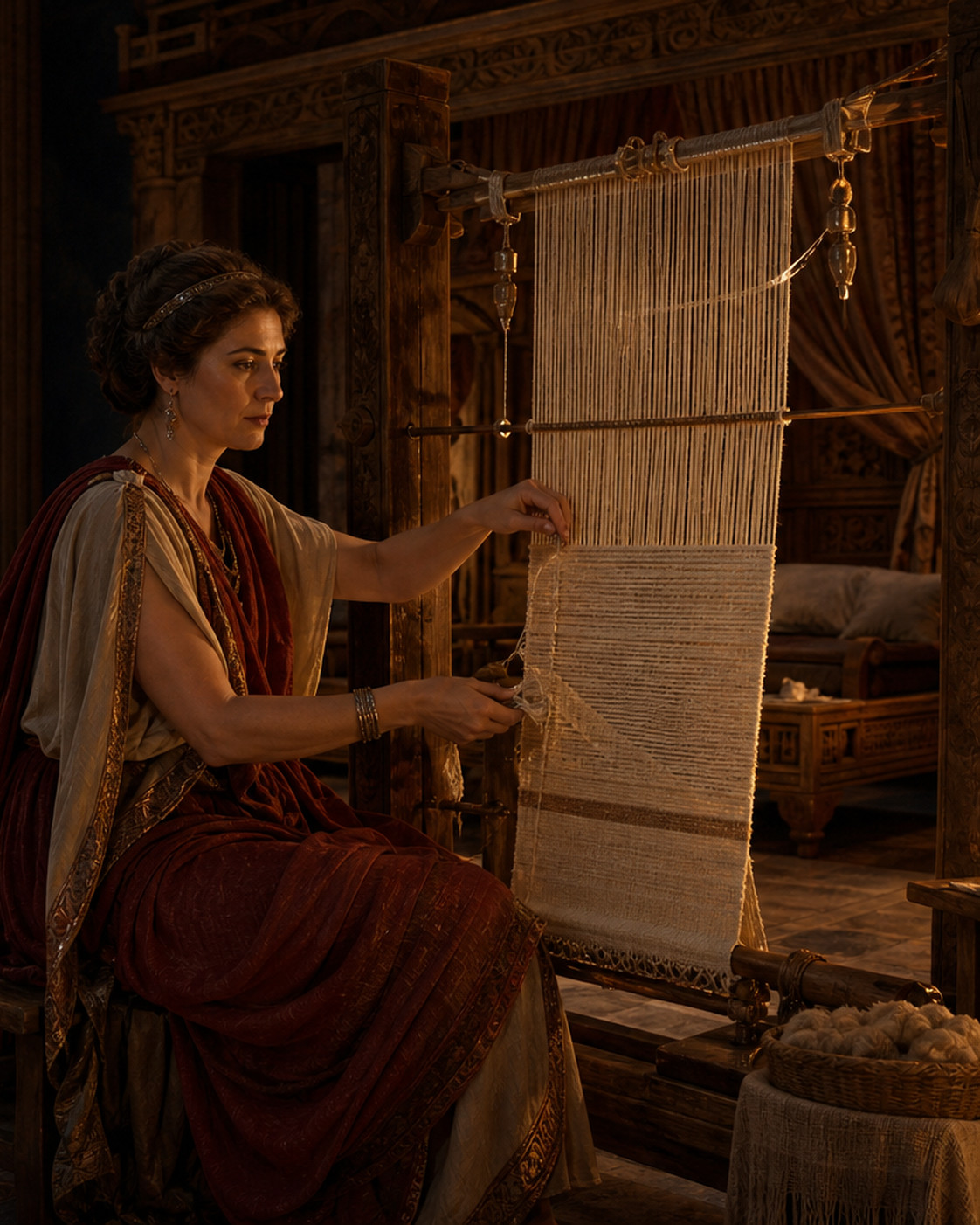
The suitors answer by blaming Penelope and the weaving deception. Their response reveals the household conflict as a struggle over narrative: who has caused the delay, who has the right to consume resources, and whether Telemachus possesses authority before his father’s fate is known. The assembly makes these claims visible to the community.
The Telemachy
The first four books of the Odyssey are often called the Telemachy because they follow the son’s awakening and voyage. Telemachus sails to Pylos, where Nestor remembers the divided Greek returns, then travels to Sparta, where Menelaus and Helen recount Odysseus’ intelligence at Troy and report that he remains alive on Calypso’s island.
These stories are not a direct route to the missing man. They locate Telemachus inside the generation after Troy. He sees households restored, damaged, or destroyed by return: Nestor has reached home; Menelaus wandered; Agamemnon was murdered. The future of Ithaca is one possible nostos among several.
The Suitors’ Ambush
The suitors learn of the voyage and plan to kill Telemachus on his return. His search for information has made him harder to dismiss and more urgent to eliminate. Athena helps him evade the ambush, but the danger shows that coming of age cannot remain symbolic. Public authority and inheritance have material enemies.
Penelope learns of the plot while her son is away and fears the loss of both husband and child. Telemachus’ independence therefore creates new risk for the person who protected him. The poem does not present maturity as freedom without cost; it rearranges vulnerability within the household.
Recognition at the Swineherd’s Hut
Odysseus returns disguised and stays with the loyal swineherd Eumaeus. Athena reveals him to Telemachus, who initially thinks a god stands before him. Father and son then weep, exchange knowledge, count opponents, and plan the recovery of the palace.
Their reunion differs from the eventual recognition with Penelope. Athena manages the transformation openly for Telemachus, and the men move quickly into military planning. The son must trust a father he barely knows because shared danger gives them little time for gradual intimacy.
The Bow and the Hall
Telemachus nearly strings Odysseus’ bow during the contest, stopping after a signal from his disguised father. The moment suggests inherited capacity without allowing him to replace Odysseus. He then stands beside his father, Eumaeus, and Philoetius in the attack on the suitors.
He is brave but not flawless. He leaves the storeroom unsecured, allowing the suitors to obtain weapons, and must correct the mistake. The poem lets maturity include error under pressure. Telemachus becomes worthy of the household not because he performs perfectly, but because he accepts responsibility and continues.
After the Return
In the Odyssey’s final movement, Telemachus accompanies Odysseus to Laertes’ farm and faces the relatives seeking vengeance. Athena stops the renewed conflict. The son has moved from imagining his absent father to standing in an armed line that includes father and grandfather, three generations whose continuity must be protected from civil bloodshed.
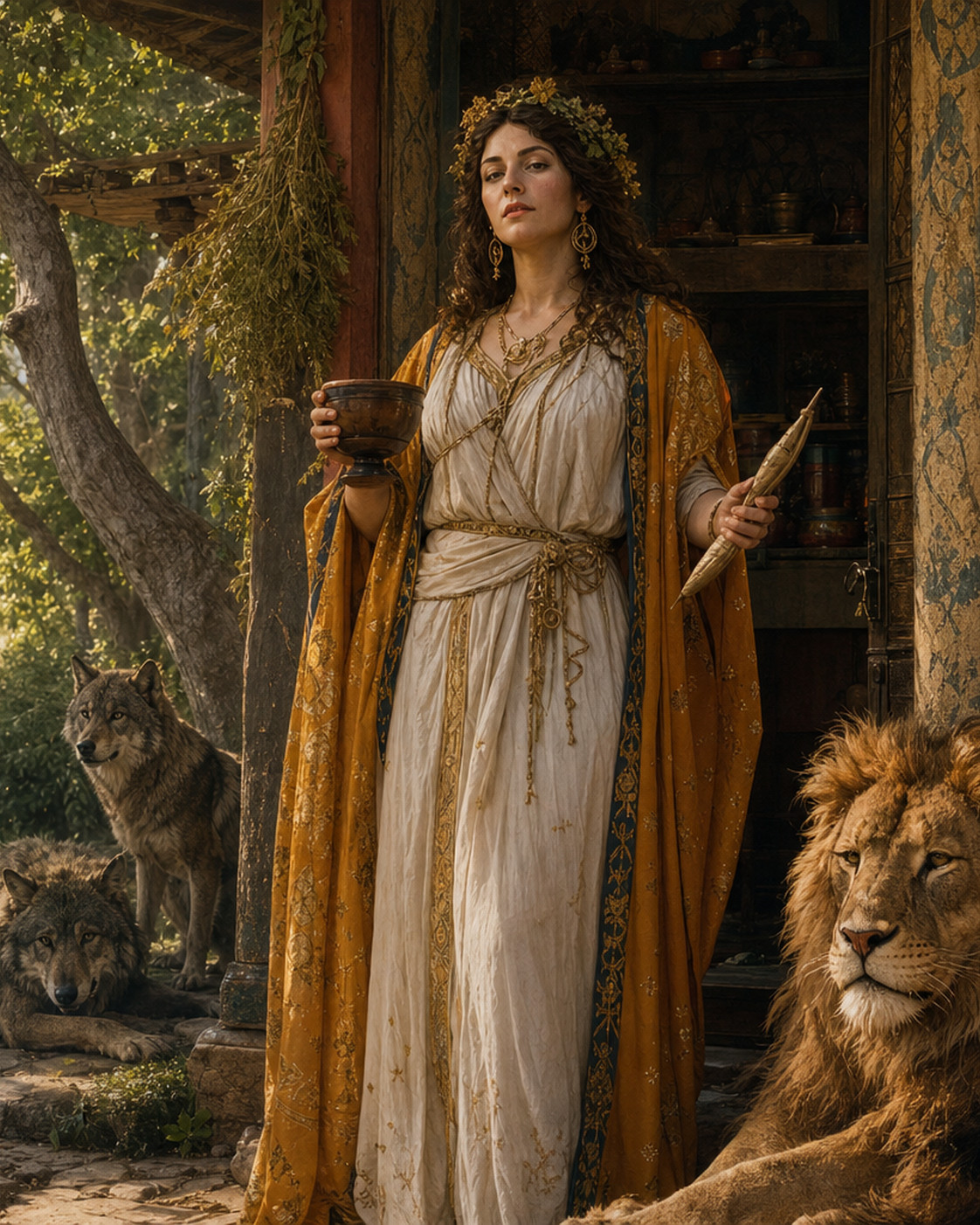
Later Telegony traditions extend or disrupt this family, sometimes linking Telemachus with Circe after Odysseus’ death. Such endings are not part of Homer’s poem and survive only indirectly. They show later myth trying to reorganize the households created by the wanderings.
How to Read Telemachus
Telemachus is not a miniature Odysseus who simply inherits cunning. His story is about acquiring a public voice, testing hospitality, receiving memory, and learning when to act with others. The journey succeeds before it produces useful news because it changes the person who asks the questions.
Follow him toward Penelope for the household under pressure, Odysseus for recognition and battle, Athena for mentorship, and the Trojan War for the inherited absence. Future pages for Nestor, Menelaus, Sparta, Pylos, and Ithaca can turn his voyage into a map of the generation living after epic war.
Trivia
- The name Mentor became a general word for an adviser largely through Athena’s use of Mentor’s form and later literary reception.
- Telemachus’ voyage occupies the opening four books before the poem first shows Odysseus directly.
- The suitors plan an ambush because the young prince’s successful journey changes his political importance.