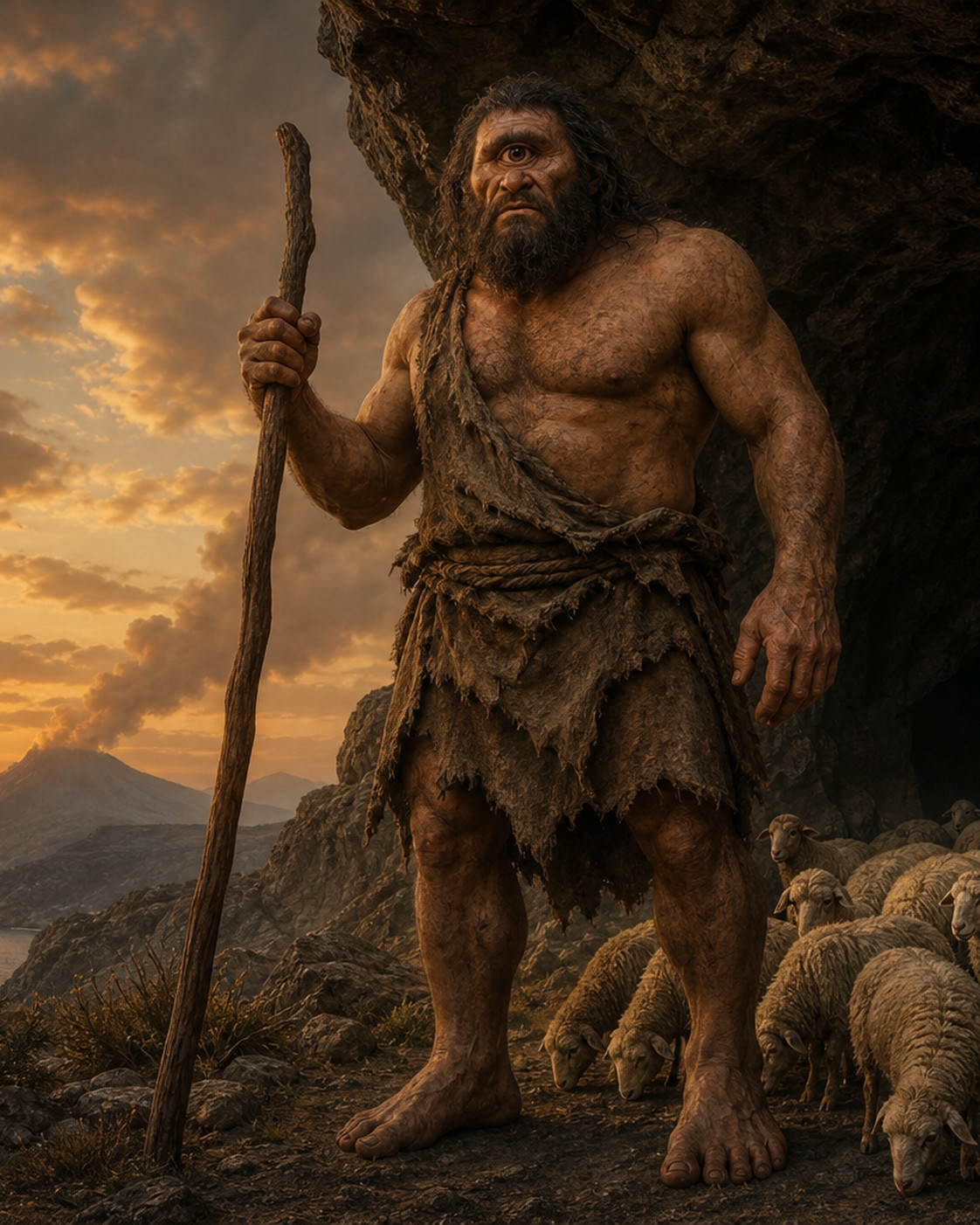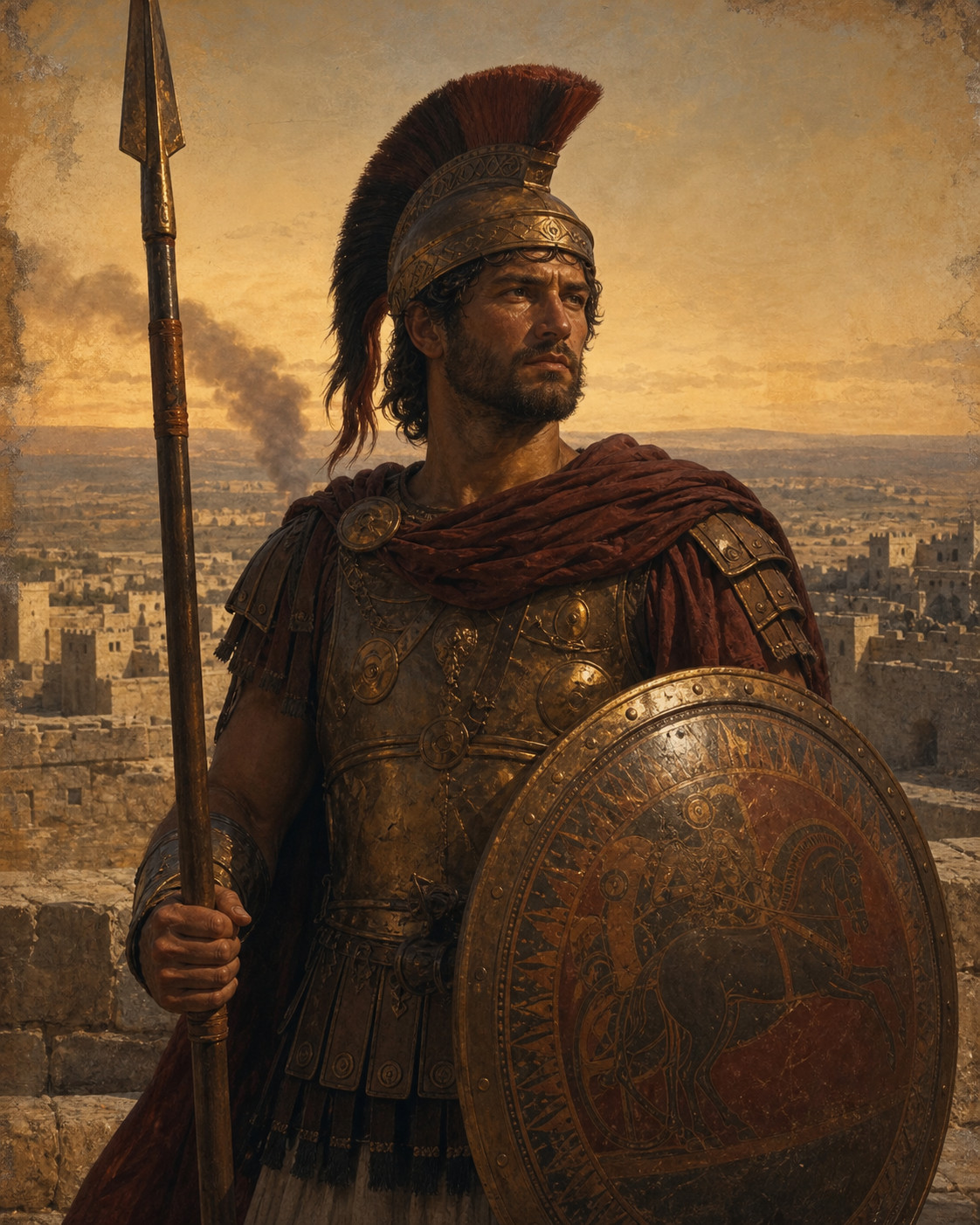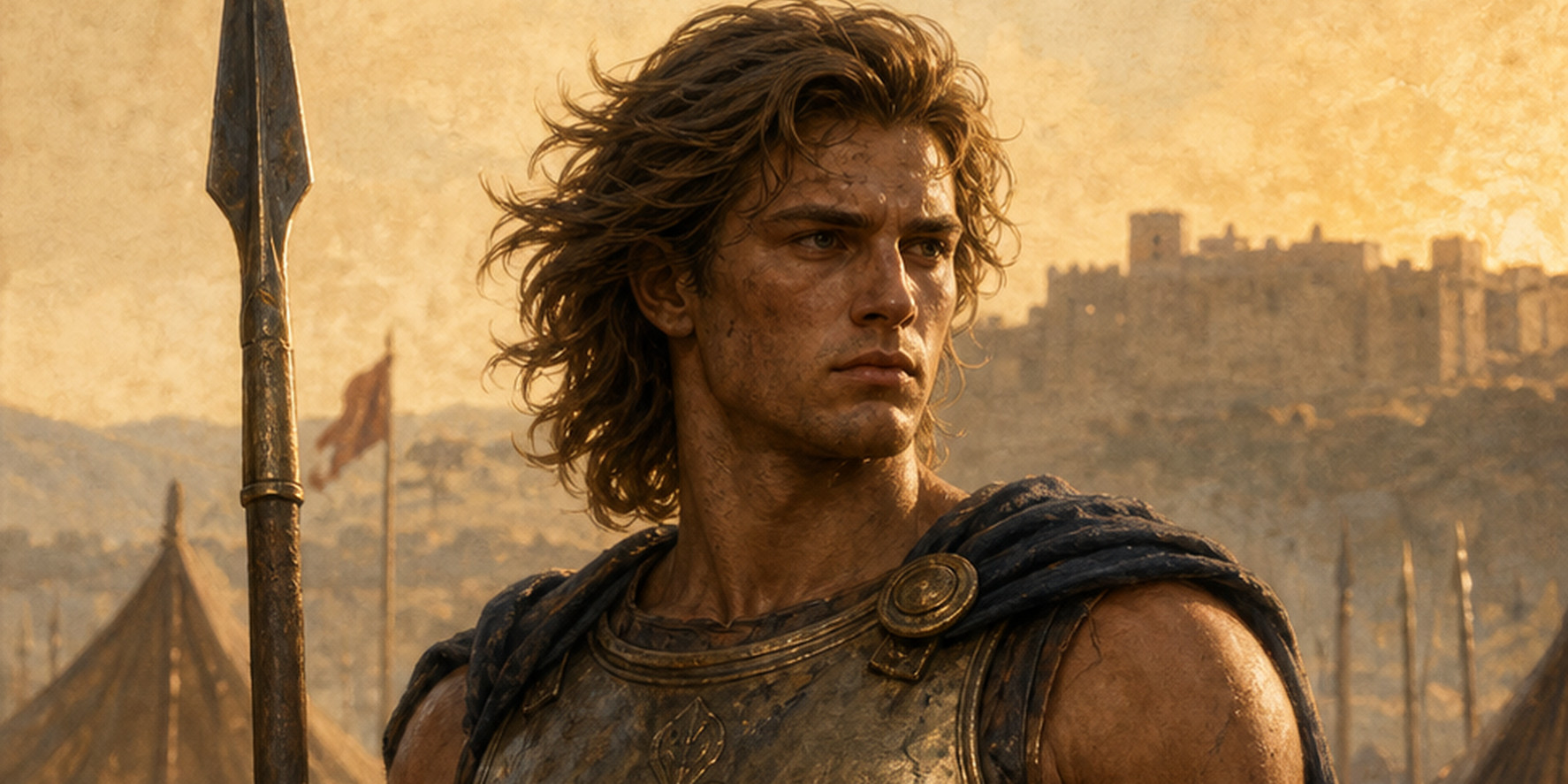
The hero whose choice of glory, consuming anger, and grief for Patroclus define the human cost of the Iliad.
- Agamemnon
- Hector
- Hephaestus
- Myrmidons
- Patroclus
- Trojan War
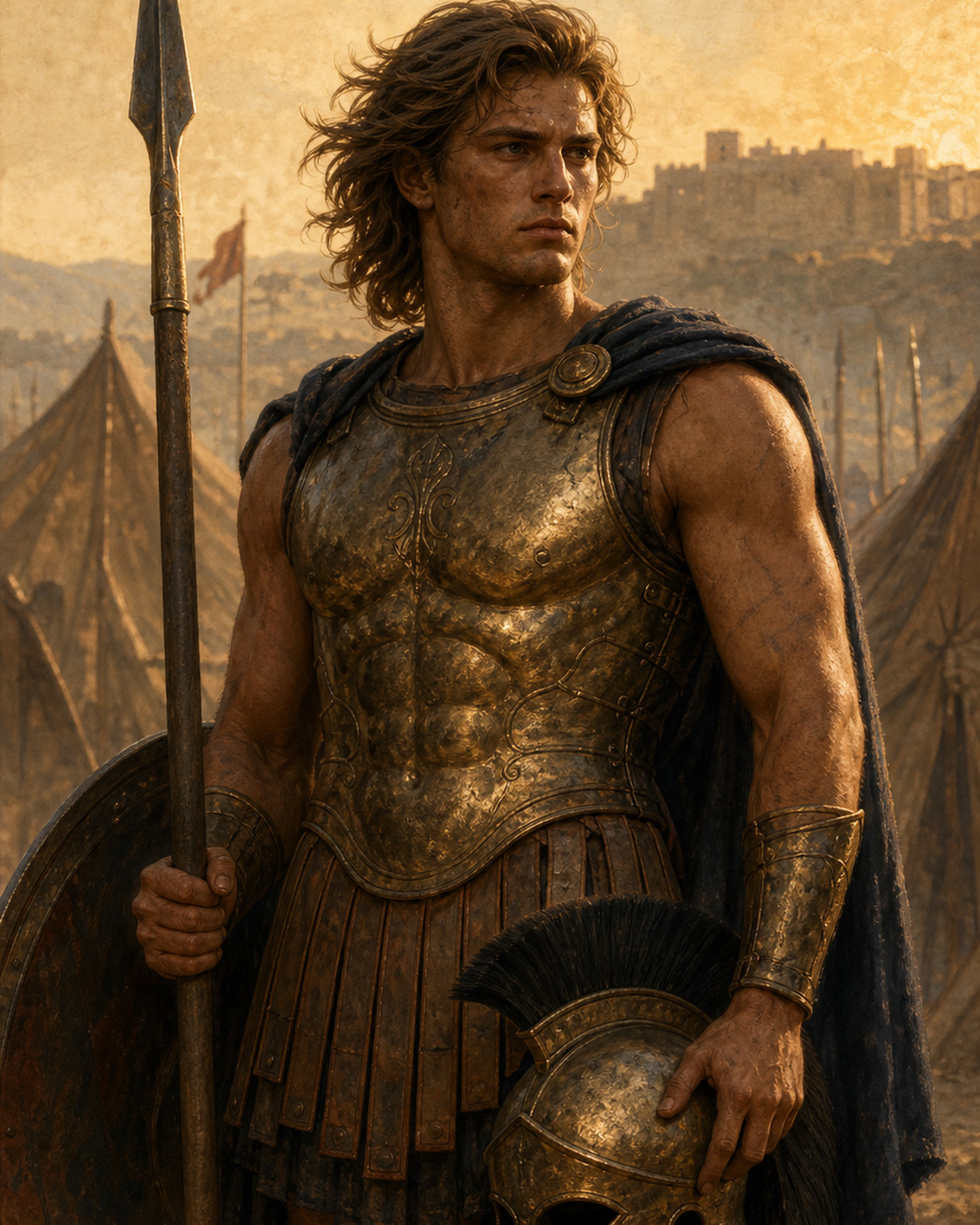
Achilles withdraws after Agamemnon seizes Briseis, returns when Patroclus is killed, and confronts both Hector and his own mortality. Priam's appeal finally restores the enemy's body and a shared space for grief.
Greek Mythology Timeline
Move through broad mythic ages and open the events that connect one story to the next. The sequence is a reading path, not an exact historical calendar.
Achilles is the greatest Achaean fighter in the Iliad, but the poem begins with his refusal to fight. Son of the mortal Peleus and the sea goddess Thetis, he is defined by speed, martial excellence, fierce attachment, and the knowledge that glory at Troy will cost him a long life. His anger at Agamemnon, grief for Patroclus, killing of Hector, and eventual meeting with Priam turn heroic power into a study of loss, responsibility, and mortality.
A Mortal Son of a Goddess
Achilles belongs to two worlds without fully inhabiting either. Thetis can appeal to Zeus and commission armor from Hephaestus, yet she cannot make her son exempt from death. The Iliad repeatedly places divine resources around a mortal body whose future remains limited.
Later traditions tell how Thetis tried to protect him, sometimes by fire and ambrosia or, much later, by immersion in the Styx. The famous vulnerable heel is not Homer’s explanation. Keeping these versions separate preserves the Iliad’s harsher premise: Achilles is extraordinary, not invulnerable.
The Choice of Two Fates
Achilles says that two possible destinies lie before him. If he remains at Troy, he will lose his homecoming but gain imperishable fame; if he returns home, his fame will fade but his life will be long. Heroism is therefore presented as a conscious exchange rather than a simple reward.
The choice is not completed in one speech. Anger makes him threaten departure, Patroclus’ death binds him again to battle, and grief narrows the future he can imagine. The poem lets readers watch a person move toward the fate he already understands.
The Quarrel with Agamemnon
Apollo sends plague after Agamemnon dishonors Chryses. When the commander must return Chryseis, he takes Briseis from Achilles as compensation. Achilles treats the seizure as a public denial of honor and withdraws himself and the Myrmidons from combat.
His grievance exposes a coalition held together by fragile status. Agamemnon commands the largest force, while Achilles supplies unmatched battlefield power. Neither form of authority can simply erase the other, and their contest makes the wider army pay for an elite dispute.
Patroclus in Achilles’ Armor
As Trojan pressure reaches the ships, Patroclus asks to enter battle wearing Achilles’ armor. The disguise restores Achaean confidence and terrifies opponents, but Patroclus goes beyond the agreed limit. Apollo, Euphorbus, and Hector all contribute to his death.
The borrowed armor makes identity dangerously transferable. Patroclus can appear as Achilles without possessing his full protection or boundaries. When Hector strips and wears the equipment, the same objects pass from absent hero to dead companion to doomed enemy.
Return, Armor, and Hector
Grief ends Achilles’ withdrawal. Thetis obtains new armor from Hephaestus, including the shield whose scenes of cities, labor, conflict, dance, and cosmos place one warrior’s rage inside a much larger human world. Achilles returns knowing that vengeance also brings his own death closer.
He drives the Trojans behind their walls and kills Hector after a pursuit around Troy. He then pierces the body and drags it behind his chariot. Victory does not settle grief; unchecked, it converts grief into an attack on funeral dignity.
Priam in the Enemy Hut
Guided by Hermes, Priam enters Achilles’ shelter and asks for Hector’s body, invoking the memory of Peleus. The two enemies weep for different dead and absent loved ones. Achilles recognizes that suffering is not confined to one camp.
He accepts ransom, orders the body prepared, and grants time for burial. This does not undo the killing or make the war just. It restores a shared practice between enemies and gives the Iliad an ending based on restraint rather than the sack of Troy.
Death Beyond the Iliad
The Iliad foretells Achilles’ death but ends earlier. Epic Cycle traditions place later victories over Penthesilea and Memnon before Paris and Apollo bring about his death. Ajax carries the body while Odysseus protects the withdrawal, and the two later compete for his armor.
Different sources place the fatal wound differently, and the heel becomes dominant only in later reception. The secure central idea is that the hero knowingly exchanges return for fame and dies before Troy falls, leaving armor, memory, and disputed honor behind.
Reading the Traditions
Achilles changes as the surviving record moves beyond Homer. The Iliad gives the richest account of anger, grief, reconciliation, and foreknown death; Epic Cycle summaries extend the battlefield sequence; later poets, mythographers, and artists develop childhood protections, Scyros, Penthesilea, and the exact wound. A continuous biography must therefore mark where one source ends and another begins.
Modern retellings often make invulnerability the organizing fact because the heel offers a memorable explanation. In the Iliad, however, the central pressure is moral and temporal: a mortal warrior knows that his highest fame and early death belong together. Reading Homer first keeps the later body puzzle from replacing the poem’s questions about honor, attachment, violence, and restraint.
How to Read Achilles
Achilles is not only a model warrior or a warning about temper. His story asks what honor means when institutions distribute it badly, whether grief excuses violence, and how a mortal with divine support confronts limits no god will remove.
Follow him toward Agamemnon for the command crisis, Hector for vengeance and burial, Hephaestus for the cosmic shield, Athena for checked violence, and the Trojan War for the conflict his withdrawal nearly overturns.
Trivia
- The Iliad begins with Achilles’ anger and ends with Hector’s funeral.
- Homer does not describe Achilles as invulnerable or identify his heel as the cause of death.
- His new shield is made by Hephaestus after Hector takes the armor worn by Patroclus.