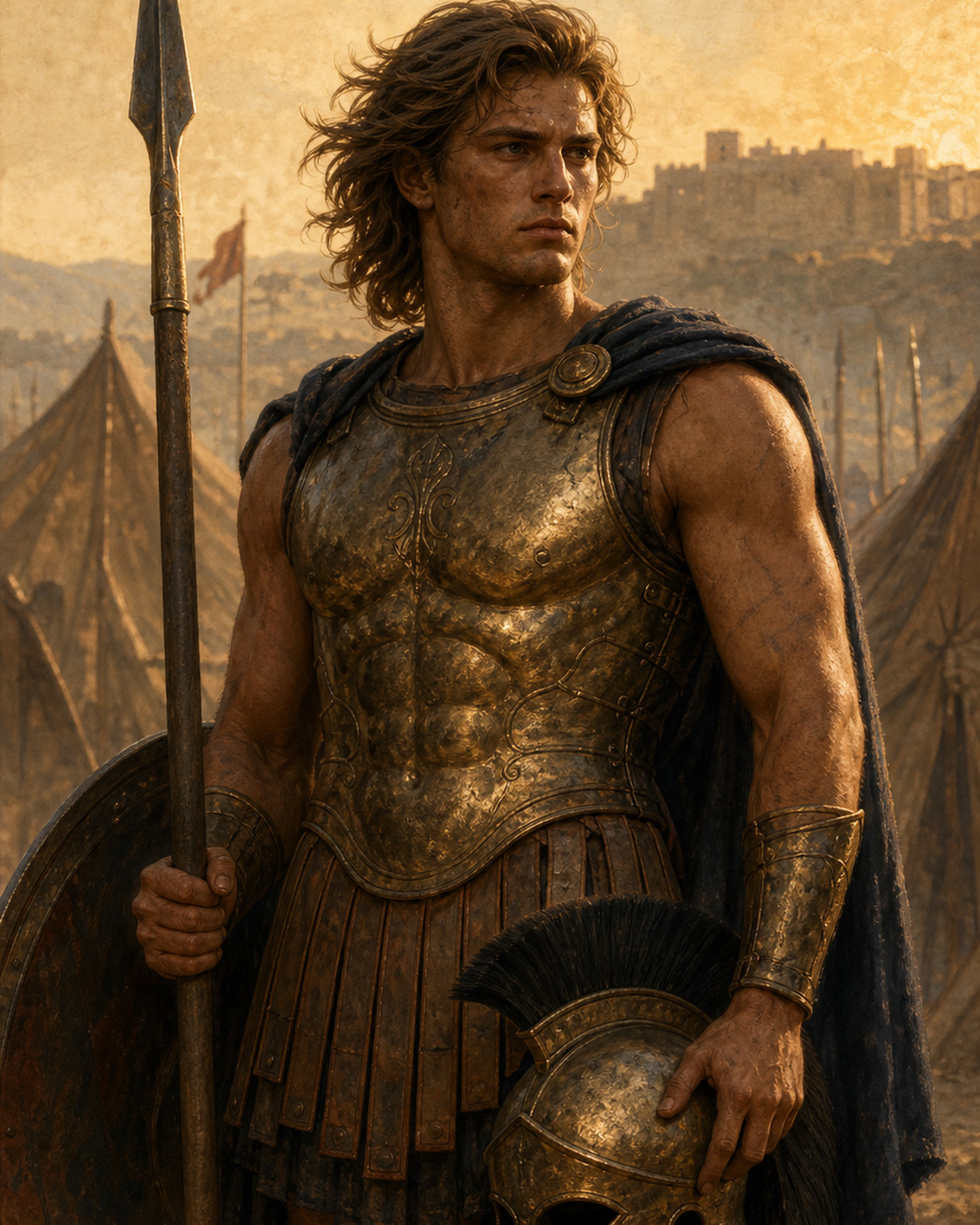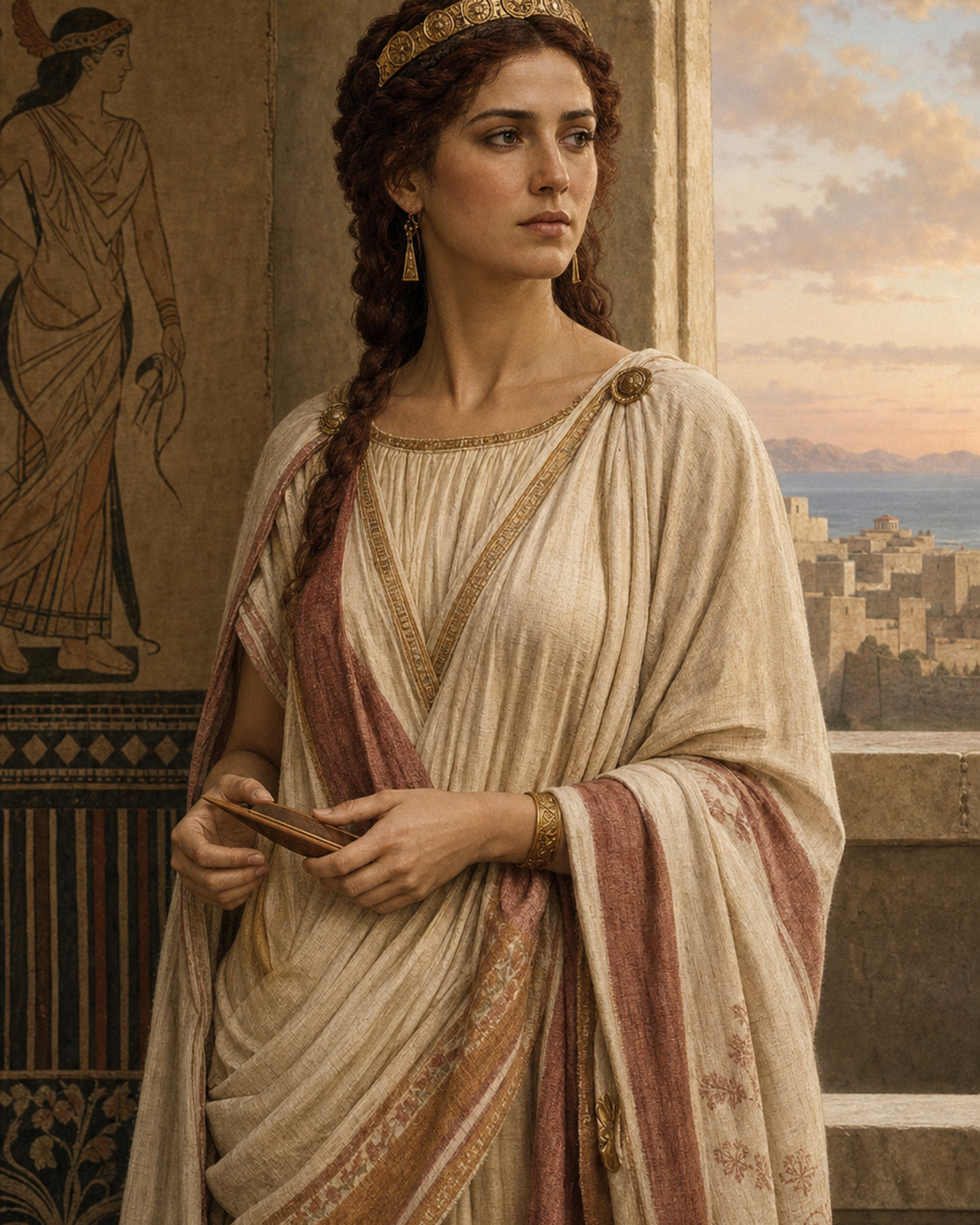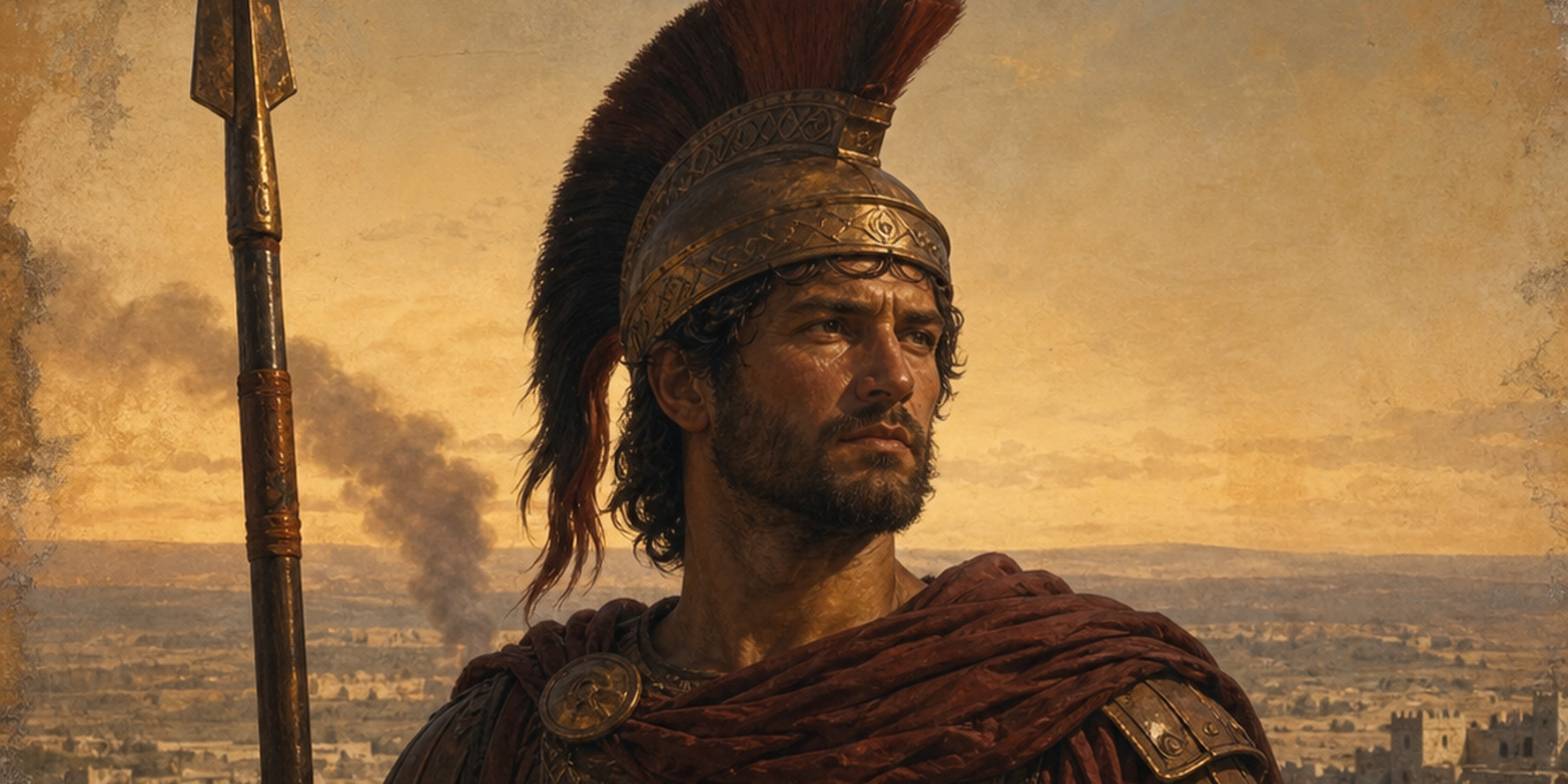
The warrior who stands between Troy and destruction while duty pulls him away from the family he hopes to protect.
- Achilles
- Apollo
- Helen
- Paris
- Trojan War
- Troy
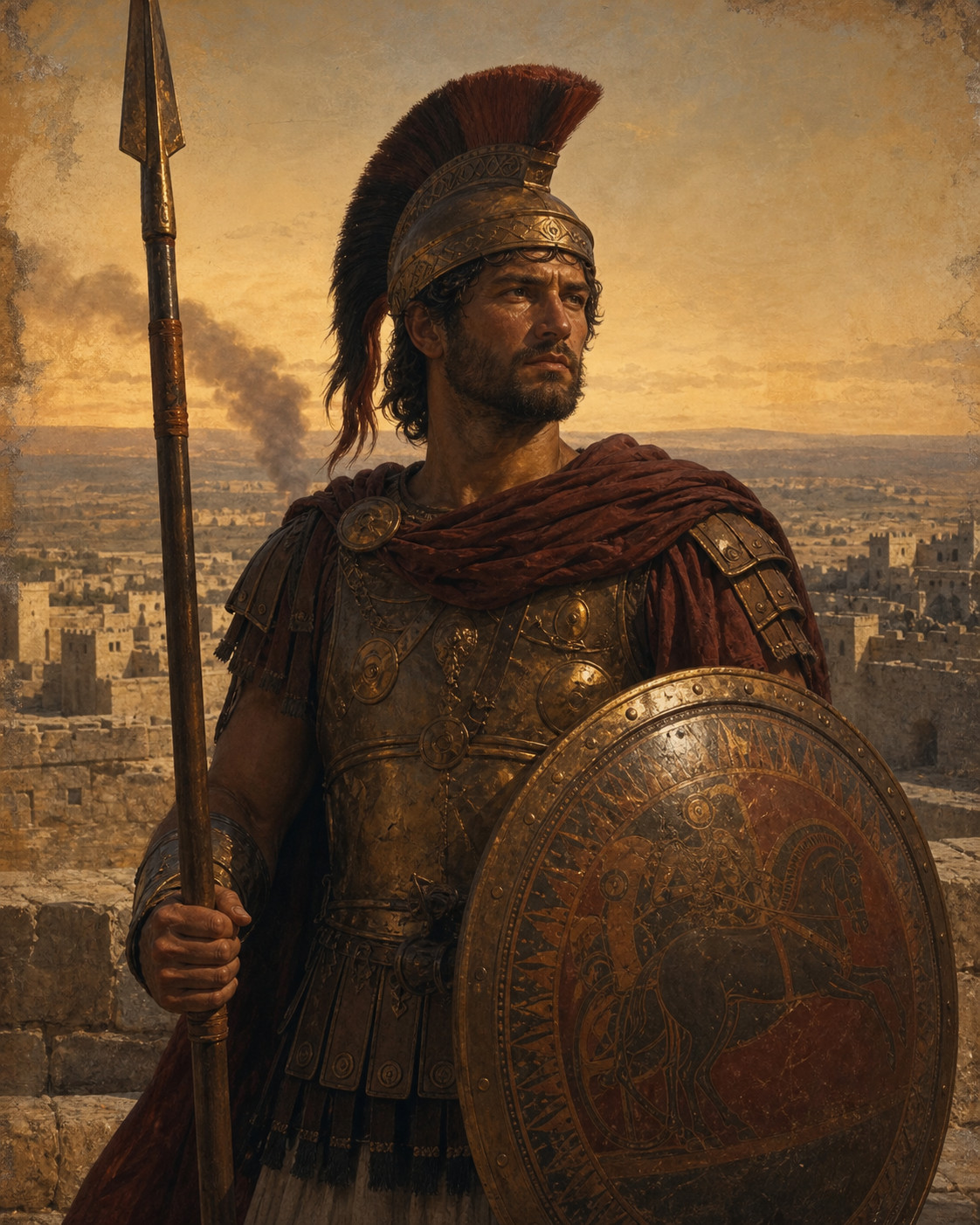
Hector is Troy's leading defender and the Iliad's central Trojan hero. He kills Patroclus, faces Achilles outside the walls, and receives the poem's final funeral after Priam ransoms his body.
Greek Mythology Timeline
Move through broad mythic ages and open the events that connect one story to the next. The sequence is a reading path, not an exact historical calendar.
Hector is Troy’s leading defender, eldest son of Priam and Hecuba, husband of Andromache, and father of Astyanax. Unlike many heroes who travel toward war, he fights before his own gates with parents, wife, child, and city directly behind him. The Iliad makes his courage inseparable from civic duty, shame, tenderness, misjudgment, and the knowledge that even his greatest successes cannot save Troy.
Prince and Defender
Hector is not presented as king of Troy; Priam still rules. His authority comes from being the most effective defender and the royal son on whom allies and citizens depend. He coordinates forces whose loyalties extend beyond a single household.
That public role limits private choice. He may judge Paris harshly, fear for Andromache, or understand an unfavorable sign, yet he must continue to appear before an army watching whether its champion holds the line.
Paris and the Cause of War
Hector repeatedly rebukes Paris for beauty without steadiness. Paris’ relationship with Helen helped bring the Achaeans to Troy, while Hector bears much of the physical burden of the defense. The brothers embody different forms of princely identity.
Hector nevertheless brings Paris back into battle instead of abandoning him. Family loyalty and public necessity remain entangled. He cannot solve the war simply by condemning its cause because Troy’s survival now depends on every available fighter.
Andromache at the Wall
In Iliad Book 6, Andromache meets Hector near the Scaean Gate and recalls that Achilles has killed her father and brothers. She asks Hector to defend from a safer position rather than leave her a widow and Astyanax fatherless.
Hector foresees Troy’s fall and imagines her enslavement, yet says shame before Trojan men and women prevents withdrawal. The scene does not make duty painless. It shows a social ideal powerful enough to demand the future both speakers most fear.
The Helmet and the Child
Astyanax recoils from Hector’s flashing helmet and horsehair crest. Hector and Andromache laugh, and he removes the helmet before lifting the child and praying that the boy will become a greater defender than his father.
The brief domestic gesture is central to his character. Martial appearance protects the city but frightens the person meant to inherit it. Readers know that the hoped-for succession will fail, which makes the prayer both loving and tragic.
Patroclus and Borrowed Armor
Hector kills Patroclus after Apollo and Euphorbus have already helped bring him down. He strips Achilles’ armor and later wears it, believing the greatest Achaean remains outside battle. The apparent triumph changes the balance around Troy.
Yet the armor carries a fatal reversal. Patroclus used it to simulate Achilles; Hector takes it as proof of victory; Achilles receives a new divine set and returns. Objects move between bodies while each transfer brings the next confrontation closer.
Alone Outside the Gates
When Achilles drives the Trojans back, Hector remains outside despite Priam and Hecuba’s pleas. He debates whether to negotiate, return Helen and treasure, or fight. Shame over an earlier tactical decision makes reentry feel impossible.
Athena, disguised as Deiphobus, persuades him to stand. After the helper vanishes, Hector understands divine deception but still attacks. Achilles kills him and refuses his final request that the body be returned for burial.
Priam and the Funeral
Achilles drags Hector’s body, but Apollo protects it from destruction. Zeus eventually orders its release. Priam crosses the enemy camp, ransoms his son, and brings the defender home to laments by Andromache, Hecuba, and Helen.
The Iliad ends with Hector’s funeral rather than the Achaean victory. The choice places communal mourning at the center and lets the fallen defender, not his killer, receive the poem’s final named rite.
Reading the Traditions
Hector’s most complete portrait belongs to the Iliad, whose compressed final-year action gives family scenes, tactical decisions, divine interference, duel, abuse of the body, ransom, and funeral. Later prose narratives may make him more consistently chivalric or strategically flawless, smoothing away hesitation and error that are essential to Homer’s tragic humanity.
The fall of Troy and fate of Andromache and Astyanax occur outside the Iliad in cyclic, tragic, and later accounts. Those consequences deepen Hector’s farewell, but they should not be retroactively presented as scenes he witnesses. The poem’s power comes from unequal knowledge: characters imagine futures while the audience recognizes which hopes the larger tradition will deny. That distance is the source of much of Hector’s pathos.
How to Read Hector
Hector’s courage is neither effortless nor strategically perfect. It is a repeated decision made under the gaze of family, allies, enemies, and gods. His tragedy lies partly in the fact that admirable duty cannot reverse a doomed political situation.
Follow him toward Achilles for the duel, Paris and Helen for the conflict’s cause, Apollo and Ares for divine support, and the Trojan War for the city-scale consequences of one defender’s choices.
Trivia
- The Iliad closes with the words marking Hector’s burial.
- Astyanax is a title meaning lord of the city; the child’s personal name is Scamandrius.
- Hector wears the armor taken from Patroclus before facing Achilles.